Sometimes a troubling typewriter issue needs time stewing in my brain before I find a satisfying solution. I’ll put it on the back burner and think about the problem from time to time, stirring it occasionally. I recently worked on a Smith-Corona Electric 5TE with bell and right margin problems that is finally behaving properly after long slow-cook pondering.
Monica and Stephen are local typewriter enthusiasts who have been a source of interesting typewriter projects for me. Monica brought me a 1960 Smith-Corona Electric 5TE portable that had once belonged to a friend’s father.
One major issue was that it wouldn’t turn on. Monica had gotten it to briefly start once, and at that time, only one key worked.
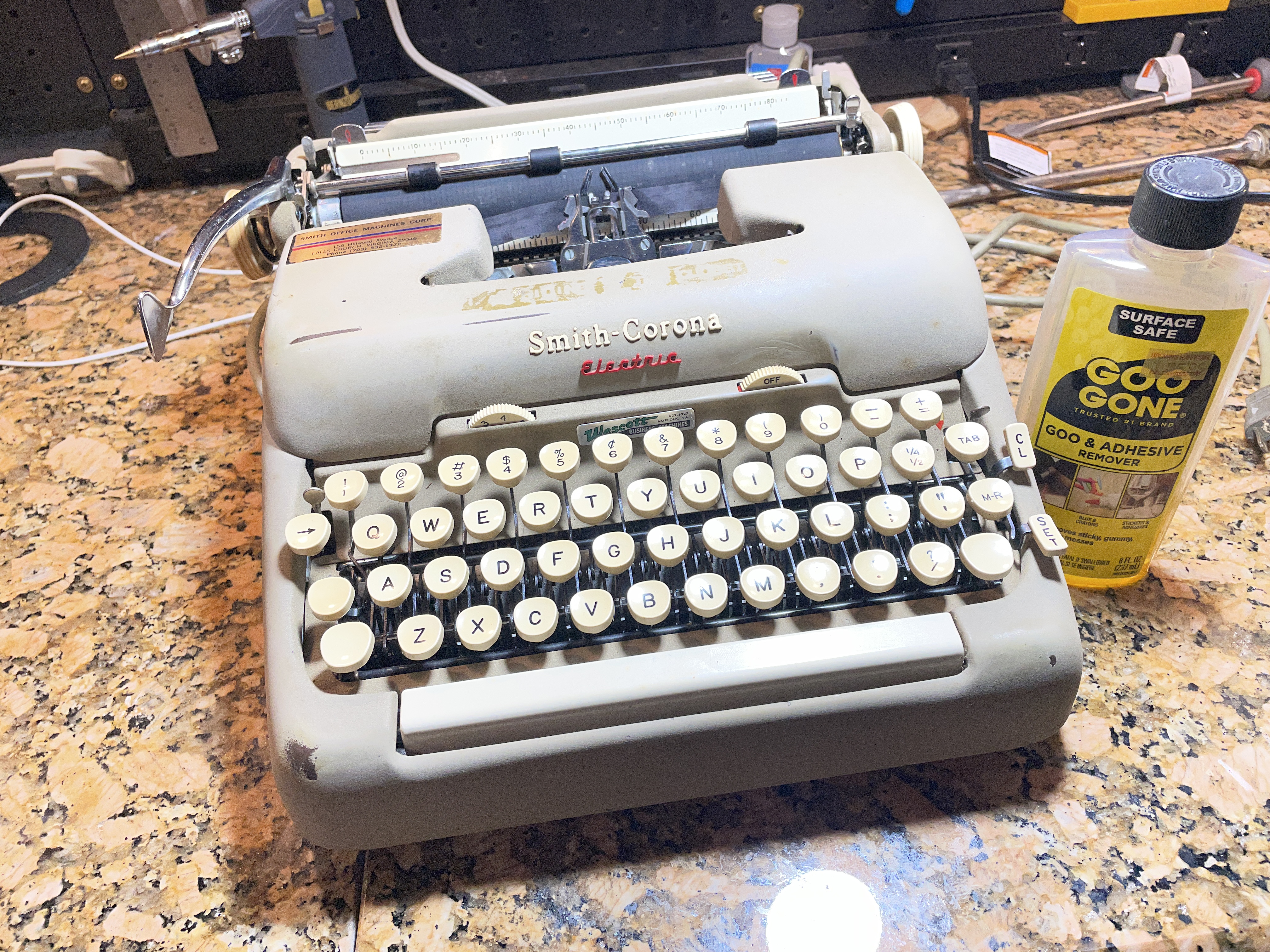
I love that sweet red Electric badge on the front, but the typewriter was in kinda rough shape—a dingy tan with old paper tape on its forehead:
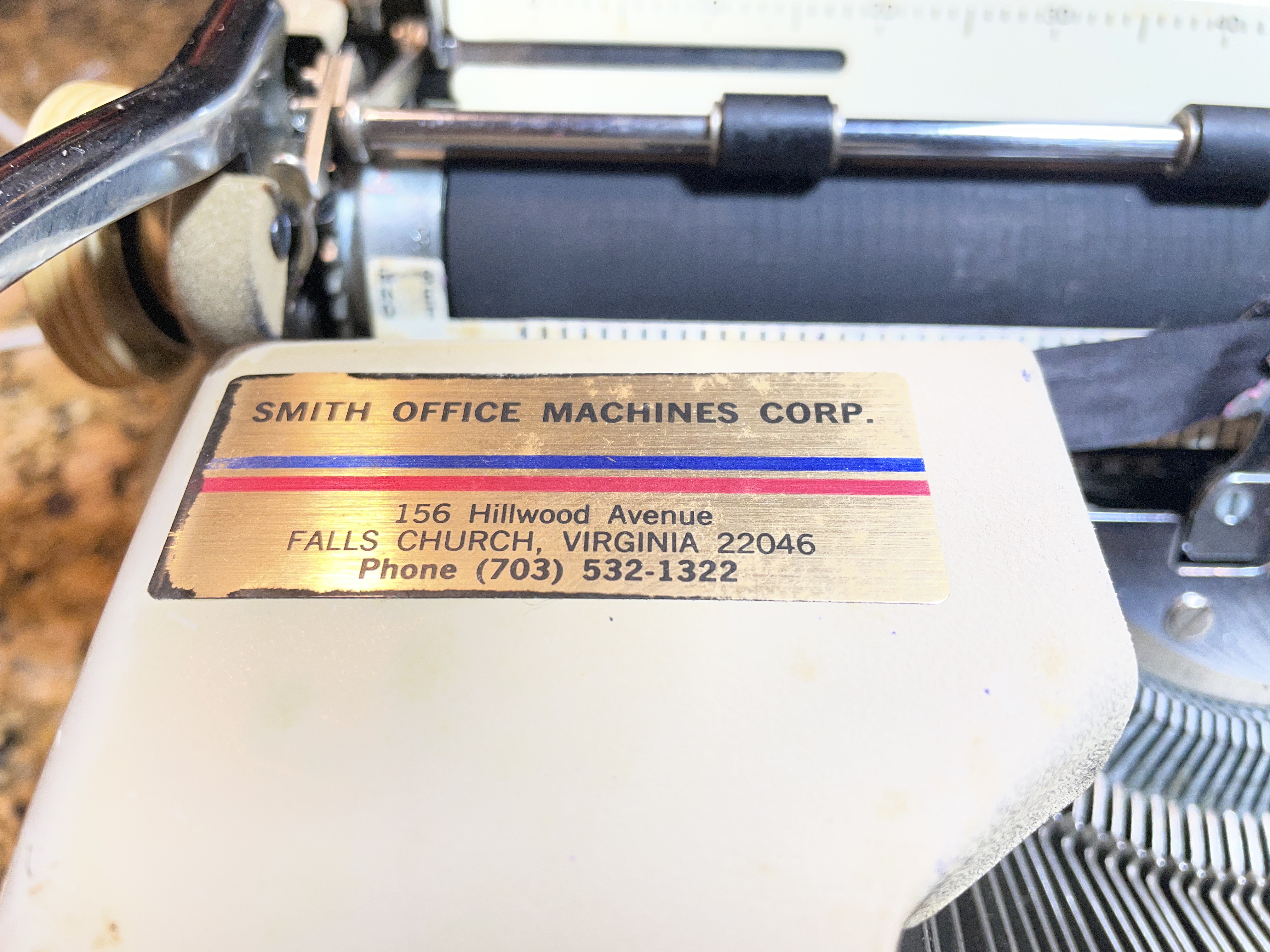
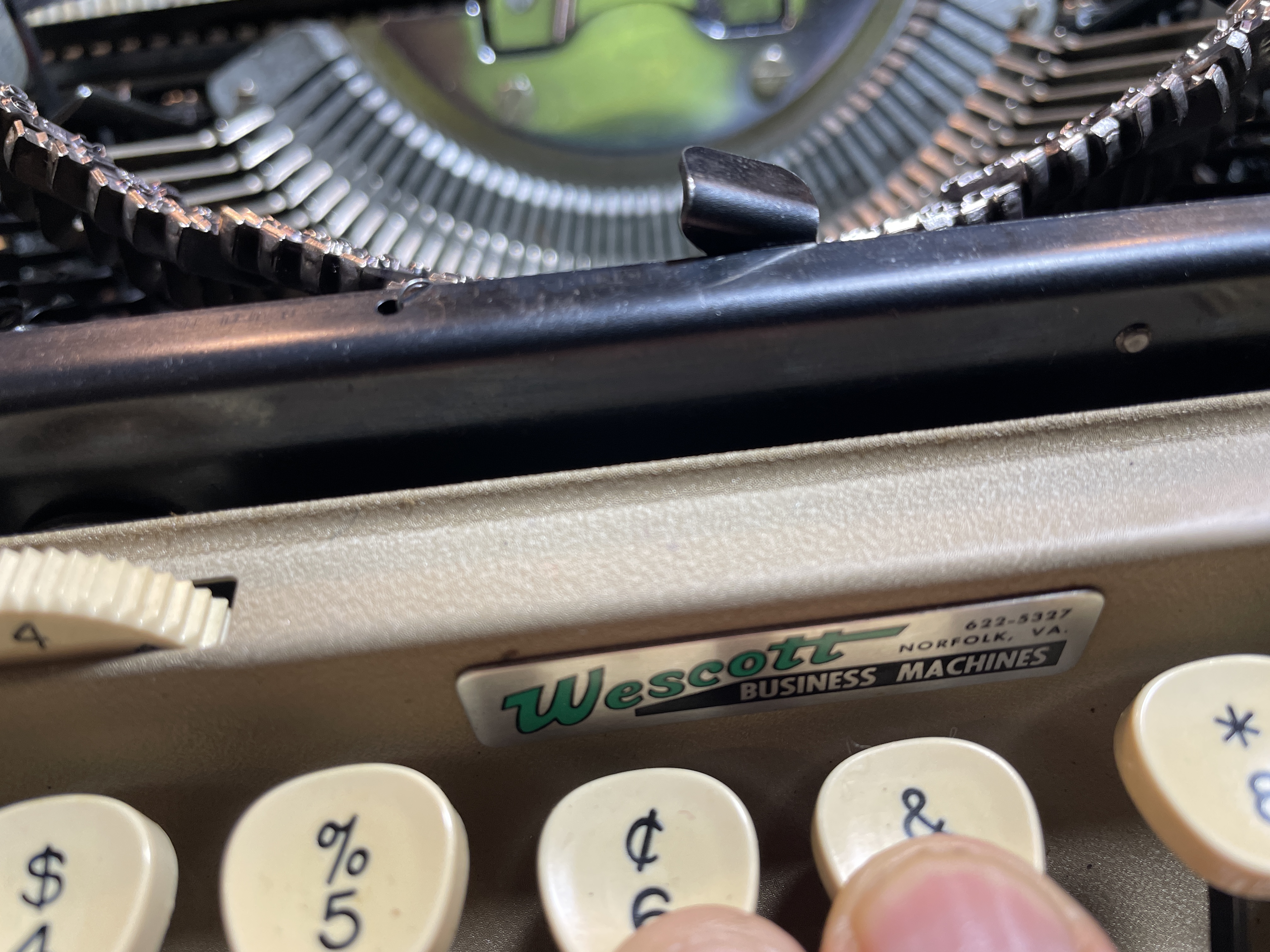
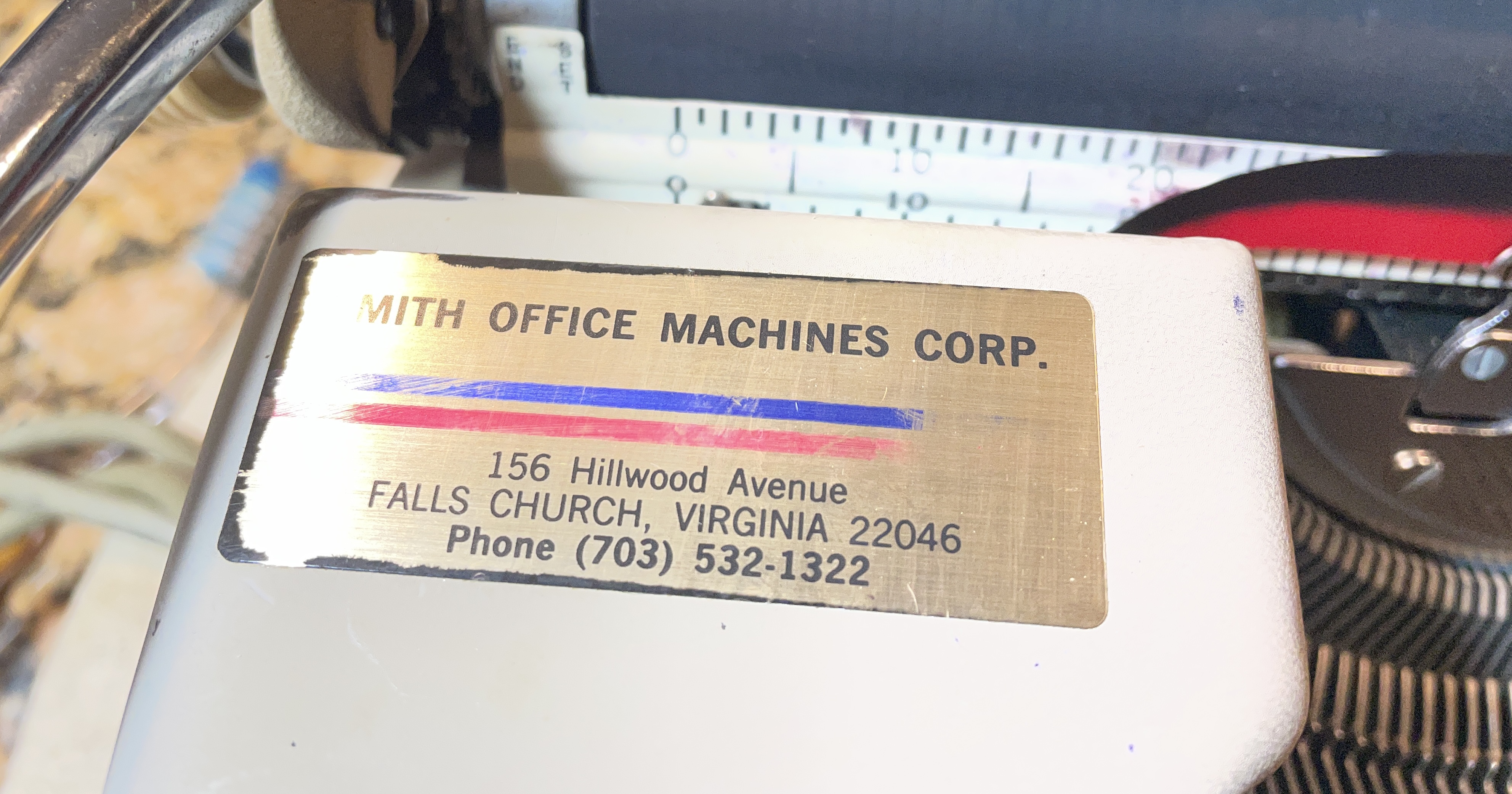
It also had a couple of service/dealer stickers on it:
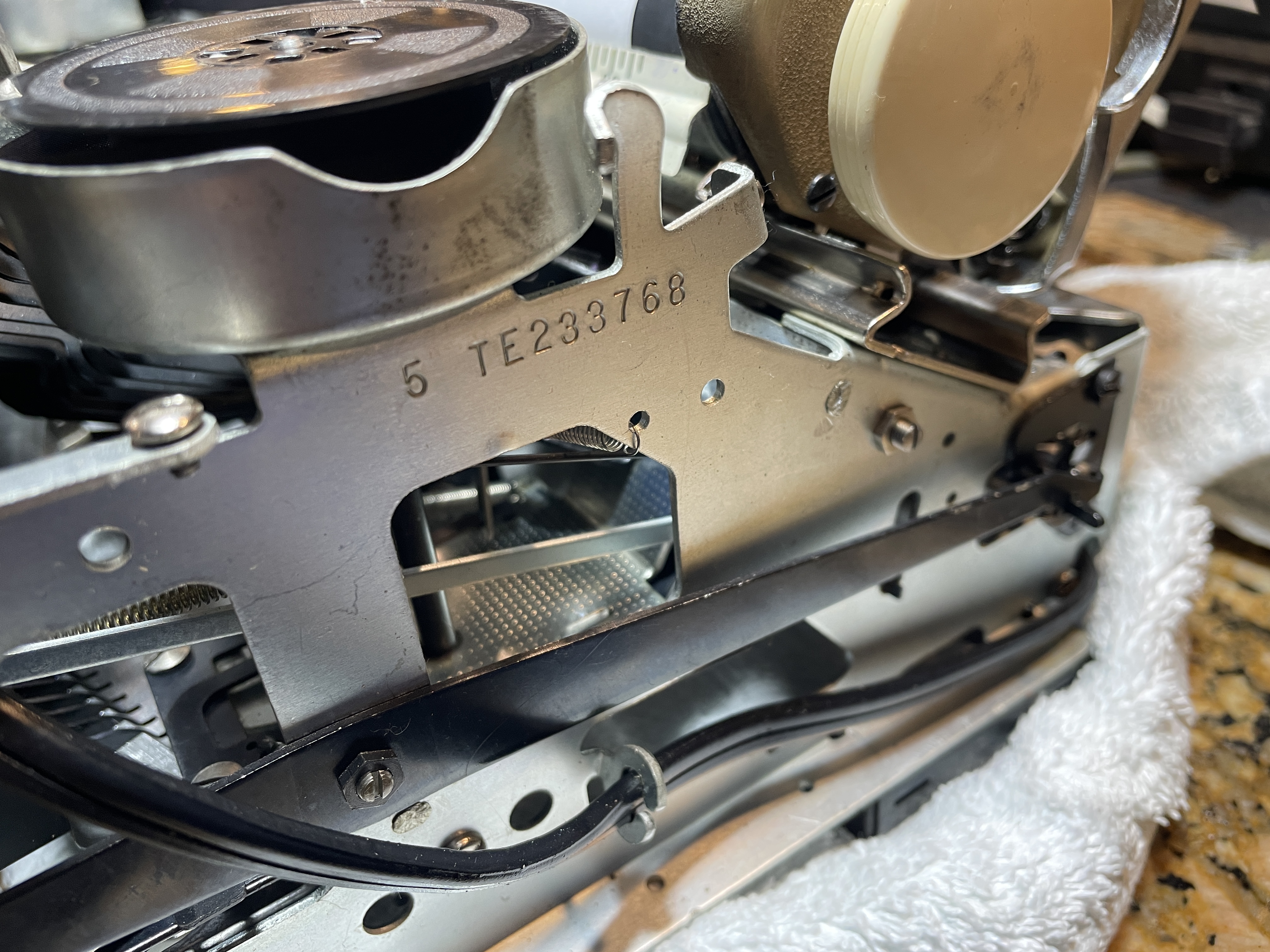
It’s a 1960 by serial number 5TE233768.
Rob M., a very knowledgeable member of the local typewriter community was in my garage when this Smith-Corona arrived, and fortunately he has had some experience with 5TEs. He noticed that if he manually worked the on/off switch on the inside, the machine would turn on. Yeah!
The switch was very gummy. It began to reliably turn the machine on with manual working and cleaning.
Rob also noticed that the lid kill switch/safety switch wasn’t working properly. The machine should turn off if the ribbon cover is raised. I investigated and found that the switch was bent and rubbing against the front shell. I bent it back into correct position. This is how it is supposed to work:
Like the sticky on/off switch, the machine was super gummy throughout and most of the typebars stuck in place. I needed to de-shell the machine to clean it thoroughly. Here’s HotRod Typewriter taking the body panels off:
I cleaned the shell with Simple Green and water. Simple Green was great for the old tape. Goo Gone usually does the trick for old adhesive residue, but not this time.
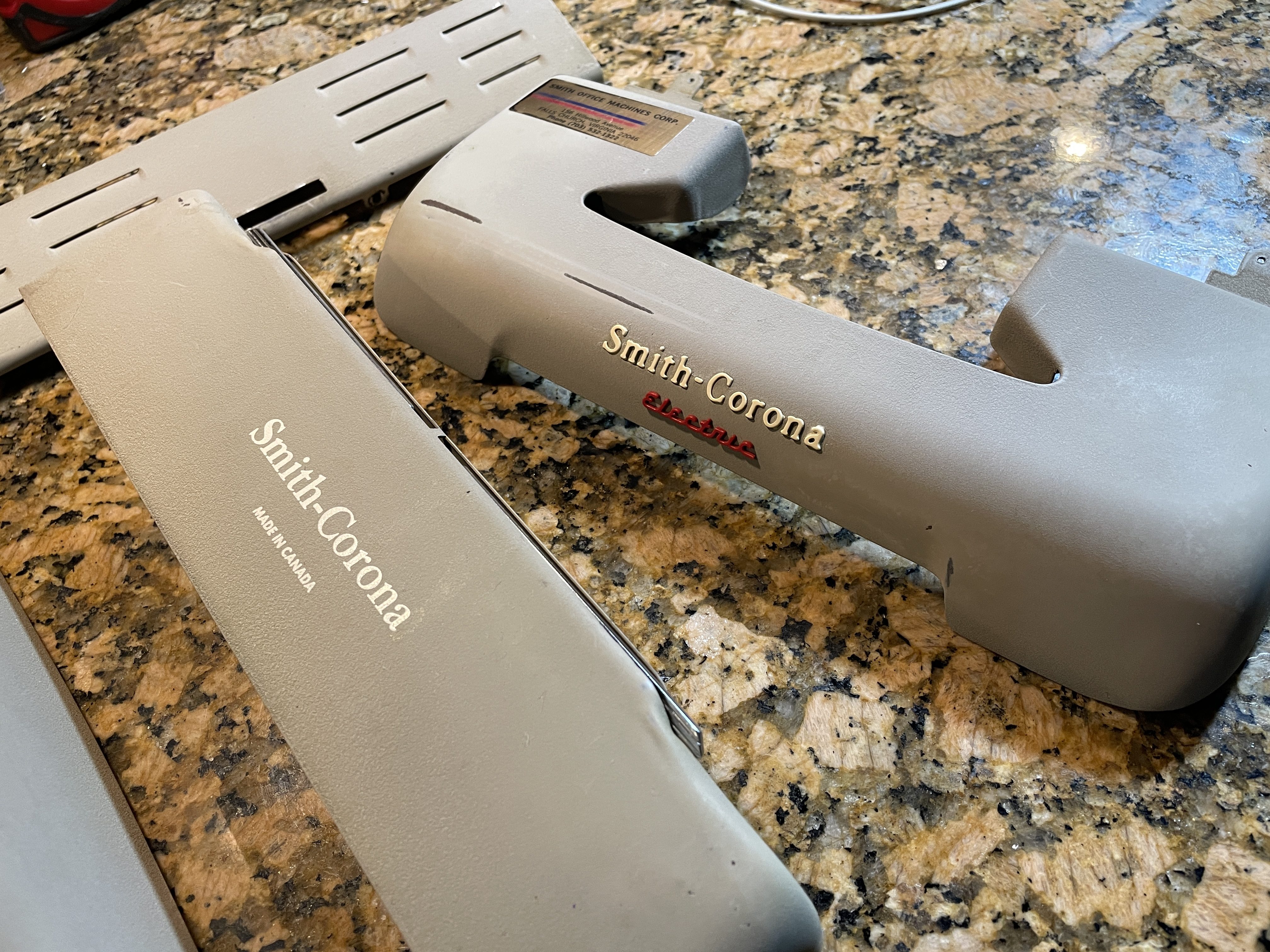
I should have been more careful with the Simple Green. It ate the stripes of the service label a little. Live and learn.
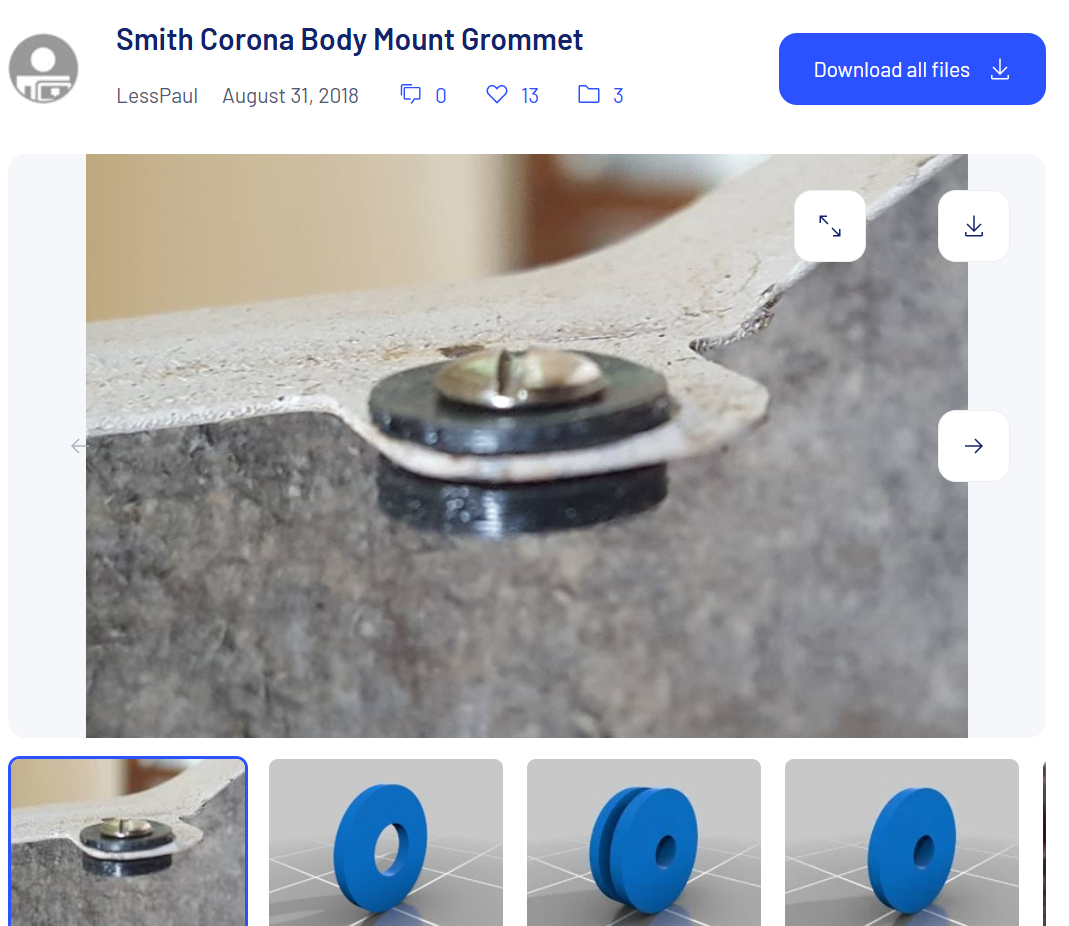
Smith-Corona Anti-Vibration Body Mount Grommets
I had noticed tarry remnants on the bottom of the case. I didn’t realize they were the remains of anti-vibration grommets. Fortunately Ross, another member of the local typewriter community, pointed me to this post in the Facebook Antique Typewriter Maintenance Group.
Paul H. has posted the 3D file of the Smith-Corona Body Mount Grommets at Thingiverse:
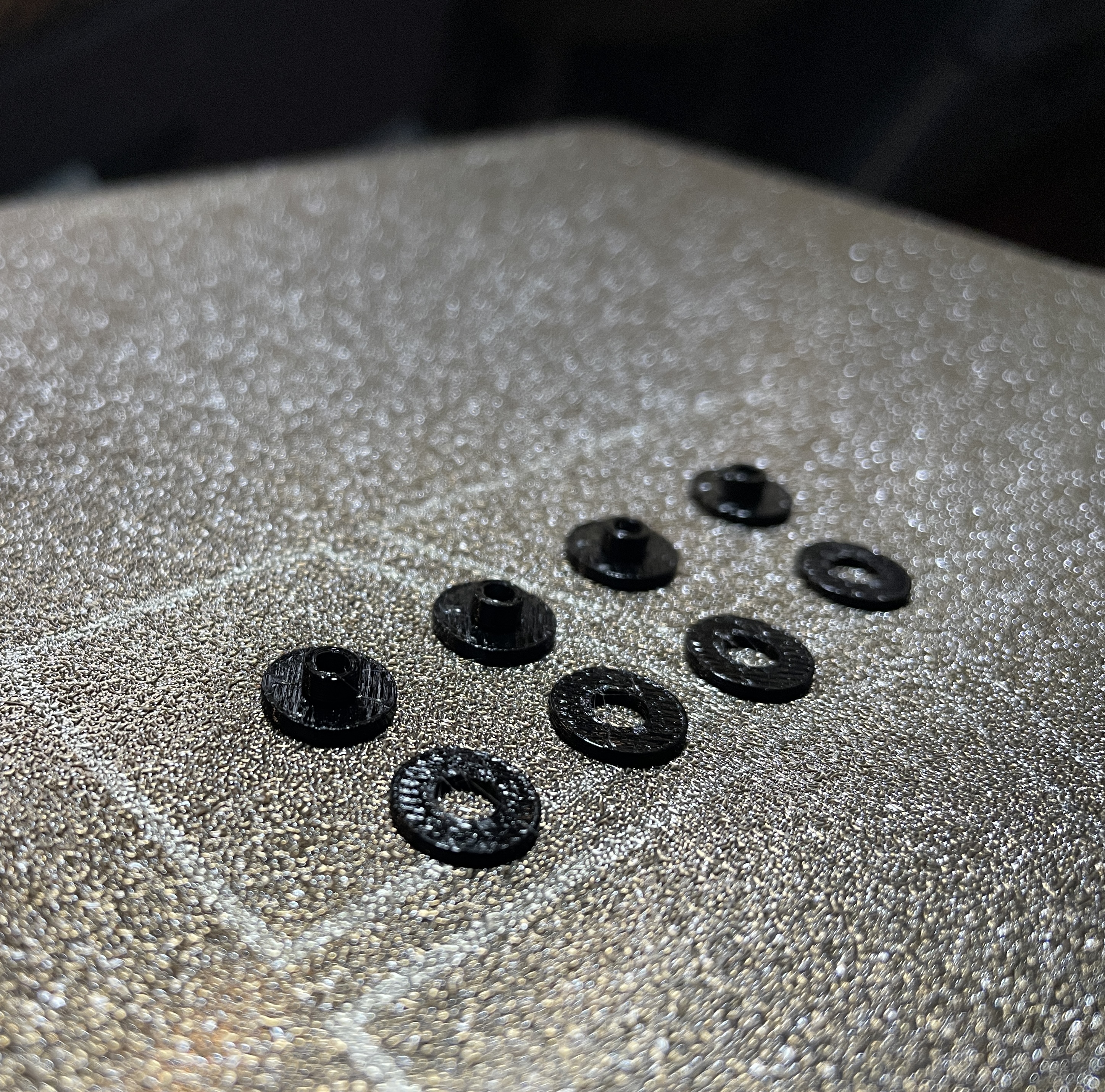
I downloaded the file and printed out the two-piece grommets in Overture high speed TPU (95A) which is flexible but still pretty firm. They worked perfectly.
The Bell, the Right Margin, and the Margin Release
The machine was very gummy. Only one key was striking when it entered my garage, but after repeated cleaning of the main segment and sublever segment, it was typing really well. I used mineral spirits and followed with a blow-out of air from my air compressor so that the gunk didn’t re-solidify in place.
However, even after extensive cleaning of the bell mechanism, I wasn’t getting a bell at the end of the line. I had taken the back cover panel off, but I couldn’t really see what was going on with the right margin set up. I adjusted the bell hammer trip on the right margin stop so that it could contact the bell hammer arm more squarely. The bell started to work, and I thought, “Oh goody. I fixed it! My work is done here.”
But something was not right. The bell was dinging just two spaces before line lock, and the margin release key wasn’t working. In addition, the line lock was engaging before the right margin by a few spaces. Why, oh why?
I did some research on bell adjustment on Phoenix Typewriter’s channel.
Hmm. I couldn’t see very well, but the 5 series bell trip in the video was very different from the trip on the 1960 5TE. What to do? My bell wasn’t working right. My margin wasn’t working right. My margin release wasn’t working right. I got busy with hosting Easter and taking care of my grandson, so I had to put the 5TE’s problems on the back burner and let them simmer. I’d walk out to the garage, stare at the 5TE, ponder its bell and margin issues, return it to the back burner, and carry on with my day.
NOTE: I used tape to keep my kill switch/safety switch down while I worked on the machine while it was out of it casing. I could have just bent the switch under the frame lip again, too.
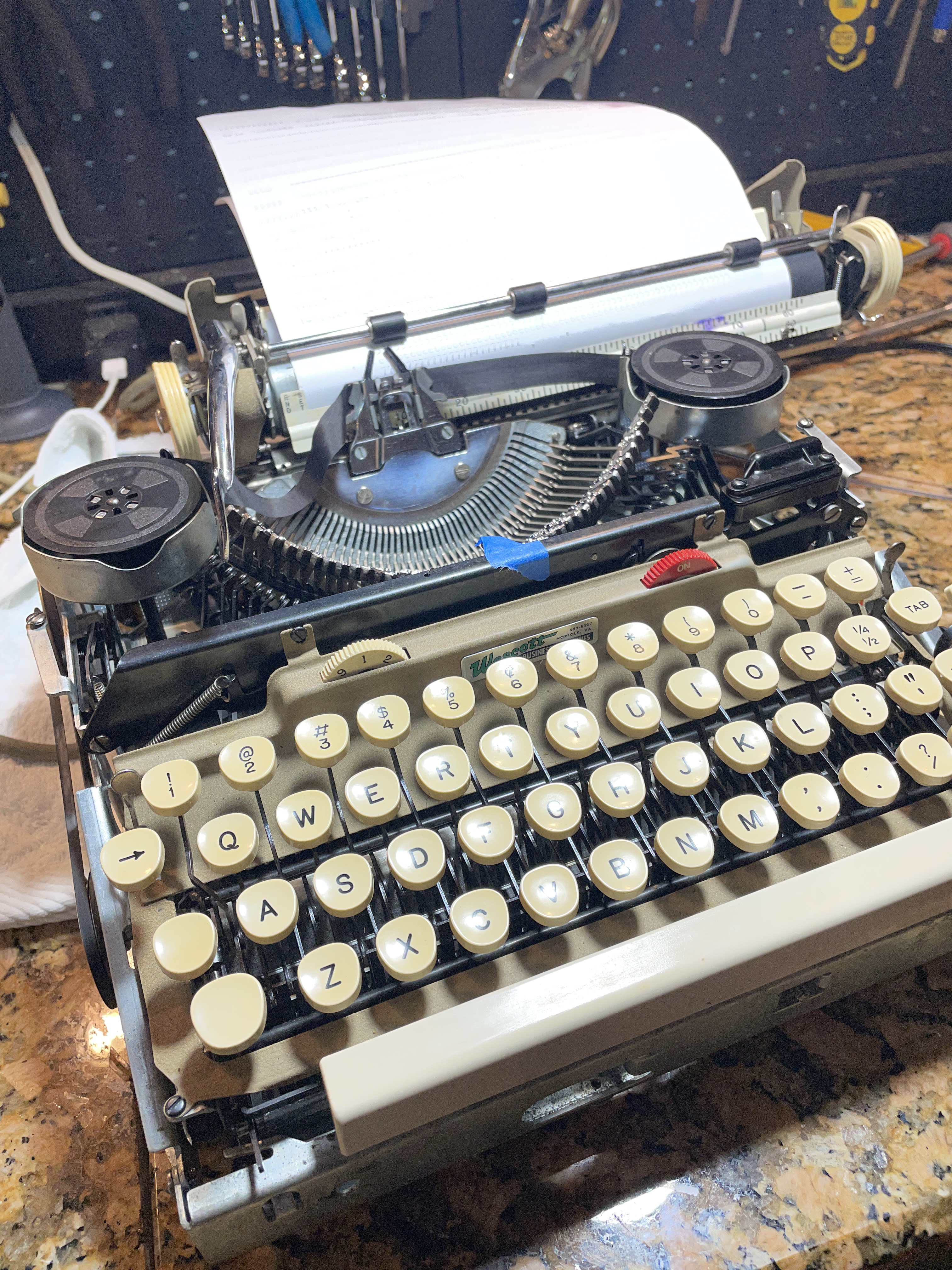
Over time, I became more and more convinced that I needed to remove the margin rack and see what the heck was going on with the margin stop and bell trip—even if I wasn’t sure what it was supposed to look like.
If only I had a comparison machine! Sigh. Hmmm. I still had the 196x Coronet with me. Maybe it had a similar bell trip.
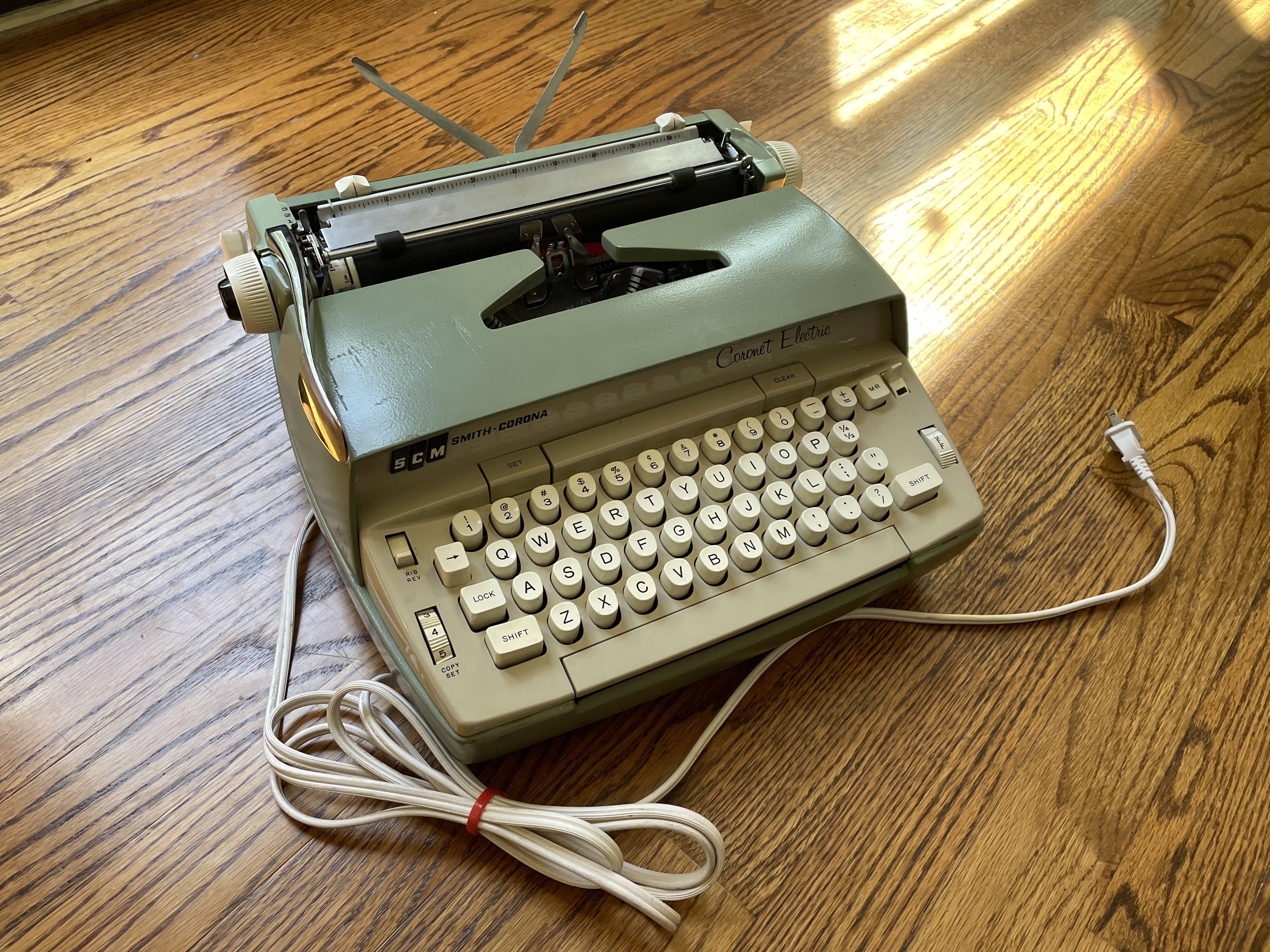
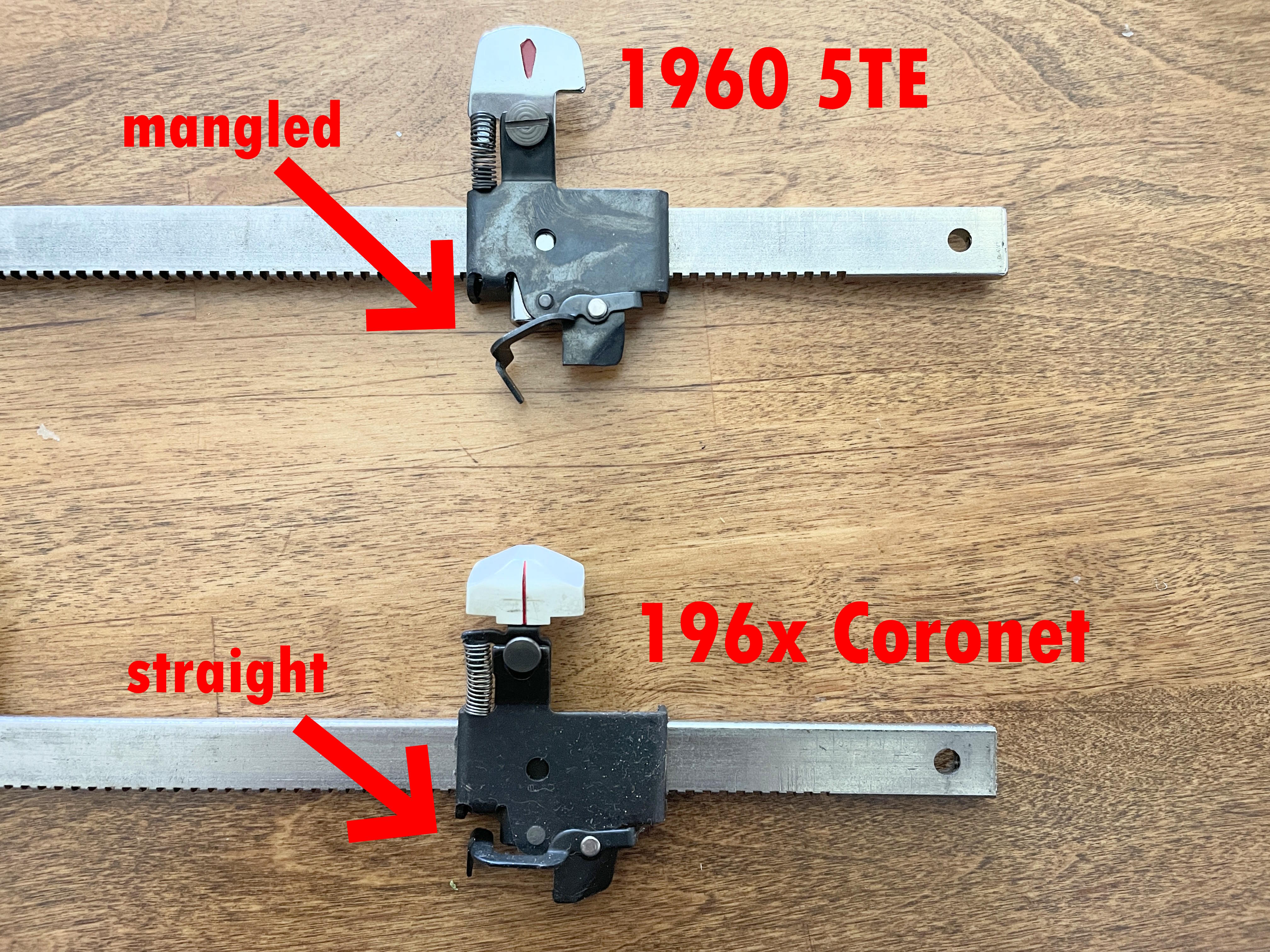
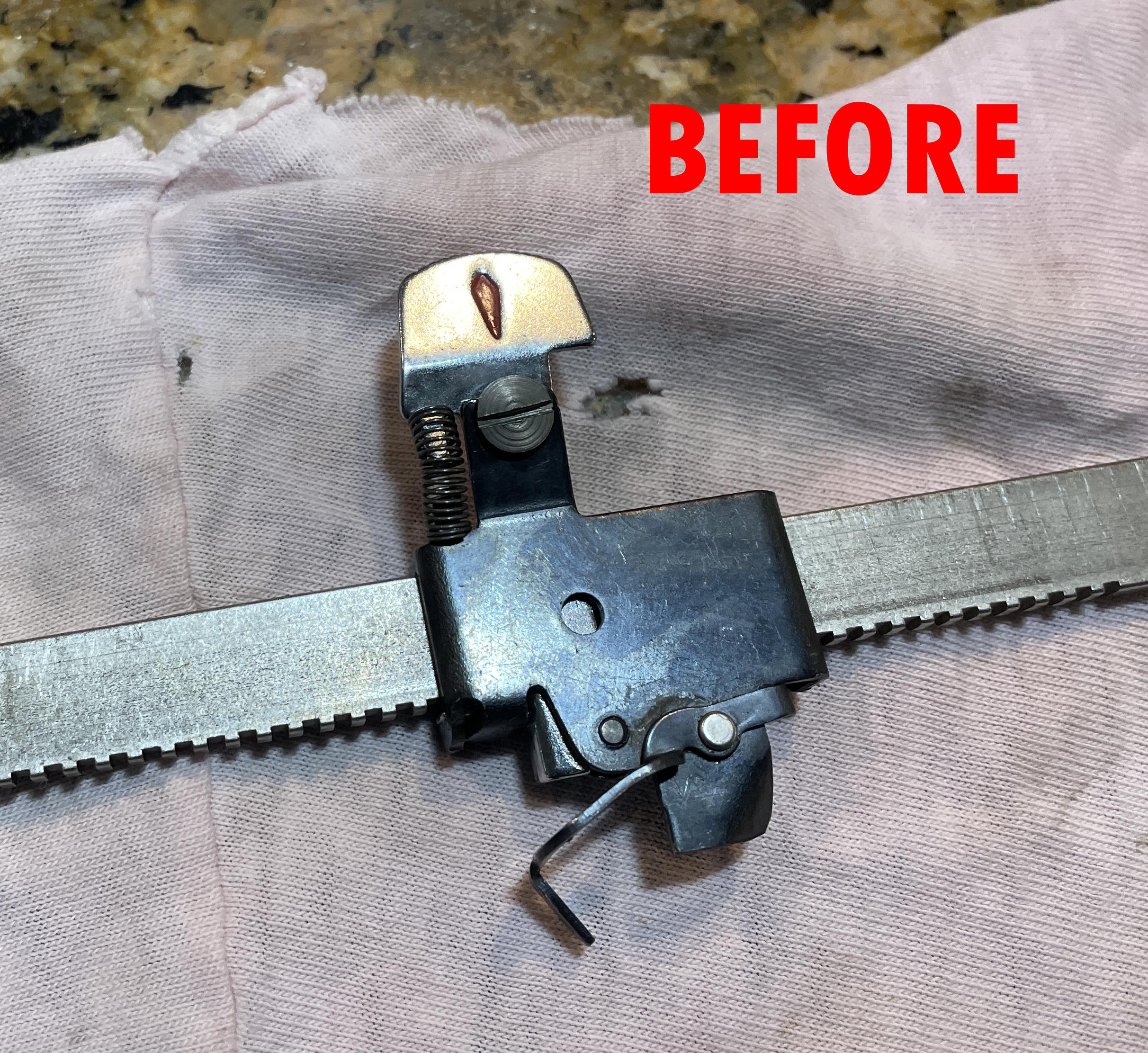
Following Duane’s video instructions, I removed the margin rack from both the 196x Coronet and the 1960 5TE but wisely kept my margin stops on the racks. I was pleasantly surprised to find that it is an identical set-up on the two typewriters, despite the fact that they look like very different machines. Now I could see clearly that the 5TE’s bell hammer trip was mangled. No wonder my bell, right margin, and margin release were not working right.
Using the 196x Coronet margin stop as a guide, I straightened out the 5TE’s bell hammer trip.
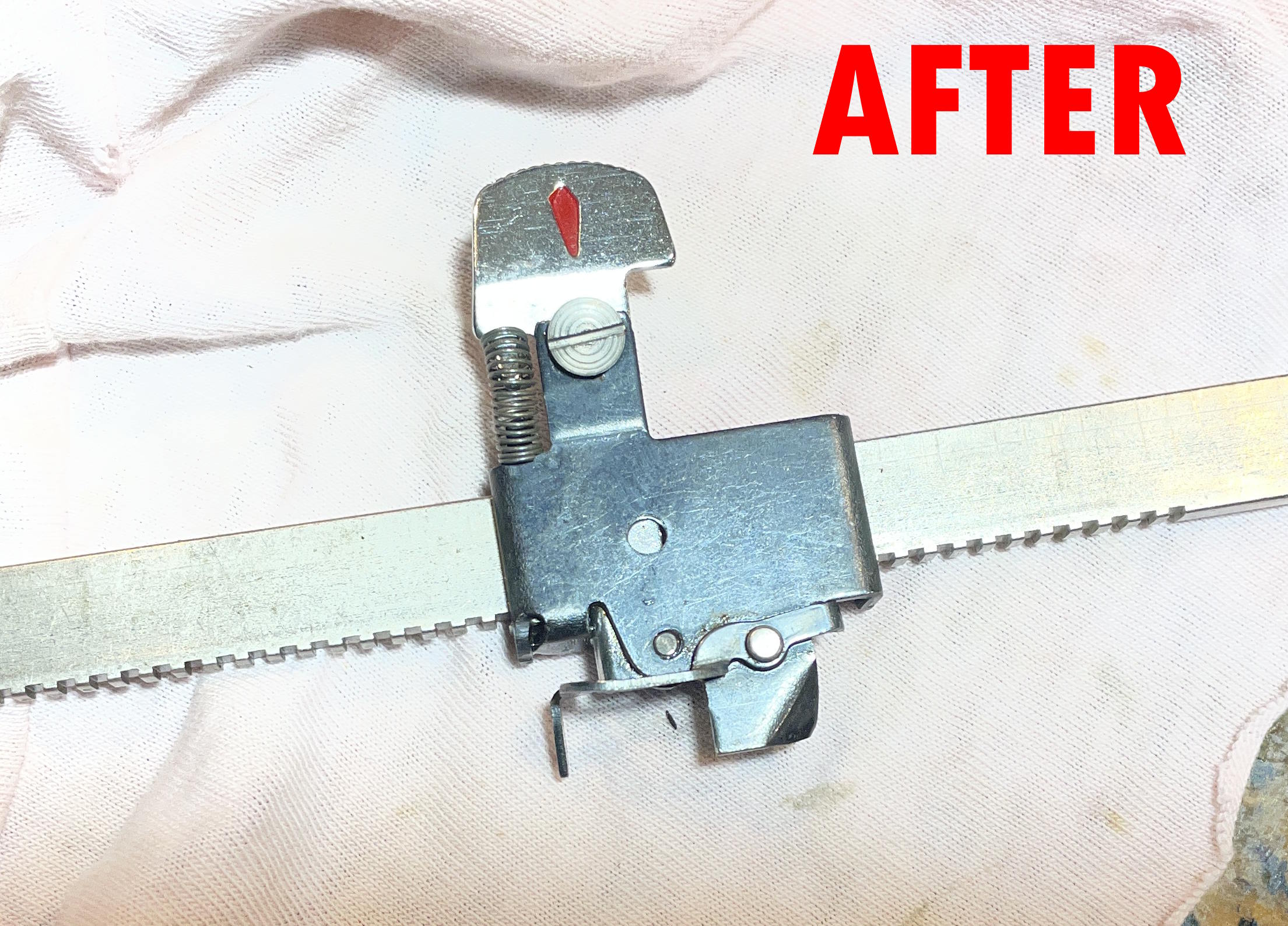
I reinstalled my margin racks and did some testing. Perfect! The bell sounds seven spaces before the right margin. The line lock and margin release function perfectly.
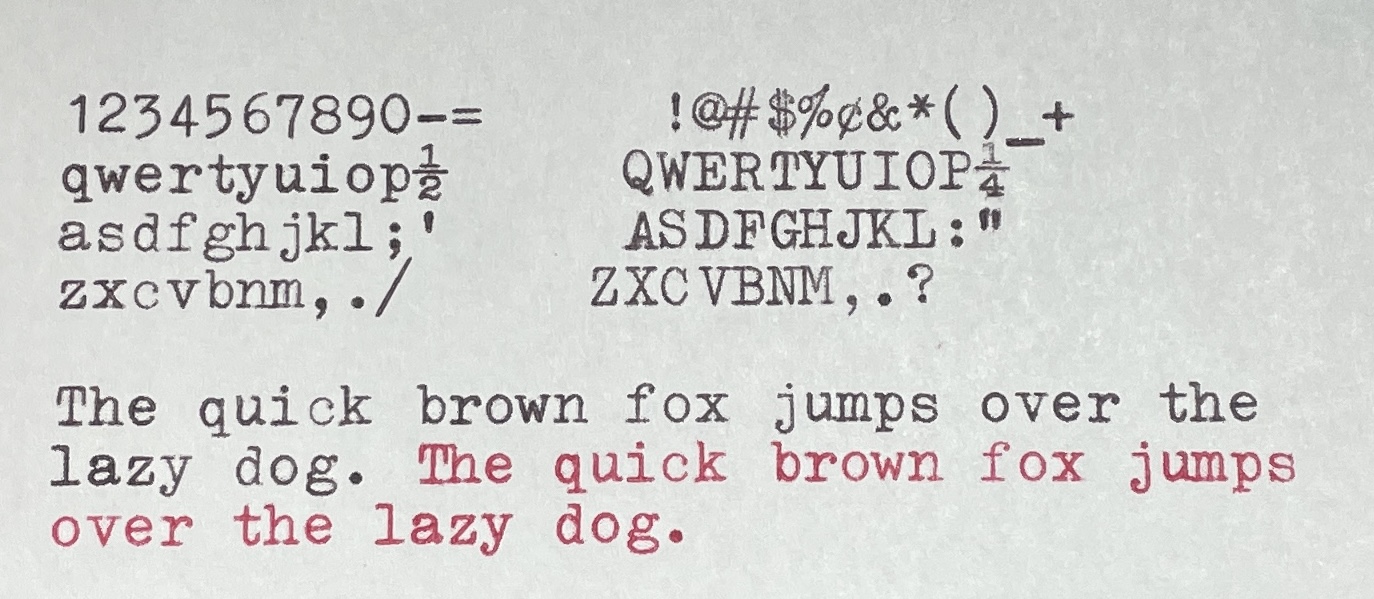
The metal of the bell hammer trip is so soft, so easily bent. I imagine that they get mangled easily and often.
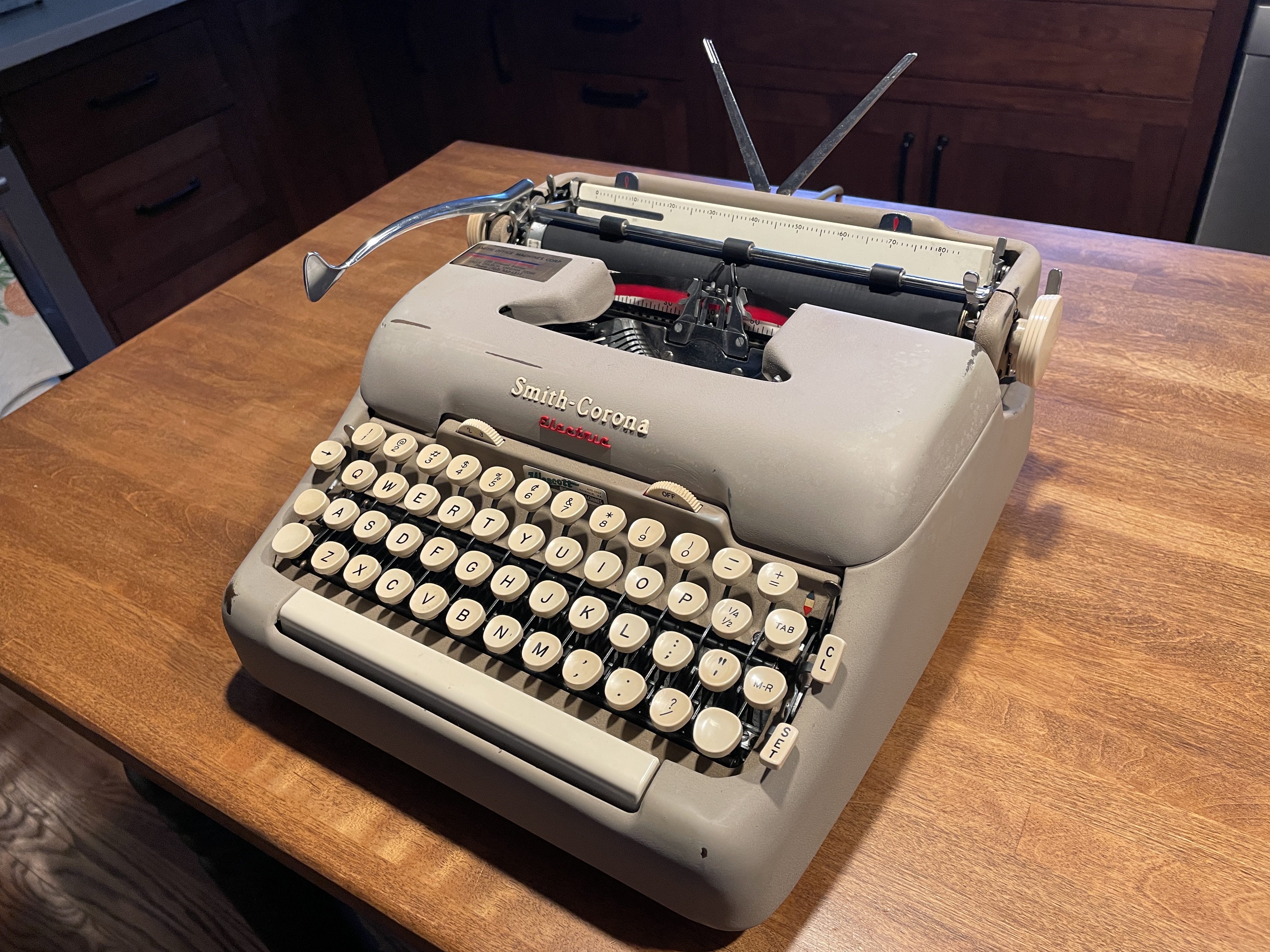
Pretty, sweet little 5TE! A new favorite electric portable. This is the first 5 series electric I have ever worked on and am glad of the experience.
The moral of this story is that sometimes you need to slow cook. For an impatient person like myself, it’s hard to step back and take a breather. However, if you let your brain work in the background, sometimes you find a slowly emerging solution in the pot. Success tastes so tender and delicious when it’s slow-cooked.
 myoldtypewriter
Three problems, one fix – can’t beat that! 😀
LikeLike
I initially thought I had three separate problems, but the more I thought about it, the more convinced I became that they were all related.
LikeLike