In these troubling times of widening gyres and blood-dimmed tides, I have been holding my centre through quiet typewriter tinkering. A distressed 1952 Underwood Rhythm Touch slouched into my garage around Thanksgiving last year, and working on it has brought me much comfort since then.
The machine belonged to Stephen and Monica, two local typewriter enthusiasts. Stephen had found it in a storage room or shed where it had been exposed to the elements for some time. I spotted the typewriter by Stephen and Monica’s back door, on its way out to the garbage or scrap metal heap and I said, “Hold on a second. You’re not going to throw that out, are you???”
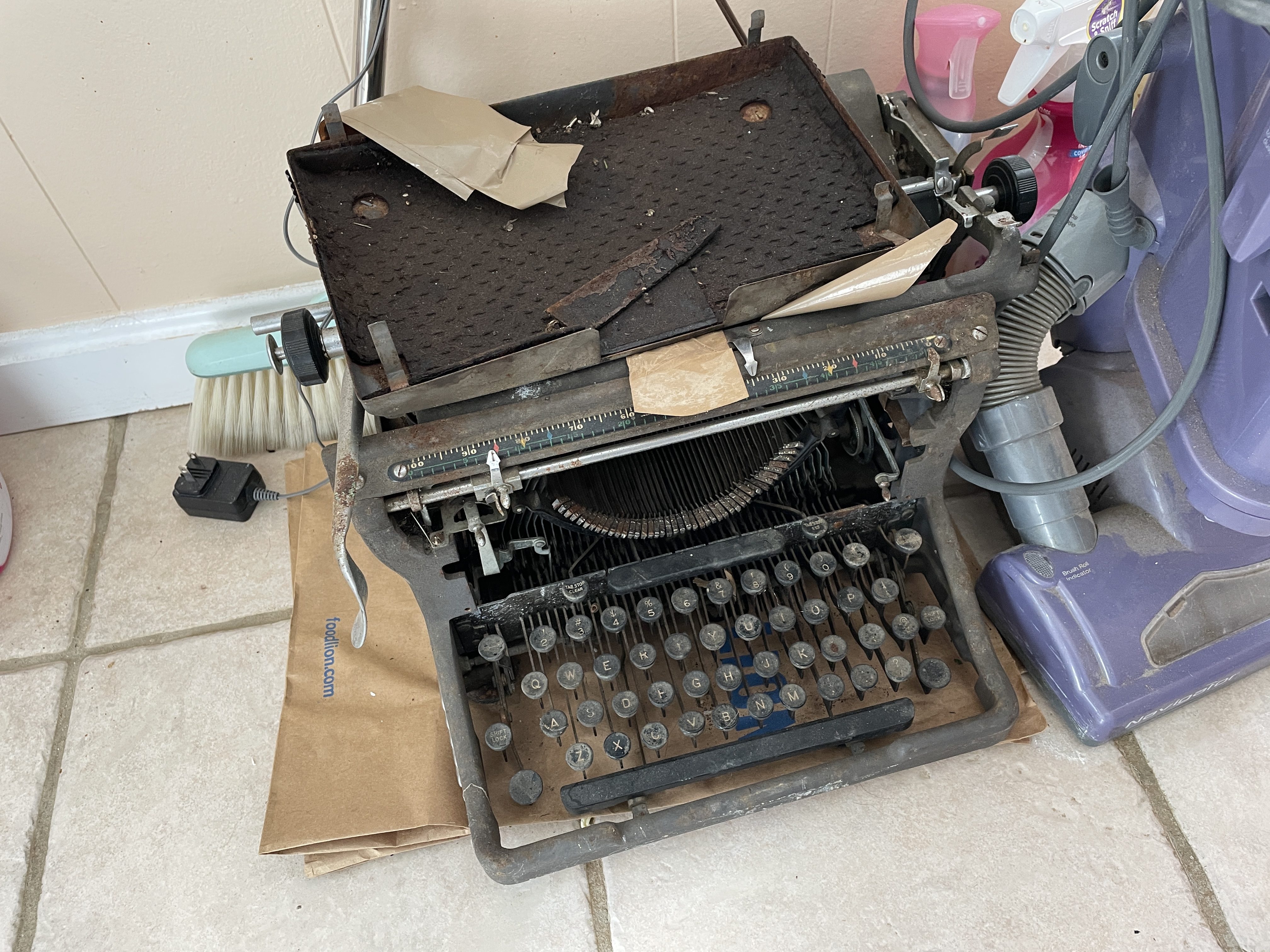
It was very rough, a seemingly lost cause for it was full of mud and leaves and frozen with rust. But in my heart, I know Underwood standards are going to Underwood. Preternaturally durable, their hardiness is the stuff of legend. Stephen and Monica gratefully let me haul it away.
I brought it home and looked at it in the sunlight. It was pretty bad. I began to re-think my life choices.
I like working on Underwood standards. They’re pretty easy to break down, and over the years I’ve become familiar with their mechanics. This 1952 Rhythm Touch is, in many ways, the same beast as the Underwood standards of the early twentieth century. Richard Polt has an excellent post about the evolution of the Underwood standard.
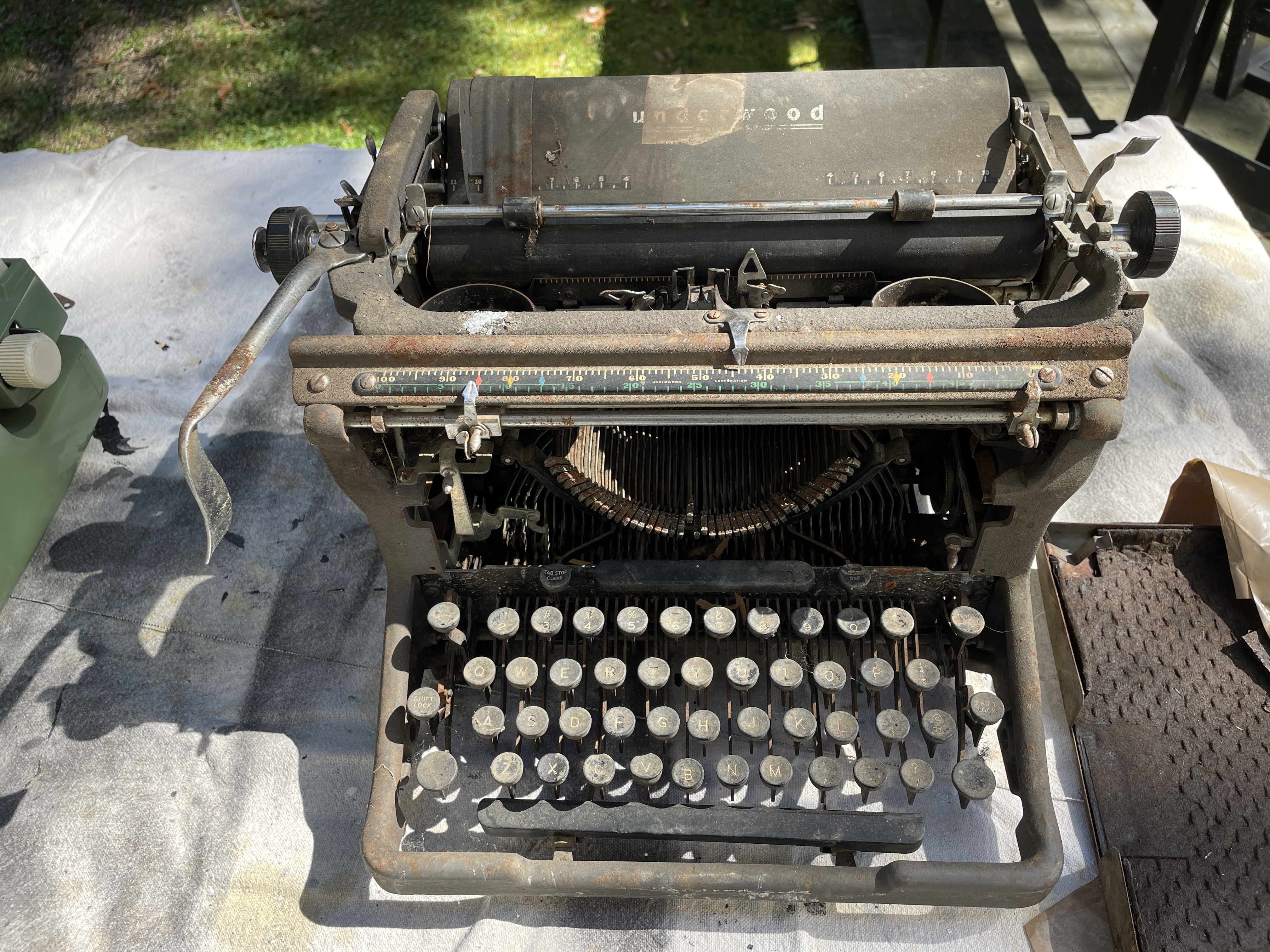
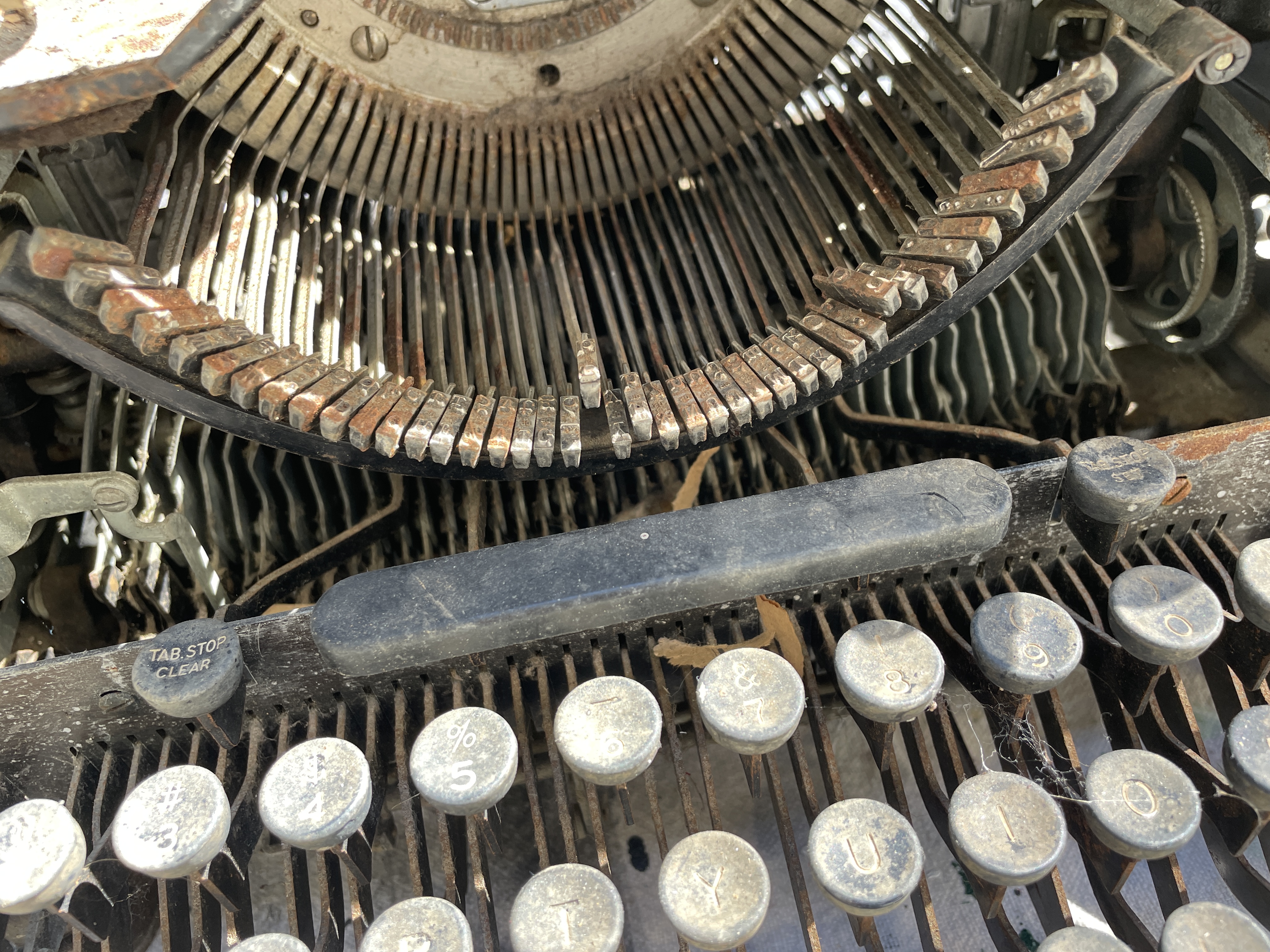
To clean it thoroughly, I needed to take the carriage off. This is a video that shows the easiest method:
This Rhythm Touch has a tab system, and this added a layer of challenge to removing the carriage. I found that if I tilted the carriage rearwards, I could wriggle the carriage off.
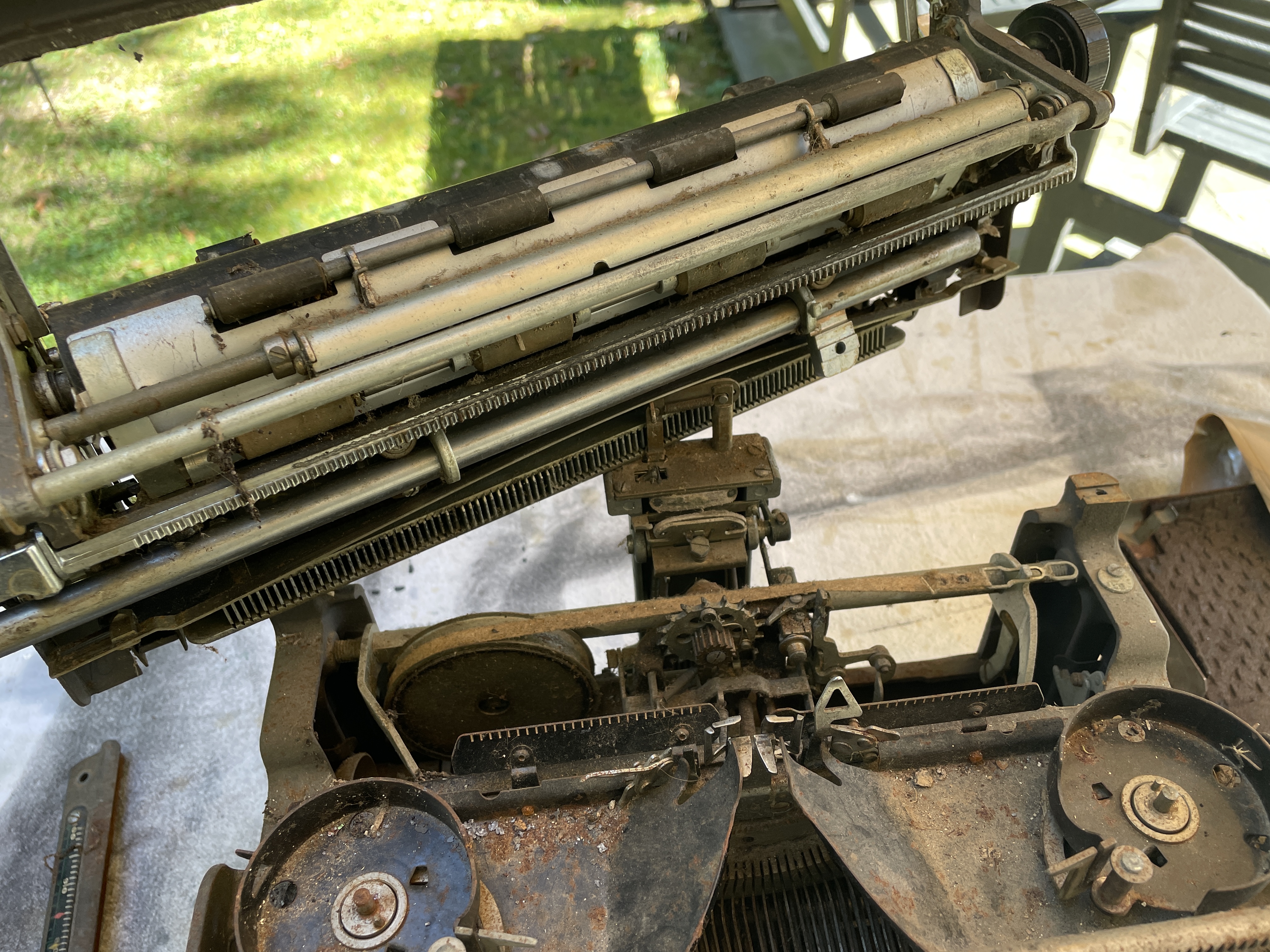
I’m glad I took the carriage off because it was very crunchy under there.
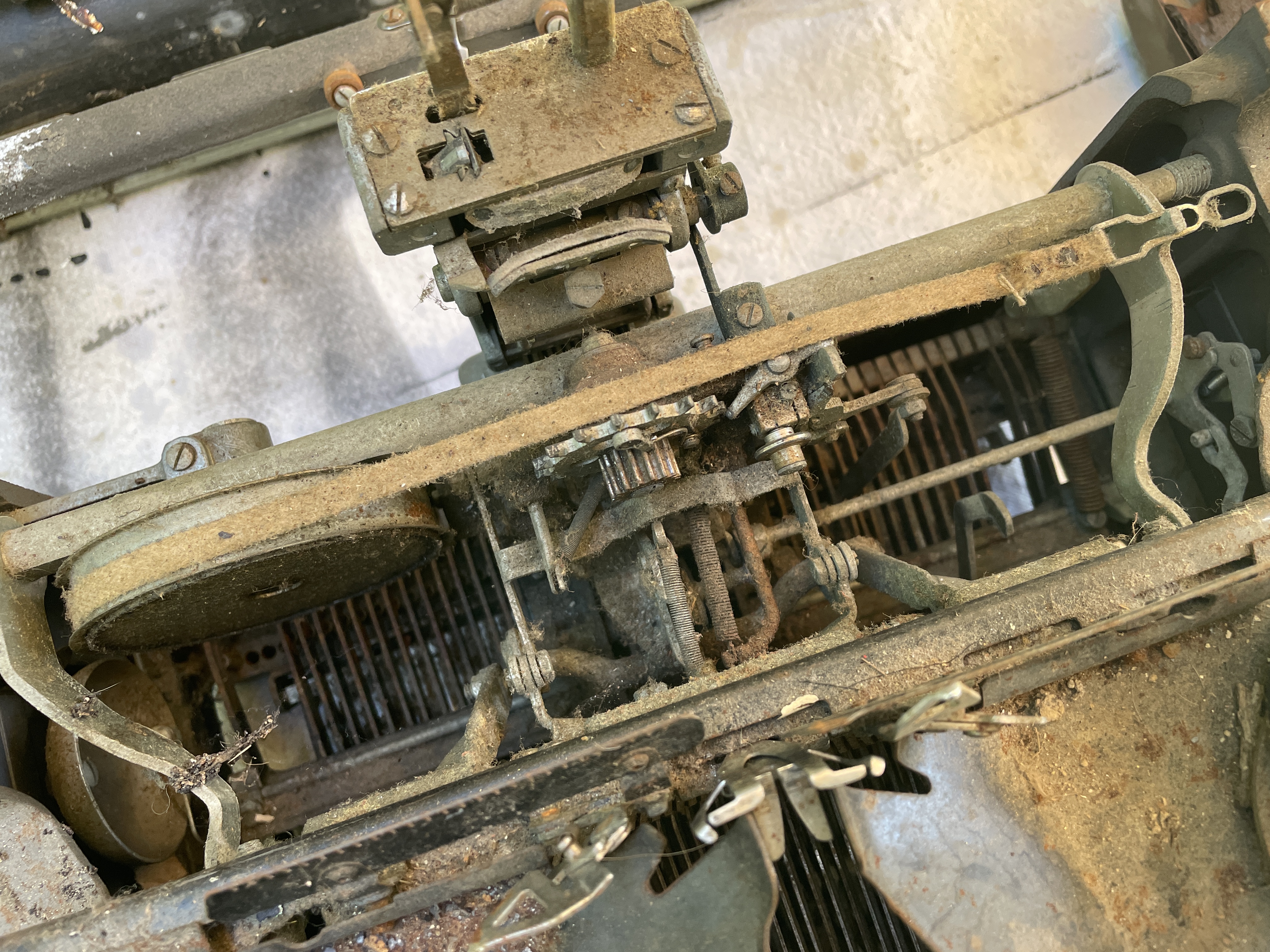
At this point, I pulled out my air compressor and started blowing out chunks and mud.
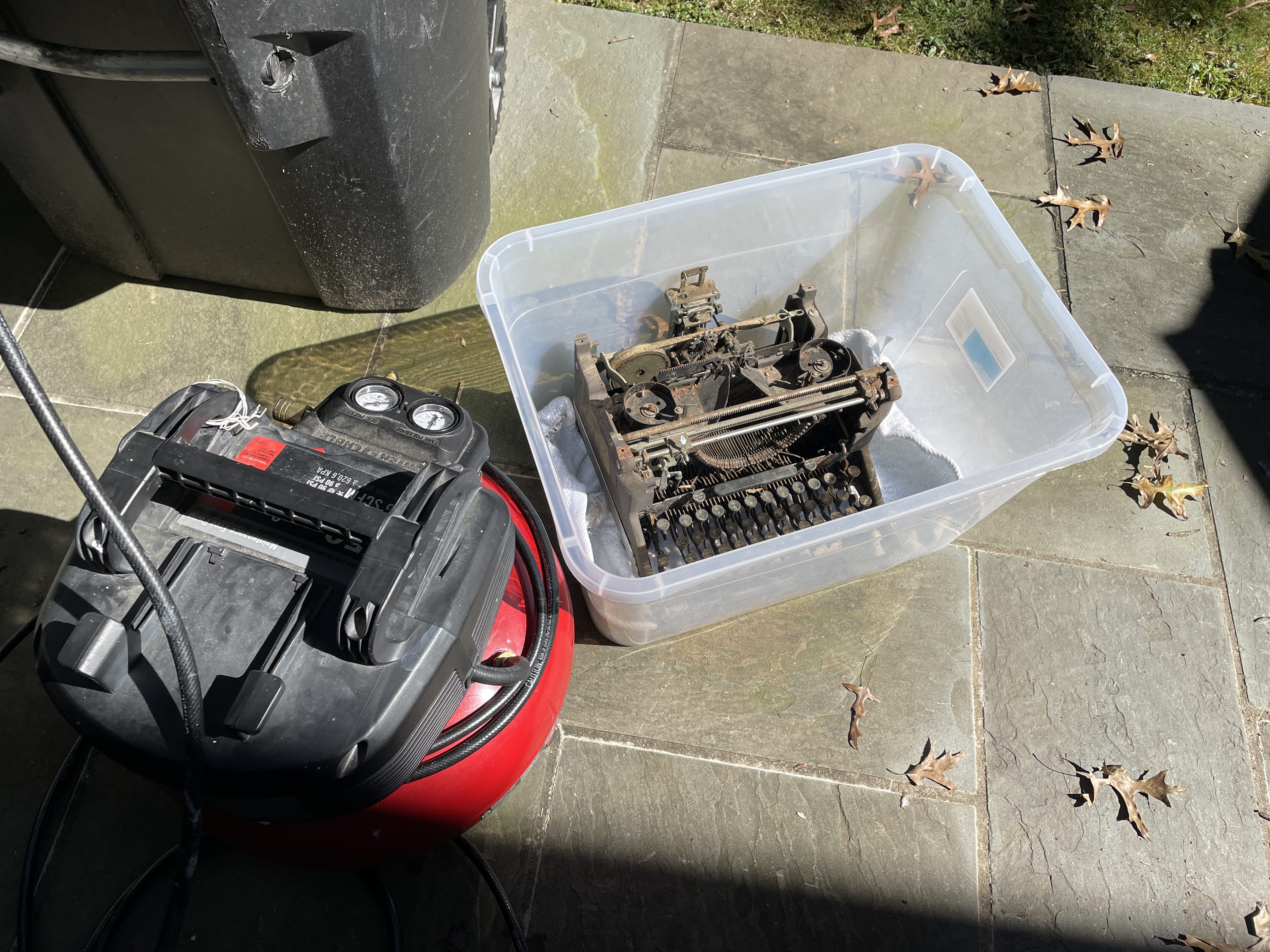
After cleaning and shooting air through the machine, I was able to get the typebars moving and the escapement to trip. True to its storied reputation, this Underwood standard was going to Underwood despite extreme neglect and abuse.
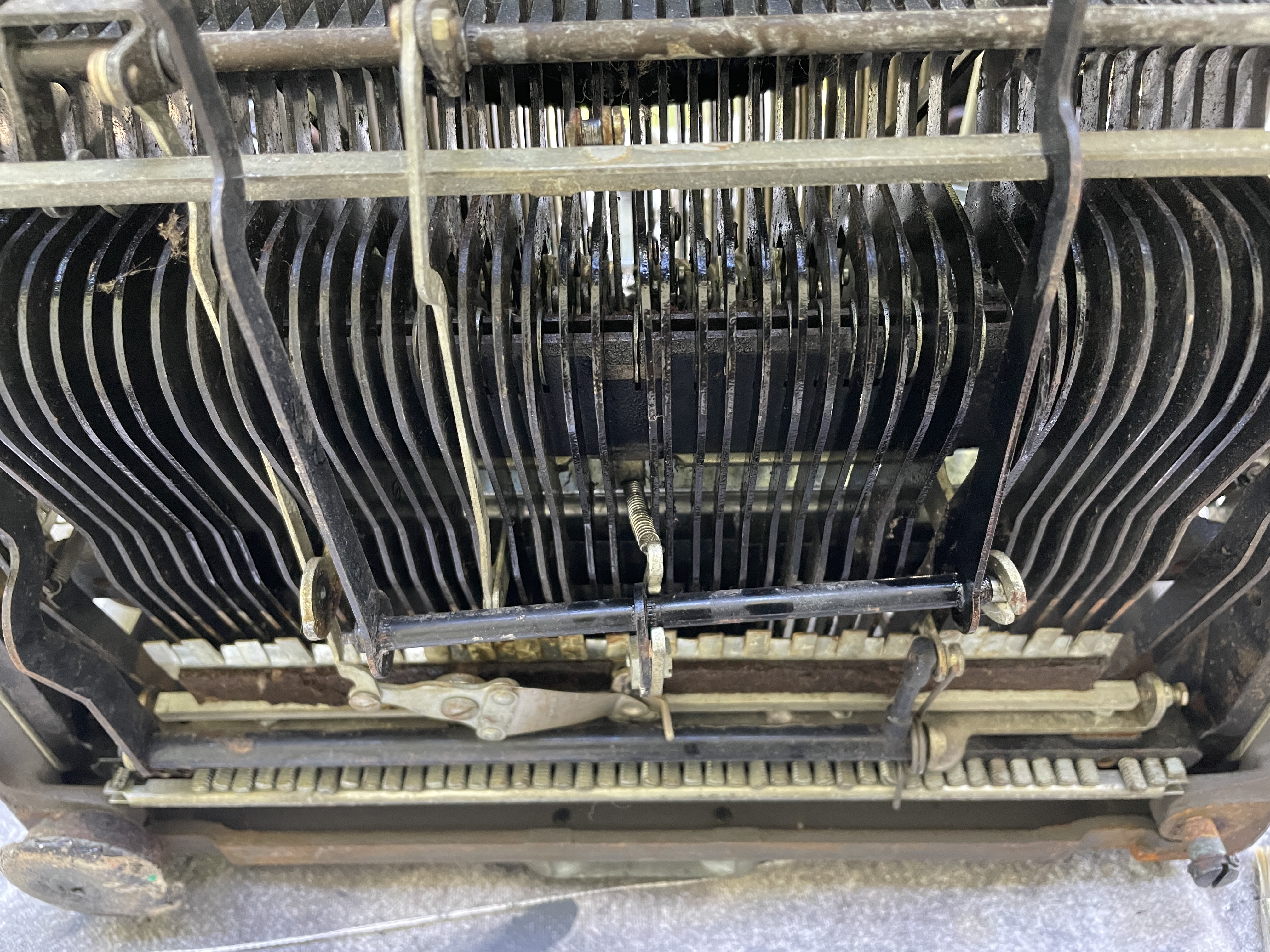
However, the space bar was mangled and hanging from the machine. I spent a lot of time on eBay looking at high-resolution images of the undersides of Underwood Rhythm Touches (yes, I am a sicko) so that I could figure out what went where.
I got it to a point where the space bar was working, but I was using a rubber band to keep it in position. I assumed I was missing a spring.
No, the space bar was out of adjustment. The space bar set-up on the Rhythm Touch is a bit different from older Underwood Standards. I went to TWDB Operation OOPRAP and found the Touchmaster Five service manual. The Touchmaster Fve is a somewhat newer machine from the 1960s, but the space bar mechanism is similar. The manual was an invaluable resource for making adjustments to the mangled space bar mechanism of the Rhythm Touch.
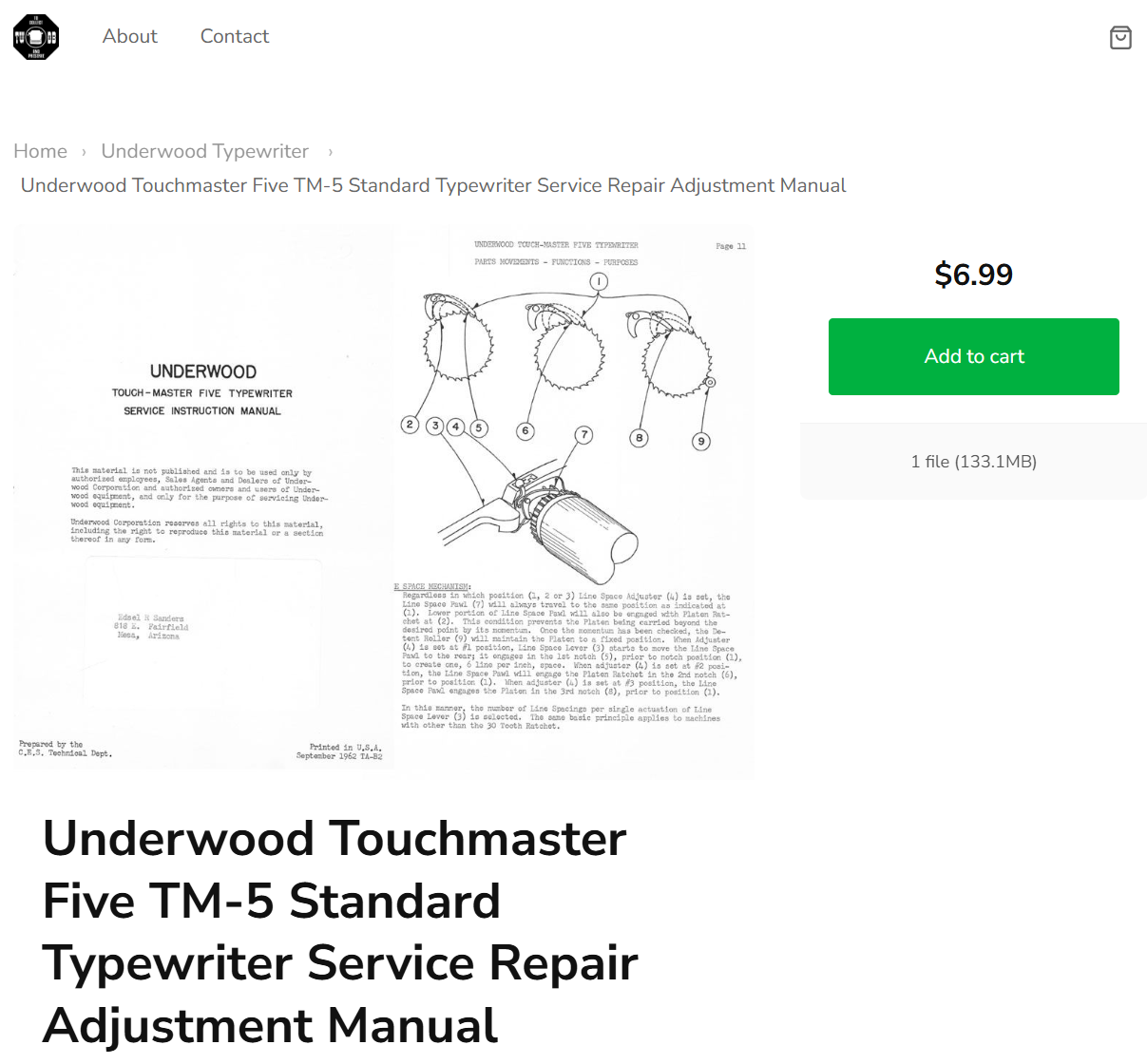
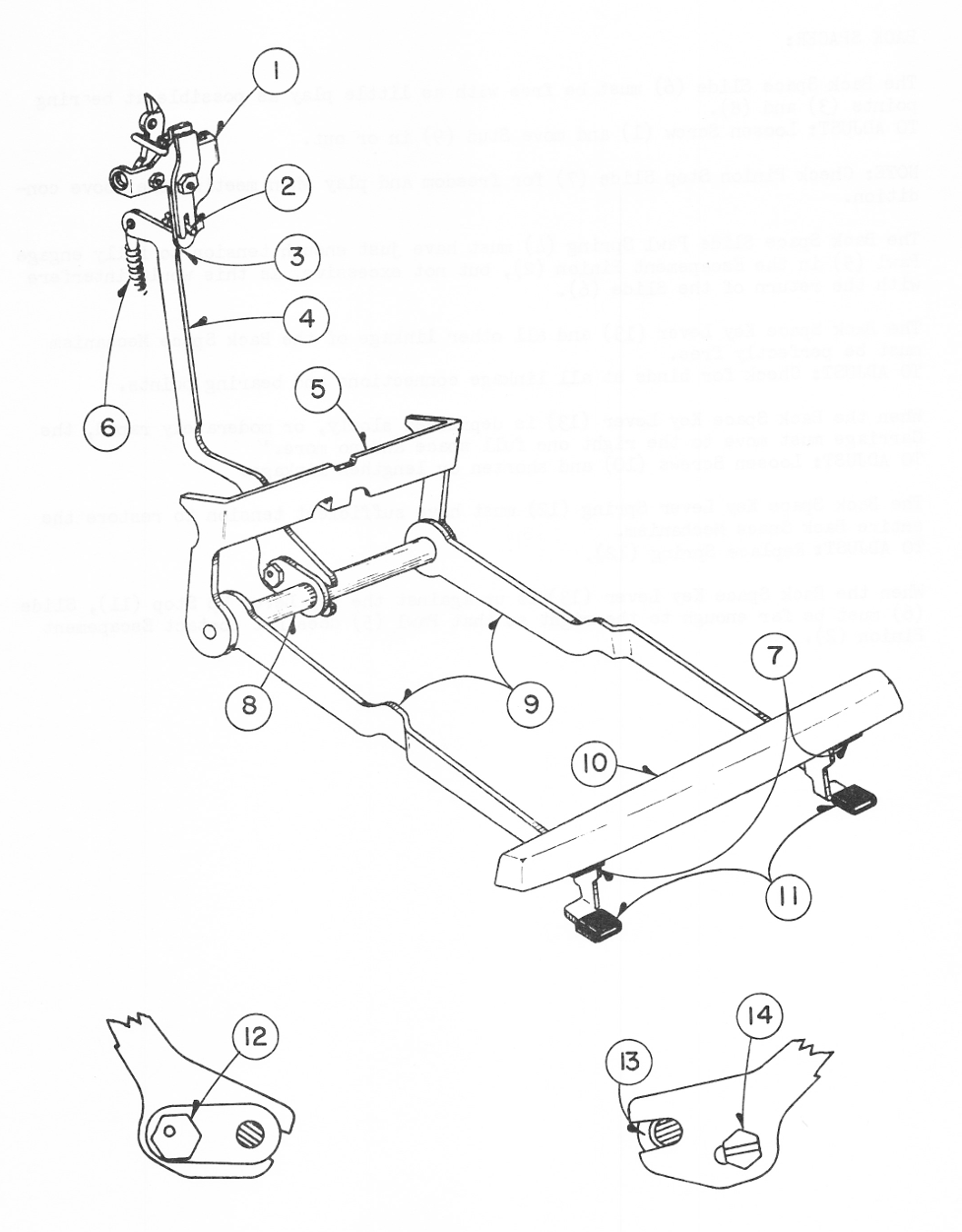
After making adjustments, I was able to remove the rubber band and the space bar functioned properly.
Bell Trip Adjuster Forming
I heard no bell while typing and heaved a great sigh. Underwood standard bells seem to be a recurring problem for me. I looked through the 1955 Underwood repair manual and the manual suggested forming the bell trip adjuster.
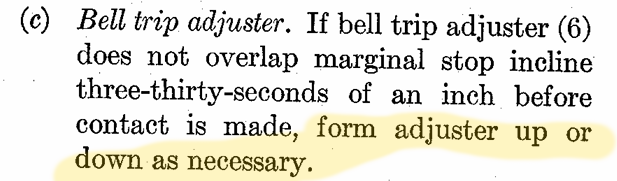
I have been faced with this option before, but it’s made me nervous. I didn’t want to accidentally break off a piece of what looks like brittle pot metal. Well, all-righty then. Here goes nuthin.
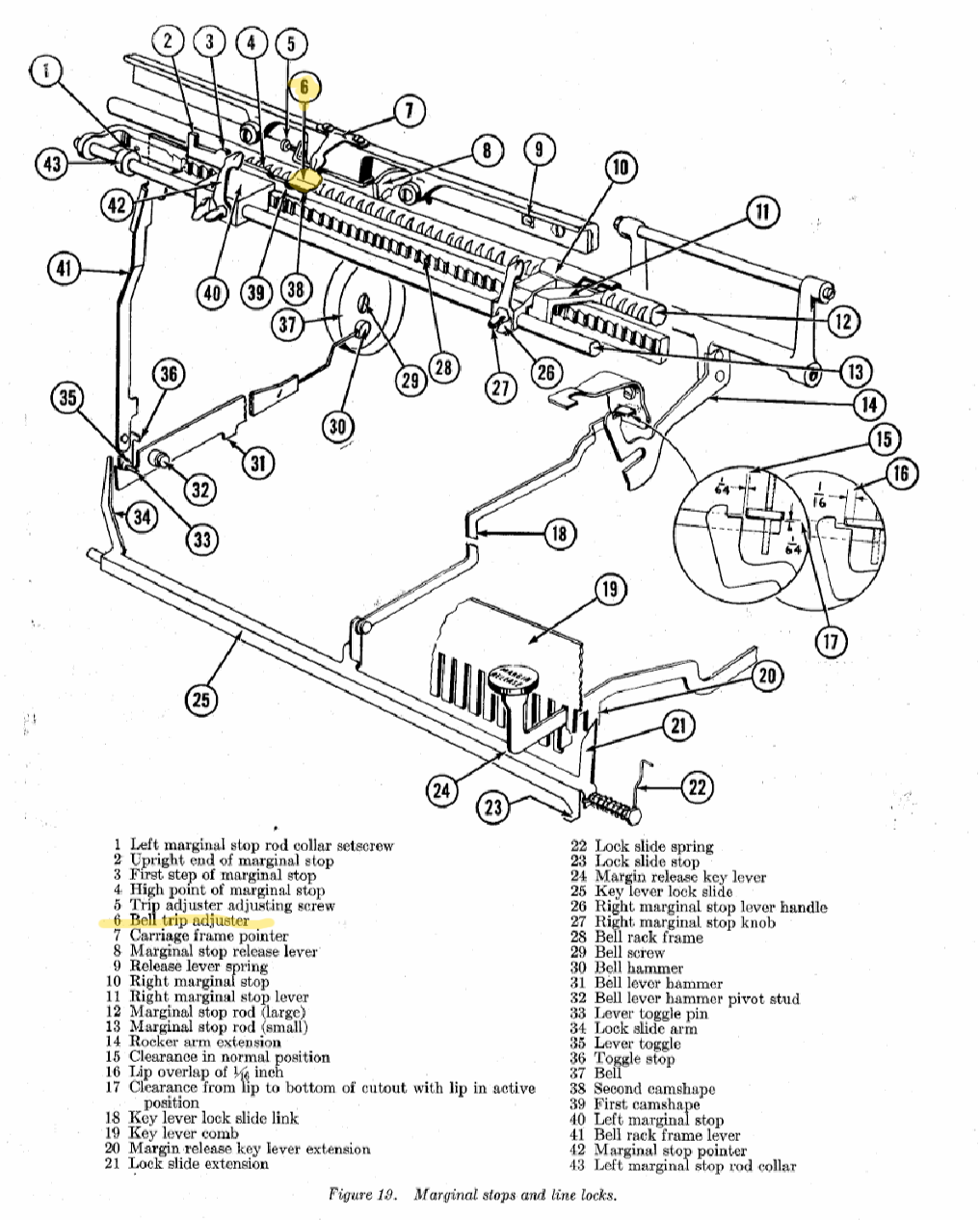
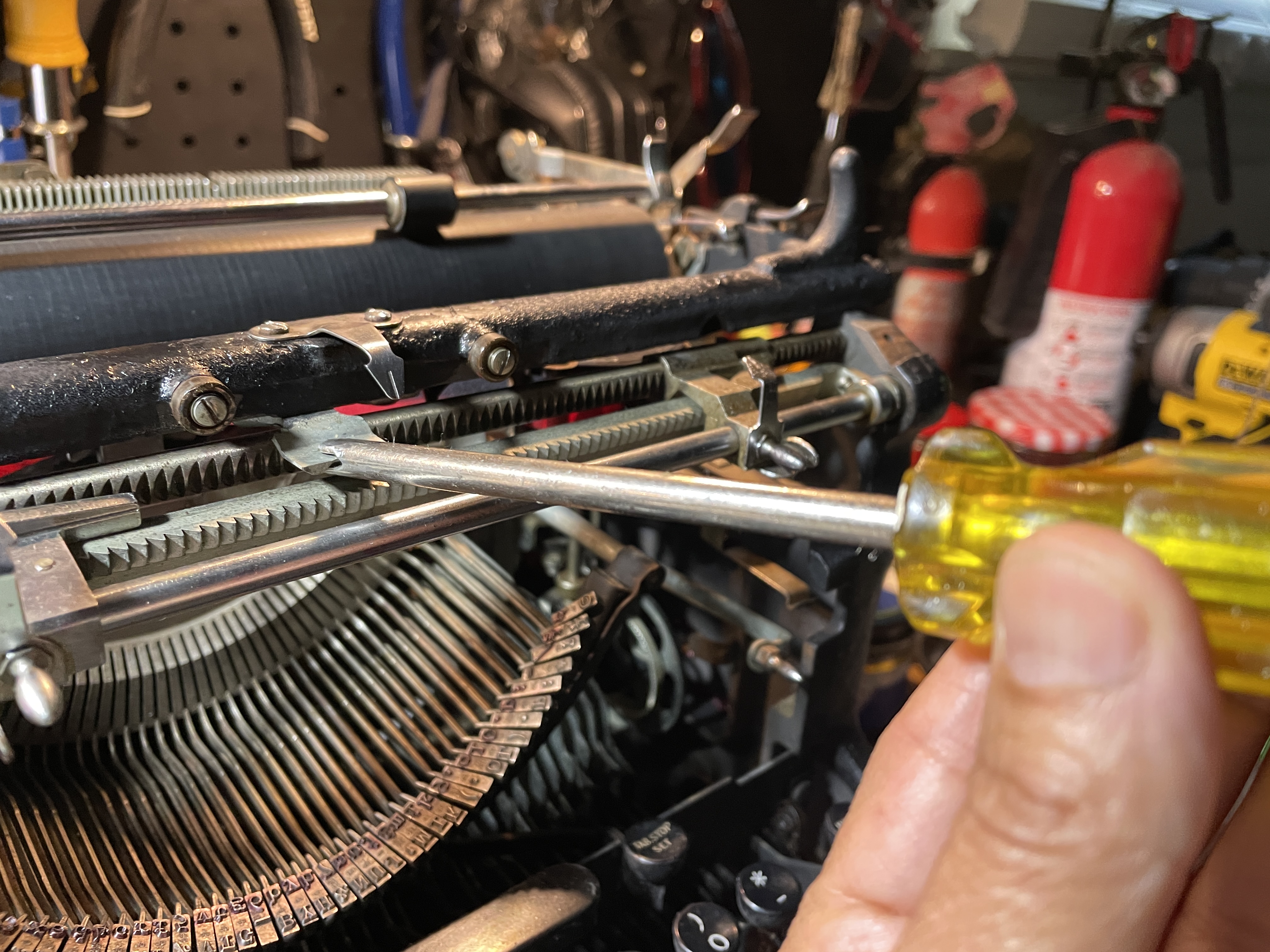
After bending the bell trip adjuster down a little, the bell began to ring. How sweet was that sound.
Line Lock Issue
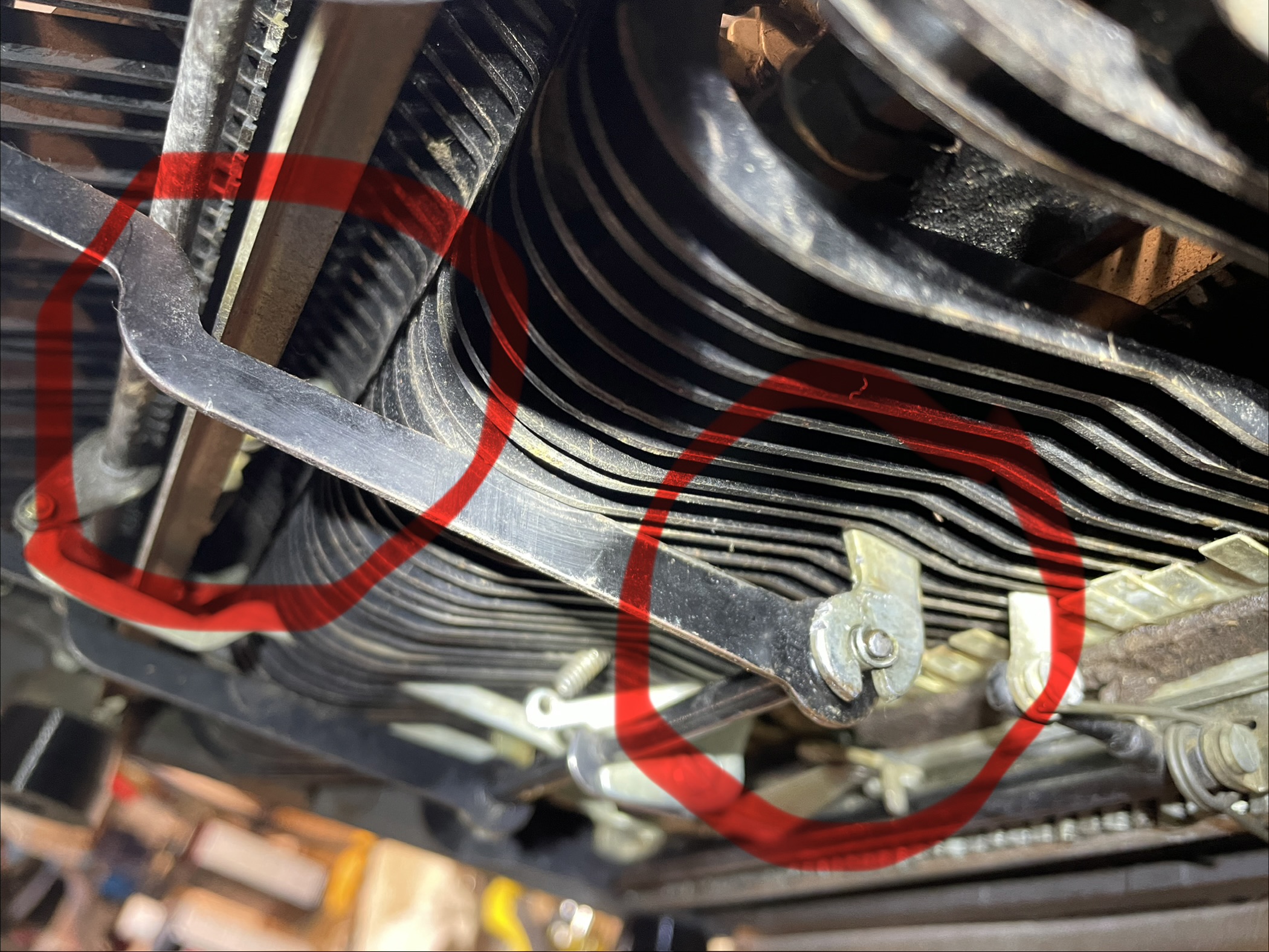
The line lock wasn’t engaging. Okay, back under the machine I went where I saw that my still slightly mangled space bar was impeding movement of the line lock bar (“key lever lock slide”) so the line lock bar couldn’t pivot.
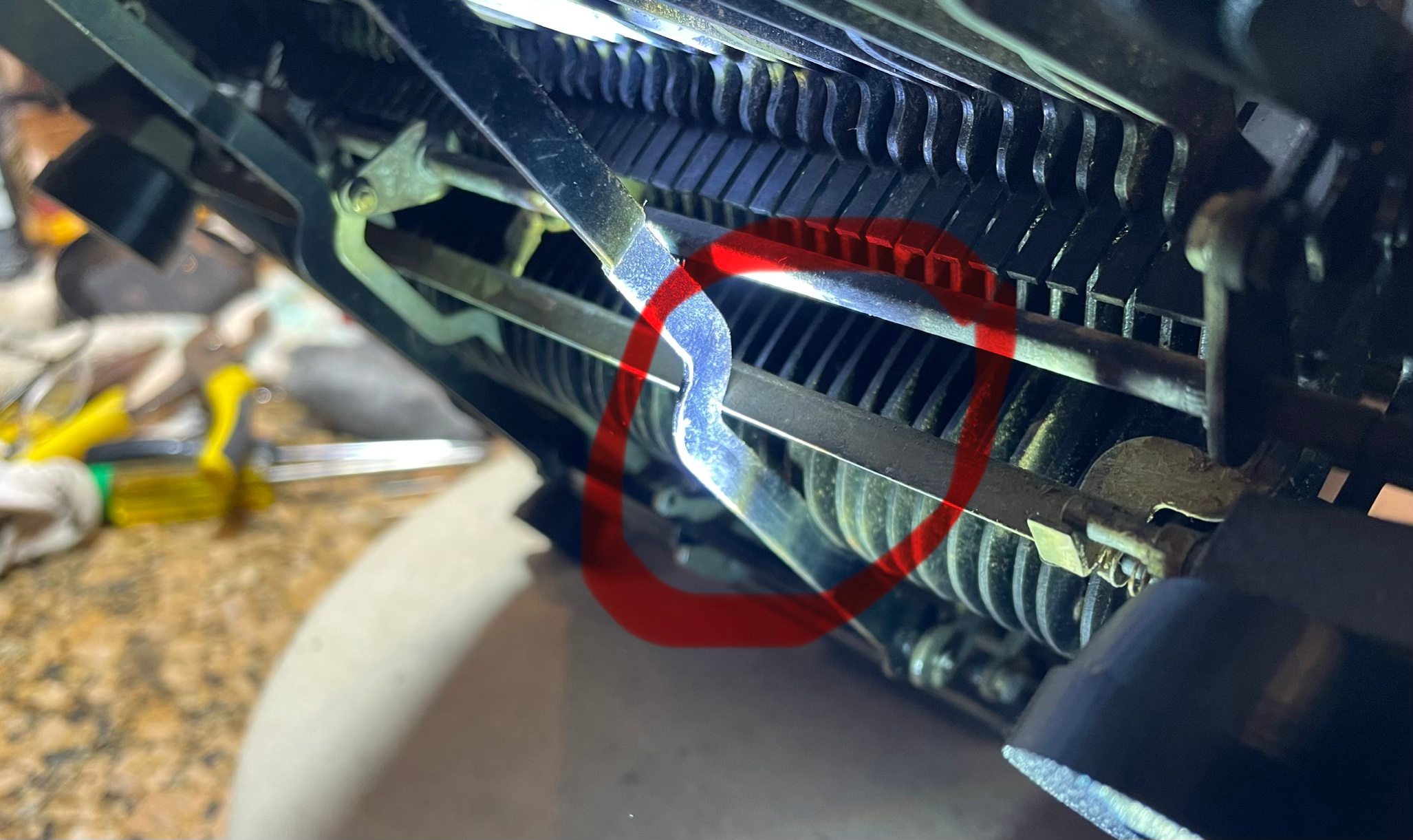
I had to form the space bar bracket so that I could get clearance between the line lock bar and the space bar.
Once I got the mechanics working reliably, I started to consider the aesthetics of the machine. Patches of paint were flaking off. I stabilized the paint with epoxy and decided to paint the entire machine black and start with a clean canvas.
I had an internal debate about doing this. I generally try to keep things authentic with old typewriters, but this is a special situation. This is a relatively common machine in terrible cosmetic condition. Before anyone yells at me, remember what I was working with:
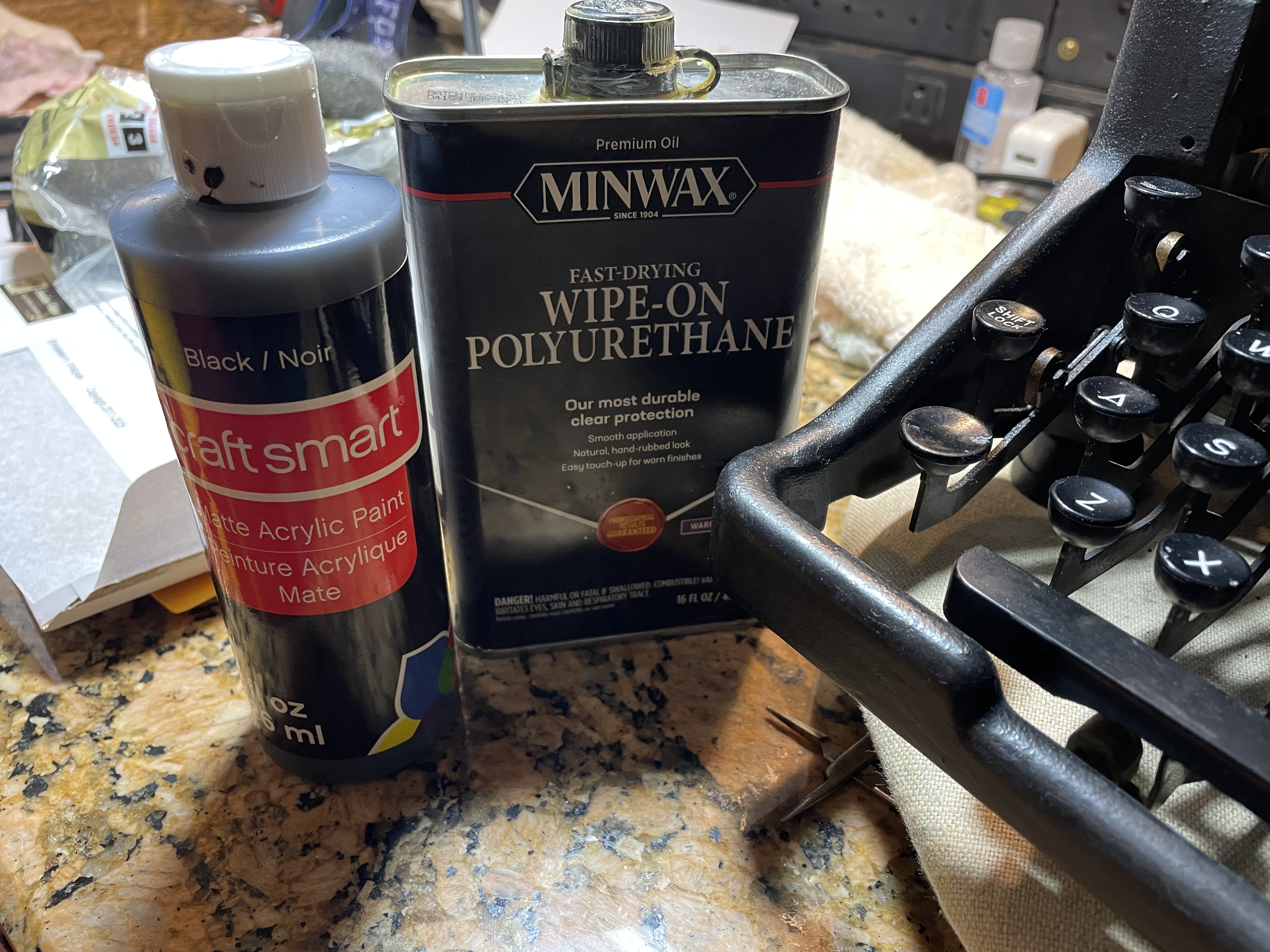
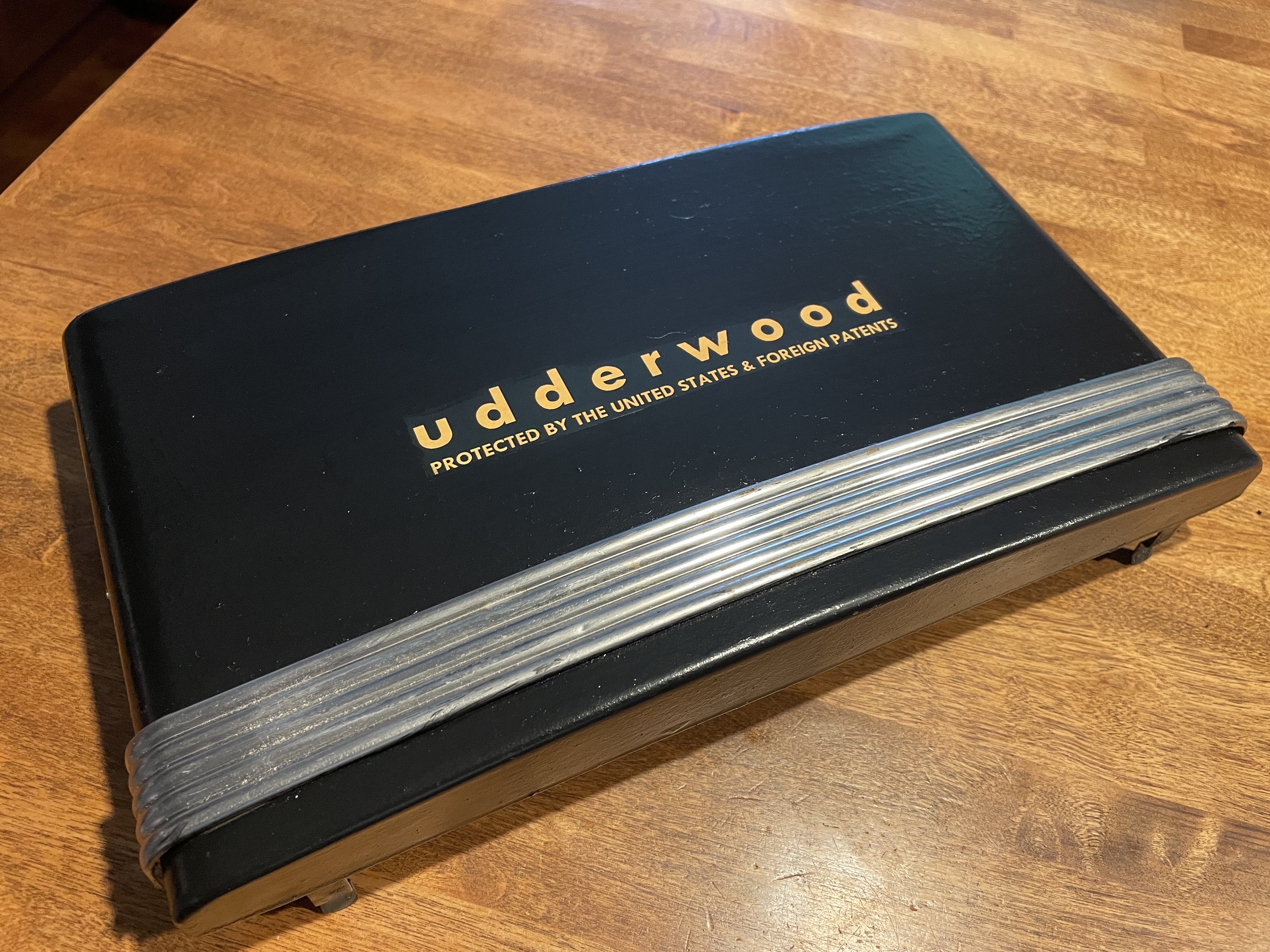
I painted the whole body with black craft paint (because that’s what I had on hand) and then put coats of satin polyurethane on top of that for a resilient surface.
I had seen some very cute vintage waterslide decals at Etsy, and thought, “I’m a cowgirl. Oh yeah.”
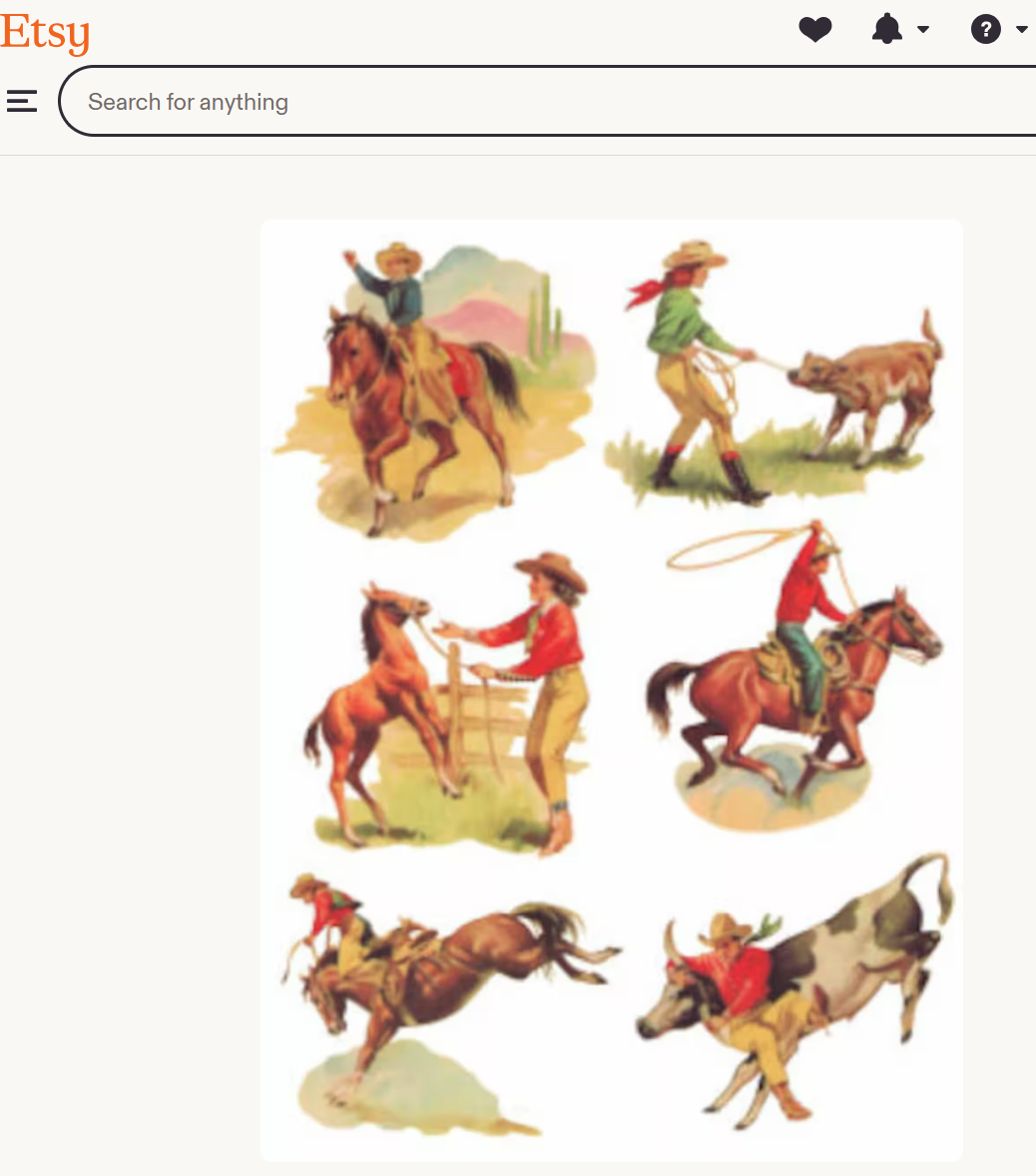
The Etsy seller was delightful to work with, and she was able to customize the decal for my application.
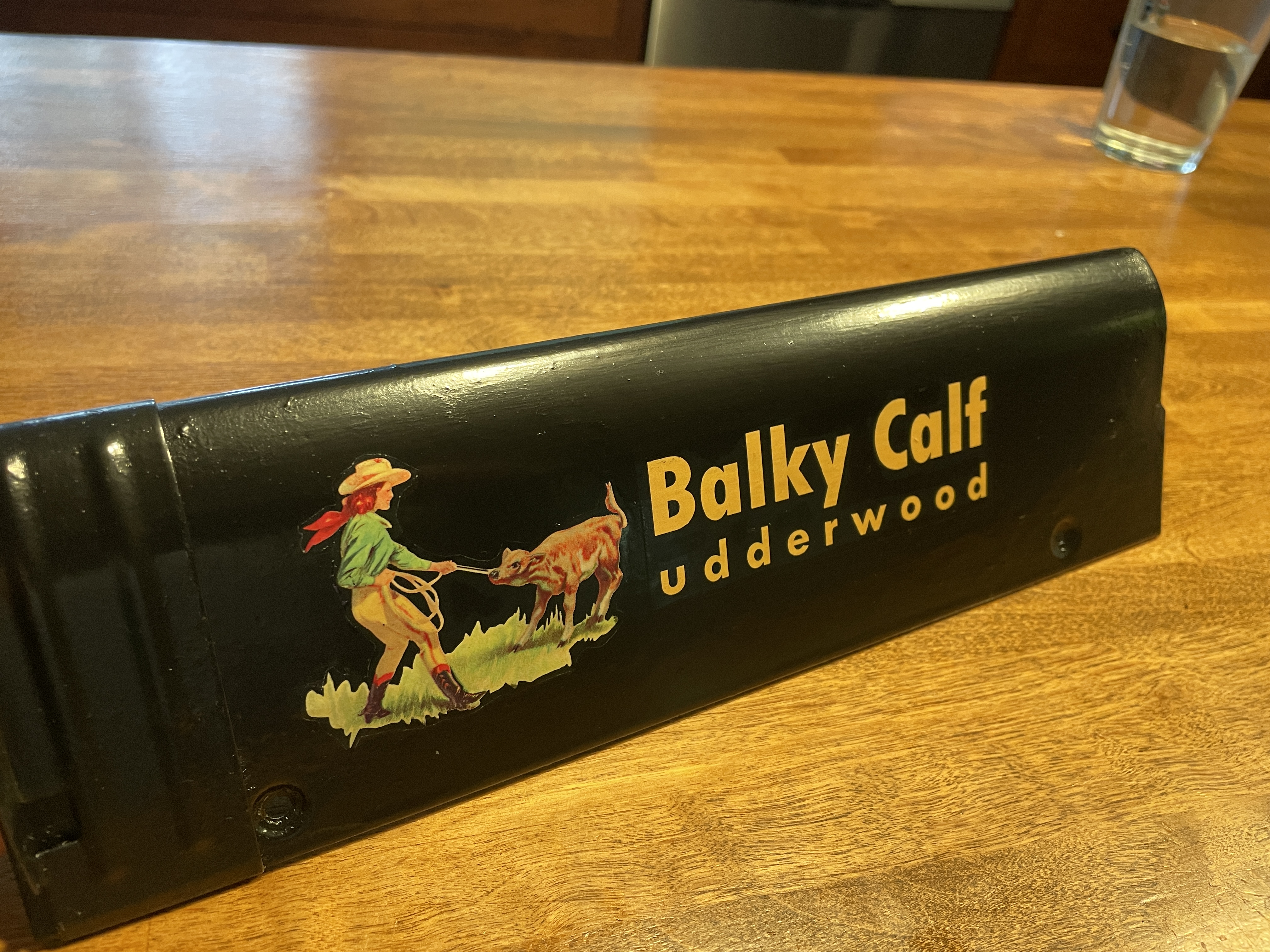
I decided to name this project machine “The Balky Calf”. Stephen suggested calling it an “Udderwood.” LOL.
I added the new decals and covered them with layers of satin polyurethane. It’s not a perfect finish, but it looks pretty cute.
Mod Podge
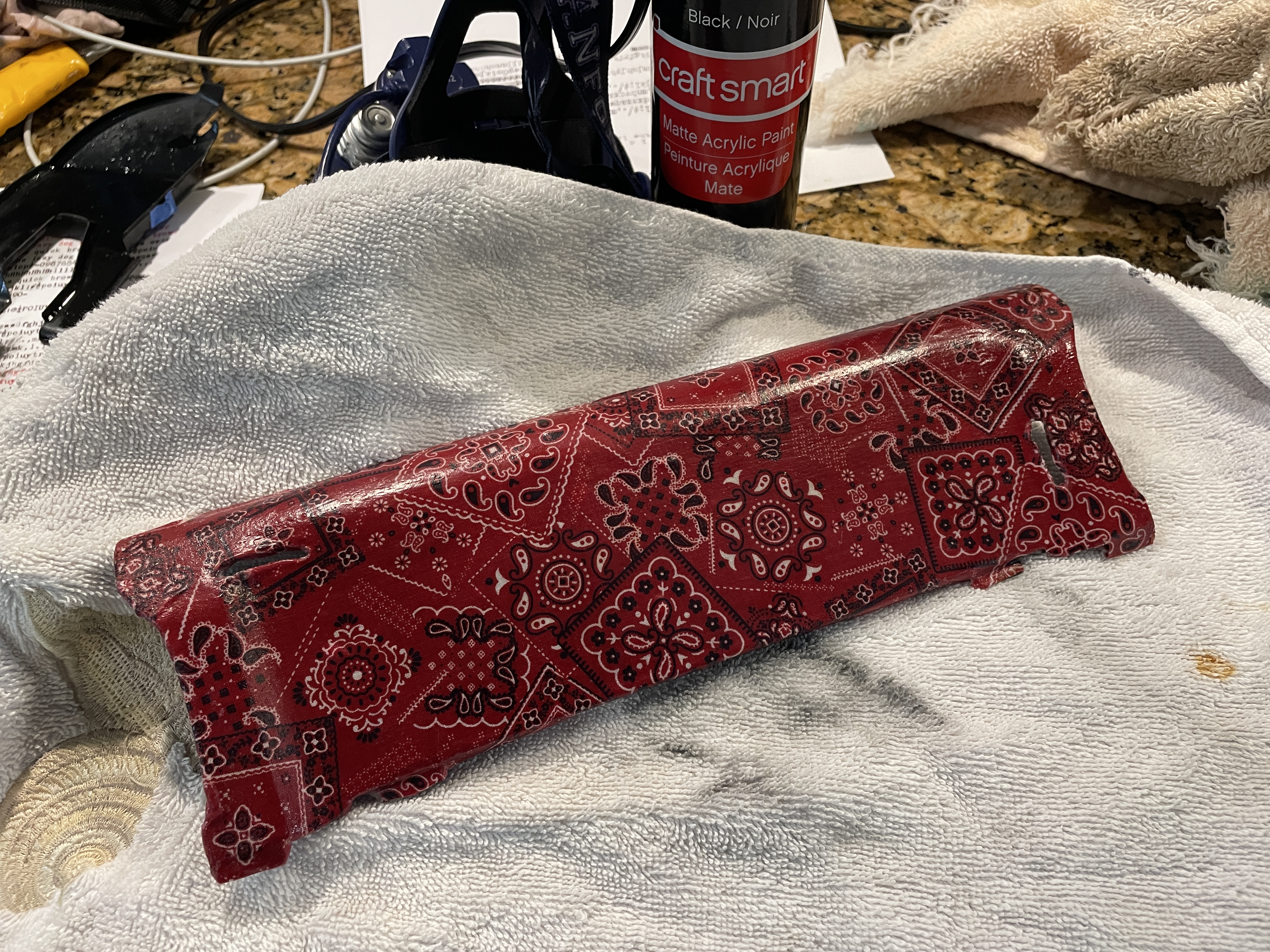
The machine had been missing its front panel so I reached out to Trevor at TB Writers Plus, and he had a panel from a 1950s Underwood standard that he sent along to me. I decided to lean into the cowgirl theme and got some bandana material for the front panel and the side panels and applied it with matte Mod Podge. Mod Podge is a decoupage medium, an “all-in-one glue, sealer, and finish”.
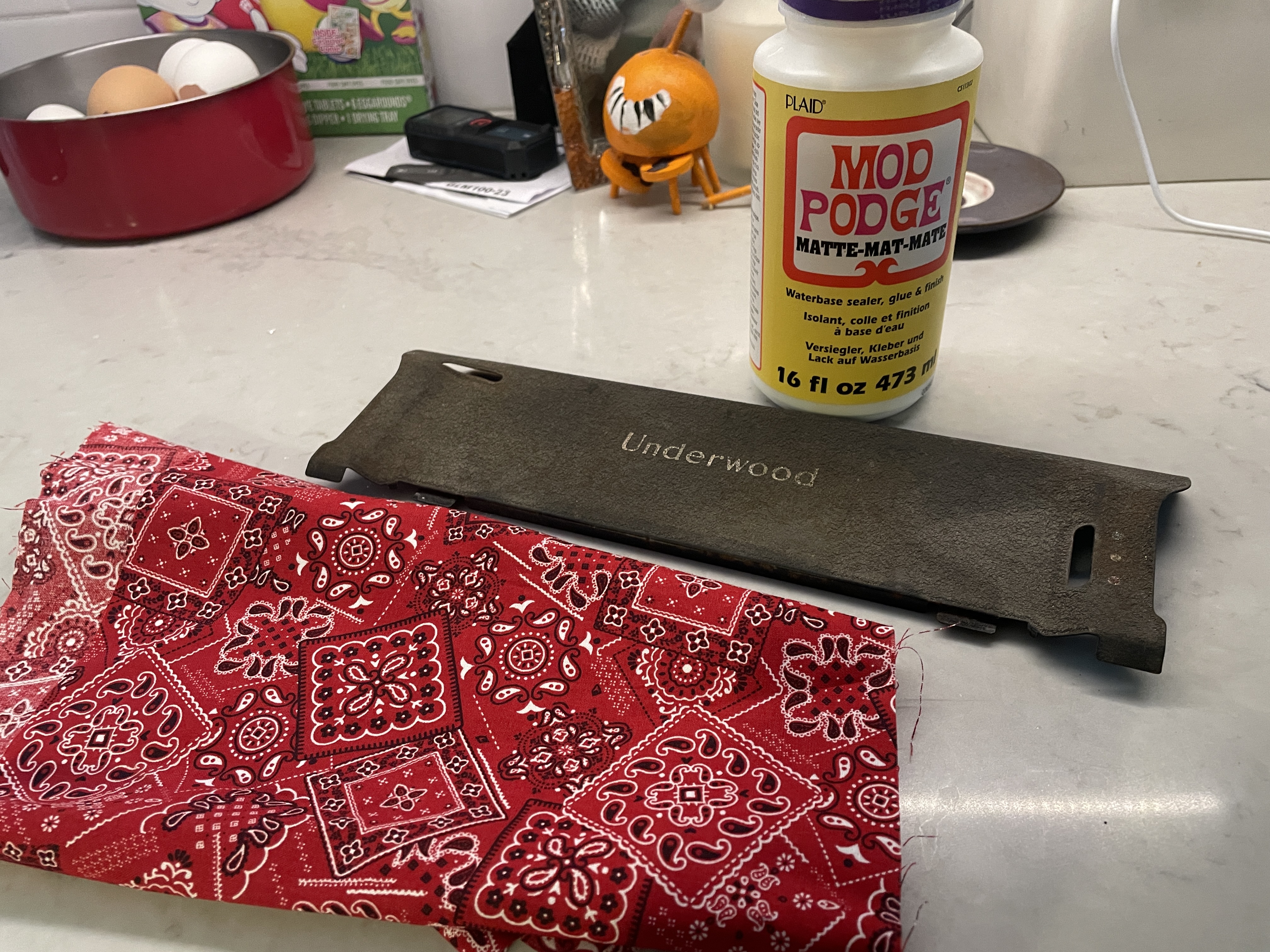
While wet with the Mod Podge, the fabric wrapped nicely around curves of the piece. The Mod Podged fabric hardens into a tough, durable surface.
New Feet
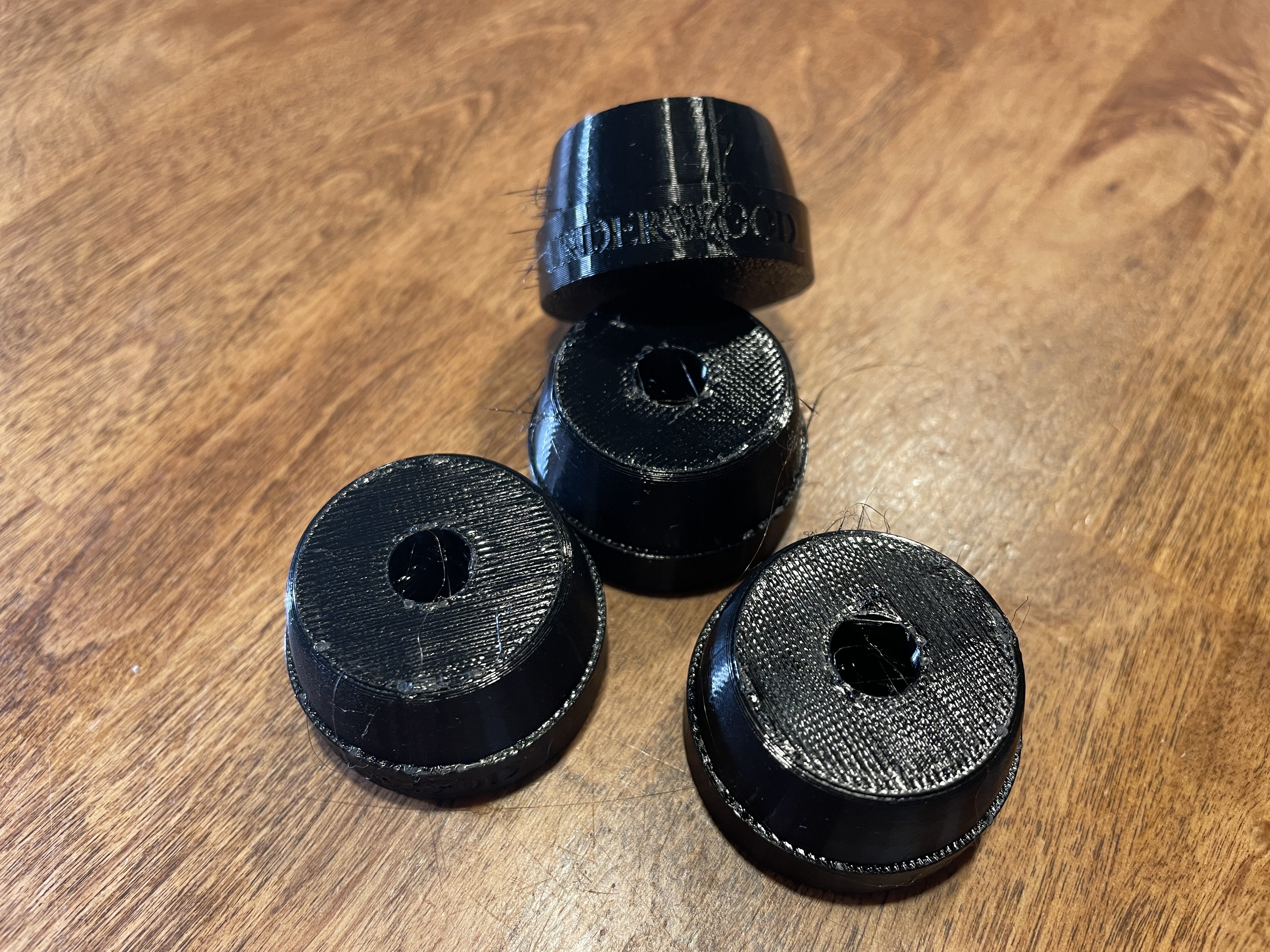
The old feet were crumbling or gone.

I found a 3D file at Thingiverse of Underwood 5 feet that worked perfectly.
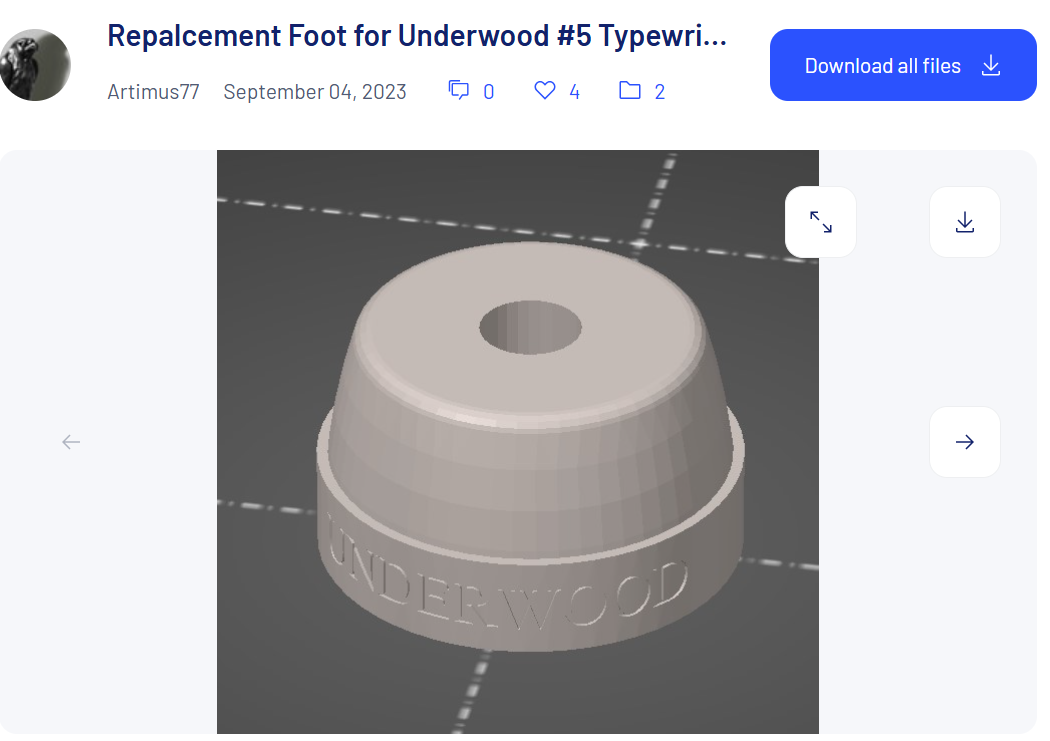
I printed these out in Overture TPU (95A), and they work well. Rhythm Touch feet appear to be wider and more squat than these. See the feet on this minty Rhythm Touch at Typewriter Database.
Sugru Key Tops
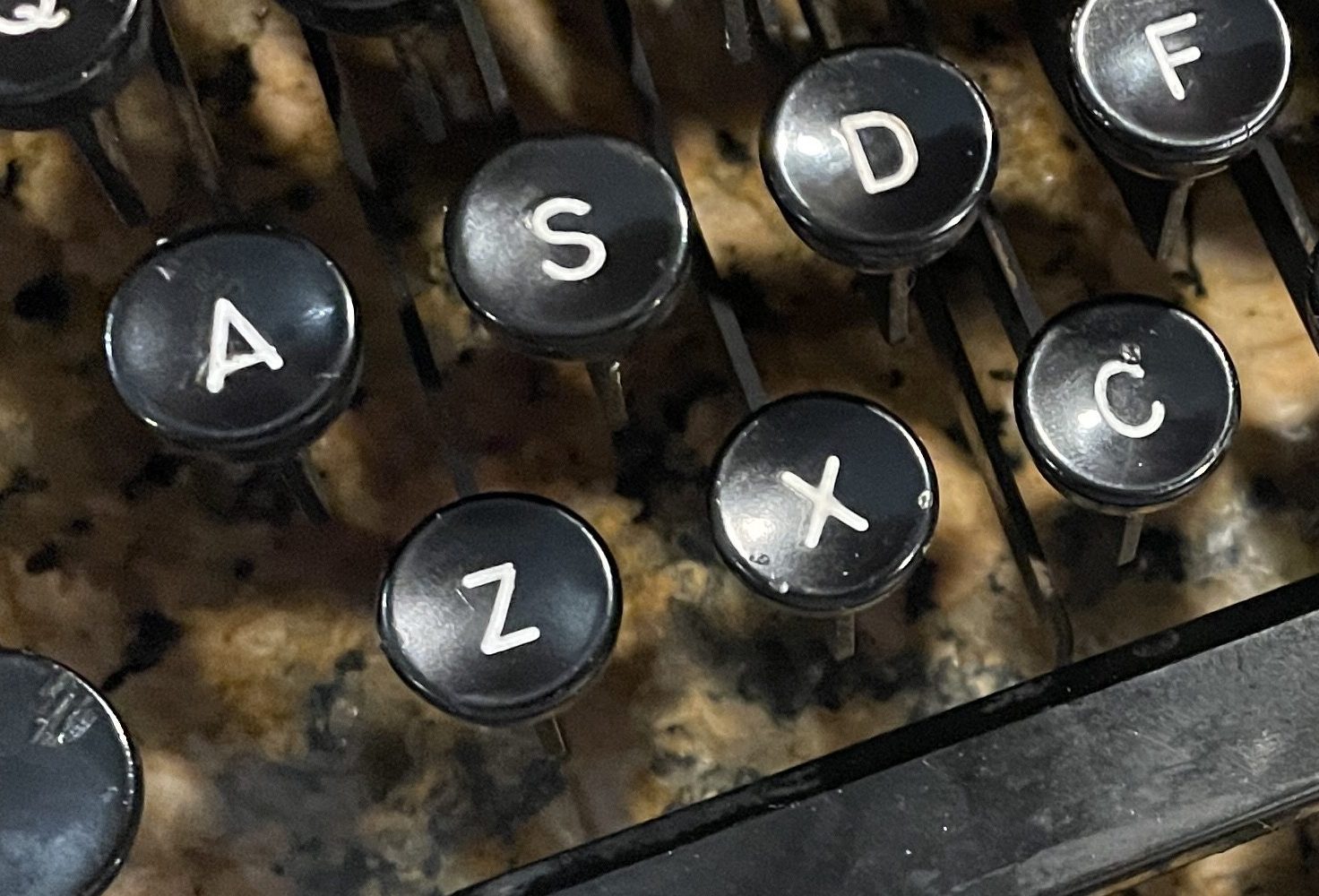
The paint on the key tops had flaked away in many places making them unreadable.
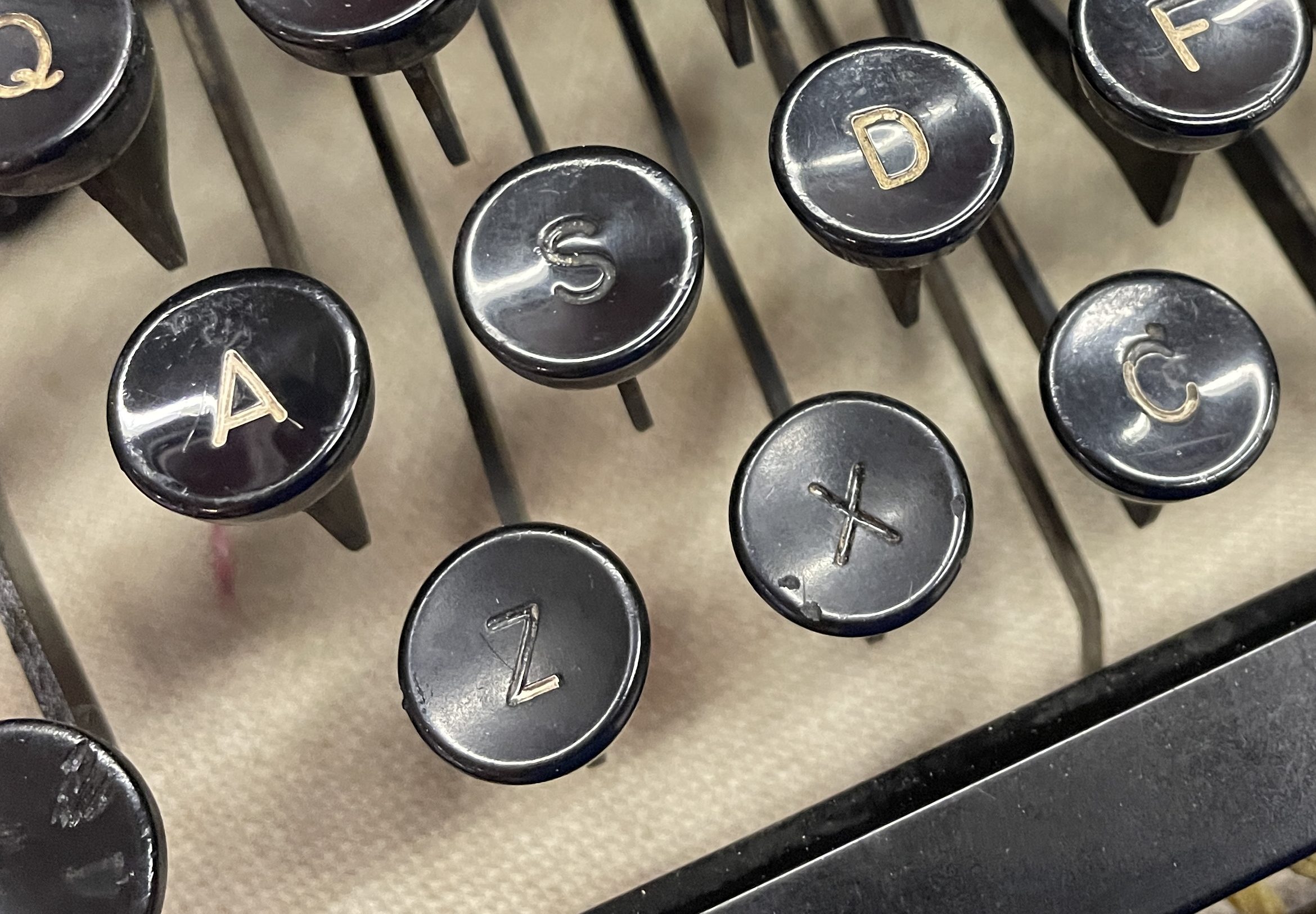
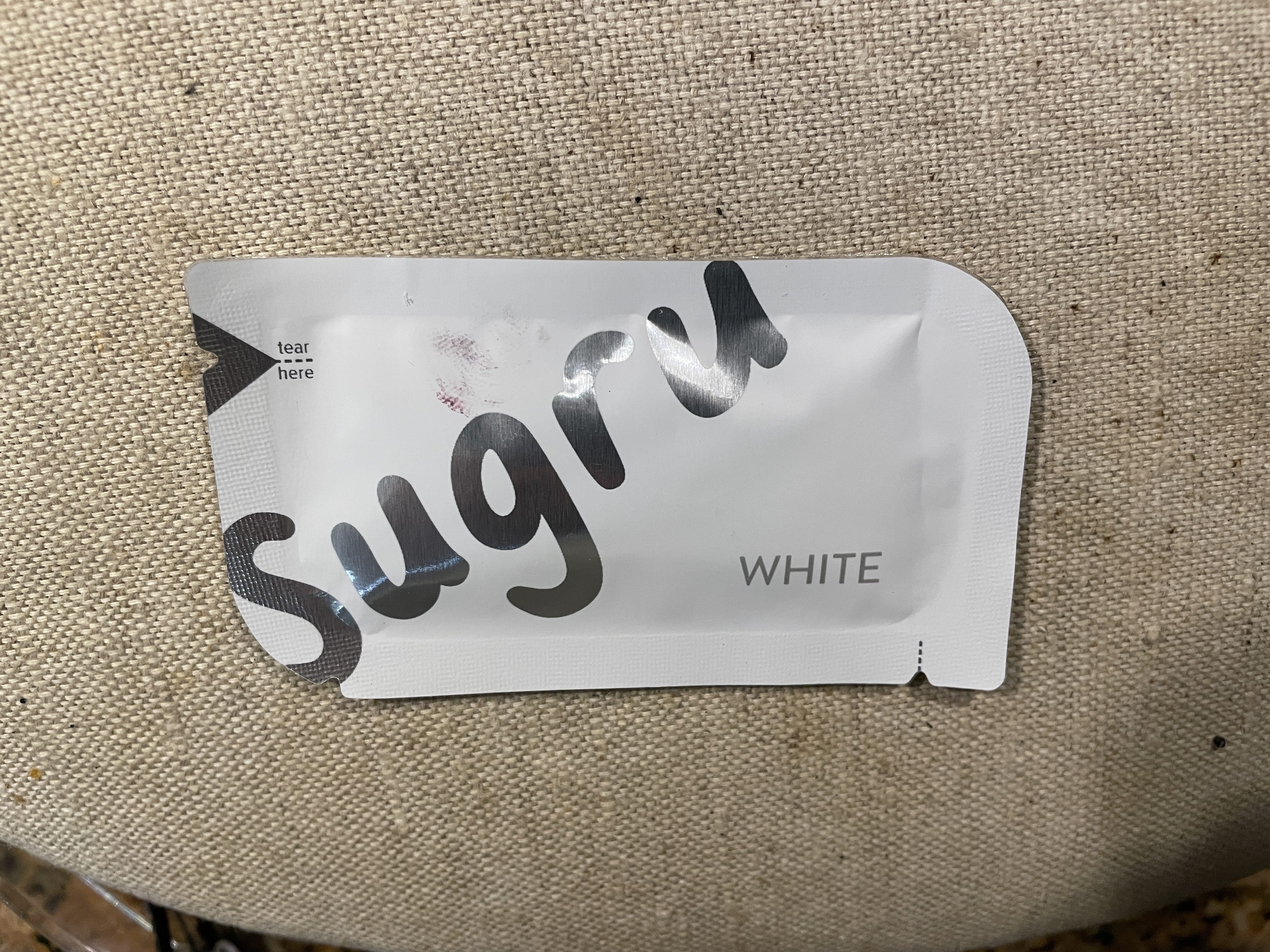
I had some Sugru, a moldable silicone glue, so I decided to fill the depressions with Sugru. I like Sugru instead of paint because it’s thick like Play-Doh and not too messy to work with and very permanent. You have to work fast because the Sugru starts to dry out after about 20 minutes.
I worked on the typewriter intermittently over a period of months, popping out to the garage and pondering its extensive mechanical and cosmetic issues. She’s a shaggy calf, but I’m pretty happy with where I’m at right now. I just realized after taking these pictures that I’m missing the right carriage frame cover plate.


I’m pretty satisfied, but I don’t know whether I did right, tricking out this dignified old Underwood like a show pony (or state fair heifer). But then I remember what I started with.
We hosted Easter this year. I set up an egg-dying station for the kids in the garage (it was pouring rain outside) and at the last minute, added the Balky Calf to the set-up. I was still working on her, trying to get her decals just right, but I thought it was good to do some testing in the general public.
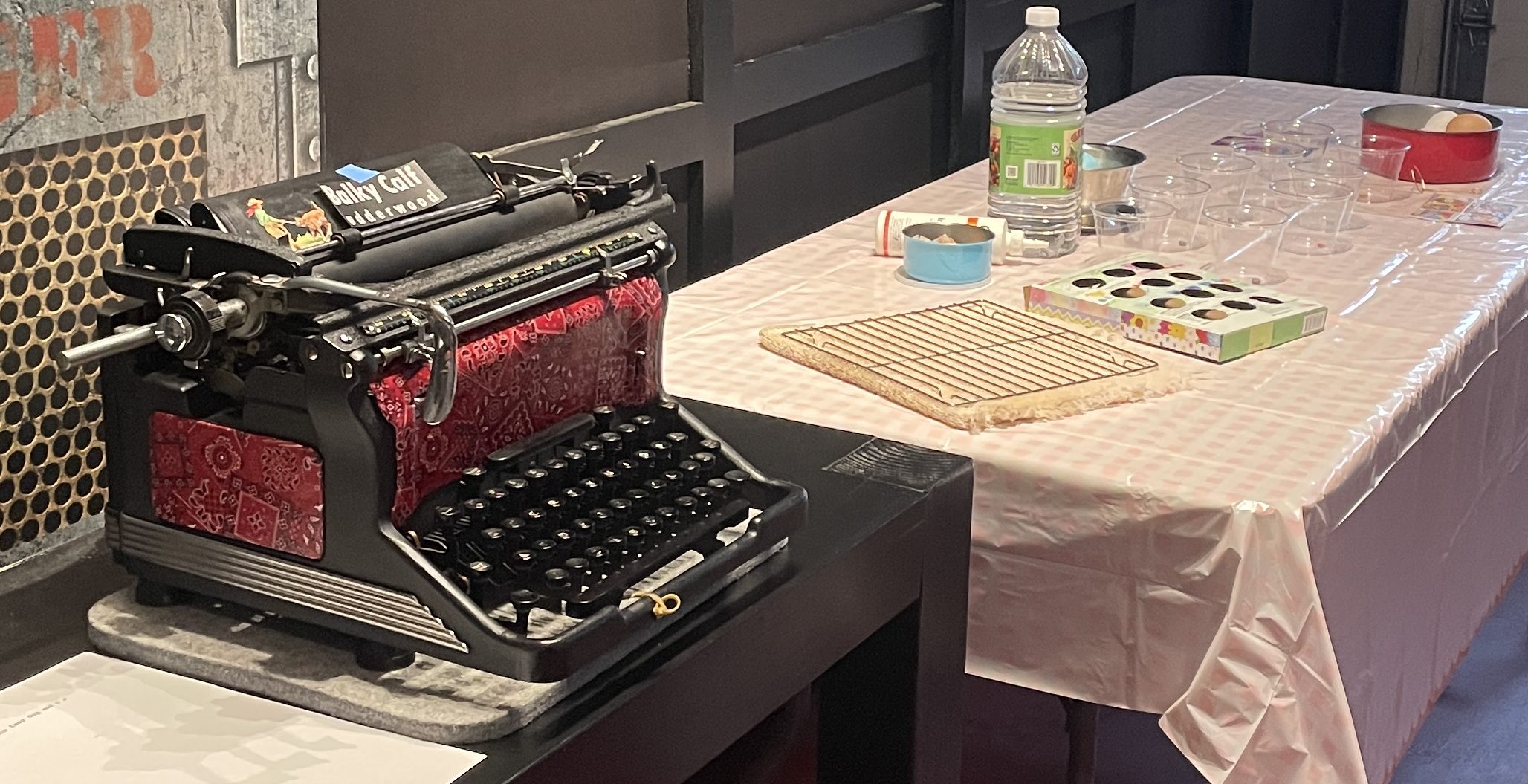
The Balky Calf came through with flying colors. The seven-year old who played with it found the typewriter fascinating and not frustrating once she got used to the keys.
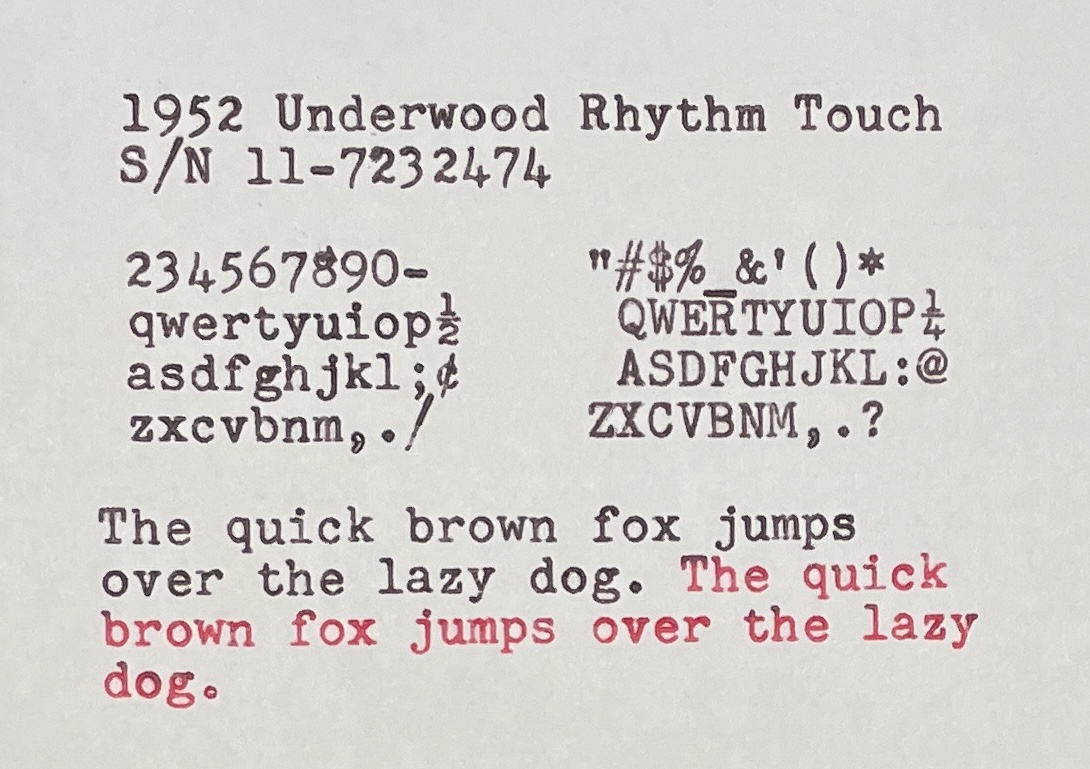
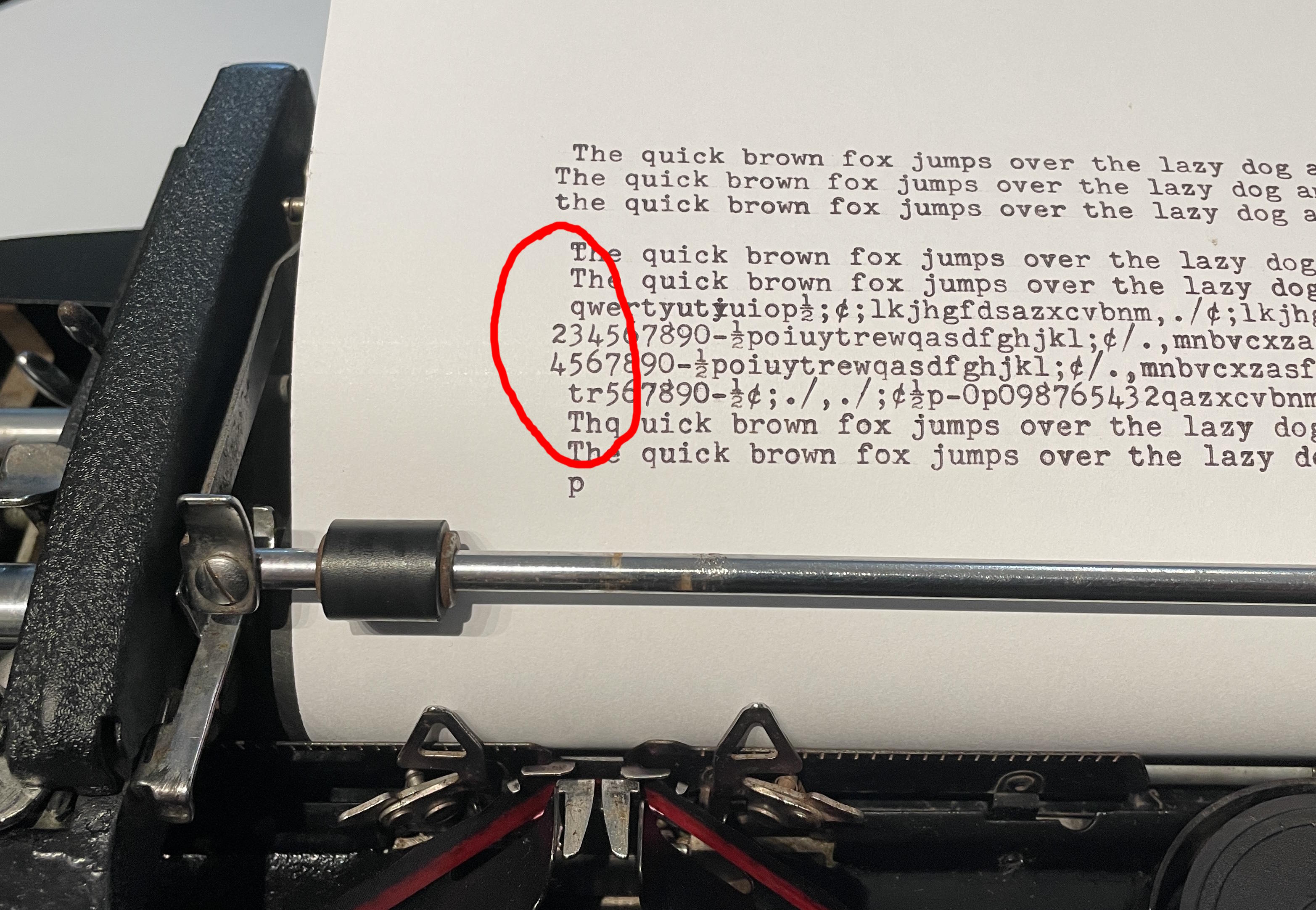
I’m still tinkering with the Balky Calf. I have an uneven left margin that I have been pondering.
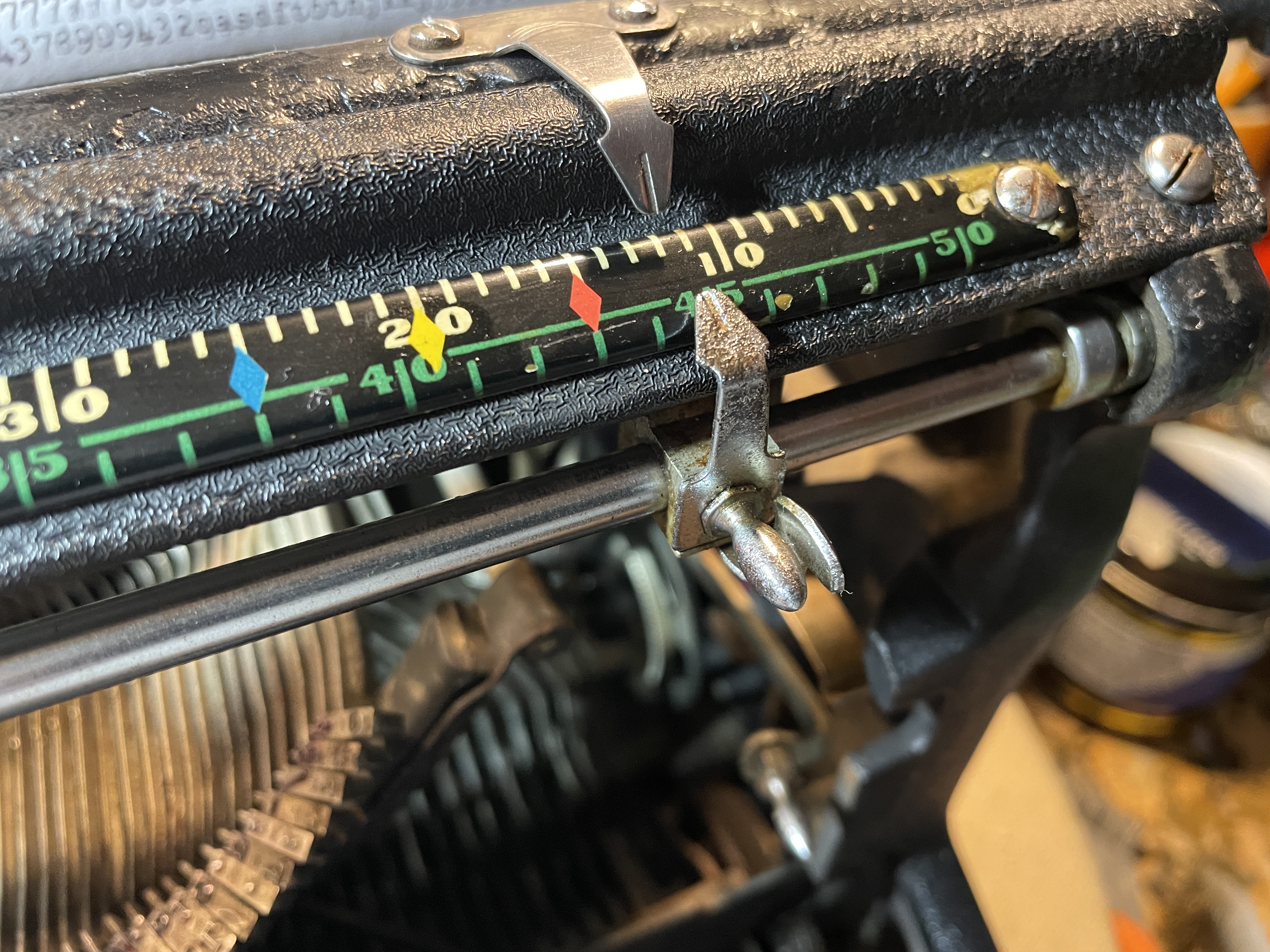
The Underwood margin system is not intuitive, and just reading the service manual is breaking my brain.

It is endearing and funny to me that the company stubbornly stuck with their counterintuitive margin system for 50+ years. I like to imagine some obstinate weirdo, some heroically perverse Underwood senior engineer saying in 1952, “To hell with the haters. The margin set-up stays as-is.”
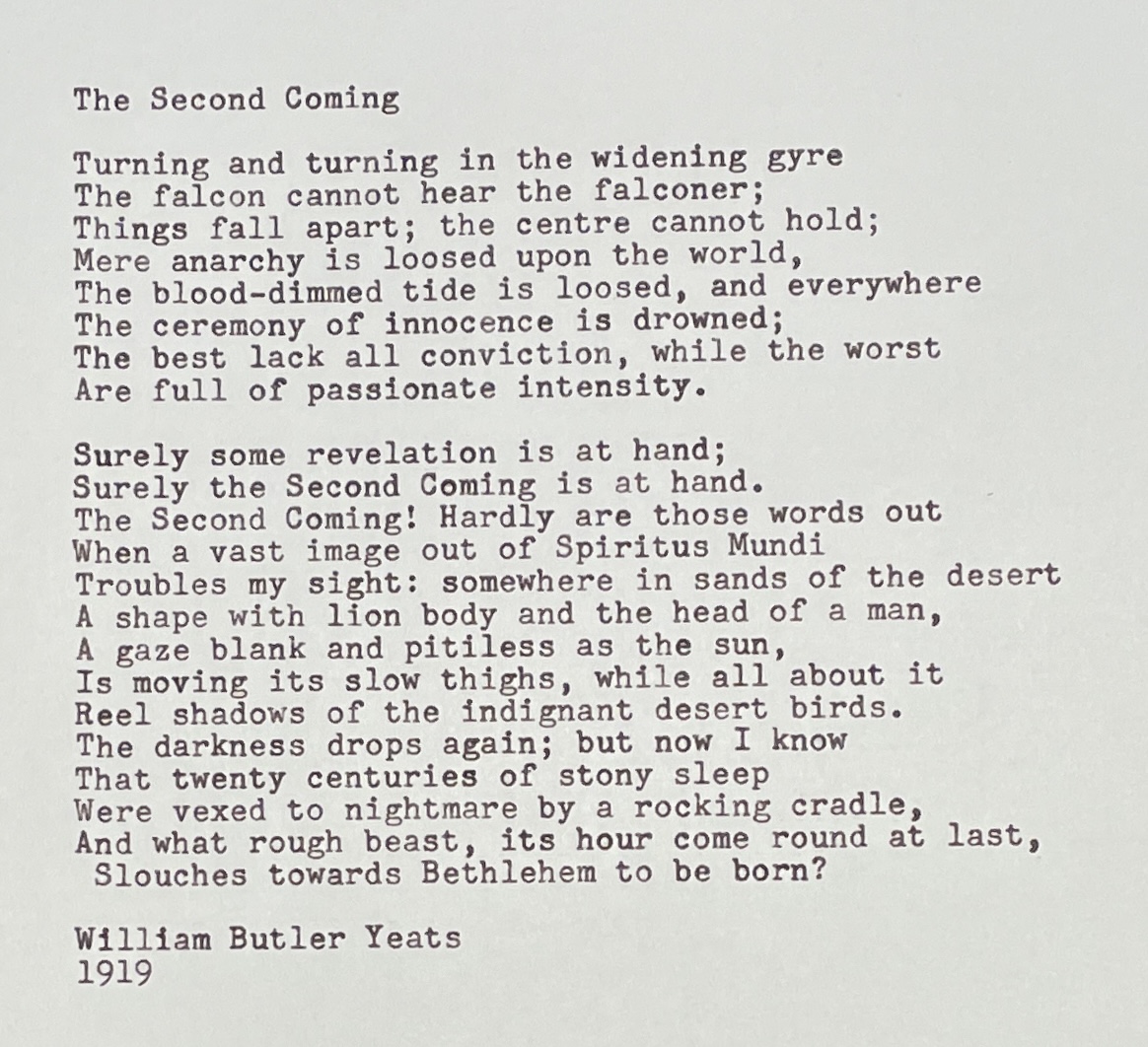
Right now, the Balky Calf is typing really well (except that soft left margin). Enjoy some Yeats. If you apply Fintan O’Toole’s ‘Yeats Test’, he’s the poet for our times.
Now back to the widening gyre that’s developing at my house.


Nice work, that’s quite a revival! I don’t know if they fit your machine because they need the original metal cups, but I designed feet for the Rhythm Touch and SS, among others, see https://www.printables.com/@ebruchez_3481058/models.
LikeLike
Nice collection of models! I only have two of the four original metal caps, but the TPU I’m printing in is firm/stiff. The feet may hold their shape even without caps. Will try it out.
LikeLike
Thanks! I found that TPU 85A works better for feet, but it’s a little tricker to work with. More typewriter feet designs are coming up 🙂
LikeLike
Happy to hear that more designs are on their way.
I had clogging with TPU 95A and was hesitant to go softer. I’ll probably find the right settings in the 3D printing forums. I am very very new to 3D printing and using an entry level printer (Bambu Lab P1S).
LikeLike
Fantastic! The Balky Calf lives! 😀
Love it – never doubt your creative impulses!
LikeLiked by 1 person
Thanks, Ted. While I have you on the line, I have a seemingly random question: did I type my last letter to you using this Rhythm Touch? If so, was the left margin uneven? I’m trying to figure out if the Balky Calf’s left margin issues are longstanding or new (possibly due to one of my “adjustments”).
LikeLike
Yes, last letter was on the Balky Calf, and the left margin was very random.
LikeLike
Thank you for checking – now I know it’s a longstanding problem and not something I introduced. When I work on a typewriter over a period of months, I sometimes forget what was originally wrong with it.
LikeLiked by 1 person
Great job bringing this ol’ typewriter back to life. I enjoyed the comment regarding the “widening gyre!” A great machine now lives!
LikeLiked by 1 person
This is what car collectors would call a restomod – an old machine restored then tricked out. It’s brilliantly whimsical, pure awesomeness, and that it is functional and not just a shelf queen is the cherry on top. I am pleasantly surprised the thickness of the added bandana didn’t present problems with the assembly. Hmmmm… this is giving me ideas for another project, a portable record player with a space age curvy case in rough shape… thanks for the inspiration!
LikeLiked by 1 person
I, too, was worried about the fabric and Mod Podge adding too much thickness to the cover plates. However, they snapped back on without a problem.
LikeLike