Every once in a while, I stumble across a type of typewriter that I haven’t met before in person. I had never encountered an R. C. Allen until recently when I started working on a damaged 1962 R. C. Allen VisOmatic A. Everything about the machine is next-level educational.
Unfamiliar typewriter brands force me to sift through blogs, YouTube videos, Facebook posts, and Reddit threads. I unearth old manuals and try to make sense of them. Sometimes one question leads to an answer—and a cascade of other questions. I really went down the rabbit hole on this one and found nerdy delight as I uncovered one piece of information after another.
This long story begins with Monica, an enthusiastic typospherian who lives near me. She and her husband Stephen have been excellent sources of distressed machines for my fixing fixation. More importantly, they are good people and very committed to building typewriter community.
Monica, for sentimental reasons, has for a long time wanted to add an R. C. Allen VisOmatic to her collection. A VisOmatic had been her father’s typewriter in the 60s and 70s, when he was a journalist writing for Missiles and Rockets and Government Executive. Monica has this single blurry photo of her father’s VisOmatic.
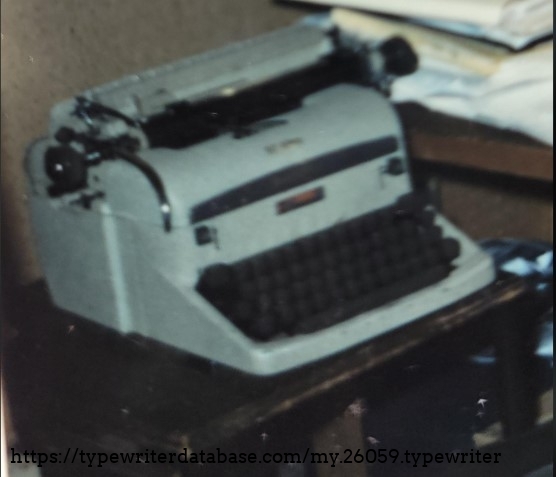
So when Monica spotted this listing for a VisOmatic on eBay, she snapped it up:
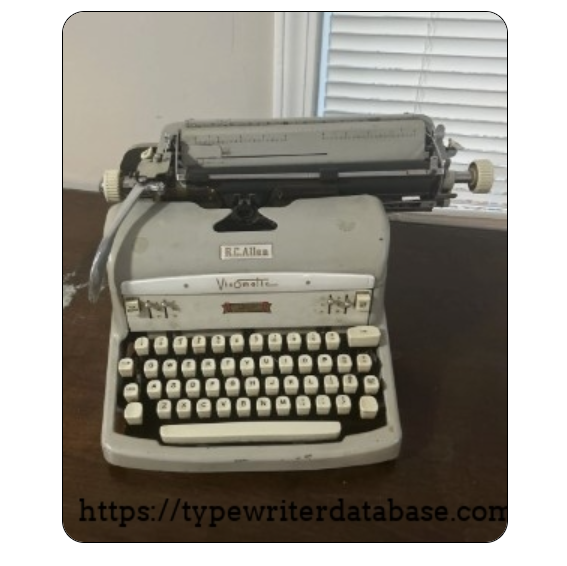
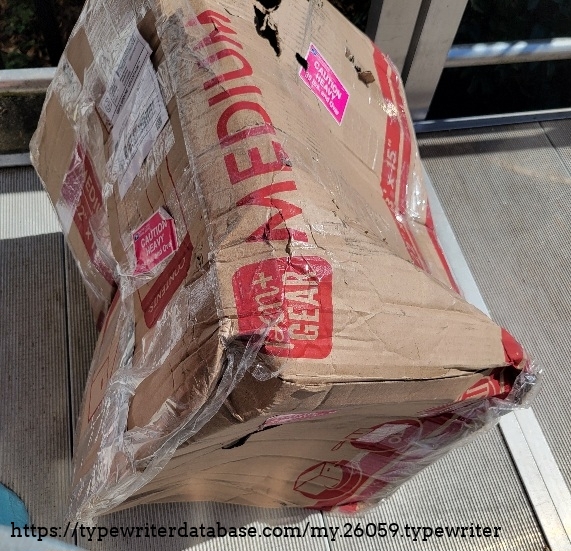
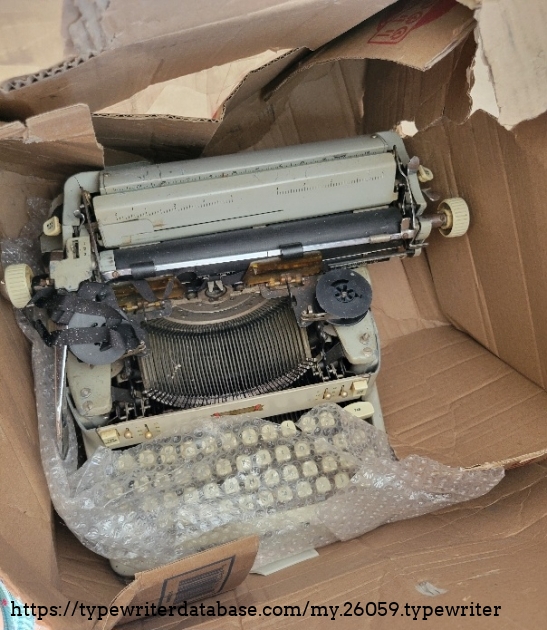
Sadly, the heavy VisOmatic didn’t survive shipment from Mississippi. It came wrapped in a thin sheet of bubble wrap and little else. Here are photos from Monica’s Typewriter Database listing for the VisOmatic:
Monica was very sad about this, but the heavens listened and provided a back-up. She was able to acquire a beautiful script VisOmatic from Richard Polt when he was downsizing his machine collection recently, and it’s a stunner:
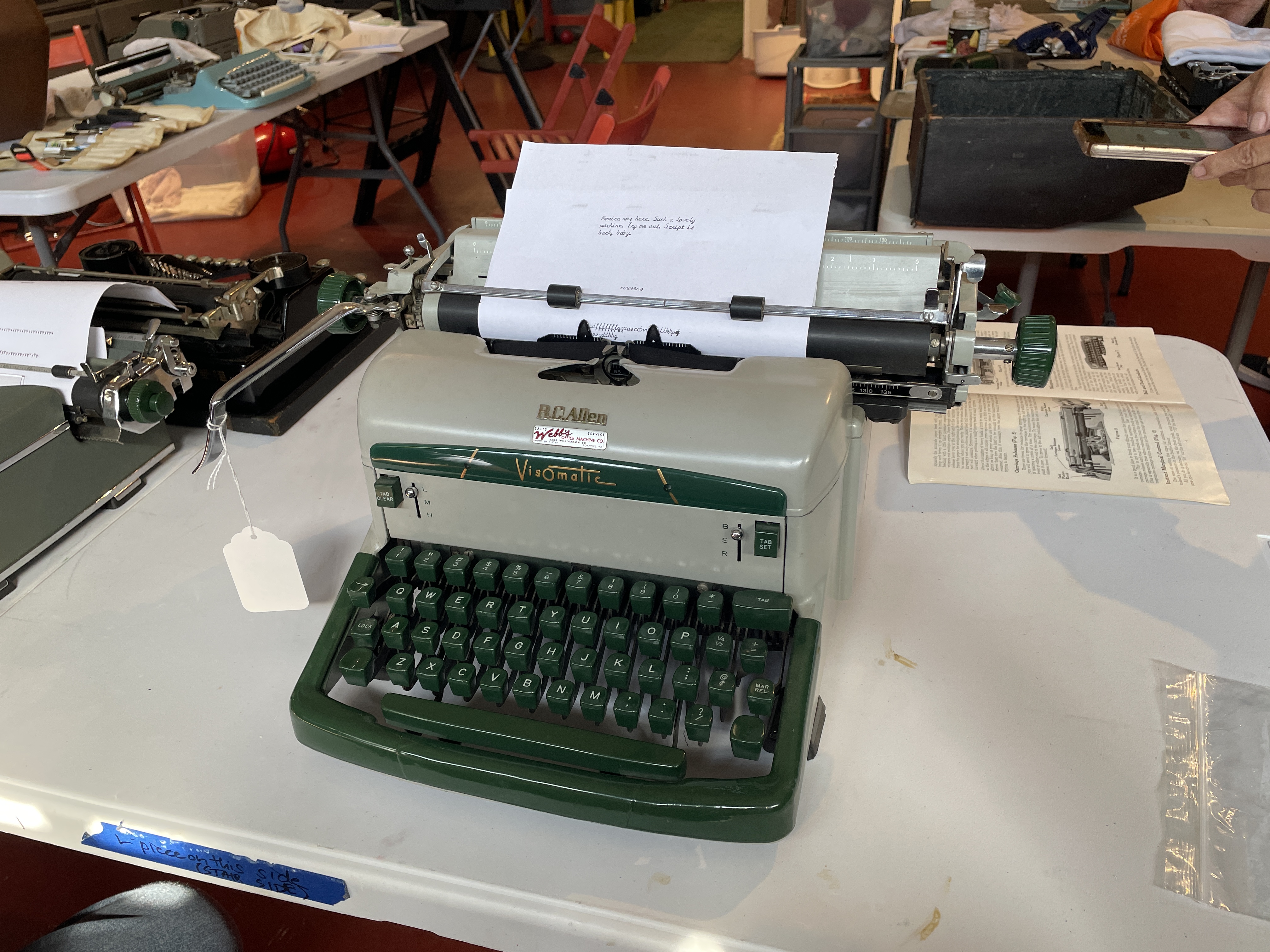
So that left Monica with a spare VisOmatic which she offered to me as a “project machine” to tinker with.
Monica’s VisOmatic had really been through the wringer in its travels from Mississippi. The cowl with its wonderful VisOmatic badge was twisted and fractured. The back shell had collapsed in.
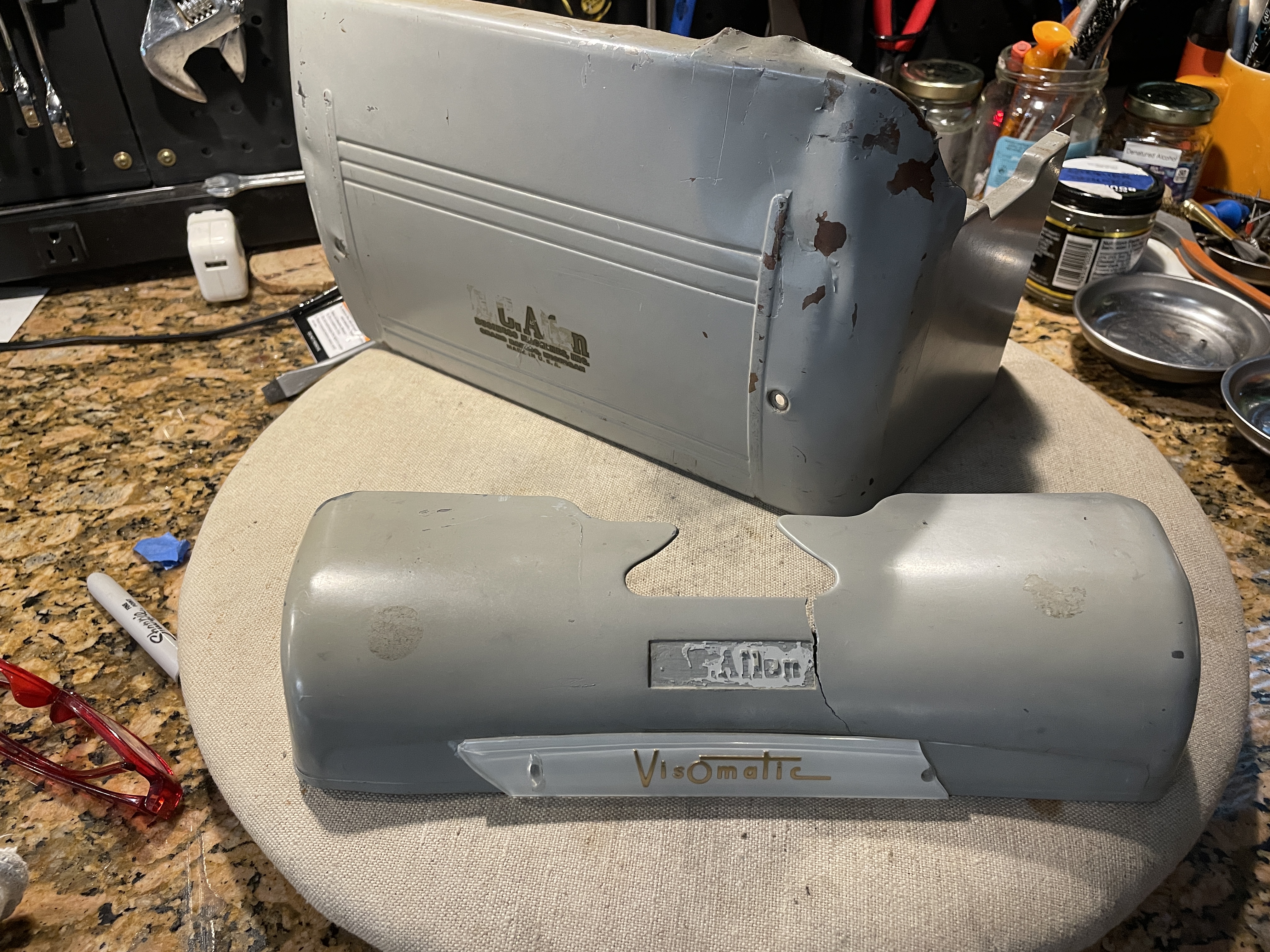
I am going to put these aside and think about the cover plates later. This VisOmatic may be a candidate for a strip and re-paint.
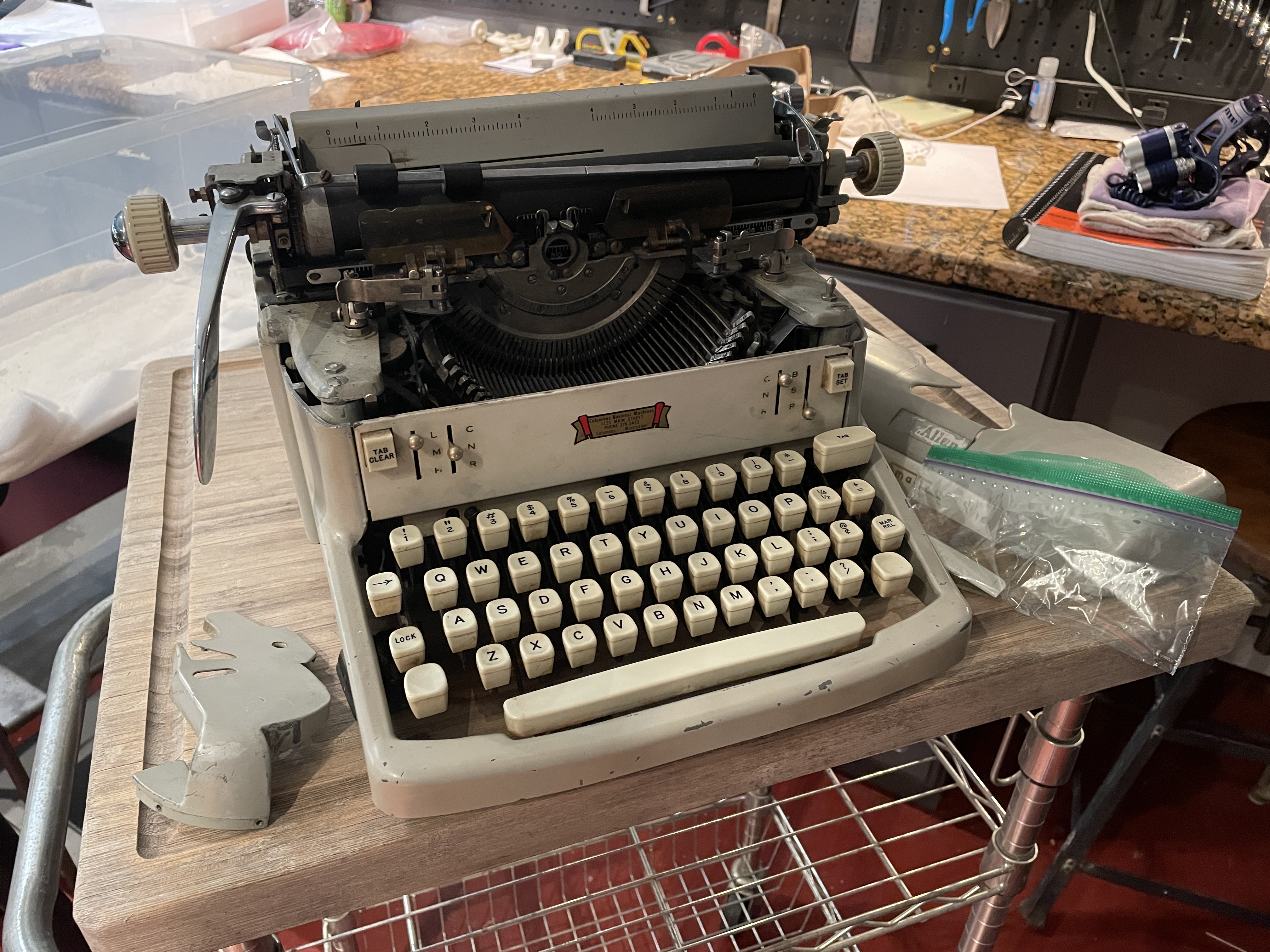
Mechanically, the machine wasn’t too bad. I heard some kind of scraping from the carriage and the space bar was nonfunctional. There were bent pieces here and there, and it was sticky and gummy. However, it seemed like it would type if encouraged.
I didn’t know anything about VisOmatics or R. C. Allens, so I went into research mode and dove down the internet rabbit hole.
What is an R. C. Allen typewriter?
Unlike larger typewriter brands like Underwood or Royal, there isn’t a lot online about R. C. Allen typewriters, and what I found, I had to dig for. I went to archive.org to see if I could find any archived information on the R. C. Allen typewriter there.

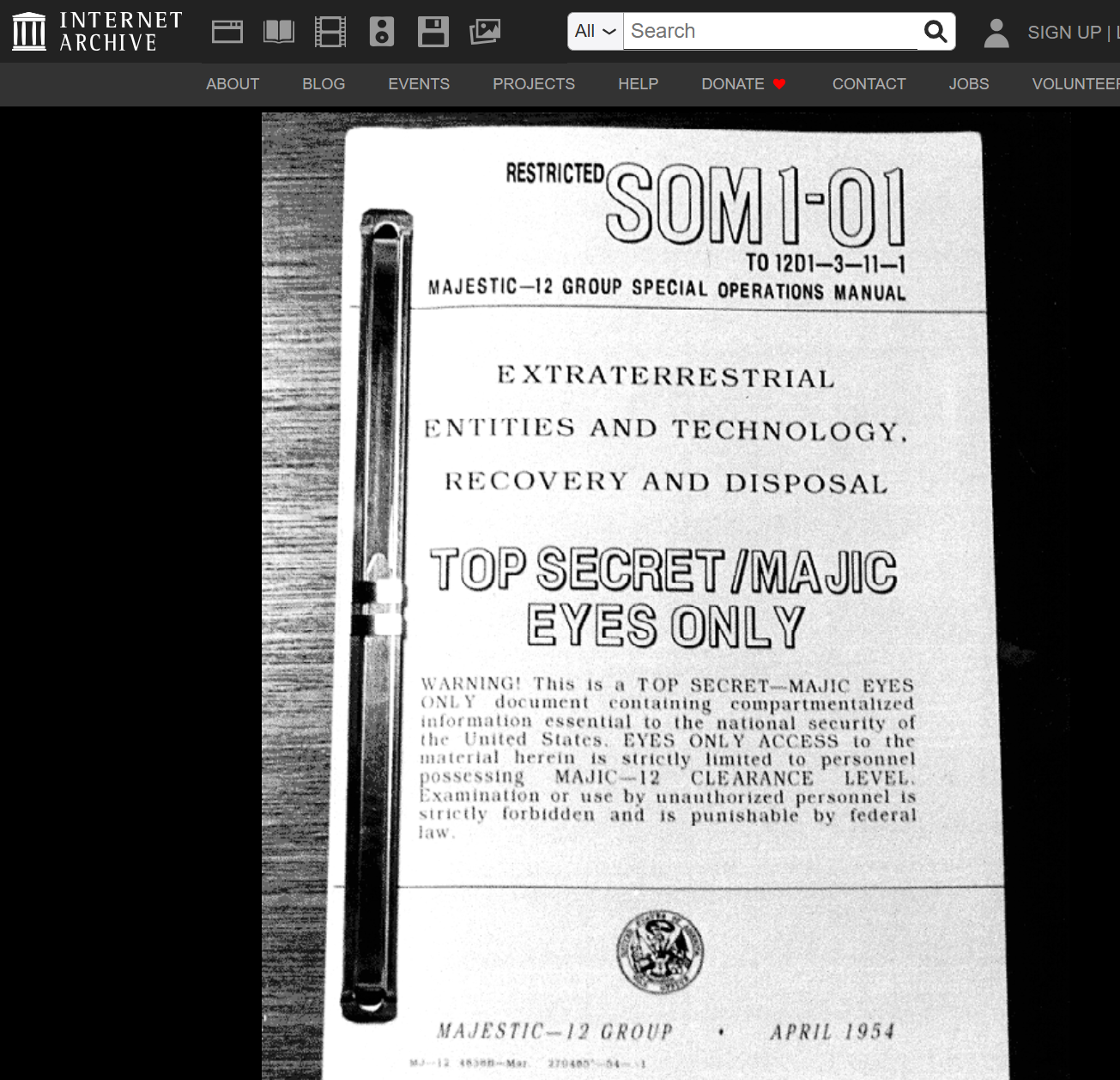
This came up in the search results for that query. I wasn’t sure I wanted to go down that rabbit hole:
So this is what I learned in my digging: an R. C. Allen is basically a re-branded Woodstock. The Woodstock Typewriter Company operated outside Chicago in Woodstock, IL where the Oliver Typewriter Company had its factory and where Groundhog Day was filmed. For a deep dive into the history of Woodstock typewriters, read more here—including details from the Alger Hiss spy drama in which a Woodstock typewriter played an important part.
Note: the entire Made-in-Chicago Museum website is a wild ride, the deepest of rabbit hole websites.
R. C. Allen Business Machines of Grand Rapids, MI (known for their cash registers and adding machines) bought Woodstock in 1949-1950 and continued to produce typewriters at the Woodstock, IL factory for another 20+ years. Will Davis has an oddity from the first year after purchase labeled with both brands: an R. C. Allen Woodstock.
R. C. Allen stopped manufacturing typewriters around 1971, but R. C. Allen is still around today as an aviation instruments line of Kelly Manufacturing.

At YouTube, I searched for R. C. Allens and VisOmatics. I found this VisOmatic video from HotRod Typewriter. His genuine enthusiasm for the machine is infectious:
That control panel on the front of the VisOmatic is charmingly quirky. The levers labeled C-N-R control the card guides on the right and left side. There’s debate online about what the letters stand for, and here are my guesses:
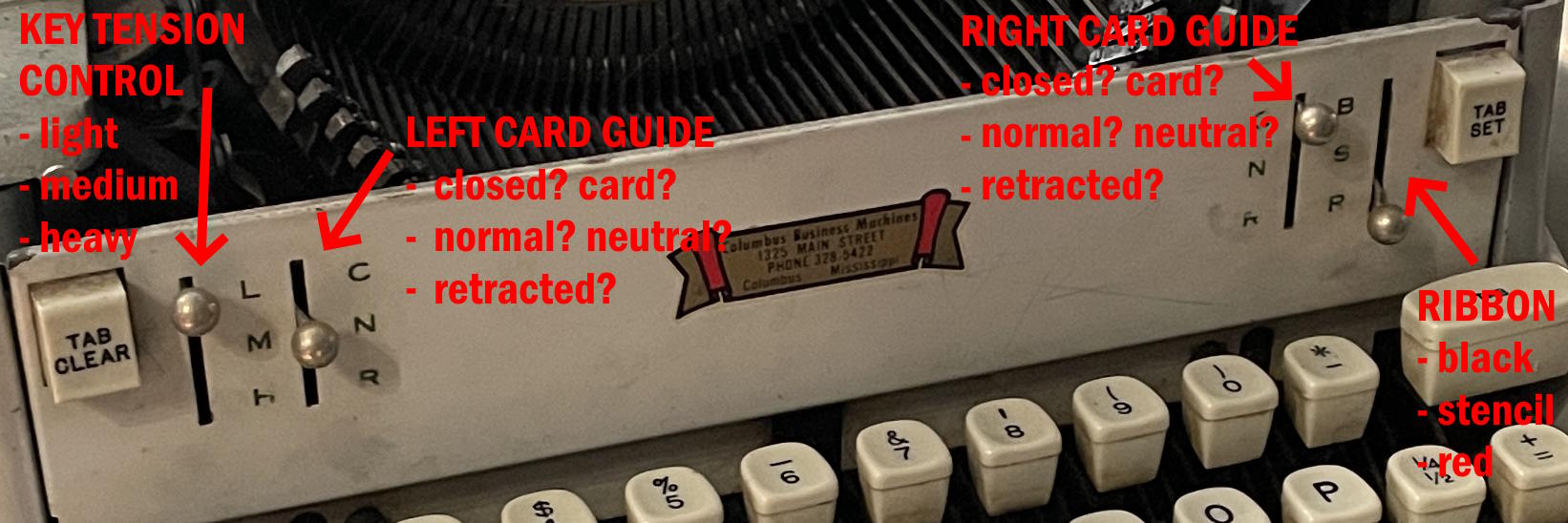
FYI: the gold ball knobs unscrew so you can remove this panel.
R. C. Allen also manufactured the very rare Musicwriter. Here’s Bob Marshall of Typewriter Muse describing how it works:
Off-topic: make sure you check out Joe Van Cleave’s recent Typewriter Muse Shop Tour video.
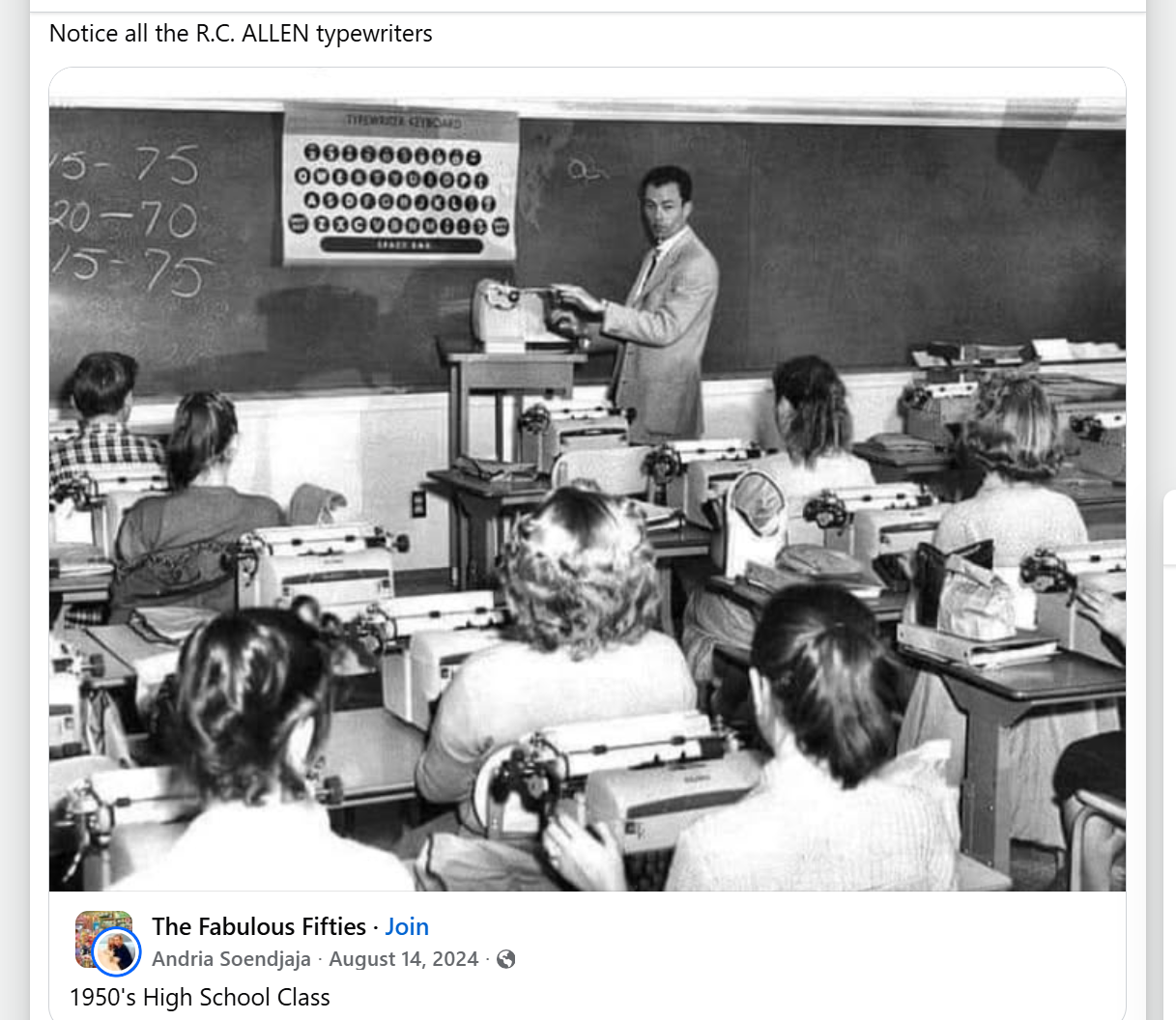
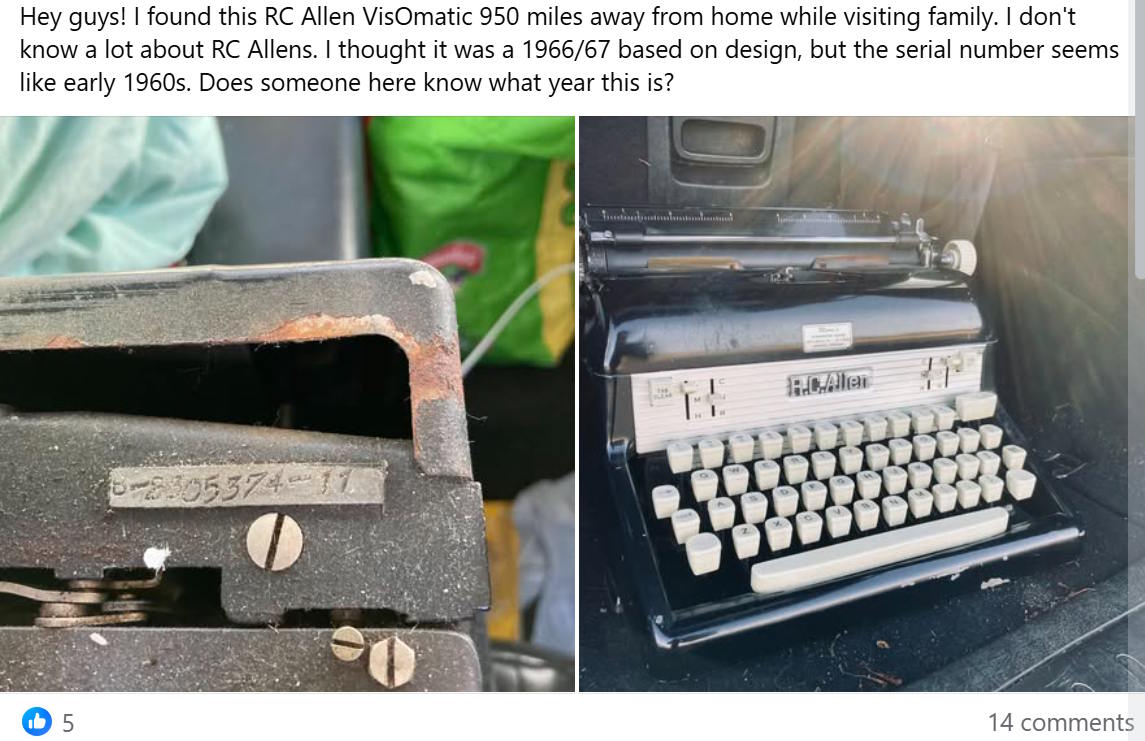
Though less common than other American typewriter brands, it looks like there were clusters of R. C. Allens here and there. Here’s a photo someone shared in the FB Antique Typewriter Collectors Group:
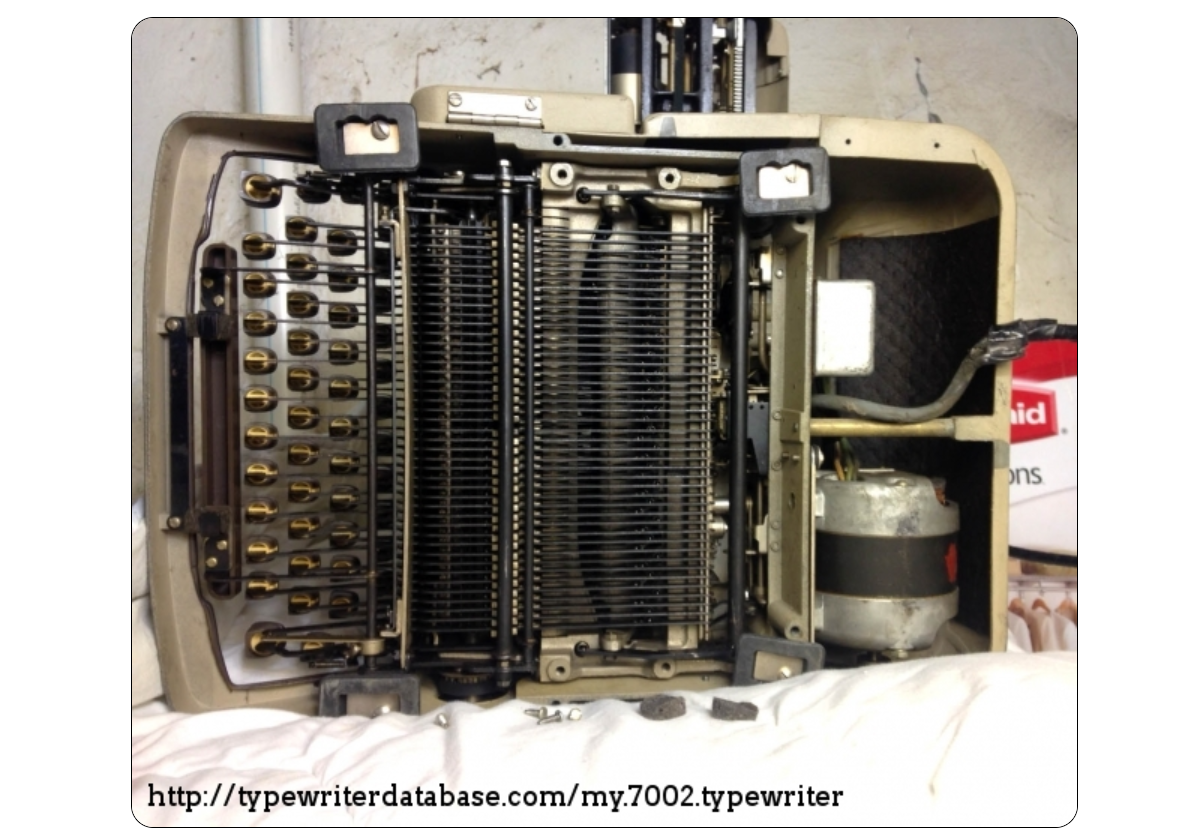
It figures that Richard Polt has the only electric VisOmatic at Typewriter Database. It’s a very rare 1960 R.C. Allen VisOmatic Electrite. It’s got a big caboose. Check out the motor compartment—LOL.
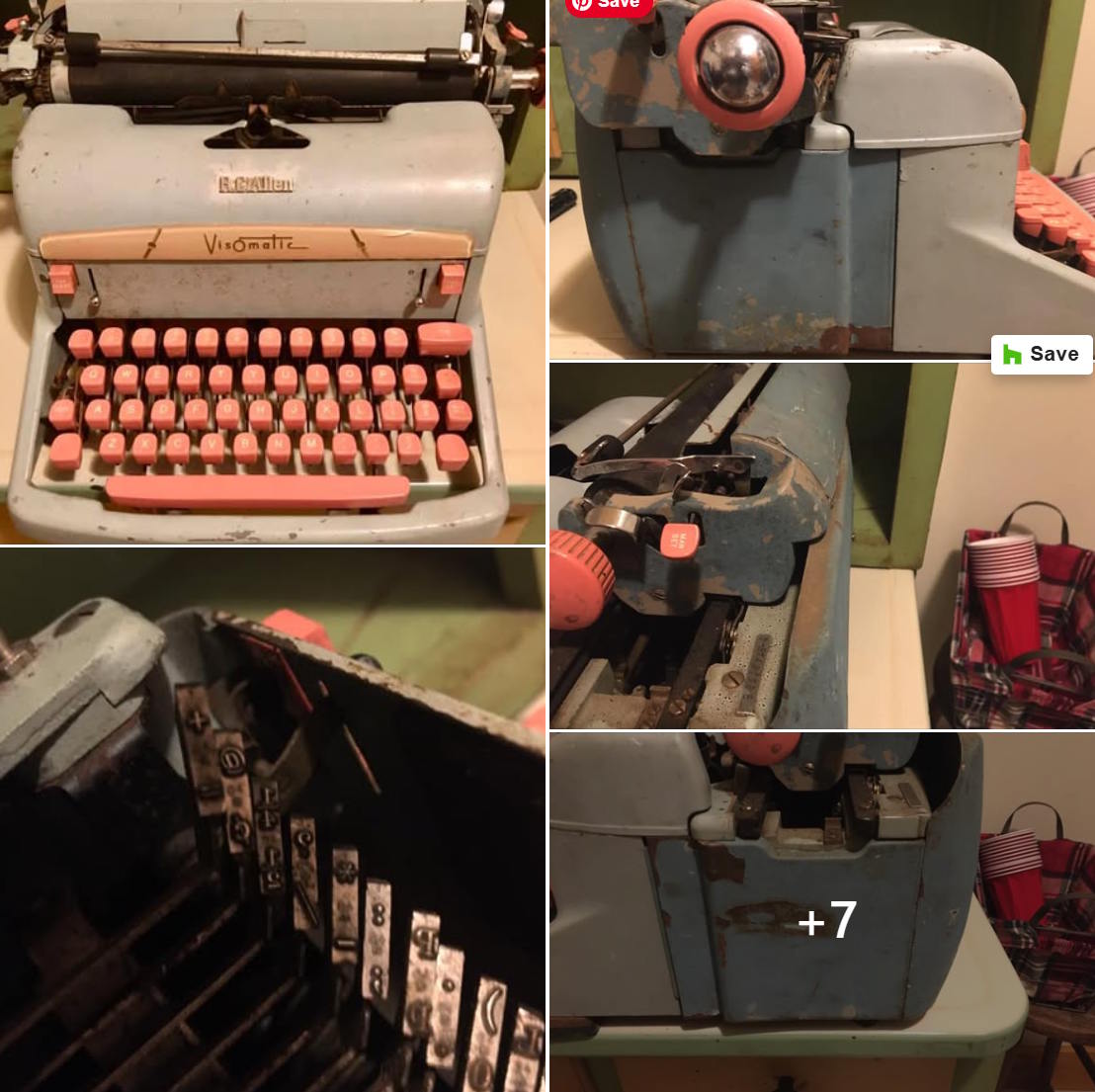
The R. C. Allens and VisOmatics I see at TWDB are generally a discreet tan or gray or green, but here are a couple interesting looking ones I saw at the FB Antique Typewriter Collectors Group:
R. C. Allen Manuals
R. C. Allen typewriters are very similar mechanically to Woodstock typewriters, so the Ames supplement on Woodstock segment-shift standards is very useful. Here are some R. C. Allen-specific manuals that I found informative:
- R. C. Allen VisOmatic user’s manual (courtesy of Richard Polt’s manuals archive)
- 1947-1964 Woodstock & R.C. Allen Typewriter Parts and Service Adjustment Manual from TWDB Operation OOPRAP
- R. C. Allen troubleshooting section in Typewriter Mechanic’s Hand-book (TYP-RYT Publishing, 1955). Courtesy of Society for the Appreciation of Typewriters and Richard Polt’s manuals archive.
Quick-switch platen removal on the R. C. Allen VisOmatic
The first thing I wanted to do was remove the carriage. I generally recommend against removing carriages from typewriters. The R. C. Allen adjustment manual warns:

However, I read through the service manual, and the procedure sounded interesting and not too bad. Besides, I had what was probably a parts machine here.
I removed the cover plates and paper table and popped the platen out. Like a Royal KMG, the VisOmatic has an easy-to-remove platen.
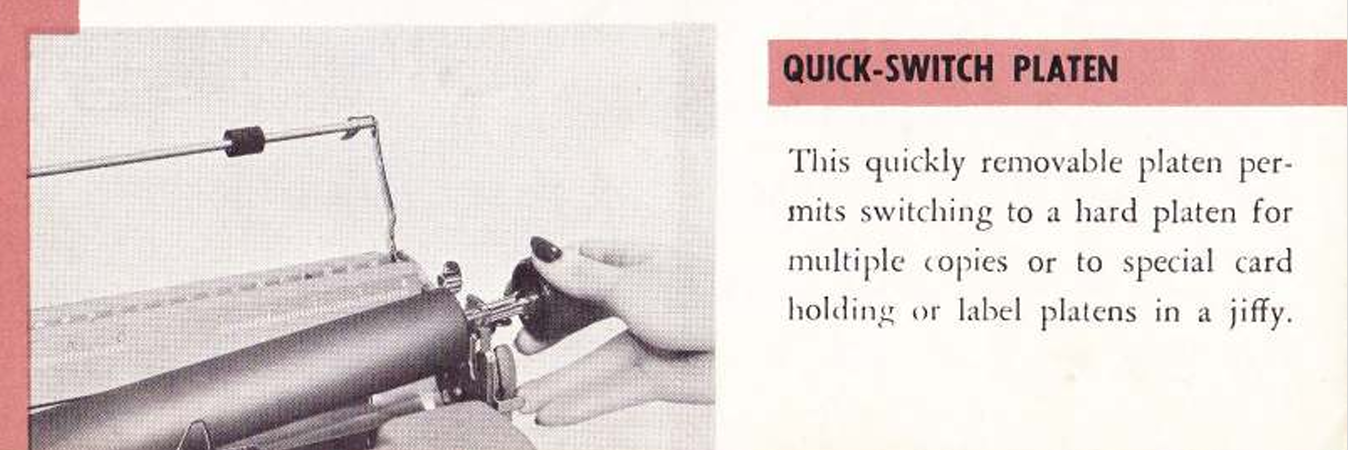
Hmmm. Different platens for different occasions.
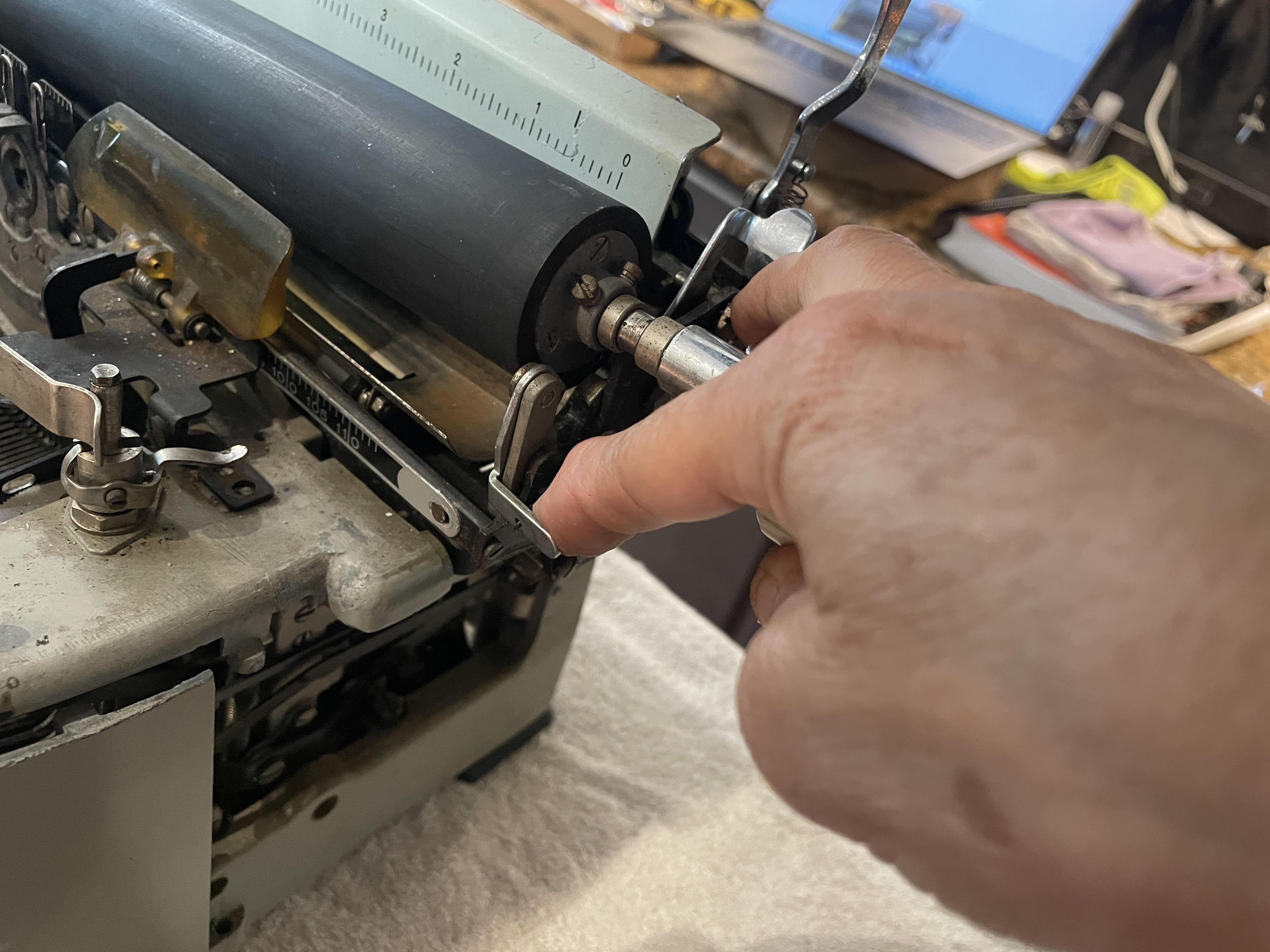
R. C. Allen VisOmatic carriage removal
I read through the carriage removal instructions in the 1955 service manual. The instructions below were the newest I could find for carriage removal, and they were for an R. C. Allen 600 series typewriter:
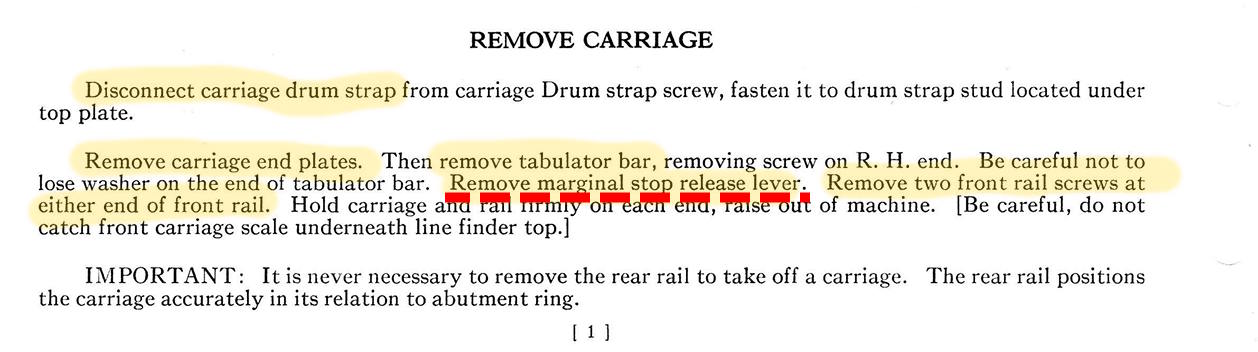
Unfortunately my 1962 VisOmatic did not have an easily removable marginal stop release lever. It looked different. My VisOmatic A had this not-easily-removed part sitting on top of the carriage rack:
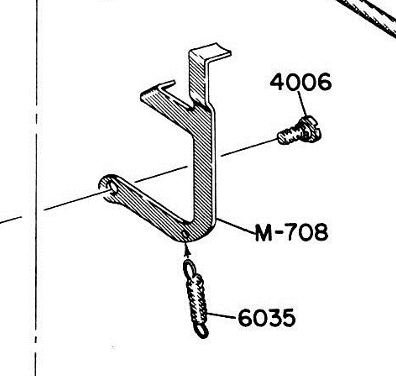
I identified the part as the “back space rack lock” from a diagram of a VisOmatic 700.
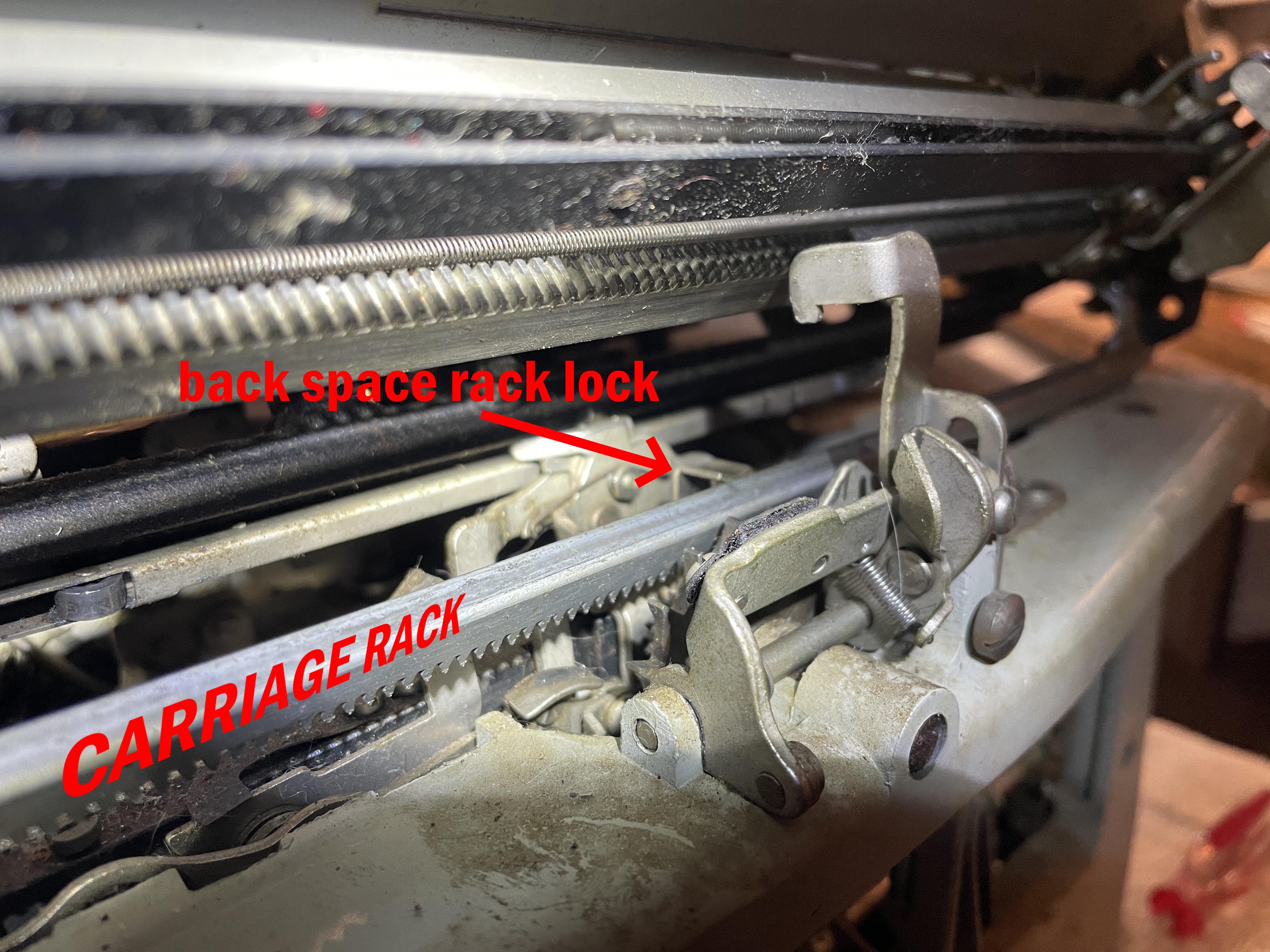
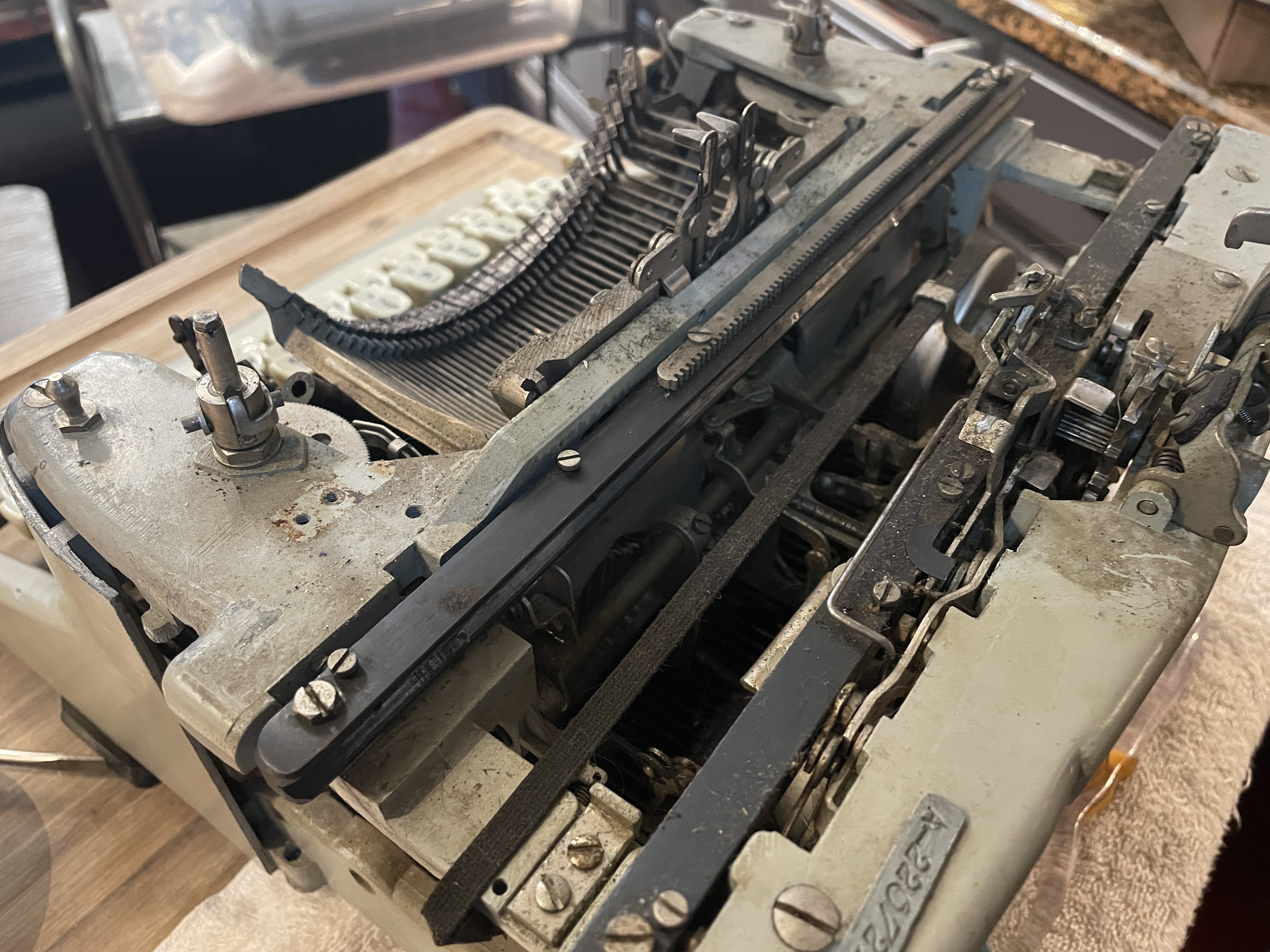
I went through all the steps of the carriage removal procedure, but I left M-708 in place. I removed the carriage by tilting the carriage rearwards and threading the carriage rack between the back space rack lock and the escapement wheel. It’s very tight, but I got the job done.
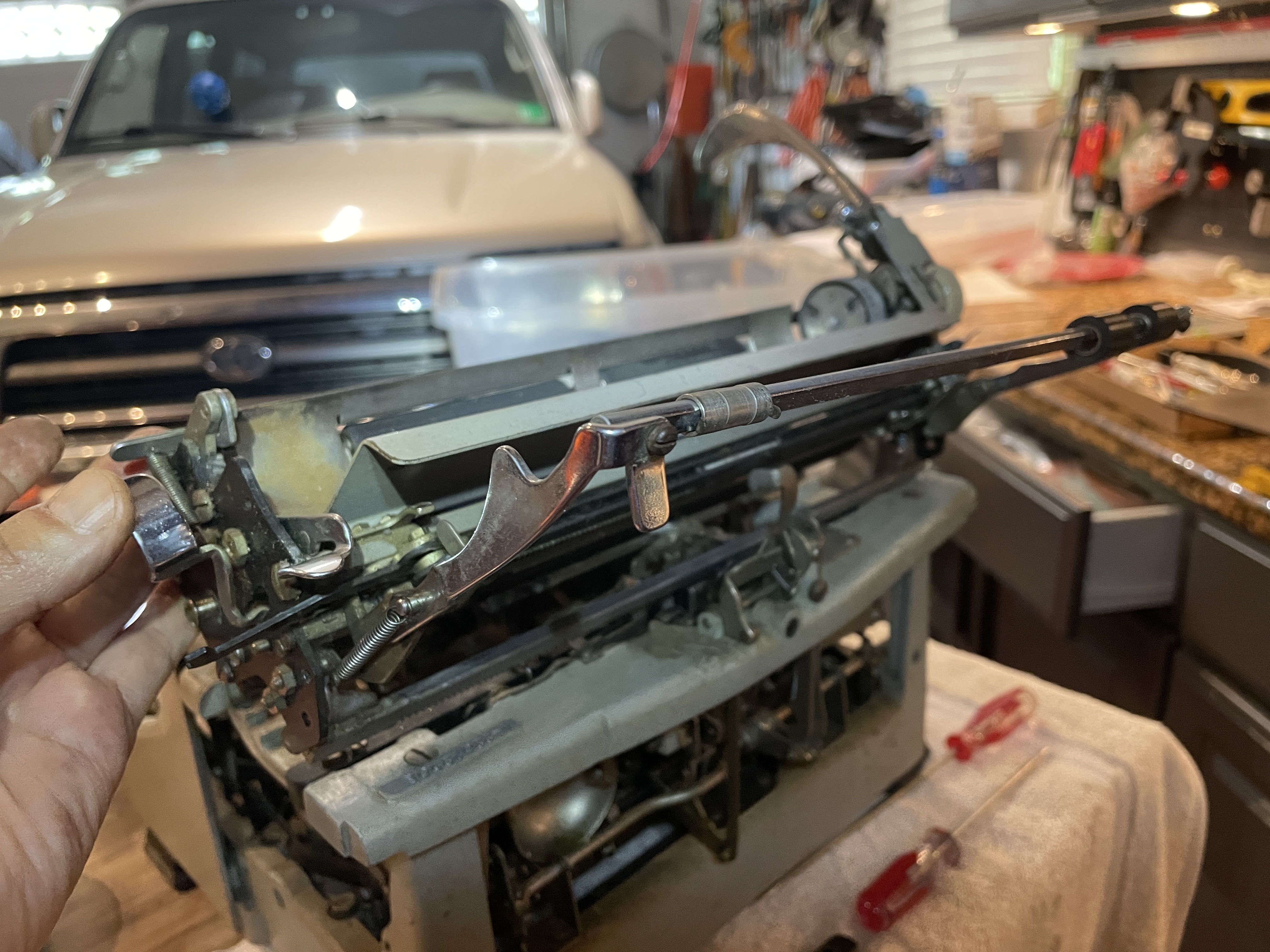
It’s a funny kind of procedure because the roller retainers/bearing trucks stay on the carriage, and the front carriage rail comes off.
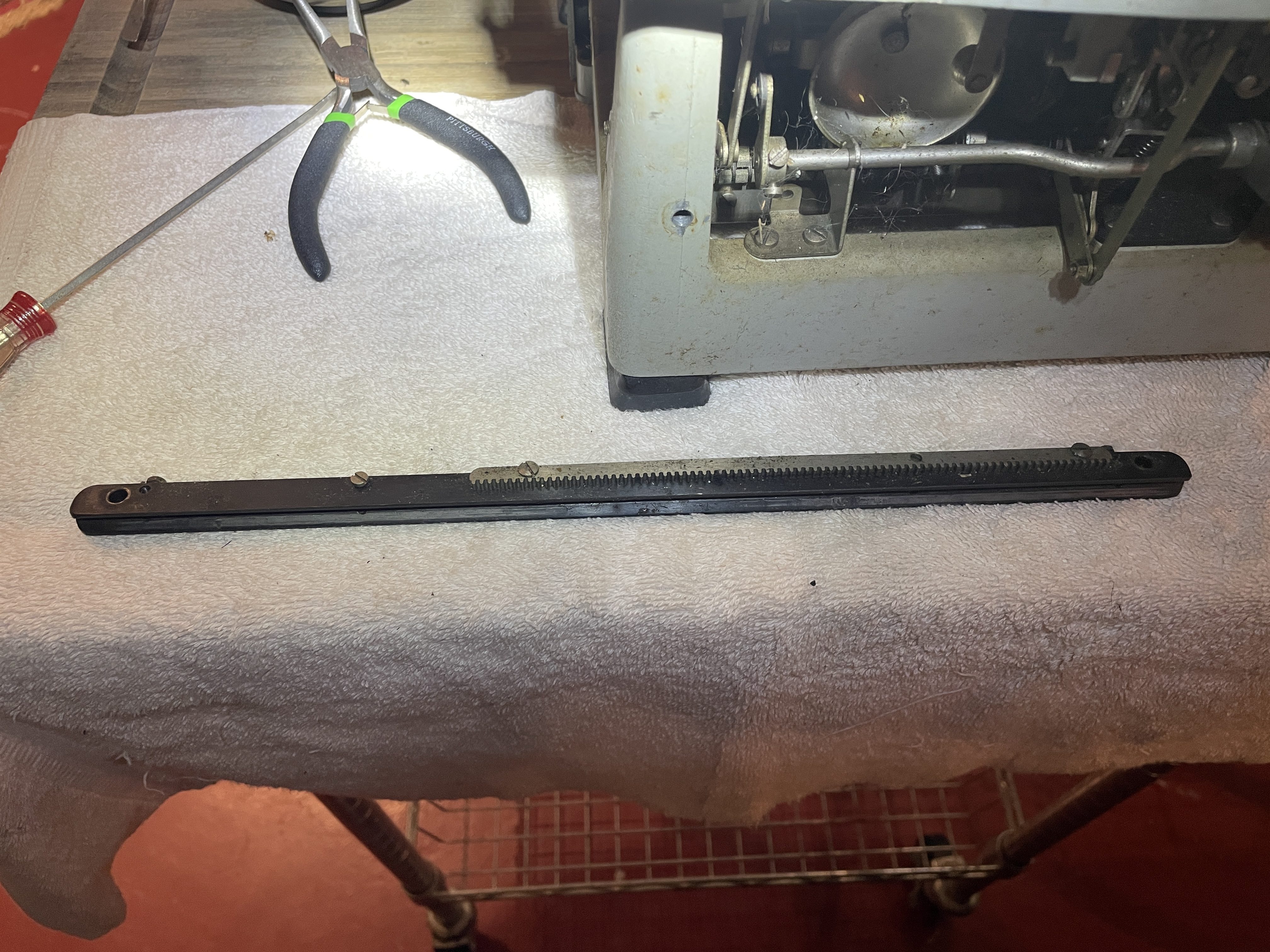
I reattached the front rail because I didn’t want to lose pieces. It was all gooey and gummy under the carriage.
I have this weird fantasy about taking a road trip out to TB Writers Plus in Dayton with a carload of stripped-down, gummy machines. I want to check out their operation and use their cleaning facilities. They have a DIY program that sounds just fantastic. I wish I lived closer to Dayton, OH.
R.C. Allen VisOmatic ribbon spools
I cleaned up the typewriter and put the carriage back on. I straightened bent parts. The carriage scraping went away, and the space bar started to work. Now for testing. I needed a ribbon for it.
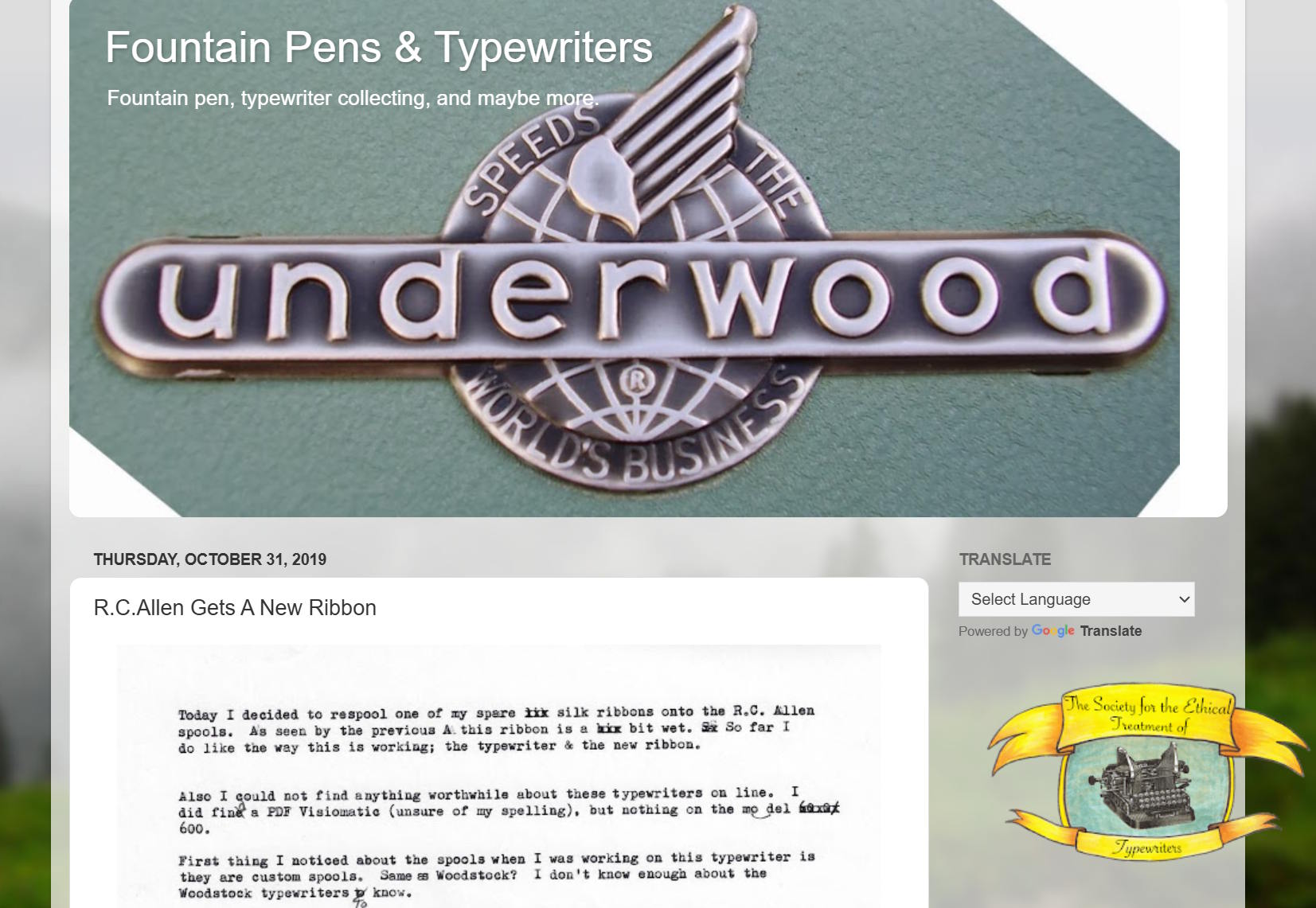
R. C. Allens use Woodstock-style spools which have a notch in them for the ribbon reverse trigger arm. Bill M. has a good blog post about a shipping-damaged R. C. Allen and a follow-up post about ribbons for it:
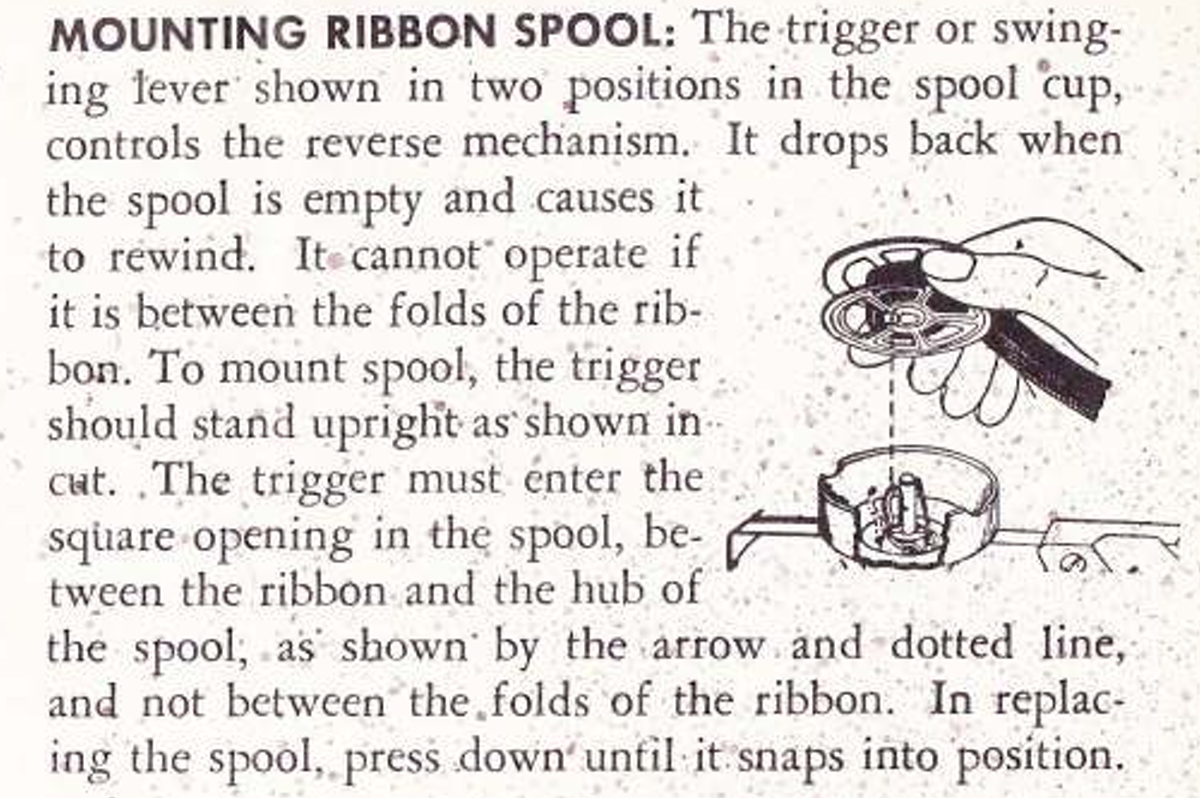
Here’s the information about mounting ribbon spools from the VisOmatic user manual:
This damaged VisOmatic came with plastic “universal” spools.
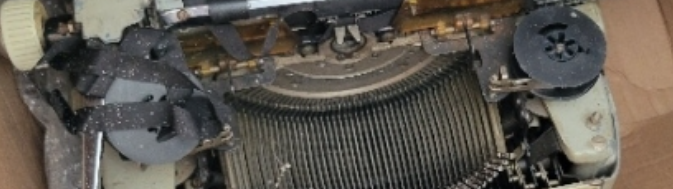
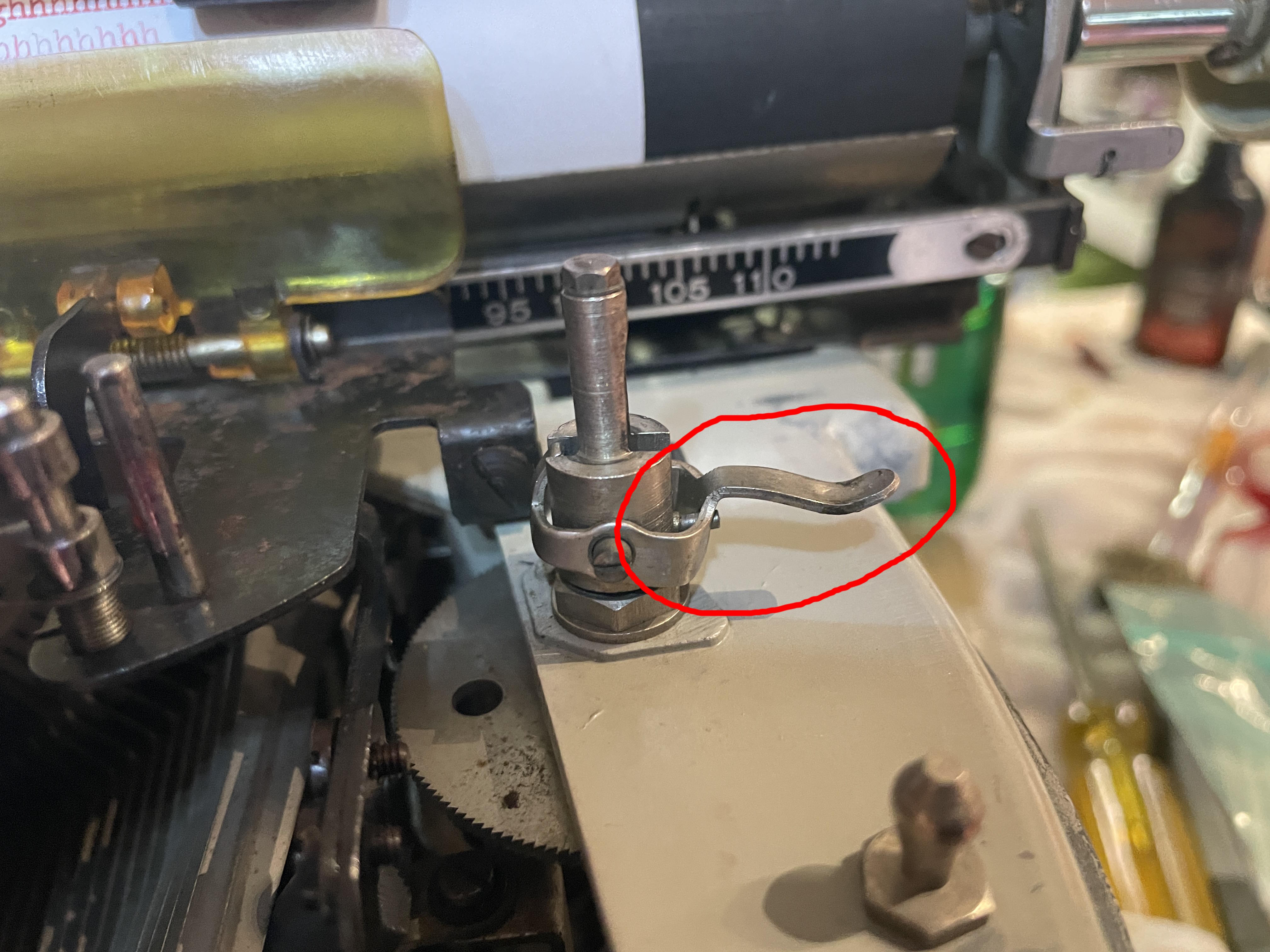
It has no spool cups which appears to be typical of VisOmatic As. The ribbon reverse trigger arms were bent downward. I don’t think this was shipping damage. I think someone purposefully bent the trigger arms down so that the “universal” spools could work.


I’ve always wondered what the cut-outs on this kind of plastic spool were for. Could this type of spool be used on an R. C. Allen? I posted on Facebook in the Antique Typewriter Collectors Group about this, and the general response was “probably not”. The window cut-outs on this type of plastic spool may be for monitoring the amount of ribbon on the spool.
I ended up removing the bent ribbon reverse trigger arms from both sides:
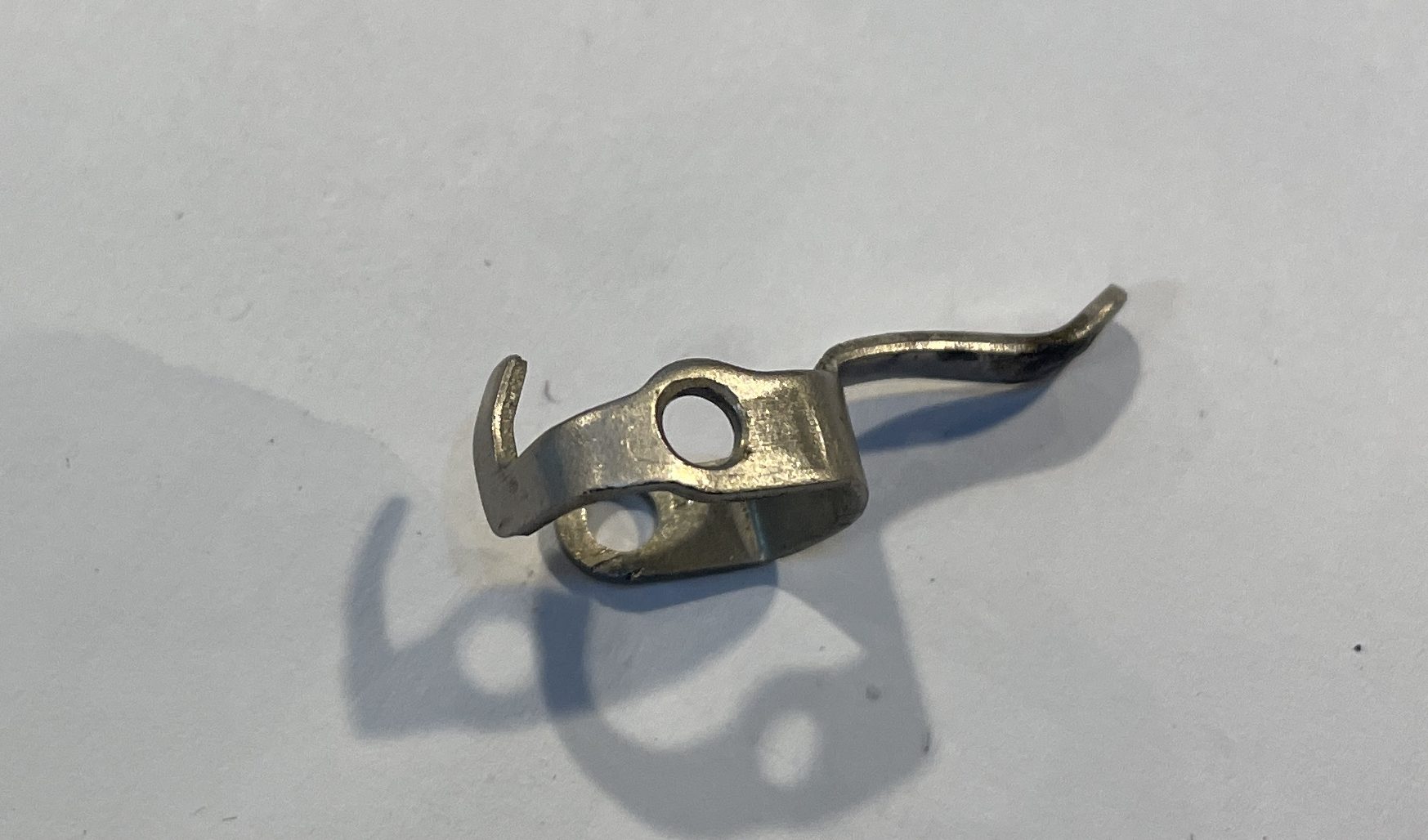
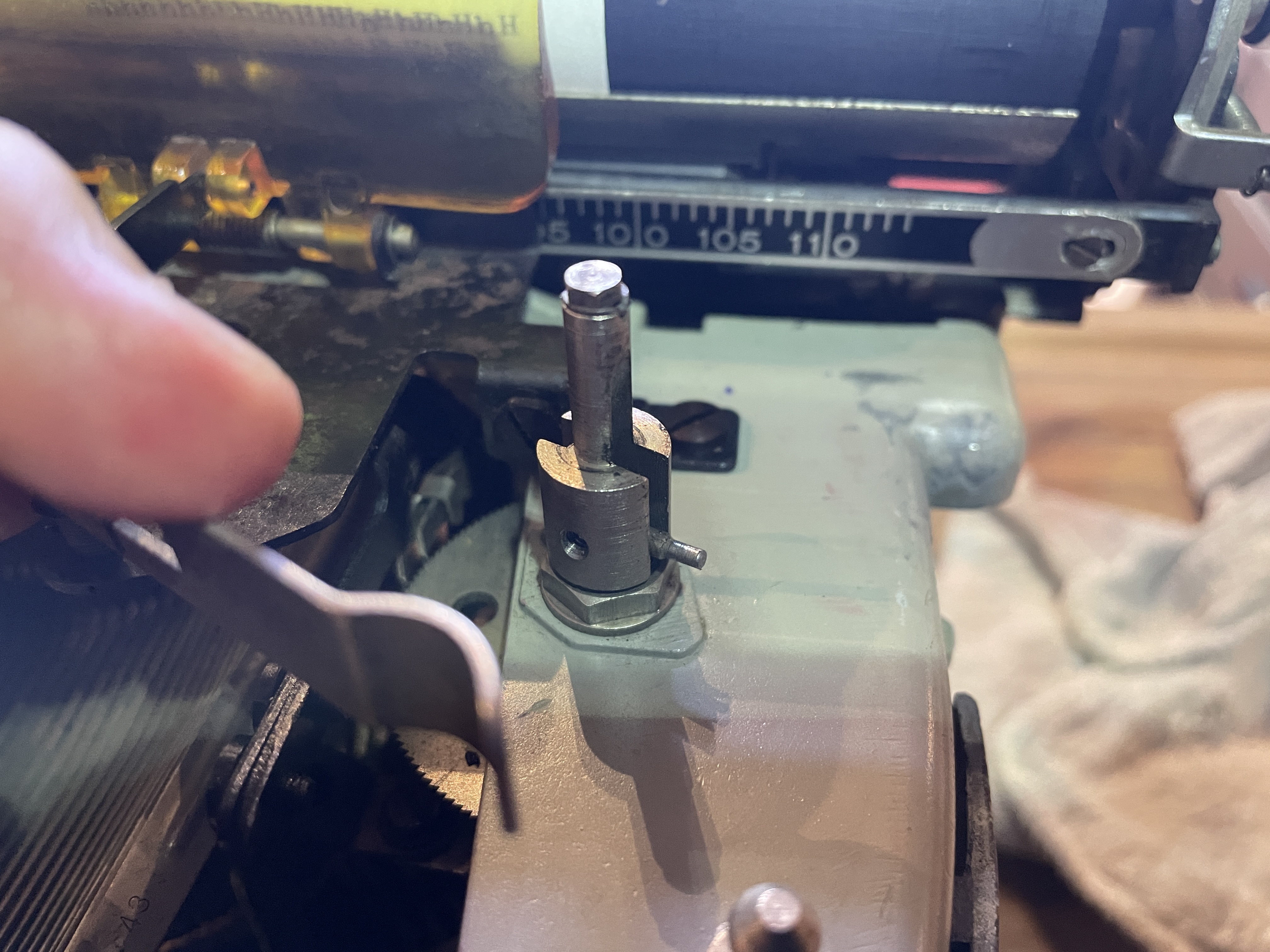
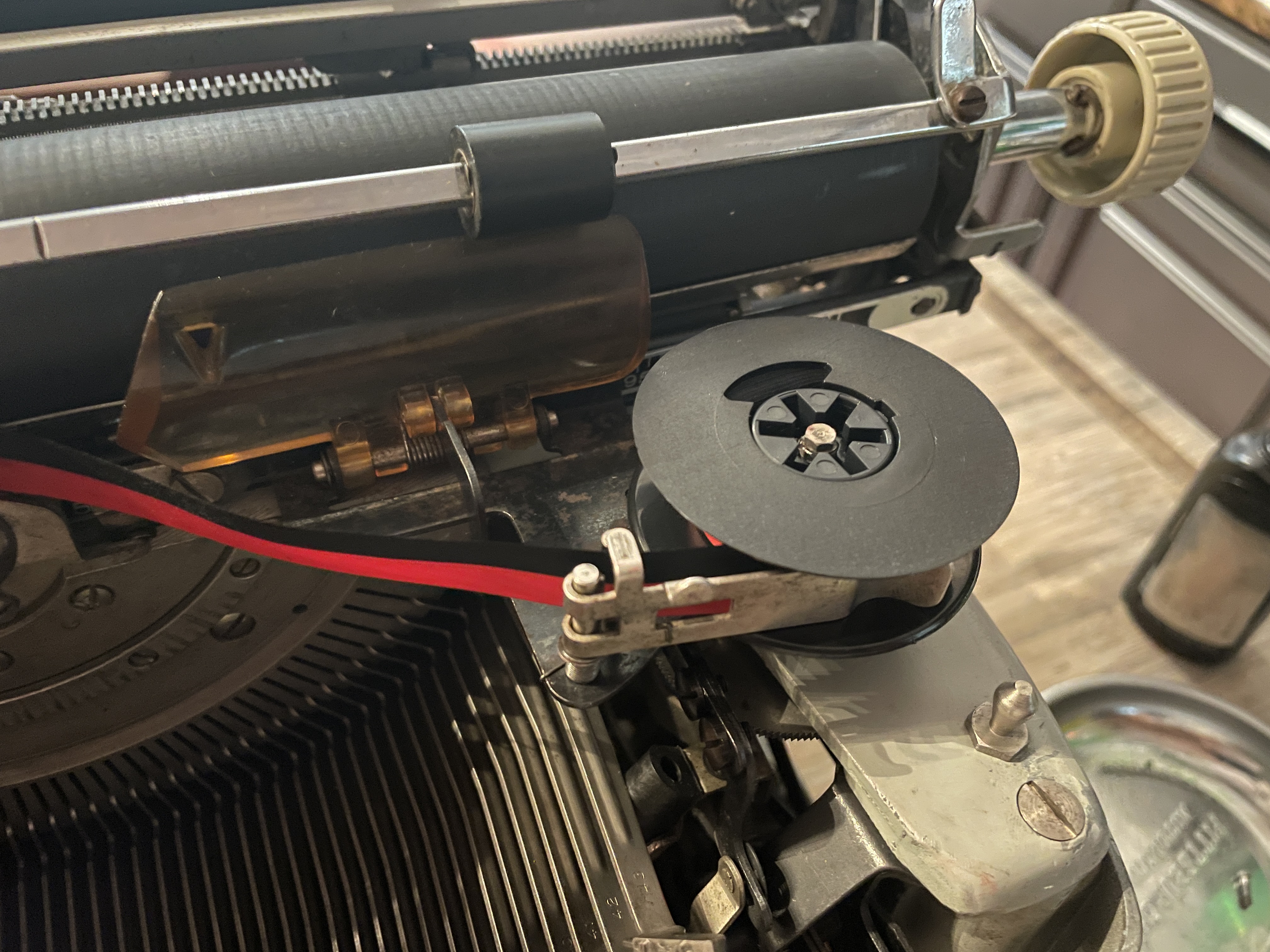
I then used the “universal” plastic spools because they have an adjustable-size center, a clamping mechanism that squeezes and holds firm to the center spindle of the ribbon mechanism.
I wound fresh ribbon onto the old plastic spools, and it all works perfectly. There’s no automatic ribbon reverse, but I have a manual ribbon reverse switch on the front of the machine. With these spools that clamp to the center spindle, I don’t need special, expensive Woodstock-style spools for this VisOmatic. It’s a kluge, but the ribbon feed works great.
Of note: TB Writers Plus is now selling bulk ribbon and M. Morren from the Netherlands has a really good 3D-printed bulk ribbon winder. I found his Royal portable bearing feeder tool very useful and am similarly impressed by this high-quality bulk ribbon winder.
I love the bulk ribbon, and I love the winder. I 3D-printed a center hub for the bulk ribbon spool from TB Writers Plus and tapped it in. Perfect.
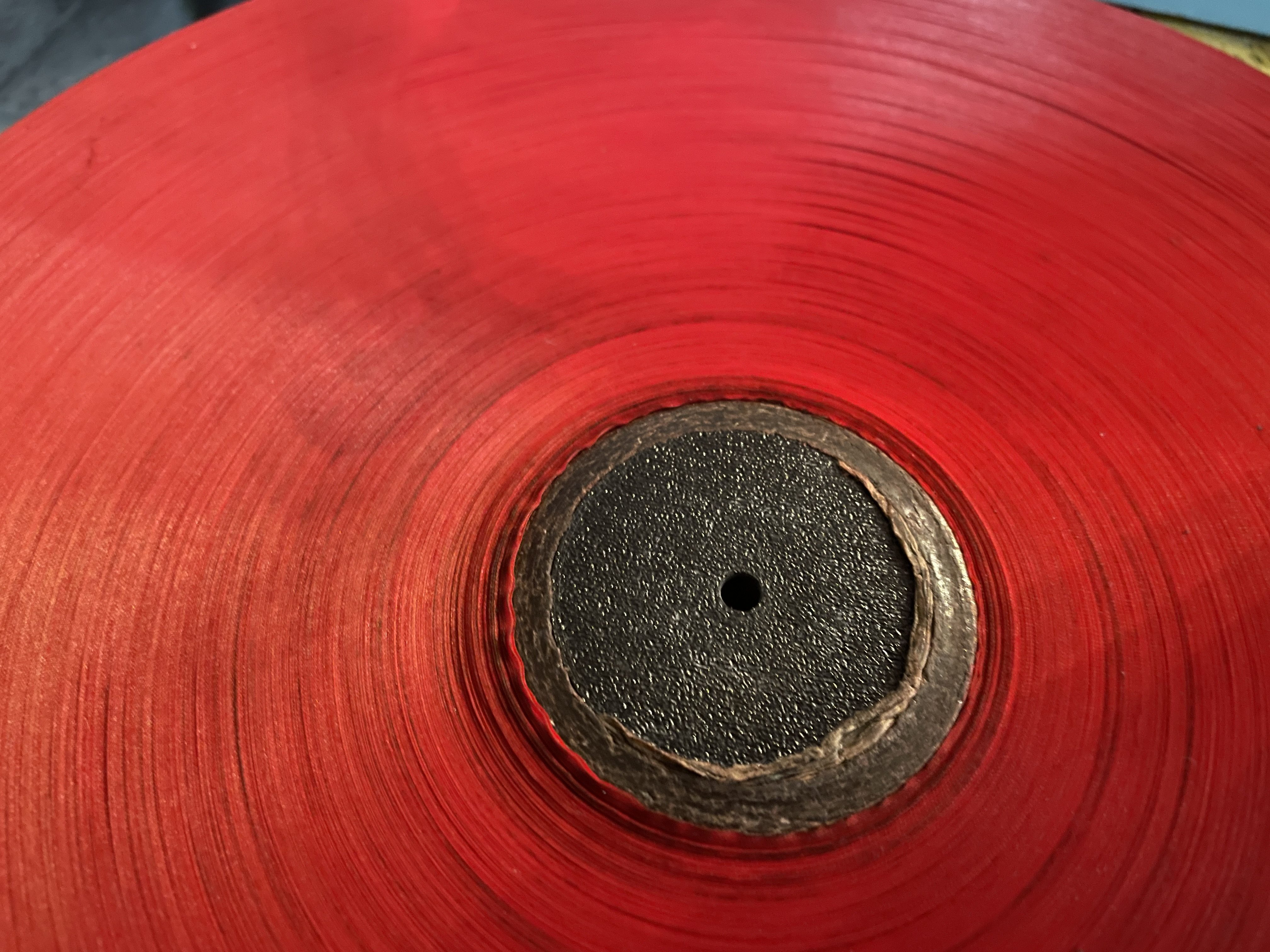
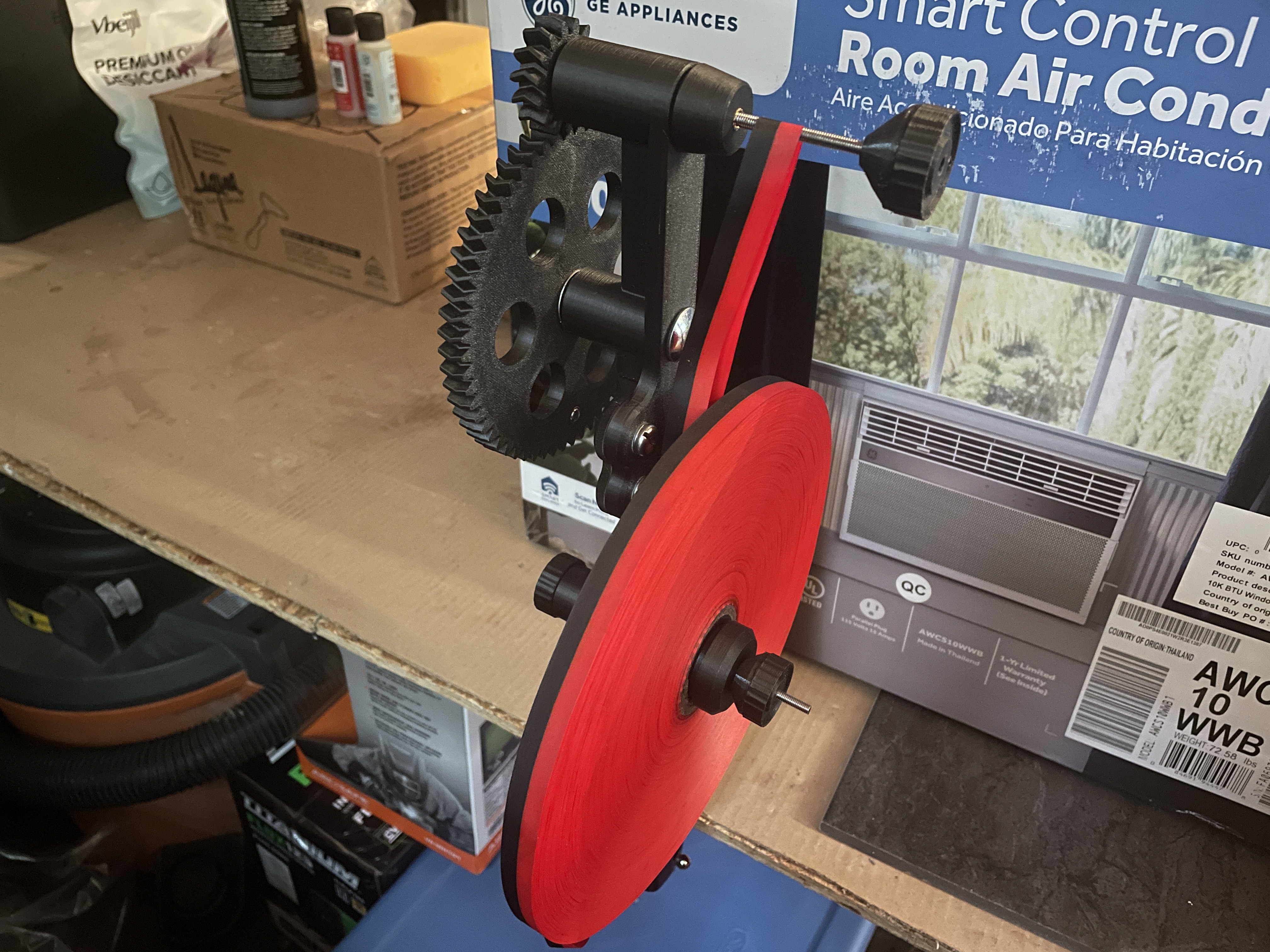
My garage is getting too full
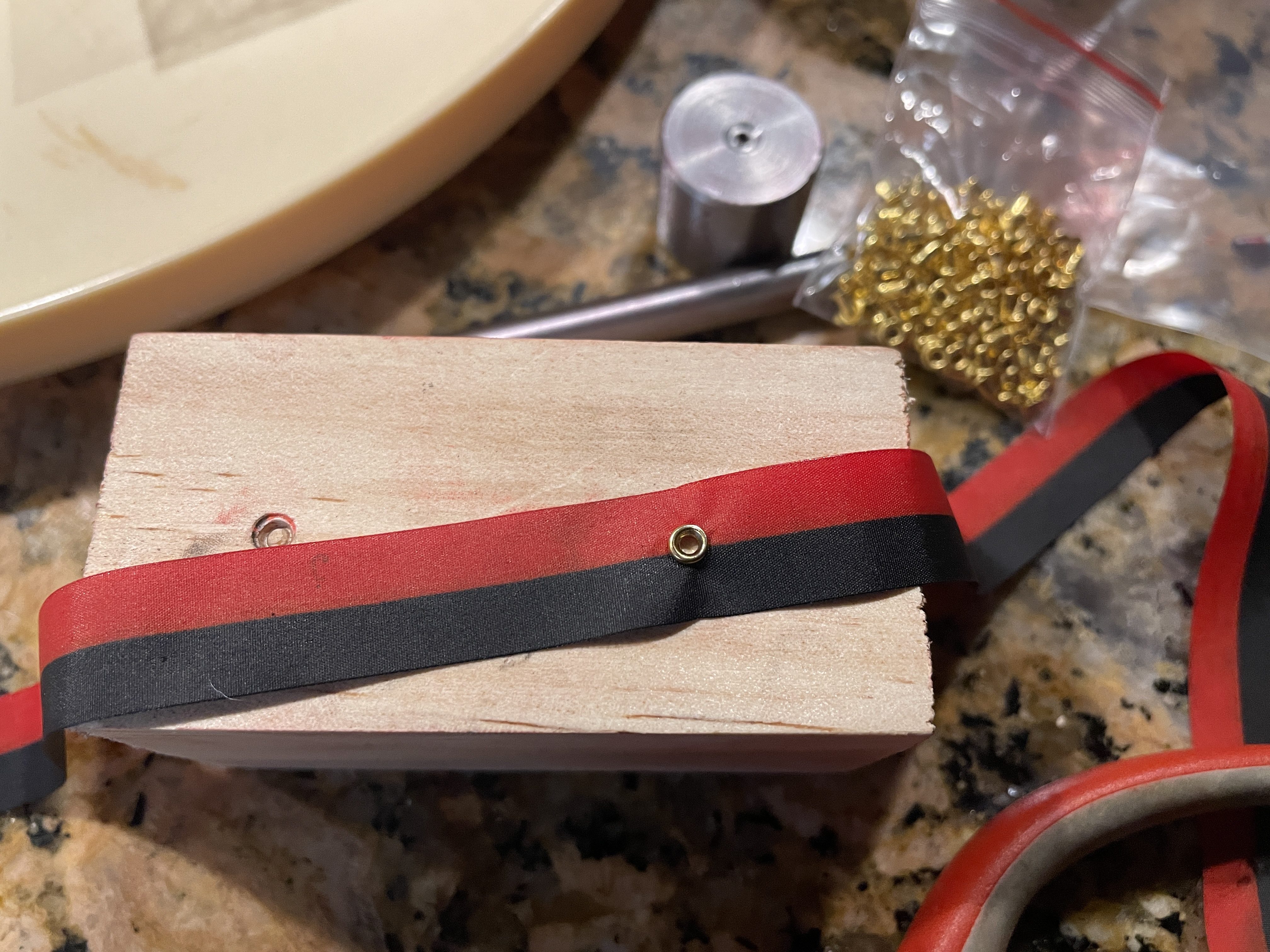
Though this VisOmatic doesn’t use eyelets for ribbon reverse, you may want to watch Joe Van Cleave’s very helpful video on inserting small 2mm eyelets into typewriter ribbon. Smaller eyelets lay flatter and look classier.
On-feet and motion adjustments on an R. C. Allen VisOmatic
I did some practice typing, and the ribbon worked great with the clamping plastic spools. I did notice the tops of my letters were fading a bit at the top. The type was not “on-feet”.
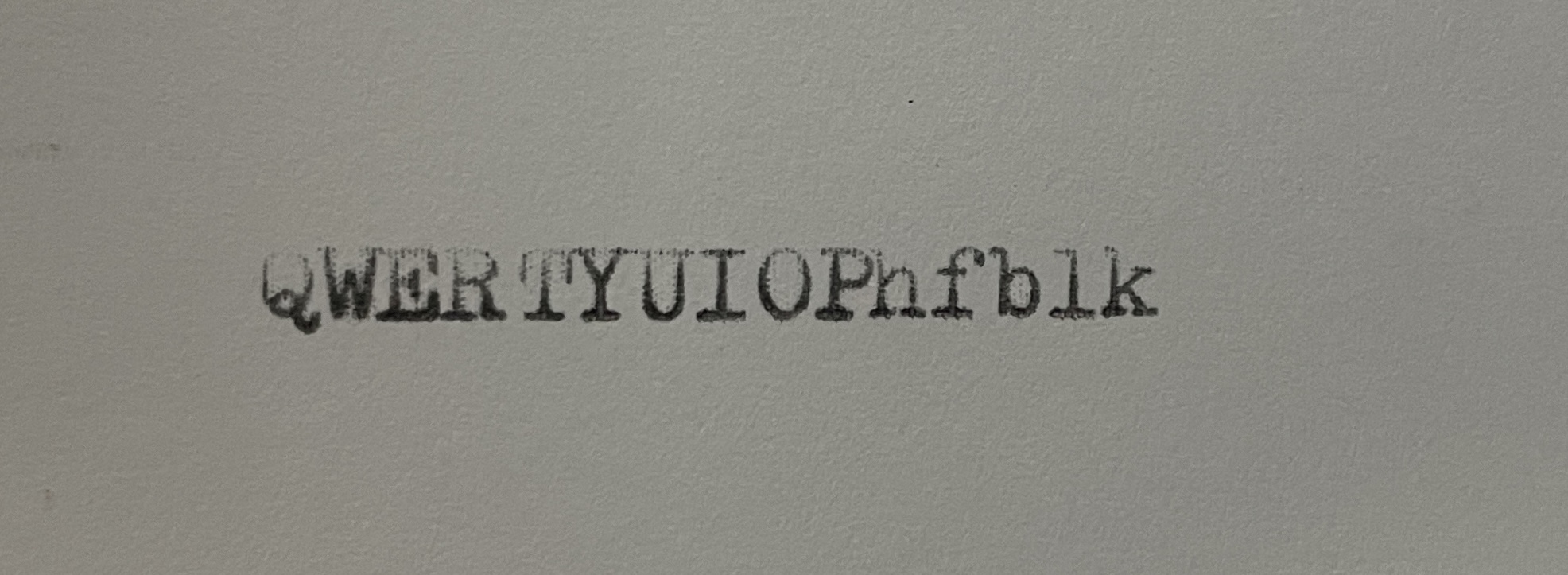
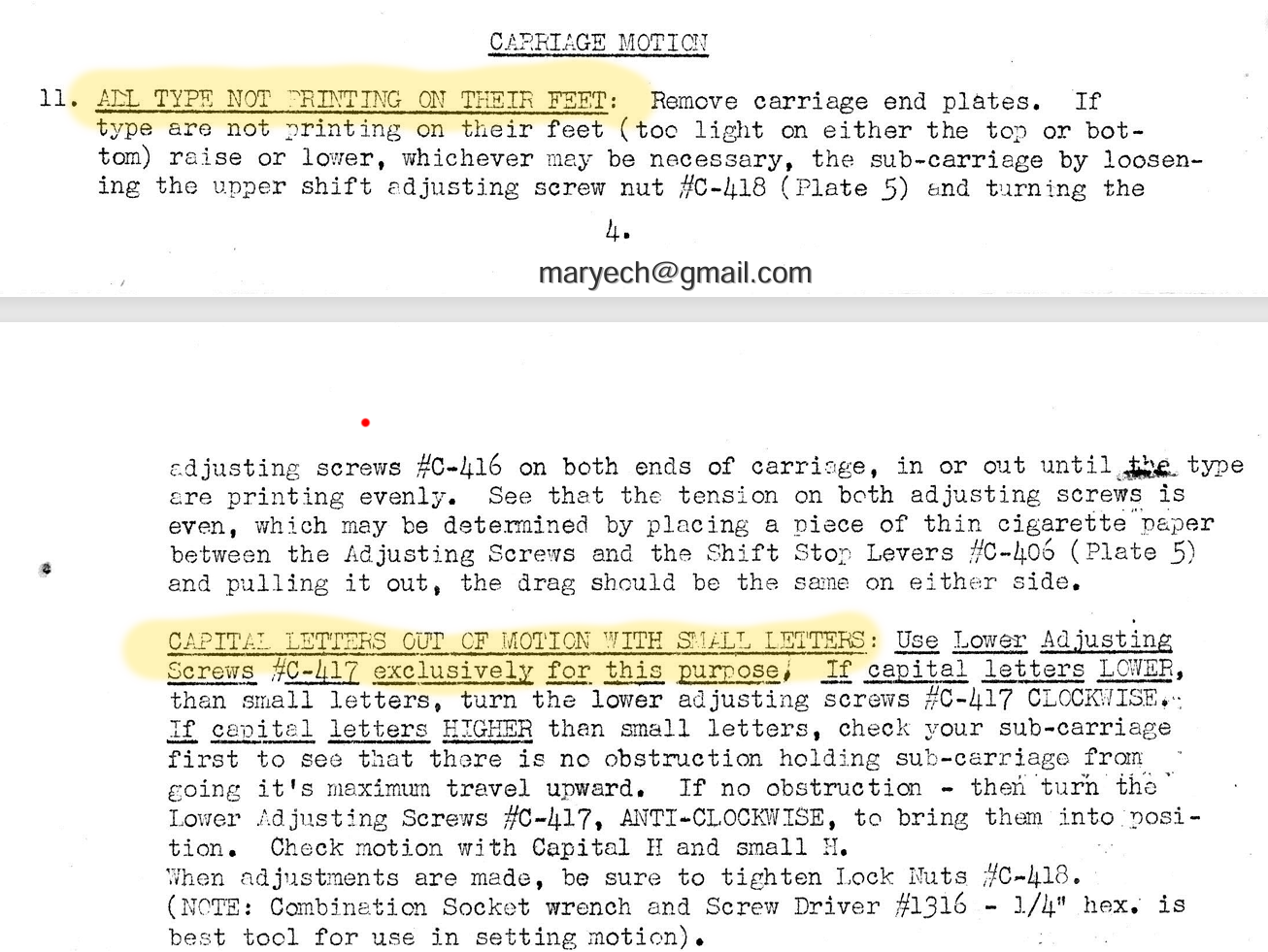
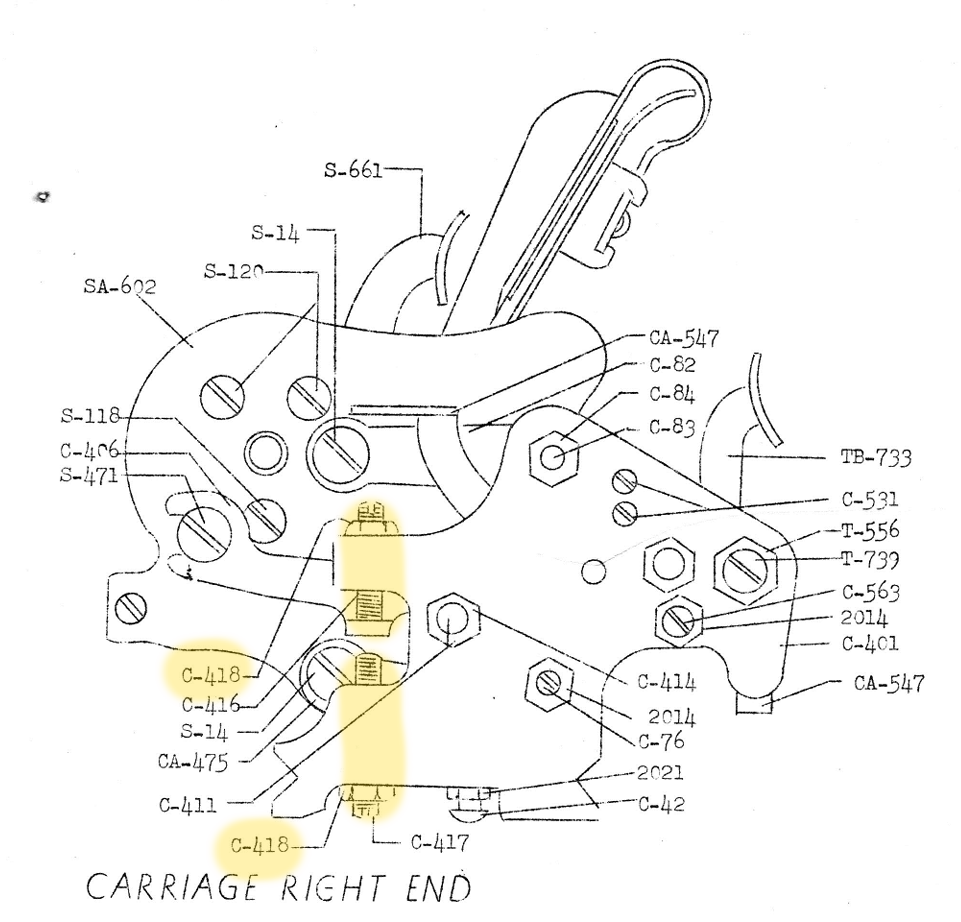
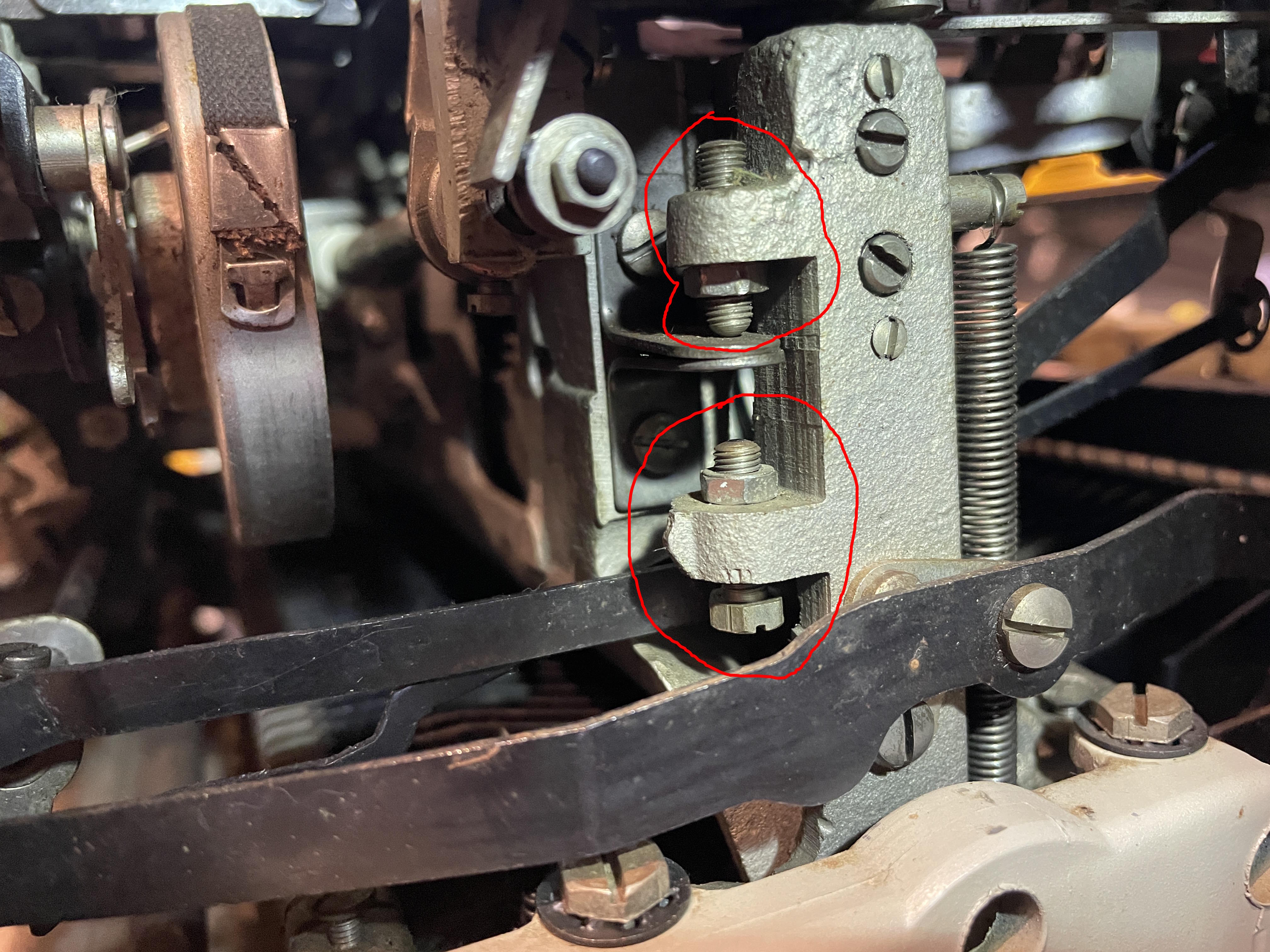
I checked out the adjustment sequence in the service manual. The instructions below are for a Woodstock, but it’s the same adjustment for my 1962 R. C. Allen VisOmatic. Note: it says to remove the carriage. I was able to make the adjustments on this VisOmatic without taking off the carriage.
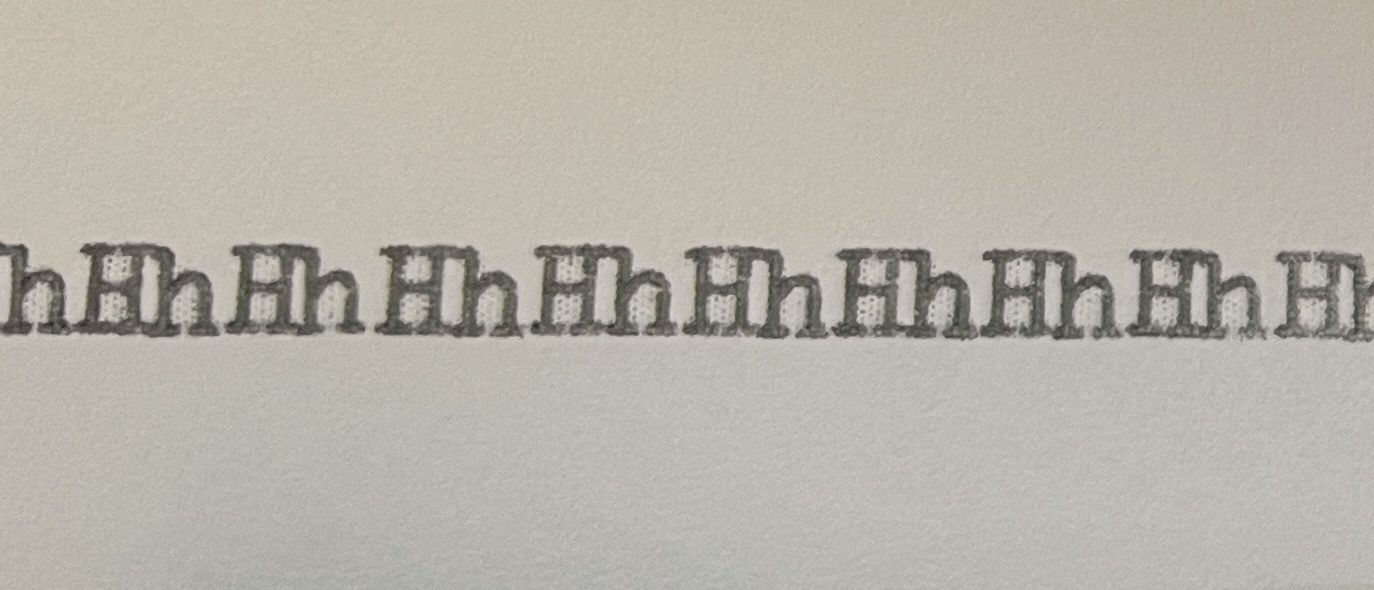
And later after some trial and error, everything is printing properly:
What’s next
I’ve been typing on this VisOmatic, and I’m beginning to fall in love with it. It’s loosening up with cleaning and use and feels good under my fingertips—though it could still benefit from a spa day at TB Writers Plus.
At this point, I’m thinking about next steps. It’s going to need a repaint. The paint on the damaged parts is cracked and failing, ready to flake off. Sadly, it’s positive for lead. No surprise, but I need to stabilize, encapsulate and/or remove the lead paint. I am nutty enough as it is, being a member of “Generation Lead”, and I have a two-year-old underfoot to worry about.
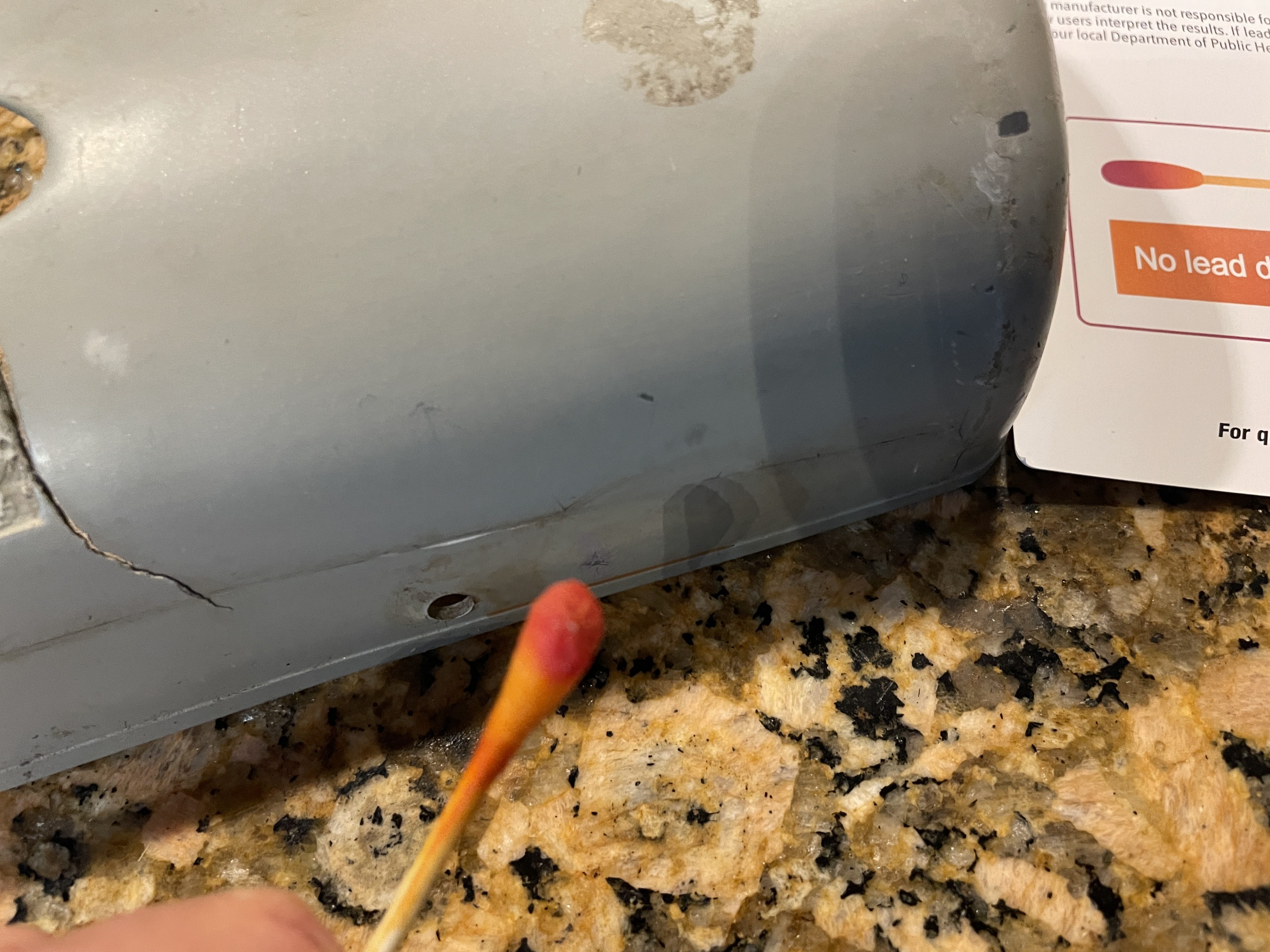
My plan is to do a very careful chemical strip of the existing paint on the cover plates, then media blast, and then powder coat. I’ll need to do a welding repair of the cracked cowl and hammer out the dents on the back cover plate. I’m watching DIY welding videos and hammer and dolly videos.
We are fortunate to have a nearby “makerspace”, NovaLabs, in Fairfax, VA. I plan to take the powder coating sign-off class in July. I’ve done powder coating before on a Voss, and the result was a beautiful, bullet-proof finish. I think I’ll paint the cowl, the back panel, and the side cover plates which are currently a color I’ll call Sad Pachyderm™. Maybe I’ll try a pretty blue or pink or pale green. If you have ideas for colors, let me know in the comments.
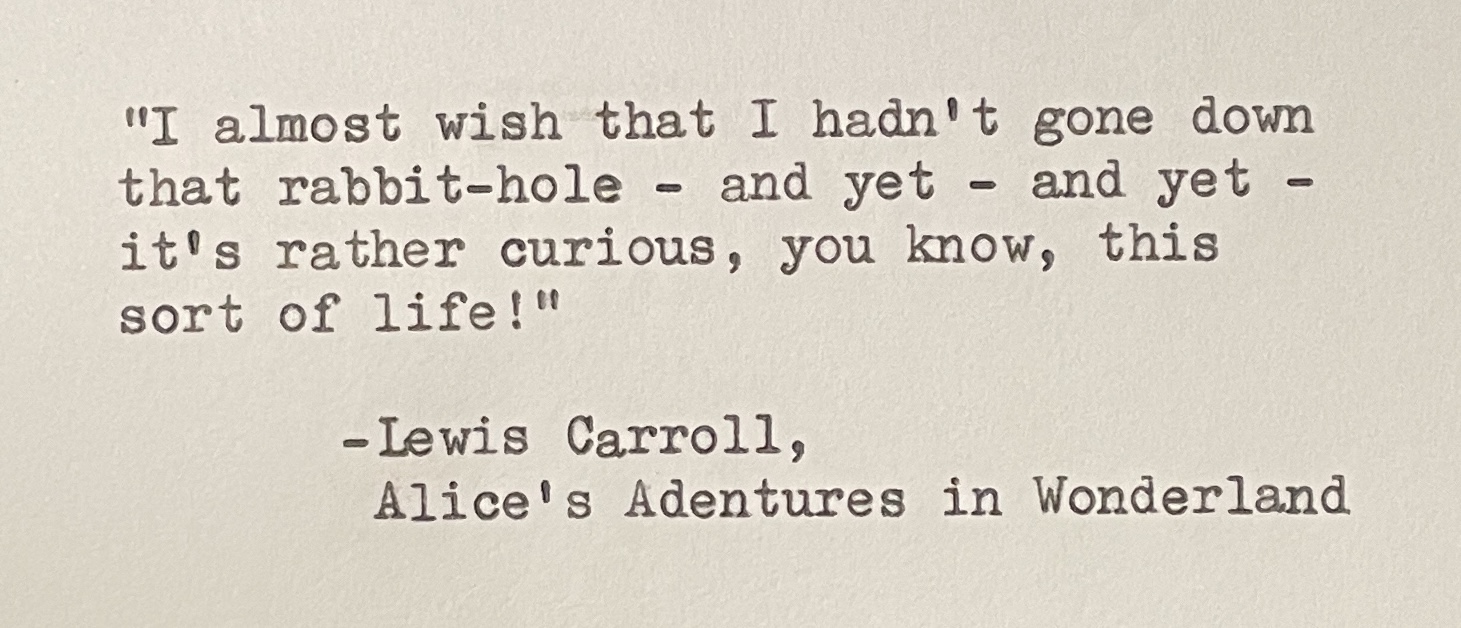
Typewriters, especially less-common brands, are full of secrets and catnip to the curious mind. Those who enjoy playgrounds of obscure knowledge know the thrill of a good rabbit hole. I got sidetracked by Bear Brand Hosiery at the Made-in-Chicago Museum website, and I am a better person for it.

I kind of feel this way about typewriters
Back to work on this VisOmatic. It just spat out a broken screw, but it’s still typing just fine. What a tank!
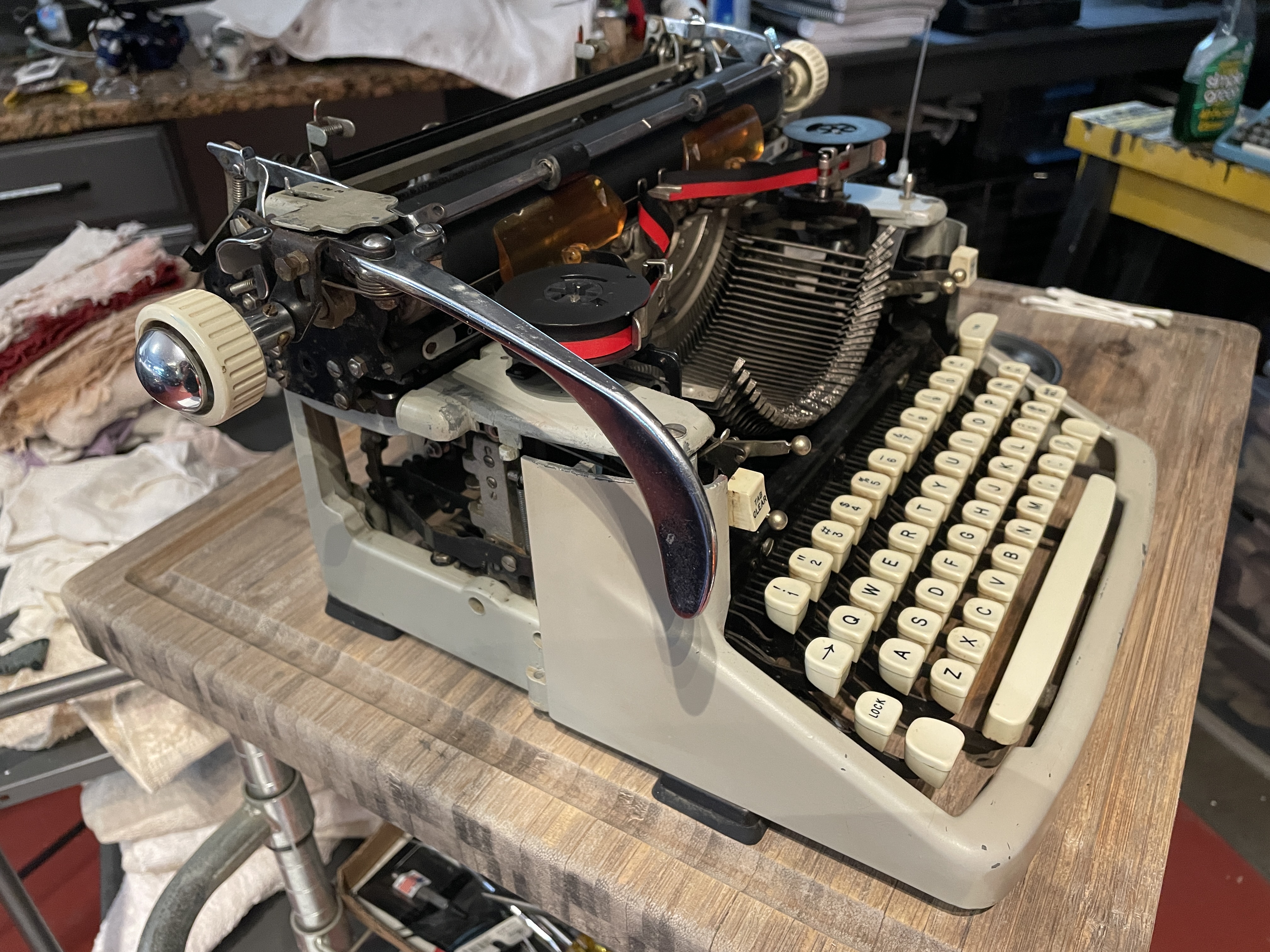


Oh what fun! There is something about these chunky guys that I really enjoy. Plus, I always root for the underdog. And now we know that extraterrestrials love R. C. Allens, too!
LikeLike