I have great affection for old Underwood standards. They didn’t change much over their long, long years of production because they just worked. And they continue to work 80, 100, 120 years later. Opening up an Underwood and seeing their old-fashioned guts is reassuring to this hobbyist. It’s like seeing a familiar face at a crowded party.
A local man, John, reached out to me recently to see if I would be interested in fixing up an old typewriter his 15-year-old daughter Maisie had found at an antique mall. I said, “Of course”, and he dropped it off at my garage.
It was an Underwood standard, Master model, a heavy machine, so I moved it inside on the Moose Cart. This wheeled cart I found on the curb has been invaluable for working on heavy typewriters.
On arrival, the typewriter was locked up. After wiggling the line lock mechanism, it began to type. It was full of a sticky, furry dust, so I dove right in.
What a cool looking machine, all twentieth-century aerodyamic curves. Robert Messenger of ozTypewriter has determined that the Underwood Master is a Willie Dobson design:
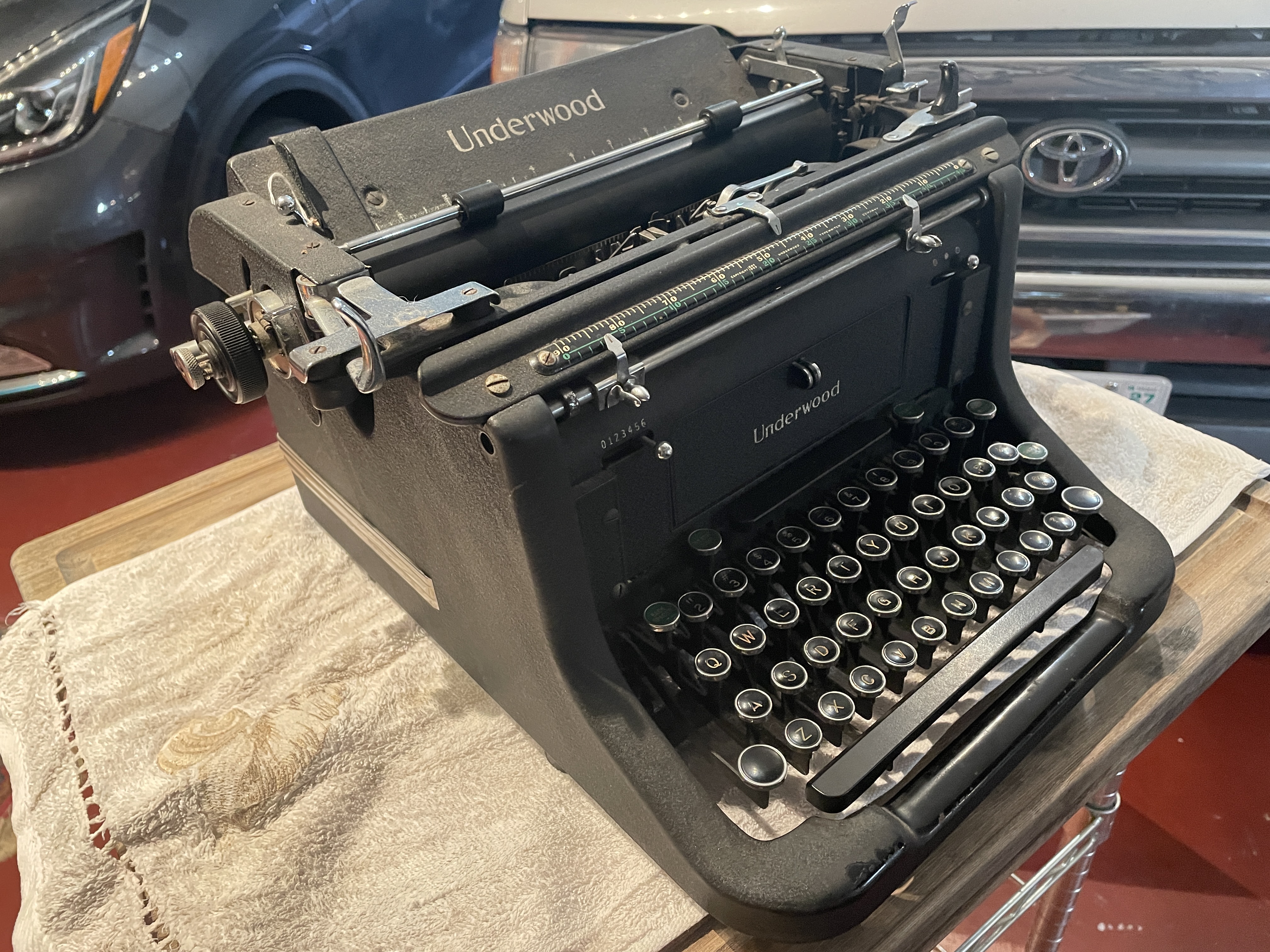
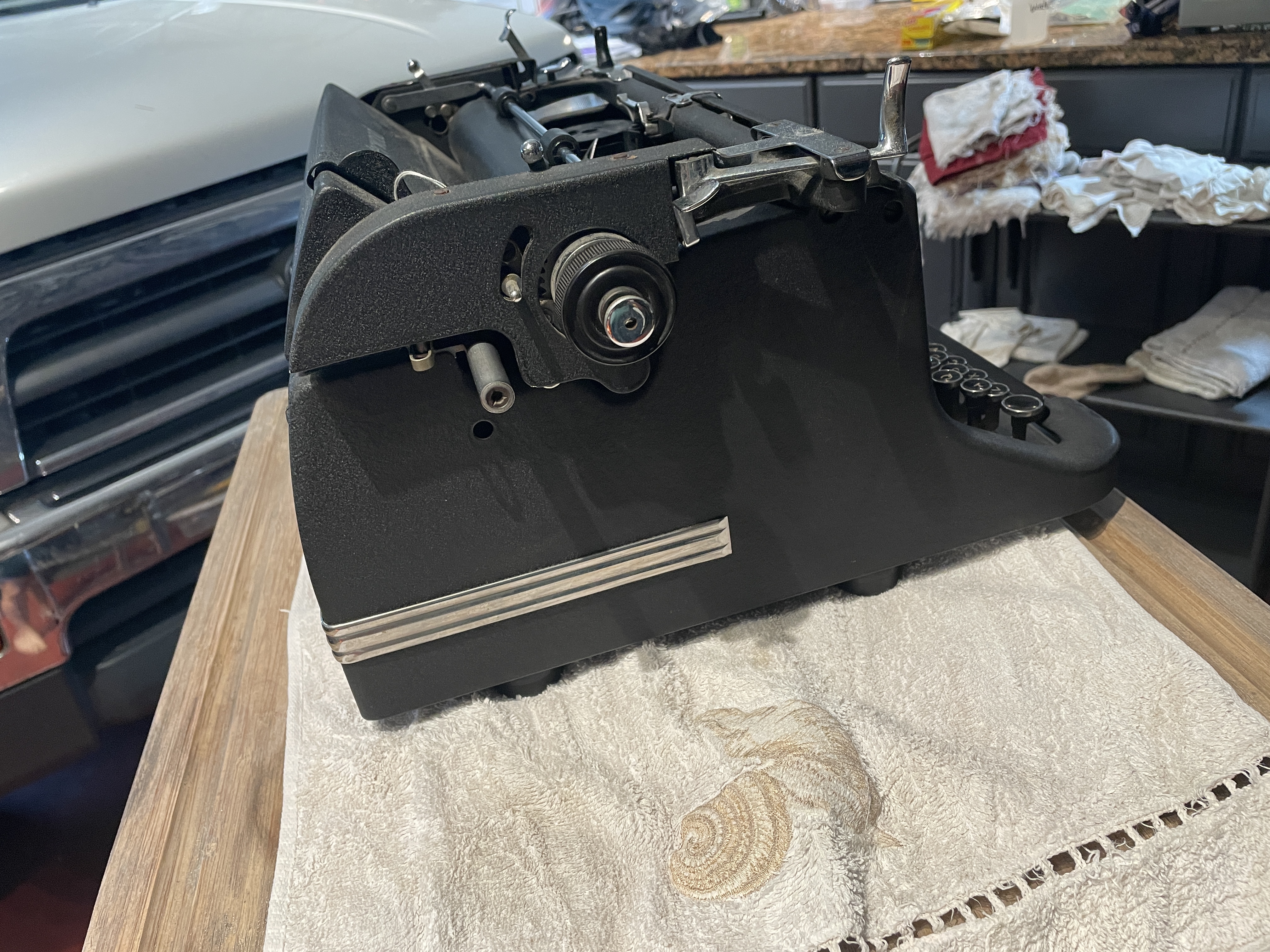
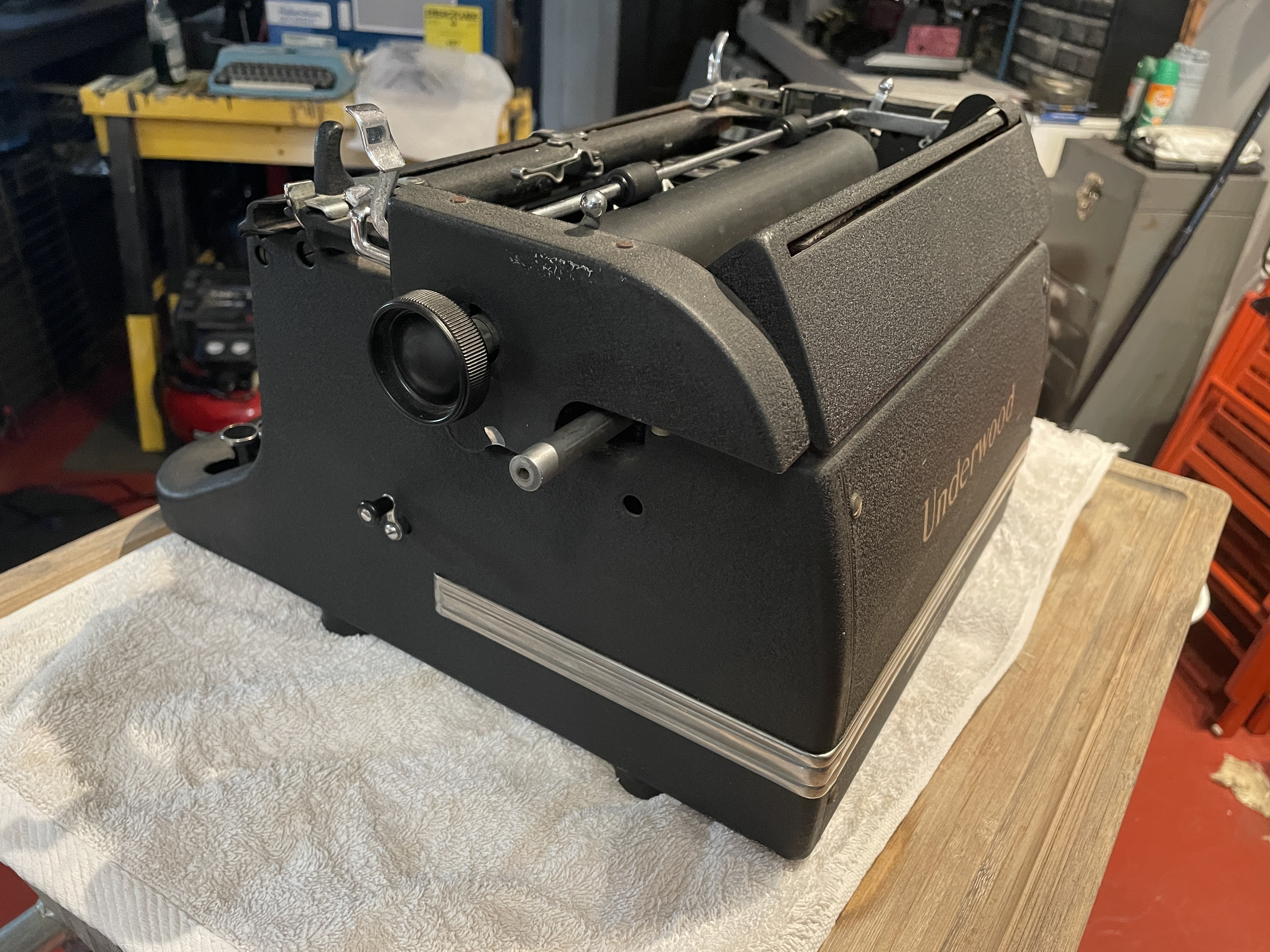
If I named typewriters, this one would be Miss Clavel after Ludwig Bemelmans’ nun with the billowing habit.
By serial number M5234568-11, it’s a 1940 Underwood Master (Model M).
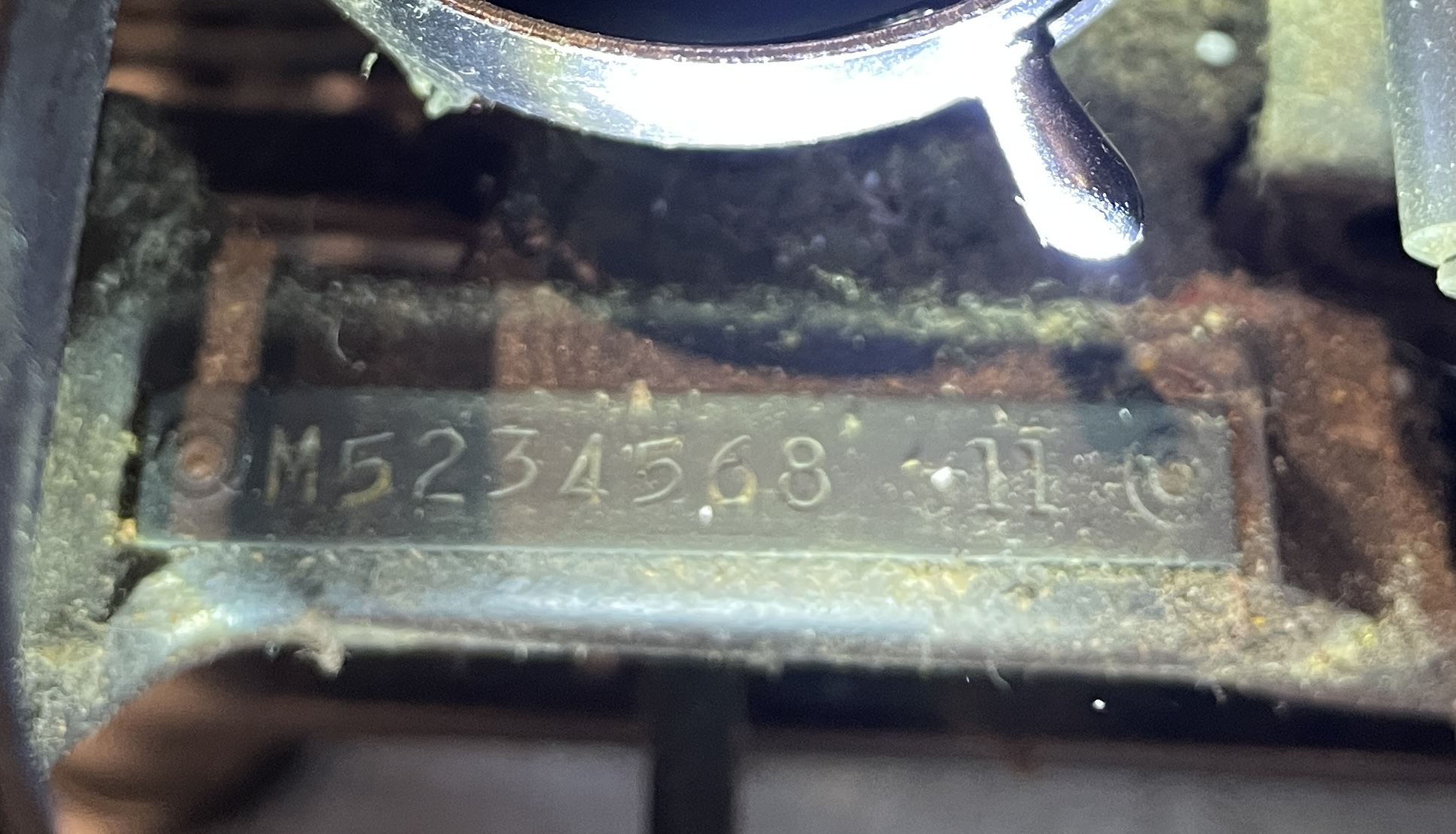
Serial number is next to right ribbon spool
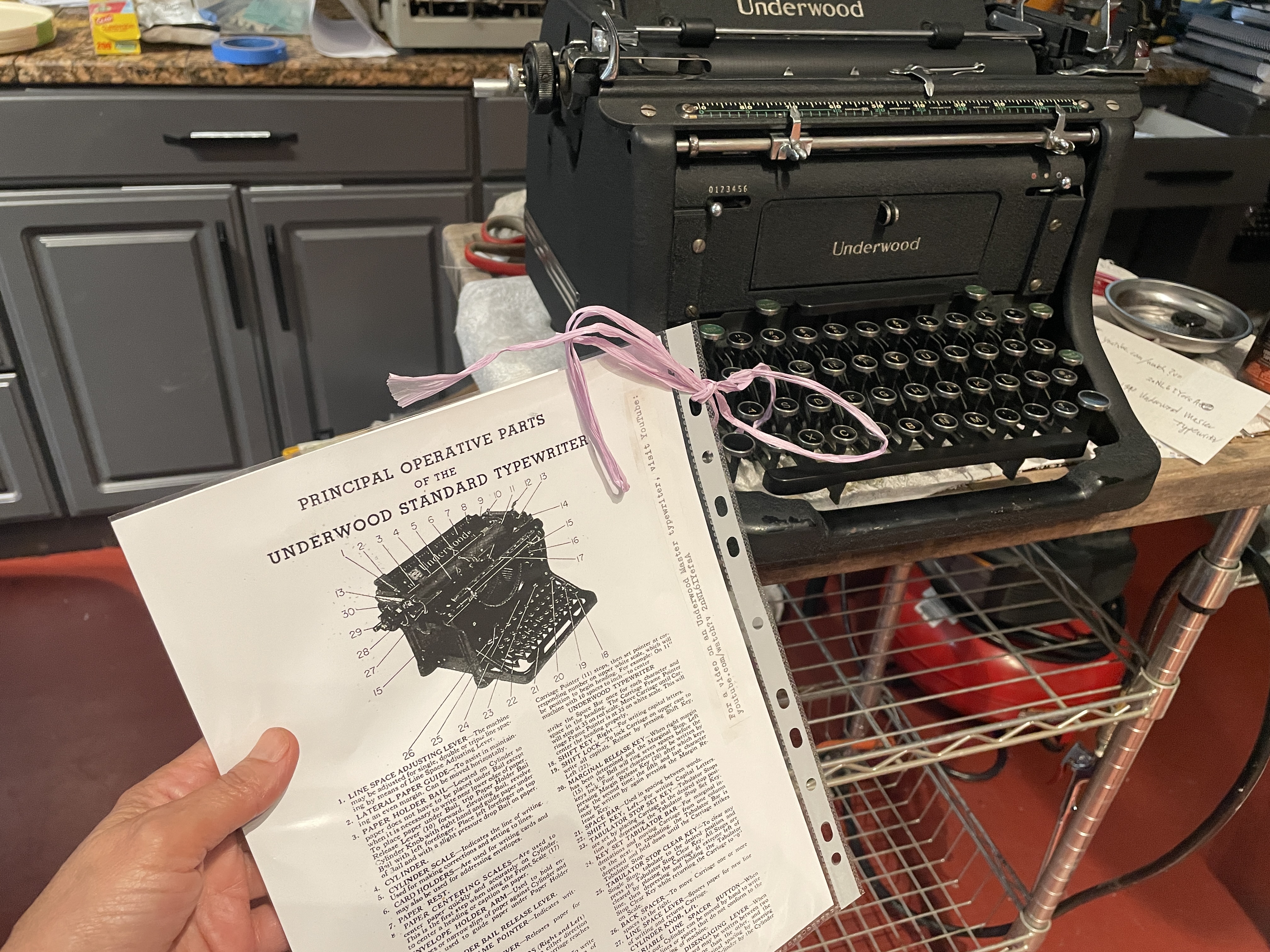
I dug around for information on the Underwood Master. While I could not find a user’s manual for the Master model, Richard Polt’s manuals archive has an 1937 Underwood 6 user functions diagram which is pretty close.
Over at Typewriter Database, I checked out the pretty pictures of the Underwood Masters. It looks like the Underwood Master originally had spool covers (!). See Richard Polt’s sighting of this Underwood Master:
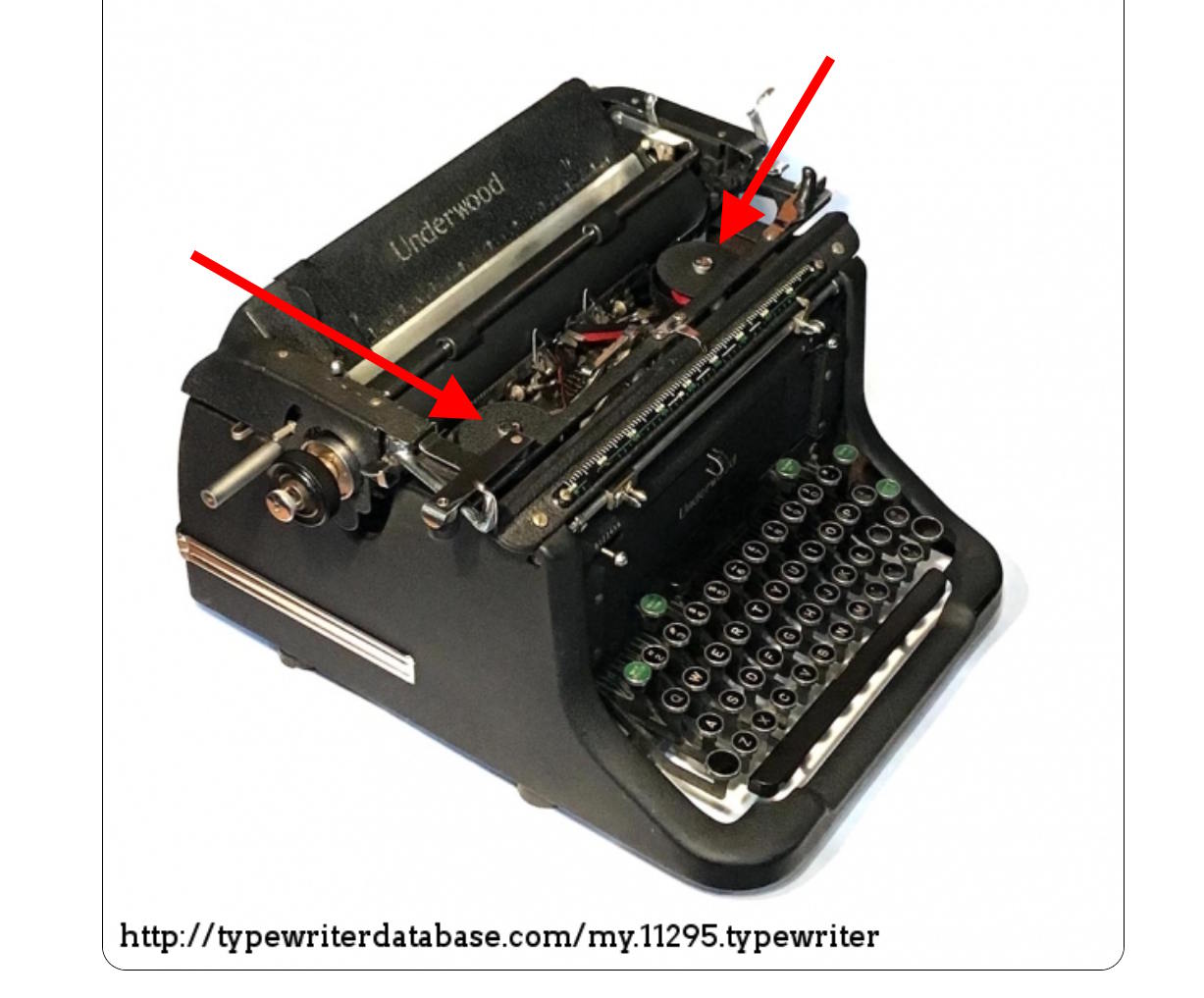
They were manufactured from about 1937 to 1942 with overlap with the Model S. I love this Model M’s little door on the front with the finger pull. It’s for accessing the type for cleaning, and the older Model Ms have it.
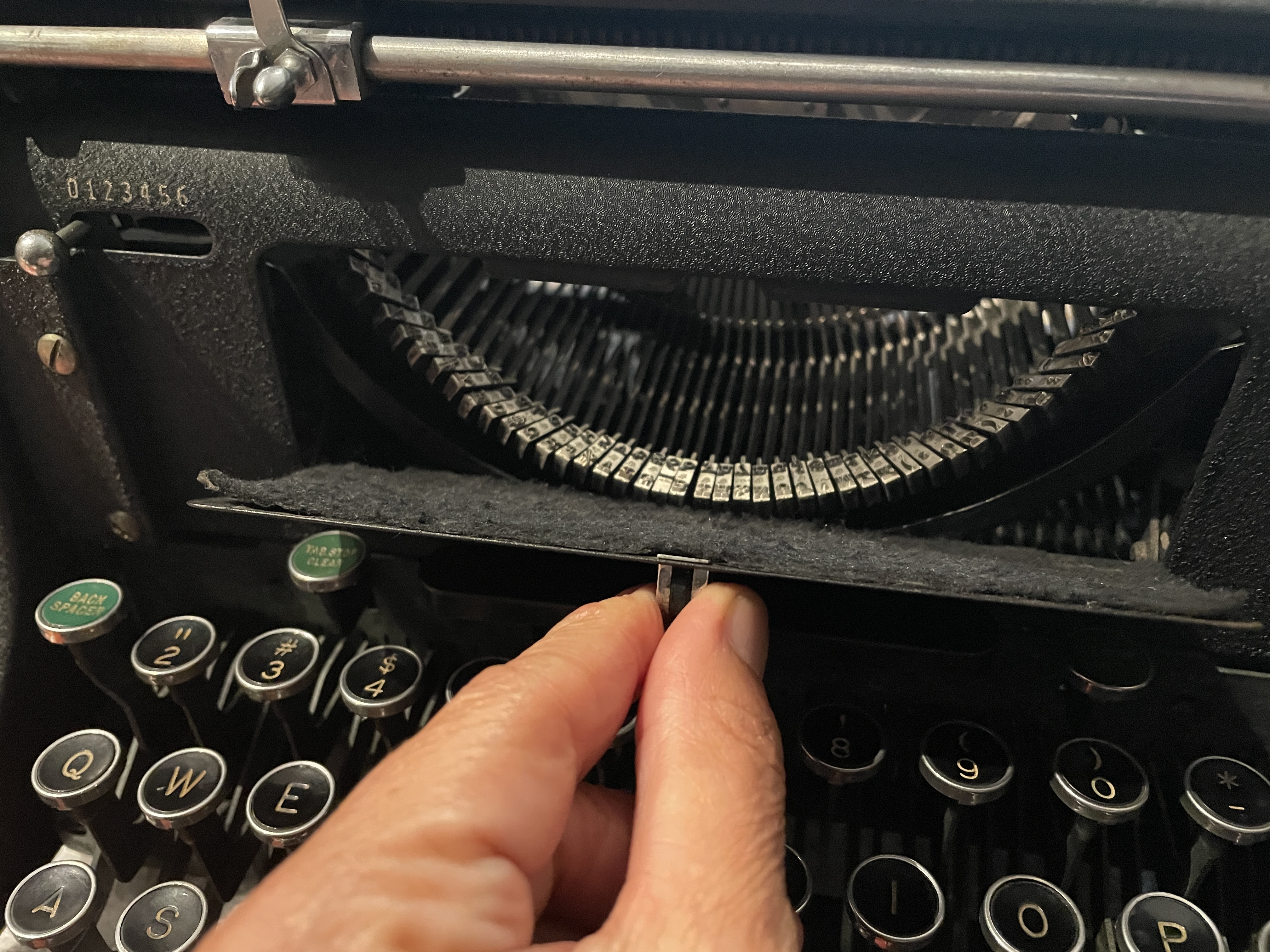
Removing Cover Plates from an Underwood Master
I needed to strip it down for cleaning, so I started by removing the front panel with the little door. There are four screws in front. Unscrew those and the touch control knob and slide the front panel off to the left.
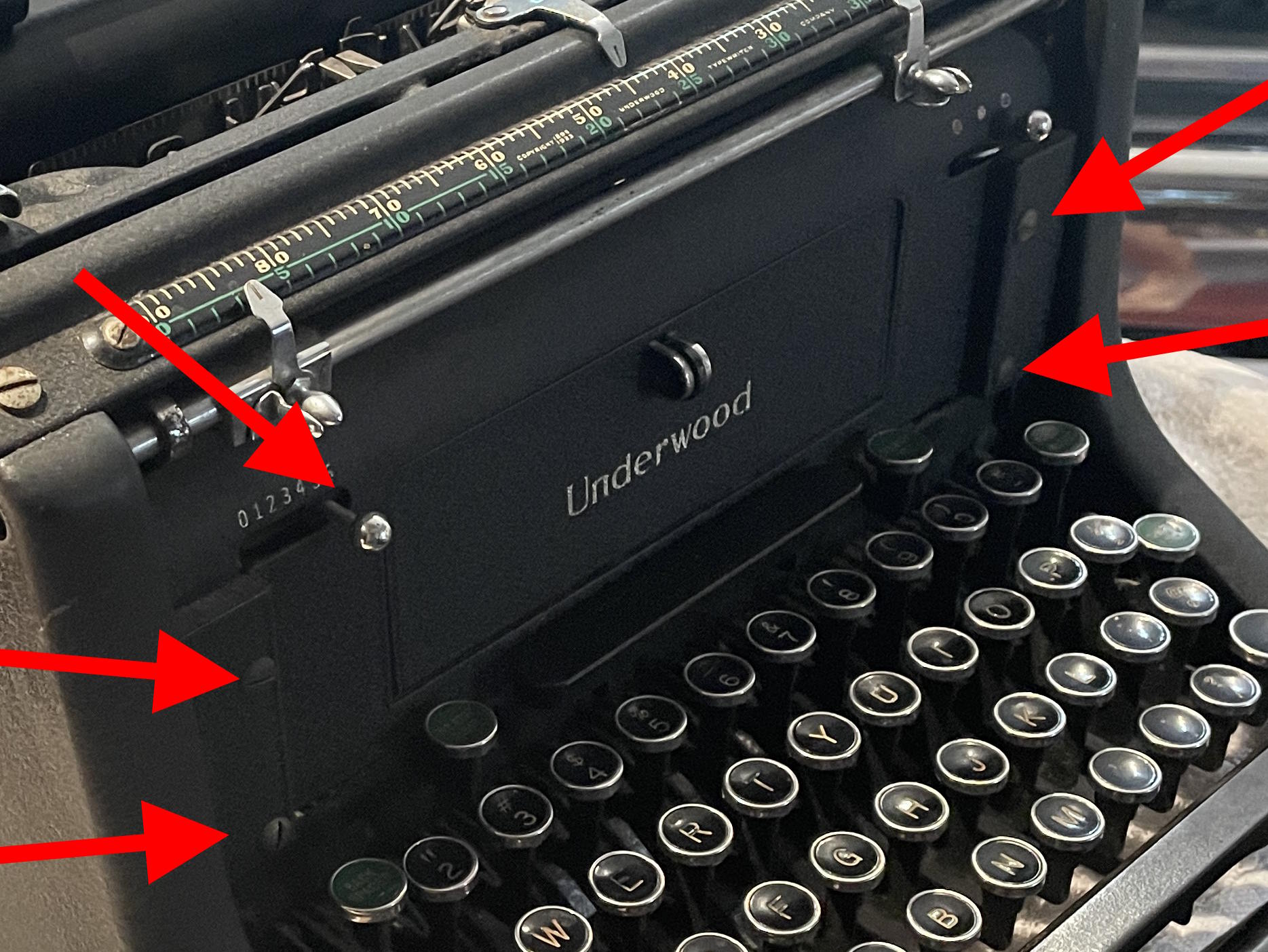
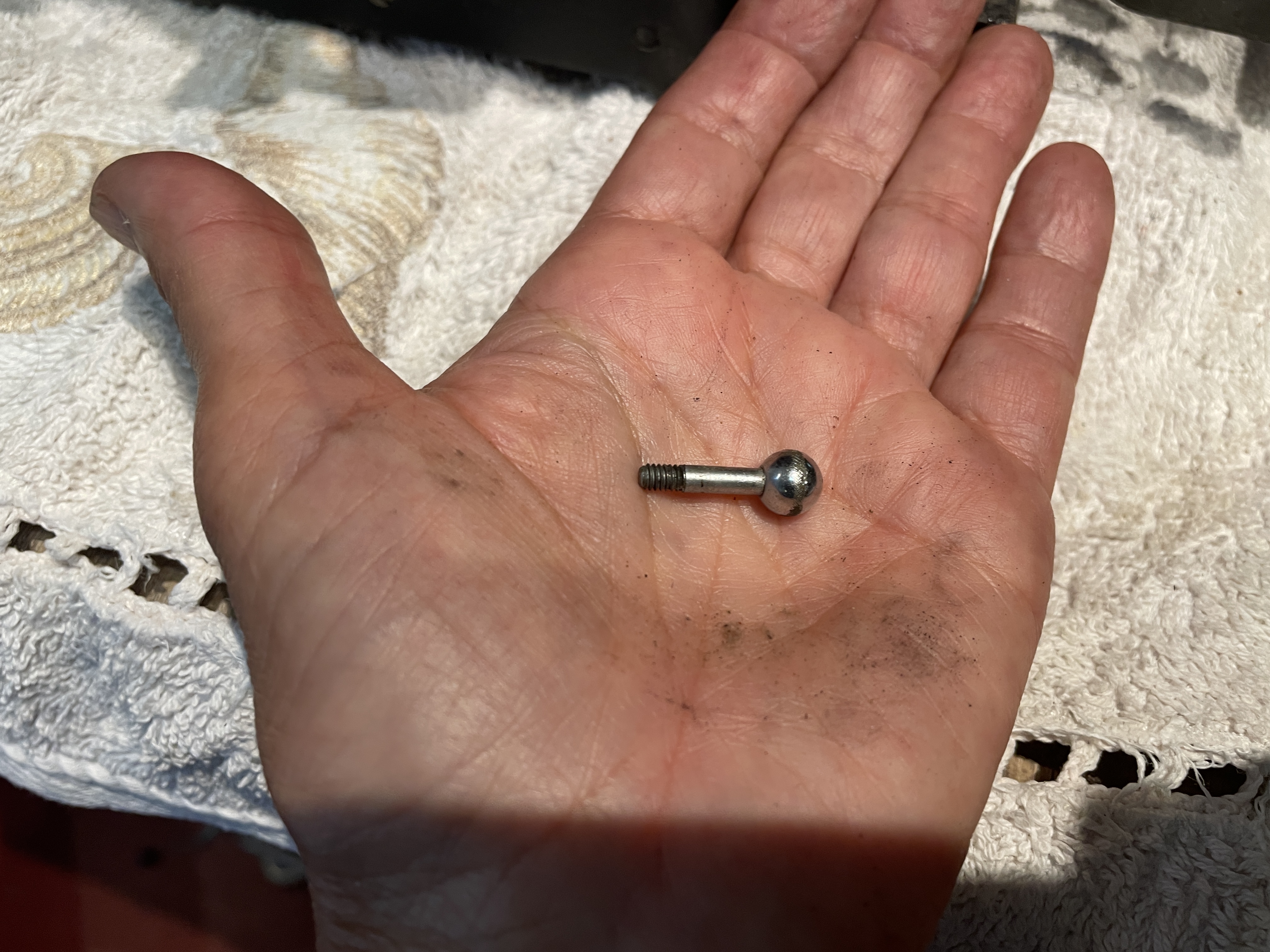
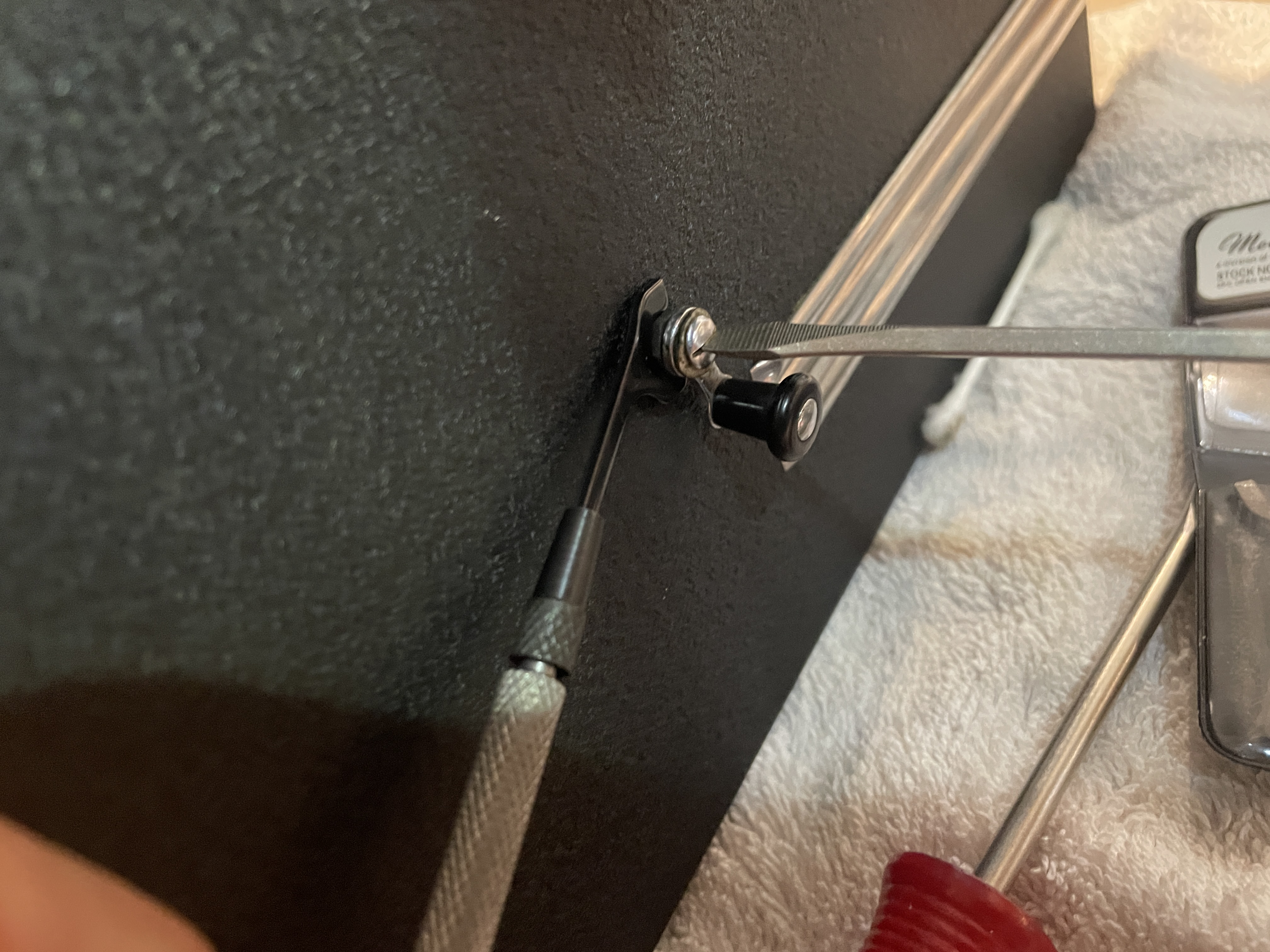
I then took the back cover plate off ( four screws) and removed the feet. I removed the ribbon winding arm using a 1/4″ wrench and and a screwdriver. The main body cover plate then slid off forward.
Surprise! An old-timey Underwood jump scare! Underneath that cool Streamline Moderne styling is a good old Underwood standard, carriage shift and all:
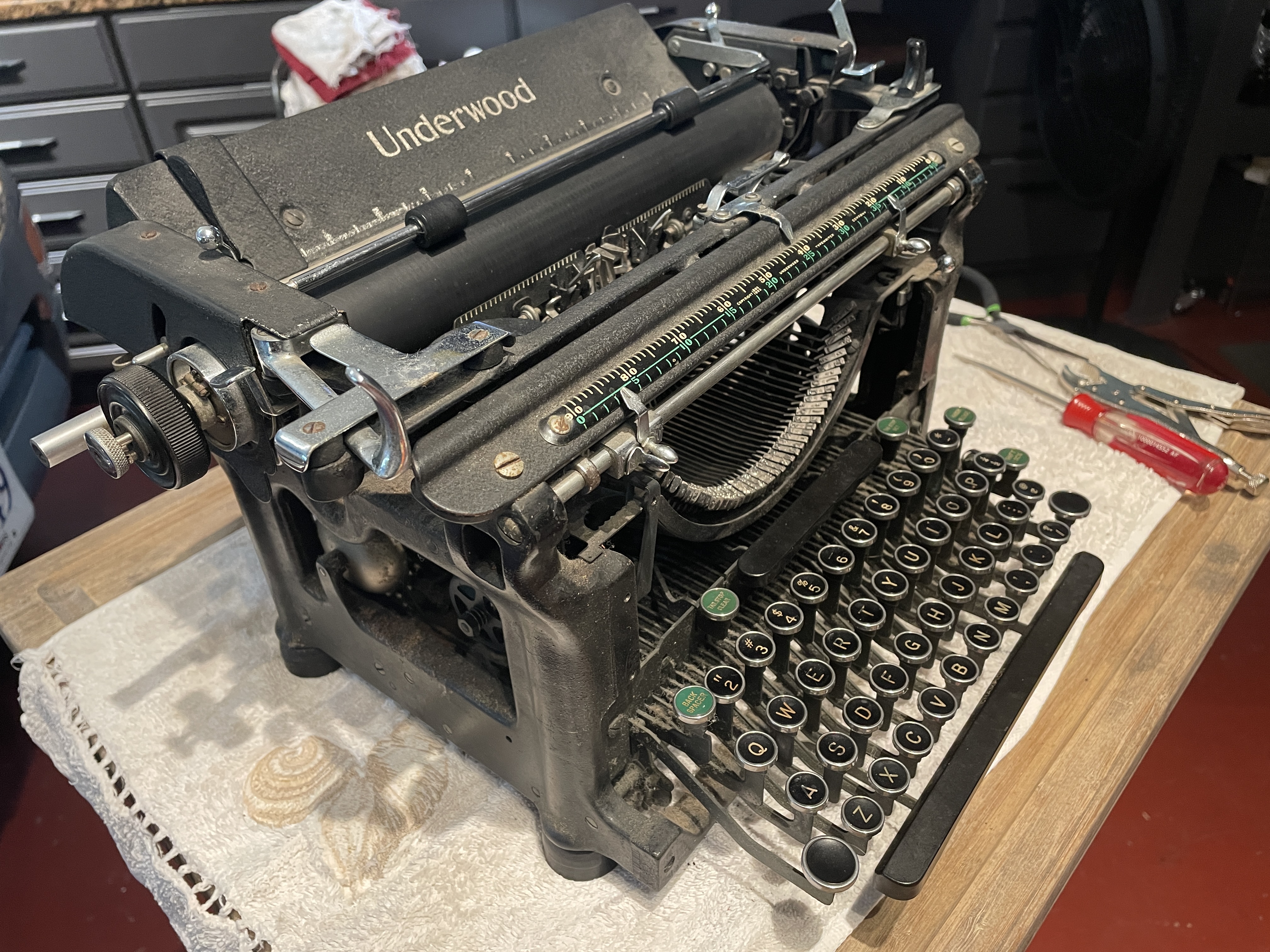
Hello, Old Friend.
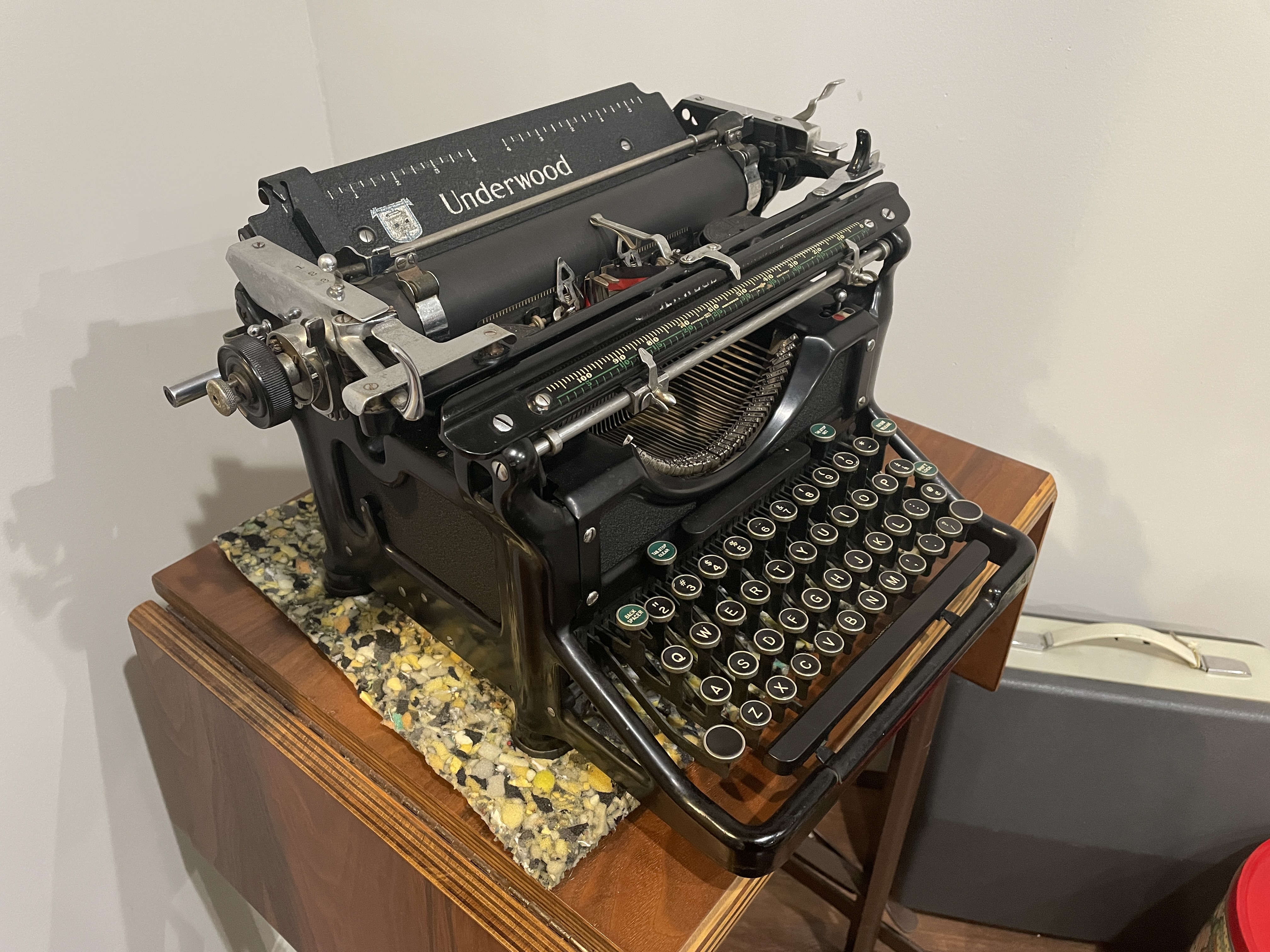
Stripped down, it looks just like the Underwood 6 that I have in the basement.
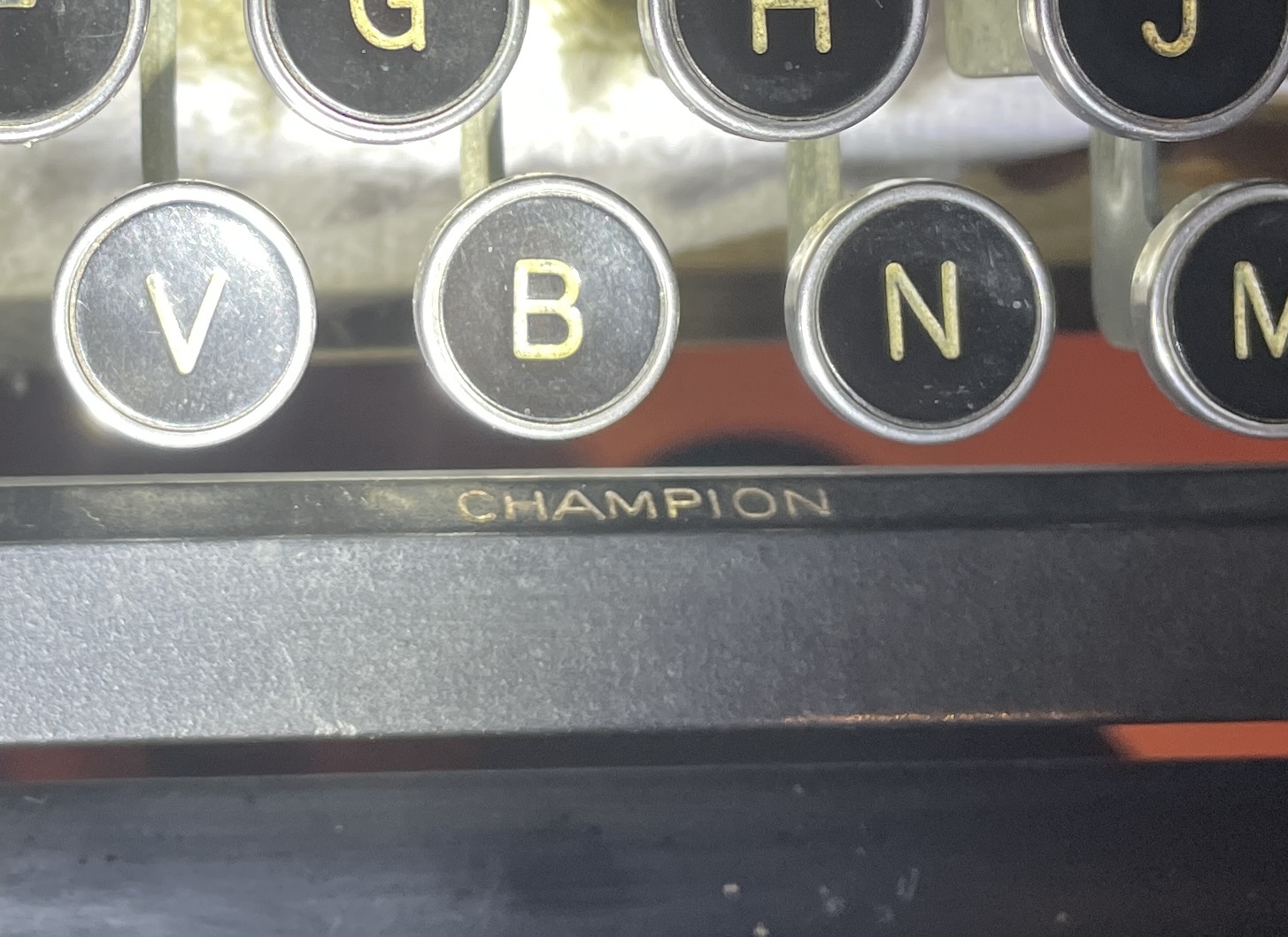
It says “Champion” on the inside of the space bar like the Underwood 6.
I like Underwood’s philosophy of If it ain’t broke, don’t fix it. By 1940, Underwood had sold millions of these standards. But I wonder: were they complacent or a tad nervous? This Master with its heavy carriage shift was behind the times in 1940. By then, Remington, Royal, and L C Smith offered basket/segment-shift standards with lighter shifting. My research indicates that Underwood didn’t offer a basket/segment-shift standard until 1947 (!).
Back to business. I put the feet back on and threw a ribbon in so that I could test a little before I cleaned. The rubber feet were in surprisingly good condition for a 86-year-old machine. It was typing really well despite being thick with furry dust and debris. The only real issue was that the line lock was engaging at the end of the line and not disengaging on carriage return.
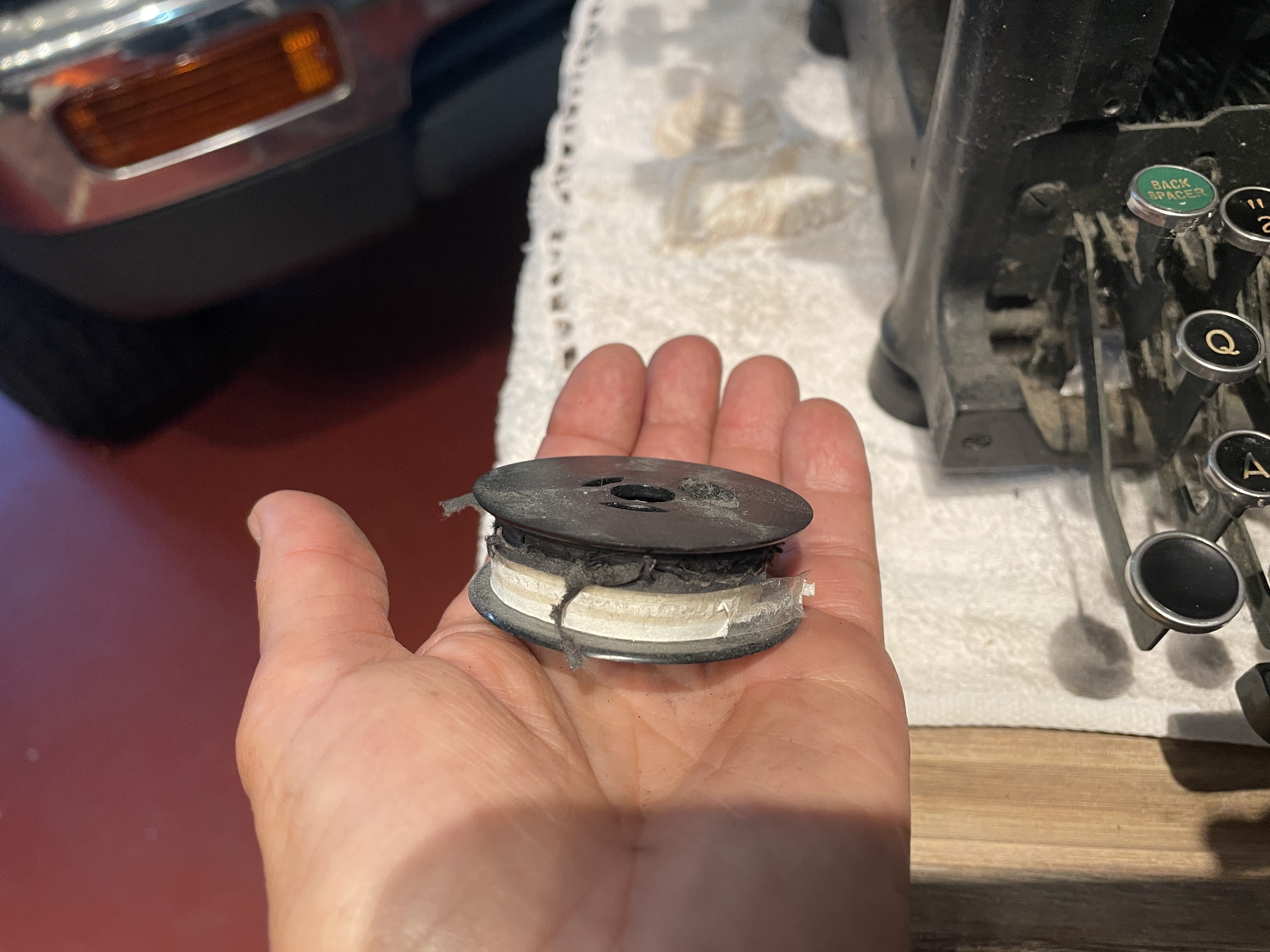
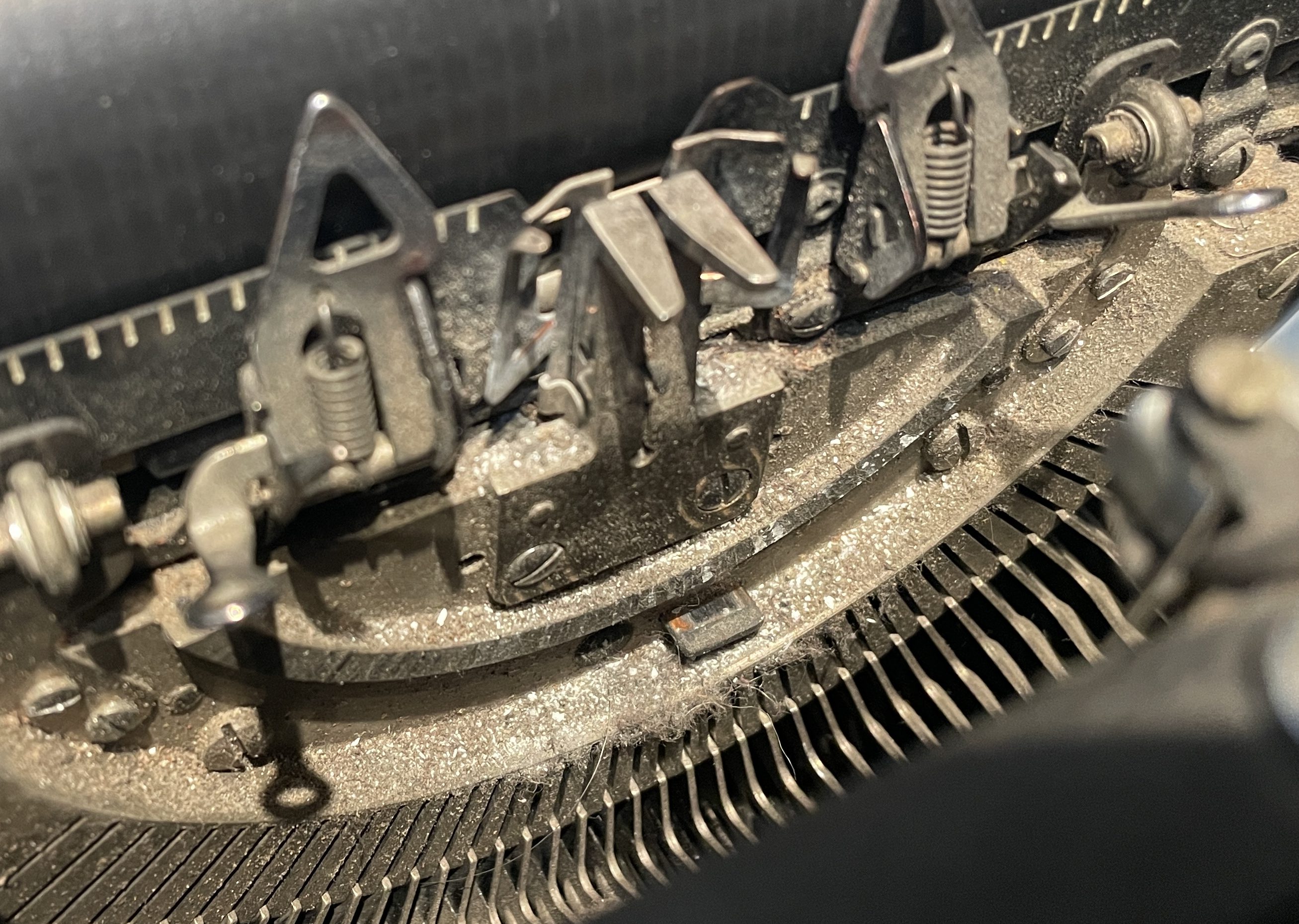
Inside, it was very dirty. A disintegrating correction ribbon had left sticky white debris throughout the machine.
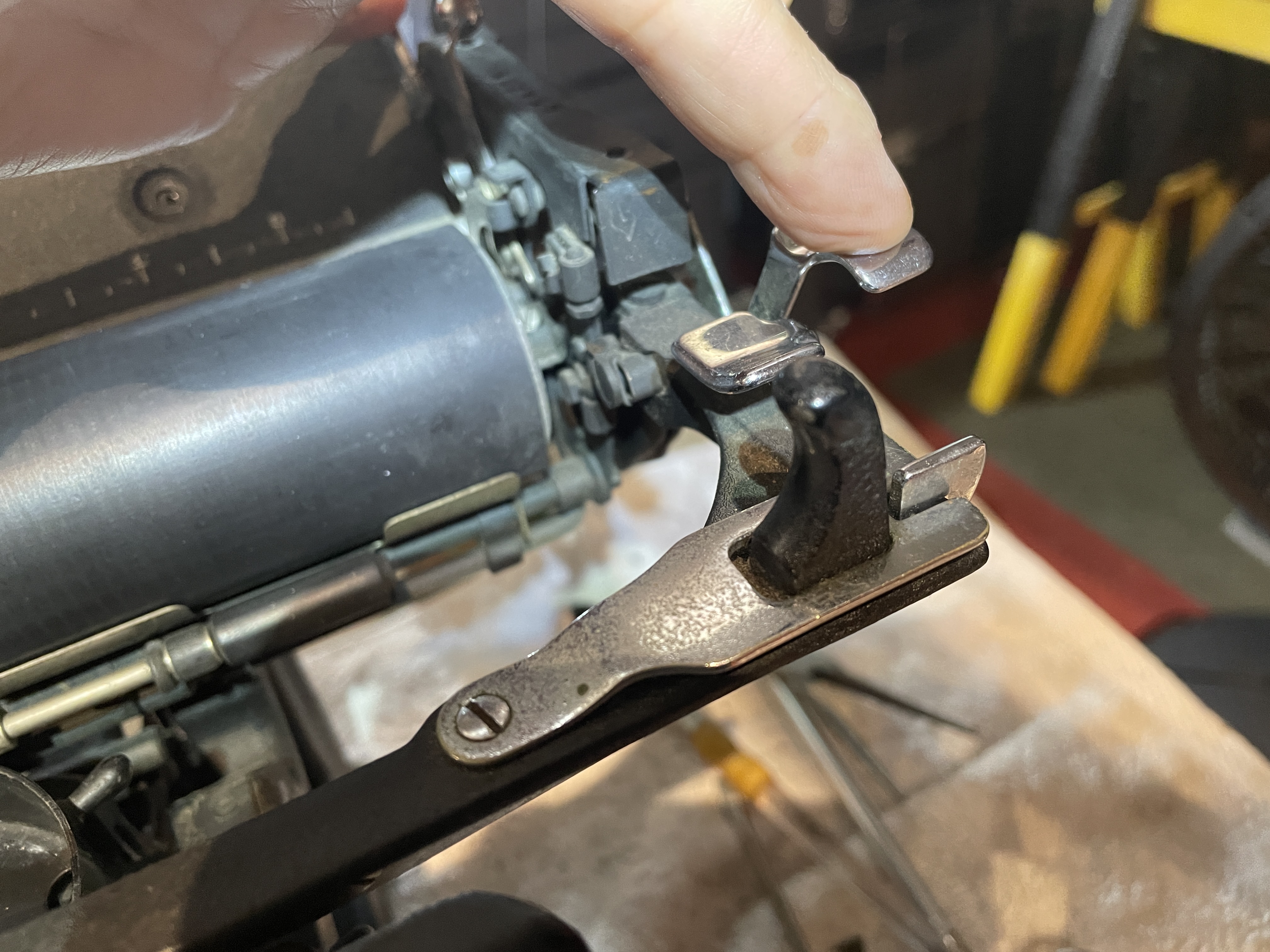
I went ahead and removed the paper rest. After taking off the two screws on the front of the rest, I loosened the two screws that hold its bottom. They were buried in the carriage. I had to engage the paper release lever to access the screw on the right side. You don’t have to completely remove these screws since the paper rest will slide out with just loosening them.
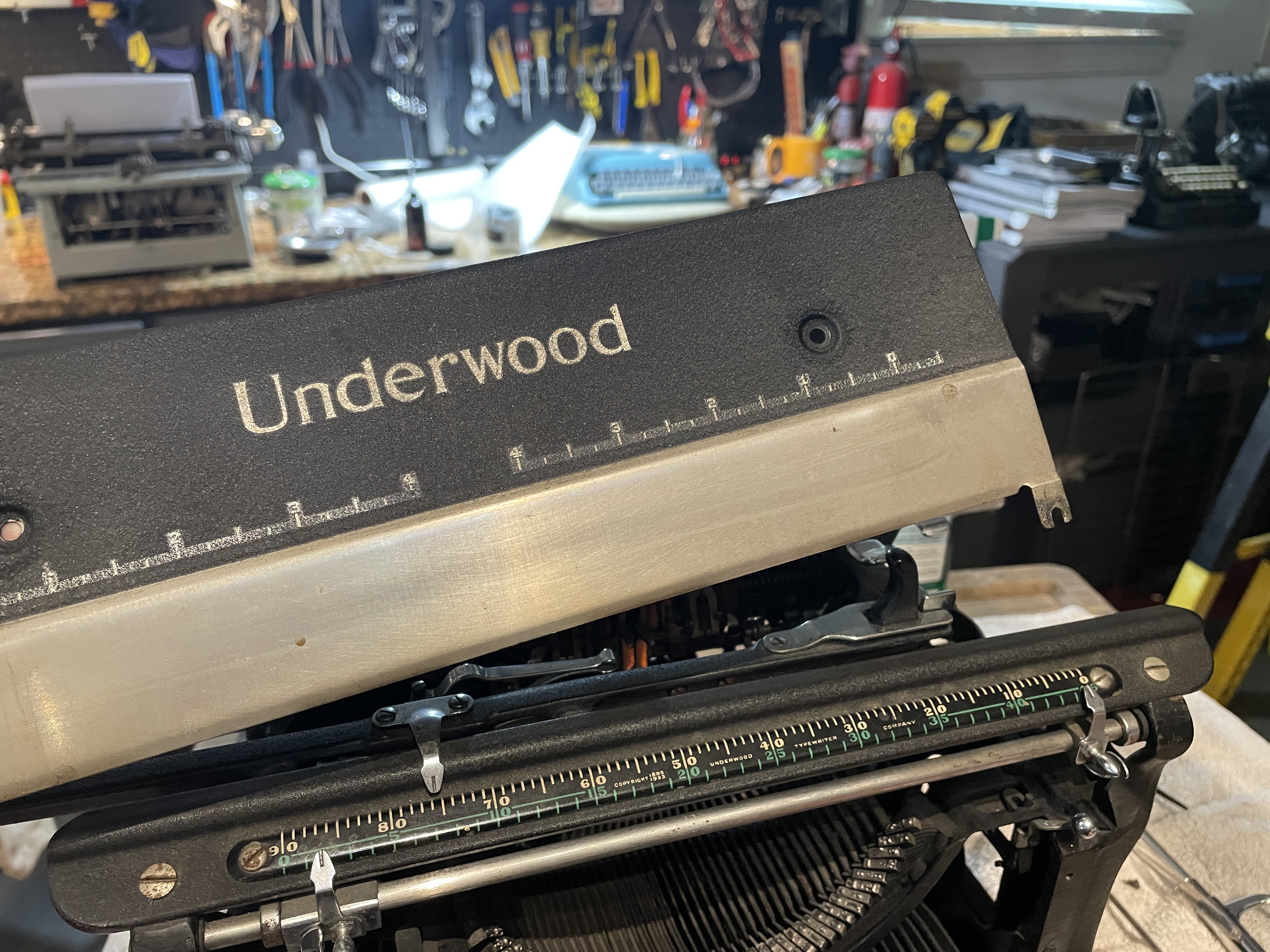
The side cover plates come off easily. You’ll need to remove the right platen knob by loosening the set screw, and the knob will slip right off.
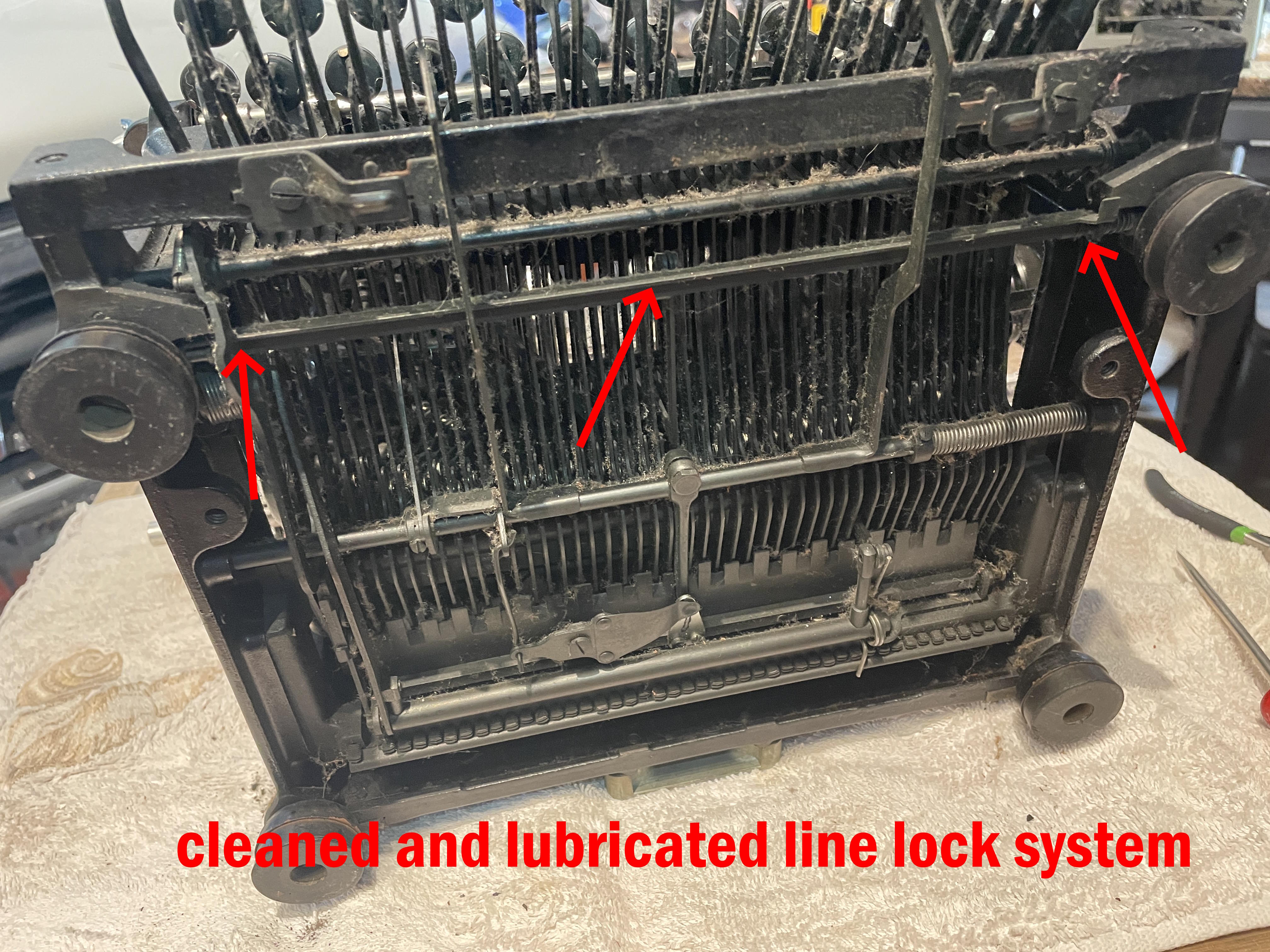
That line lock that wouldn’t disengage on carriage return was a problem since it locked up all the keys. I cleaned and lubricated all the pivot points in the line lock system, and that problem cleared up.
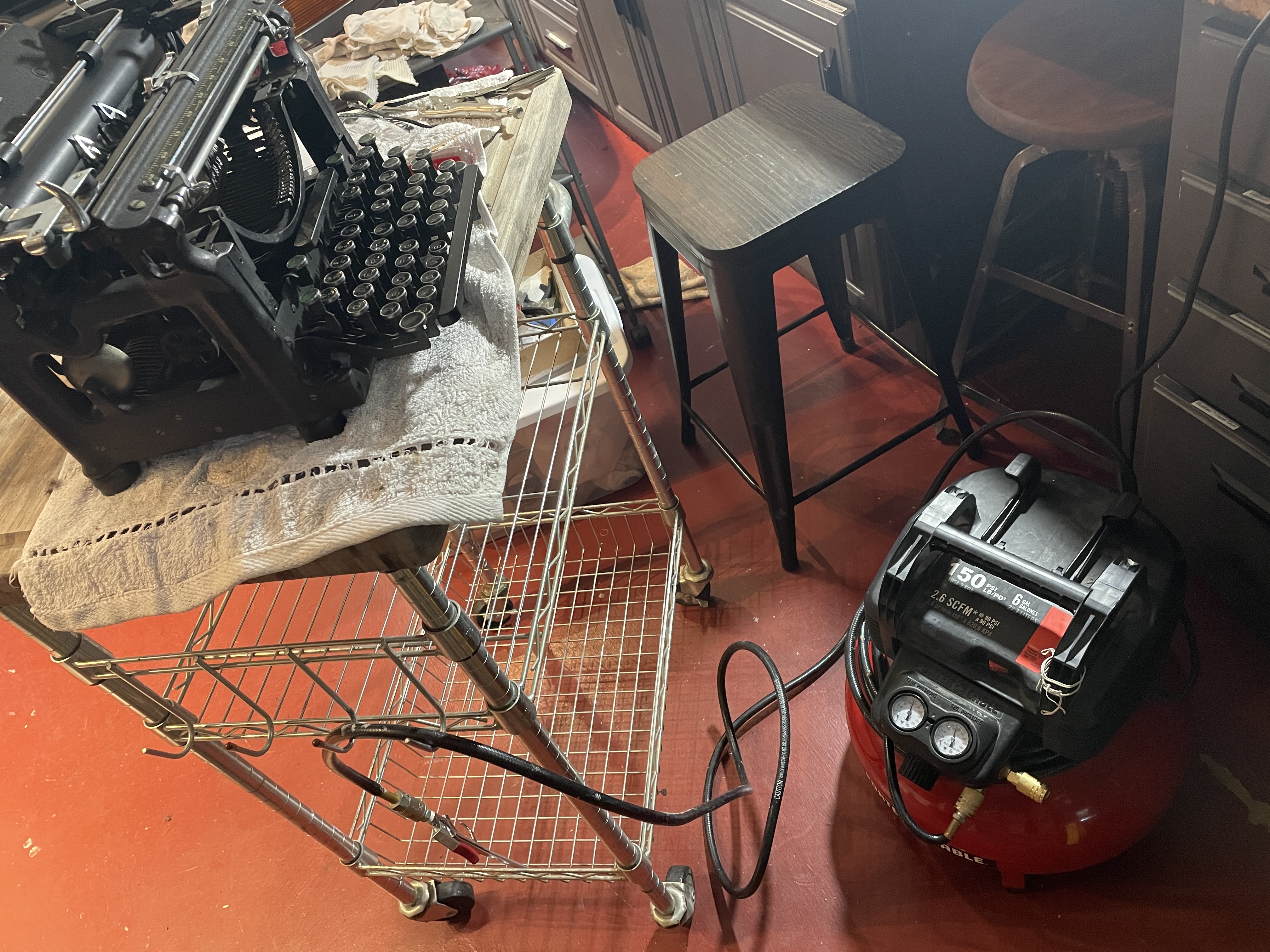
The machine got a blow out with the air compressor and a thorough scrubbing with mineral spirits.
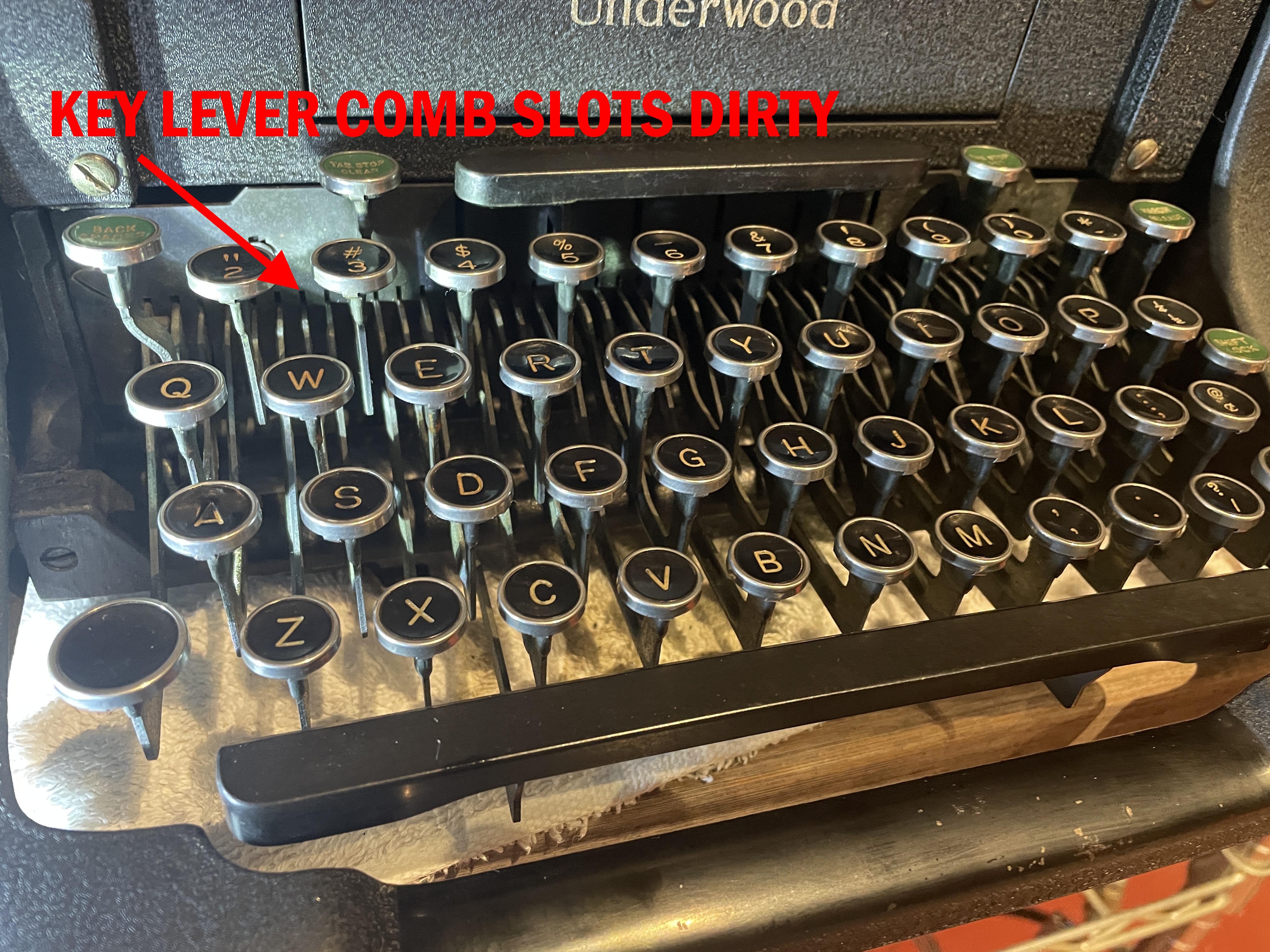
Some keys were stubbornly sticky despite scrubbing the segment and the sublever segment in back. What I discovered was that the stickiness was in the key lever comb. I cleaned that and everything was happy and loose. I haven’t run across that in a non-rusty machine before.
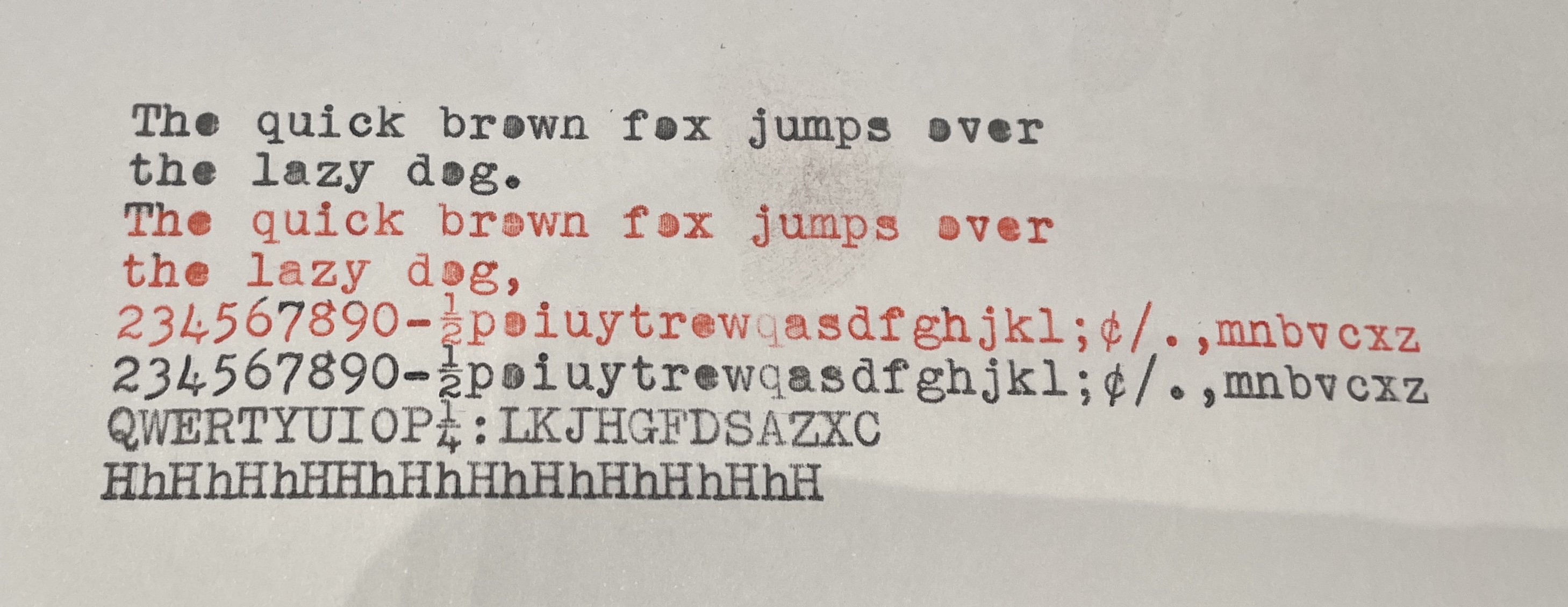
I put it all back together and tested. Typing is great though there’s a very slight intermittent bleed of black when in the red setting. There is probably some residual gunk in the ribbon vibrator, but I don’t want to take the carriage off for cleaning when it’s typing so beautifully otherwise.
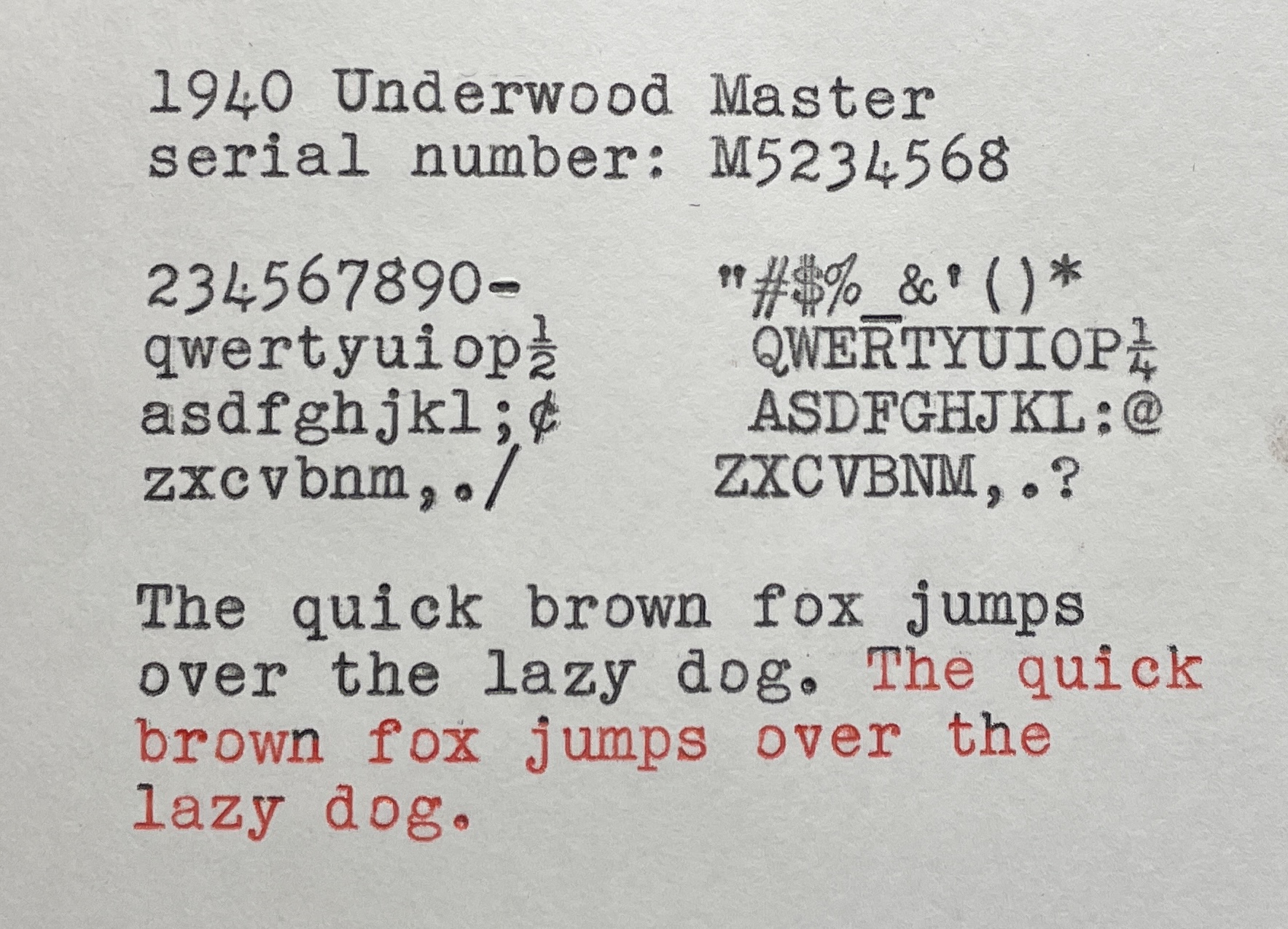
I took it outside for a couple glamour shots on the Moose Cart.
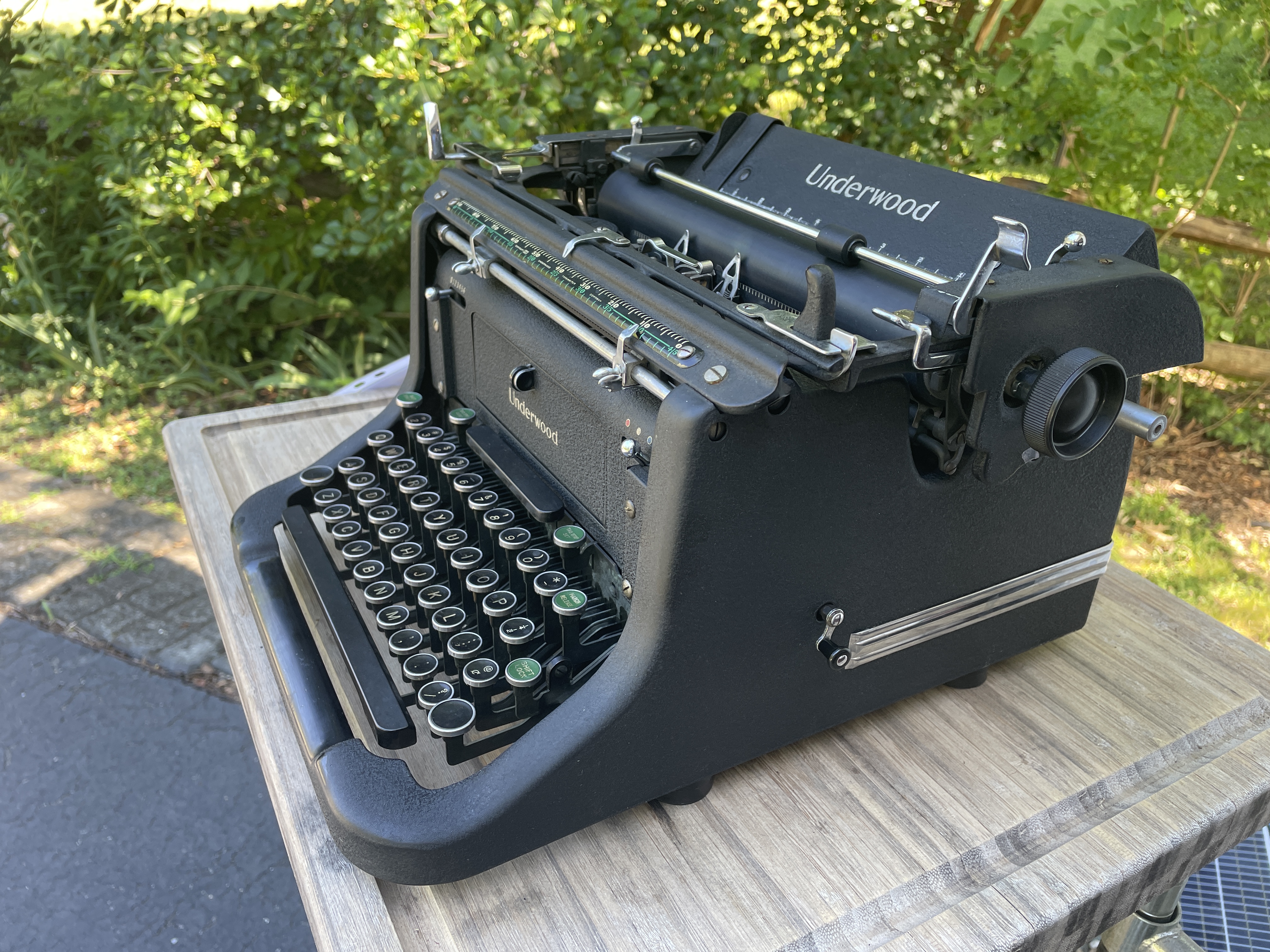
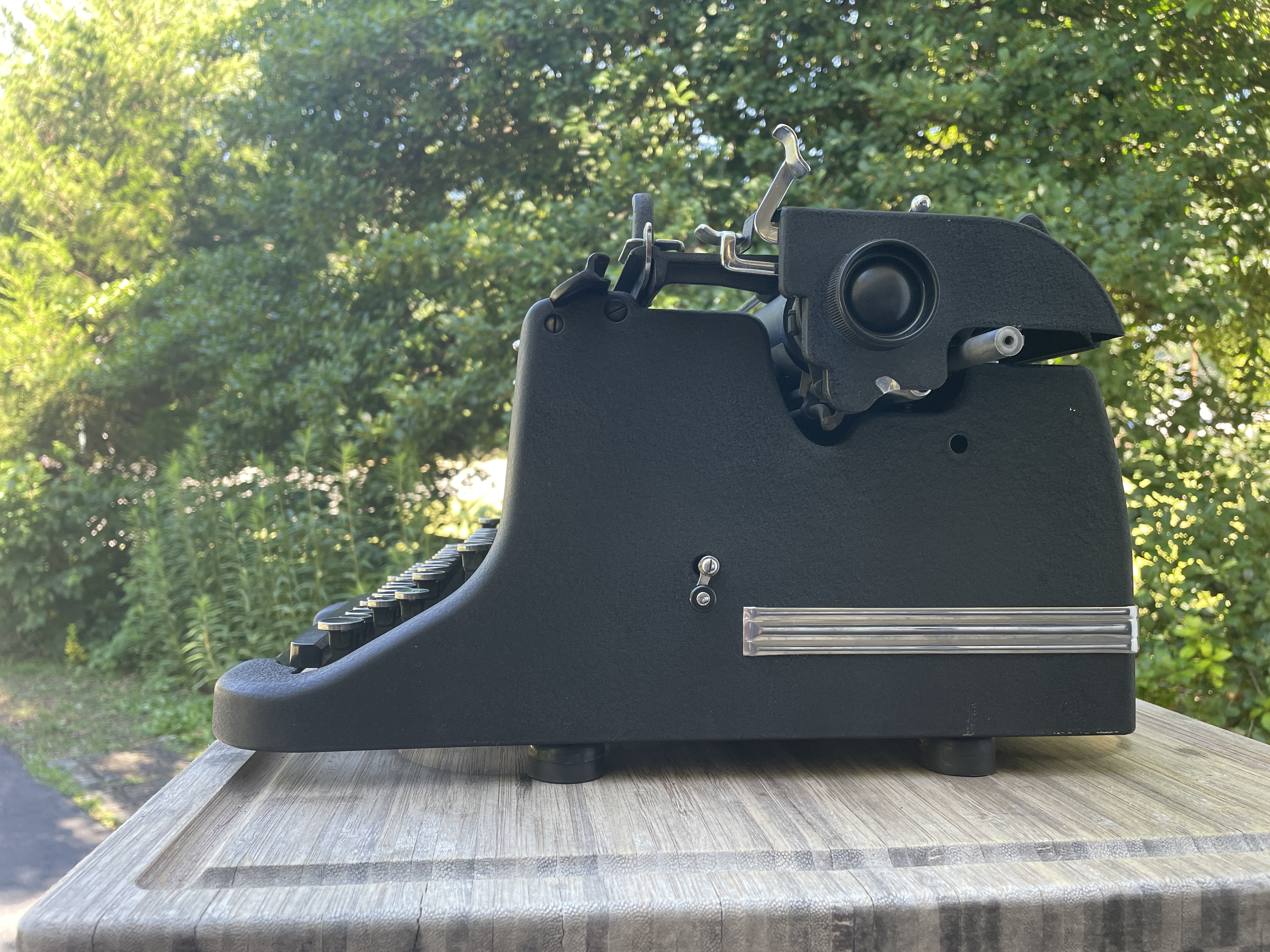
I love the curves of the back mask. It transforms and updates this typewriter. You would never know about the old bones hiding underneath.
I saw a postcard on eBay that features a giant Underwood Master. It’s from the 1939 New York World’s Fair:
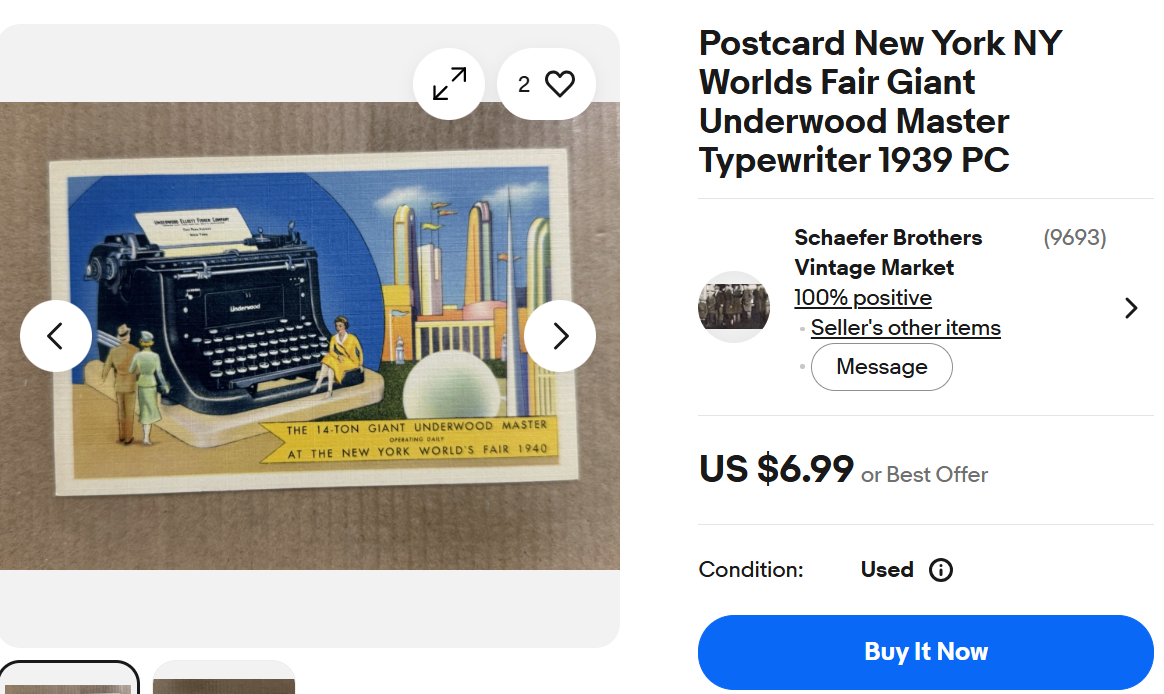
The text on the back of this 1939 postcard reads:
The GIANT UNDERWOOD MASTER TYPEWRITER
The Largest in the WorldOperates Daily at the Underwood Elliott Fisher Exhibit in the Business Systems Building at the New York World’s Fair
This huge machine, weighing 14 tons, is 1,728 times larger than the regular Underwood Master. It required 3 years to build. Each typebar weighs 45 pounds and the carriage alone weighs 3,500 pounds. Letters are typed on “stationery” measuring 9 by 12 feet, and the ribbon in the machine is 100 feet long and five inches wide. Two box cars were required to transport the Giant to the World’s Fair.
I have a photo hanging in my bathroom of the Underwood exhibit at the 1915 Panama-Pacific International Exposition (PPIE) which was held in San Francisco. The exhibit featured a 14-ton functional Underwood #5 typewriter.

Apparently, this giant Underwood at the 1915 PPIE is the same giant typewriter at the 1939 New York World’s Fair. It moved east and was re-skinned. Over at the Facebook Antique Typewriter Collectors group, typewriter historian Peter Weil has this to say about the giant Underwood at the PPIE, its migration east to Atlantic City, and its appearance at the 1939 New York World’s Fair:
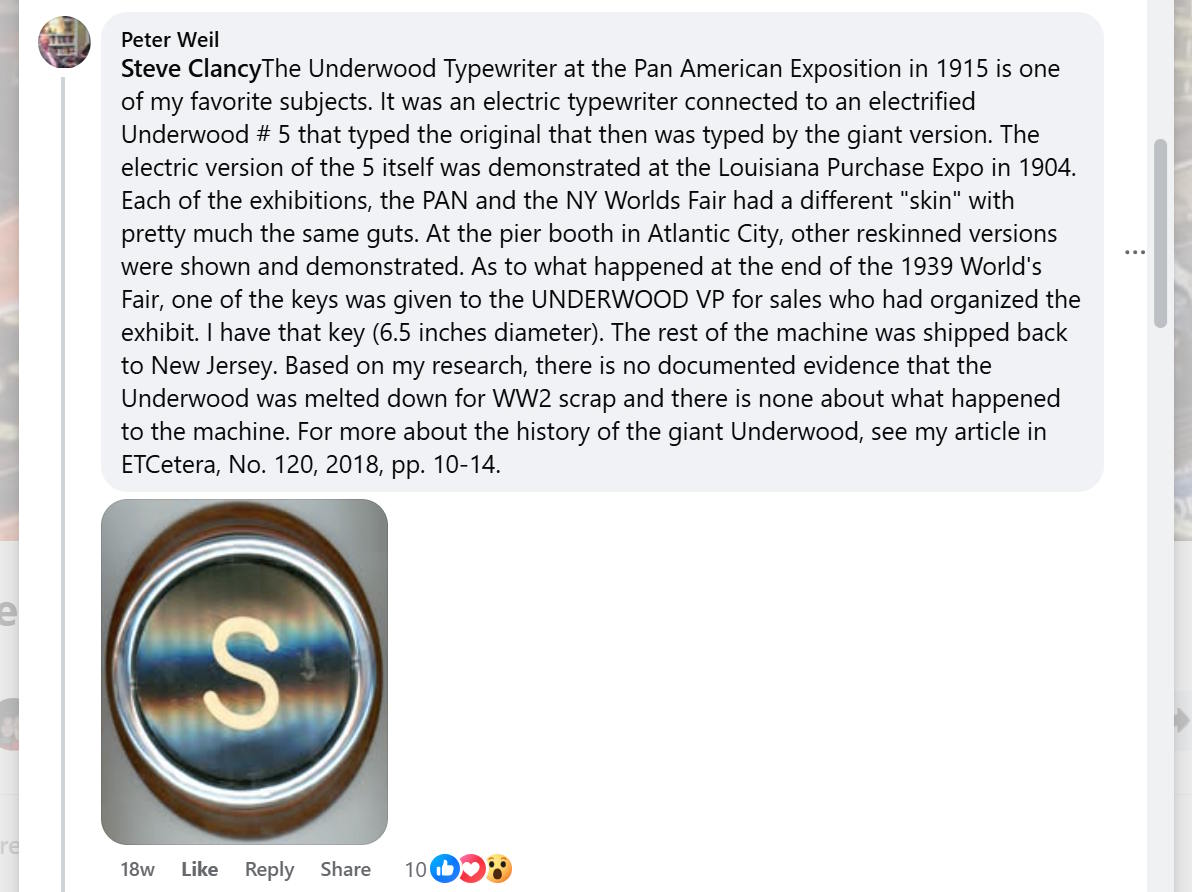
Three things are notable here: 1) the giant typewriter at PPIE was electric and connected to an electric Underwood #5 (!), 2) Peter Weil has one of the gigantic keys (!), and 3) he has found no documented evidence of the often-reported story that the giant Underwood was scrapped and melted down as part of the WWII war effort.
That giant Underwood may still be hidden away in a warehouse somewhere in New Jersey.
This much smaller Master in my garage was coming along great. I printed out the Underwood 6 instruction sheet to send home with it.
John came to retrieve the Underwood for his daughter when it was done, and he brought along his traveling companion, Zeke, a border collie. I played fetch with Zeke for a while. Border collies are my favorite dogs.

Border collies are exceptionally intelligent and hardworking. There are more modern ways to herd sheep nowadays, but many farmers prefer to go old-school with herding dogs. Like an old Underwood, they’re a throwback, but they just work.


Nice work!
Finding the Giant Underwood in some warehouse … that would be some typewriter discovery!
I have a border collie and agree that they’re super smart. (Also nice and beautiful!)
LikeLiked by 1 person
I wouldn’t exchange my standard (a Japy S18, in fact a rebranded Hermès Ambassador), but this Underwood is a beauty!
LikeLike
I agree, It is a real looker.
LikeLike
I owned one of these, it was a great typewriter–except that I found the plastic key design they made as a bridge between the glass and later plastic ones to be uncomfortable for longer typing sessions.
What’s funny about Underwood using the same design for so long is that I feel it got better until the 1950s. Right around the time of the Finger Flite and Golden Touch, they started getting worse. I’ve owned two of the unfortunately named Underwood “SS” and those remain among the best typewriters I’ve ever owned (and I’ve owned a lot of them). Compact and utterly snappy, the “SS” was probably the pinnacle of the design.
LikeLiked by 1 person