I recently worked on a 1963 Olympia SM7, one with an affliction common in Olympias of this vintage: gummed-up mechanics due to sticky blobs of orange-ish brown goo.

These orange blobs brought to mind one of my very most favorite Star Trek episodes, “The Devil in the Dark” from 1967. In it, the USS Enterprise arrives at a mining colony on planet Janus VI and learns that miners there are being picked off one-by-one by a mysterious blob-like entity.
Spock does a Vulcan mind-meld with the blob creature and finds out that it is an injured Horta, a silicon-based life form who is simply trying to protect its eggs. McCoy patches up the Horta with some silicon cement (“I’m a doctor, not a bricklayer…etc”) and [spoiler] there’s a happily ever after.

David, a local typewriter enthusiast, gave me a frozen SM7 to ponder. This Olympia had Horta-like blobs throughout. Besides being all gummed up, there was a ribbon feed problem. I said I’d take a look, so I brought it home from the type-in and repair session we had in June.
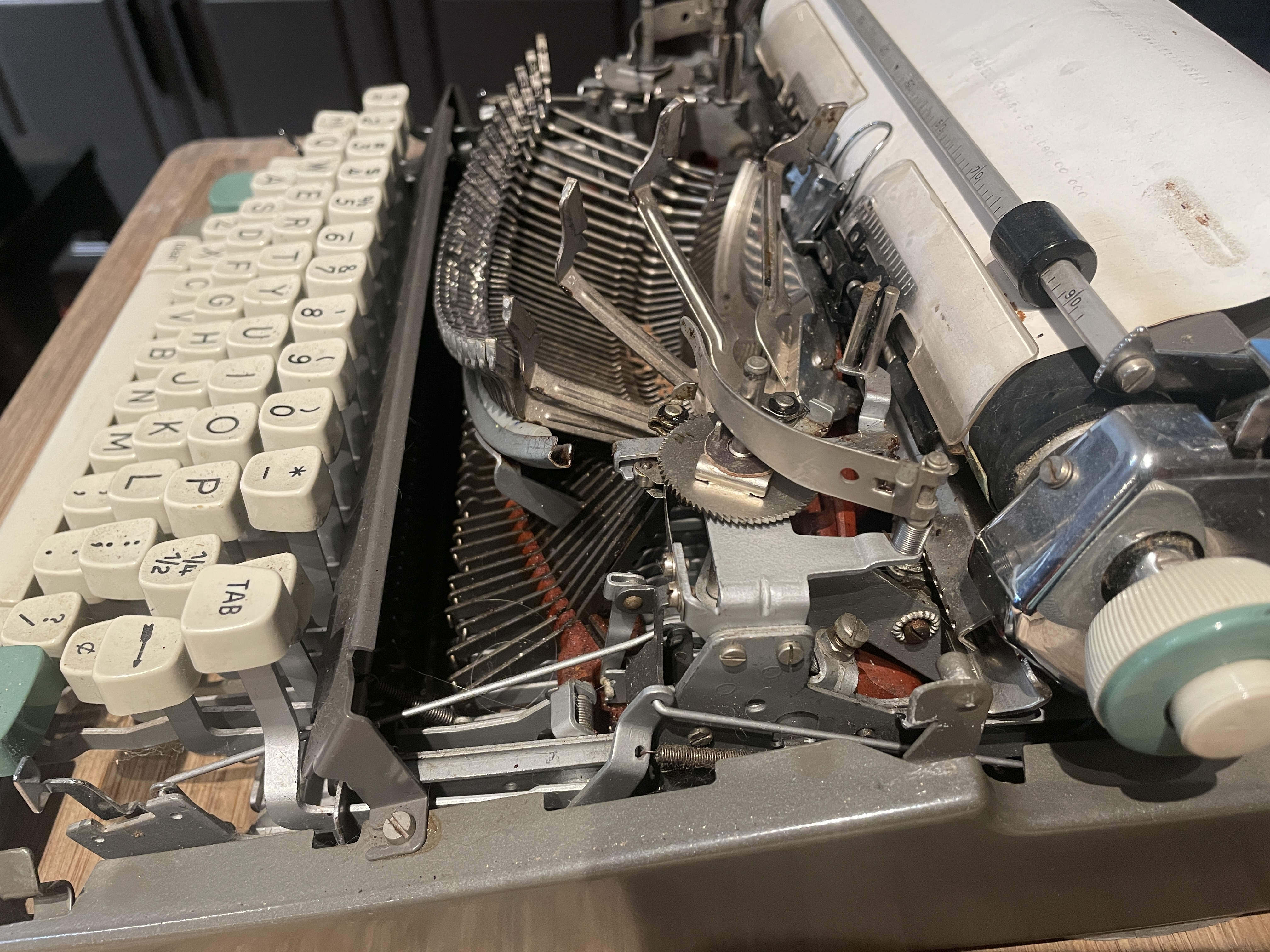
I did the Vulcan mind-meld with the typewriter, and it told me that it was a product of precision West German engineering and that the goo may be old oil that has congealed though probably it’s the old adhesive used for the felt soundproofing panels and typebar rest. Perhaps the adhesive liquified when the machine was stored in a hot attic or garage and dripped throughout the typewriter. I see remnants of the old adhesive in the typebar rest and behind where a missing felt panel had been.
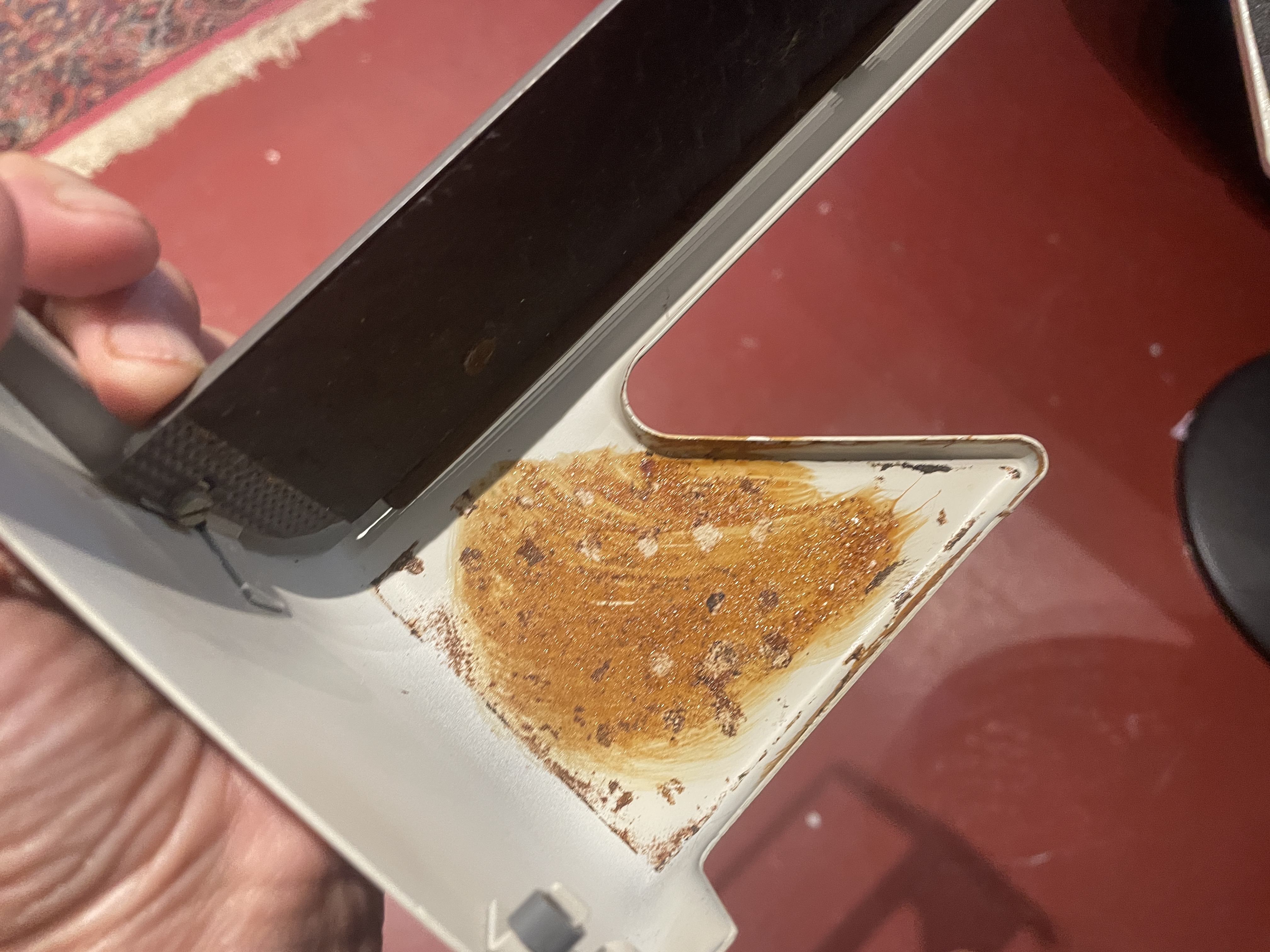
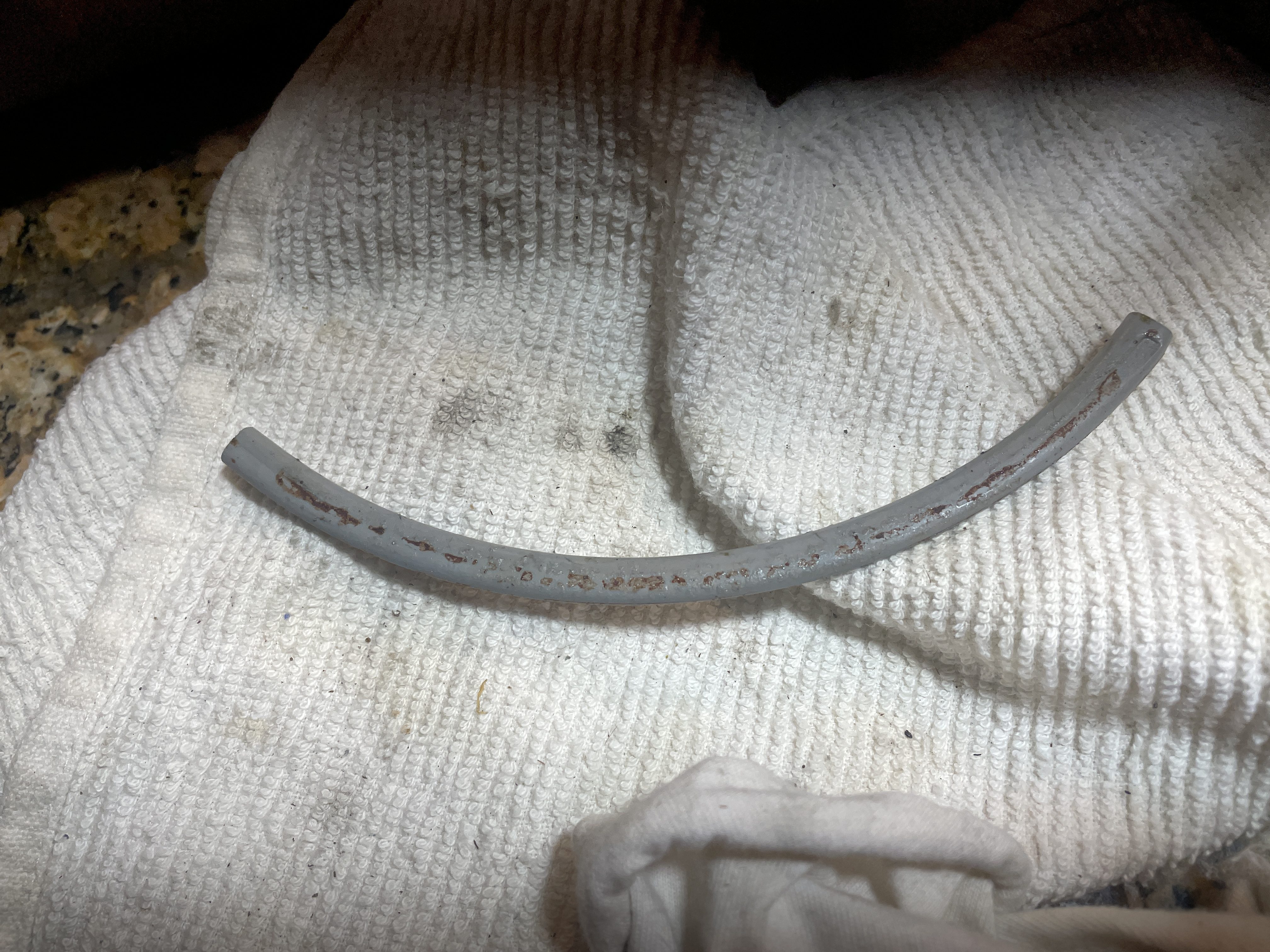
This SM7 was in bad shape. A few of the typebars were so frozen before cleaning that I was afraid I would break or bend them. Here’s a video of the machine after a first cleaning with lacquer thinner.
The trick with these gummy SMs is repeated cleaning, sometimes over the course of several days. Here’s Paul Lundy of Bremerton Typewriter.

And here’s the wonderful Duane Jensen of Phoenix Typewriter tackling a very gooey SM7:
Duane says, “Keep it wet. Keep it wet.” Just keep rubbing lacquer thinner through it, working it while it’s wet, and blowing out the goo with compressed air.
Lacquer thinner is very strong stuff. Make sure you’re working in a well-ventilated area and that you’ve removed the cover plates. I removed the “De Luxe” segment dust cover plate and the plastic card guides/front scales and covered the keyboard with a cloth. Lacquer thinner will eat through plastic and paint.
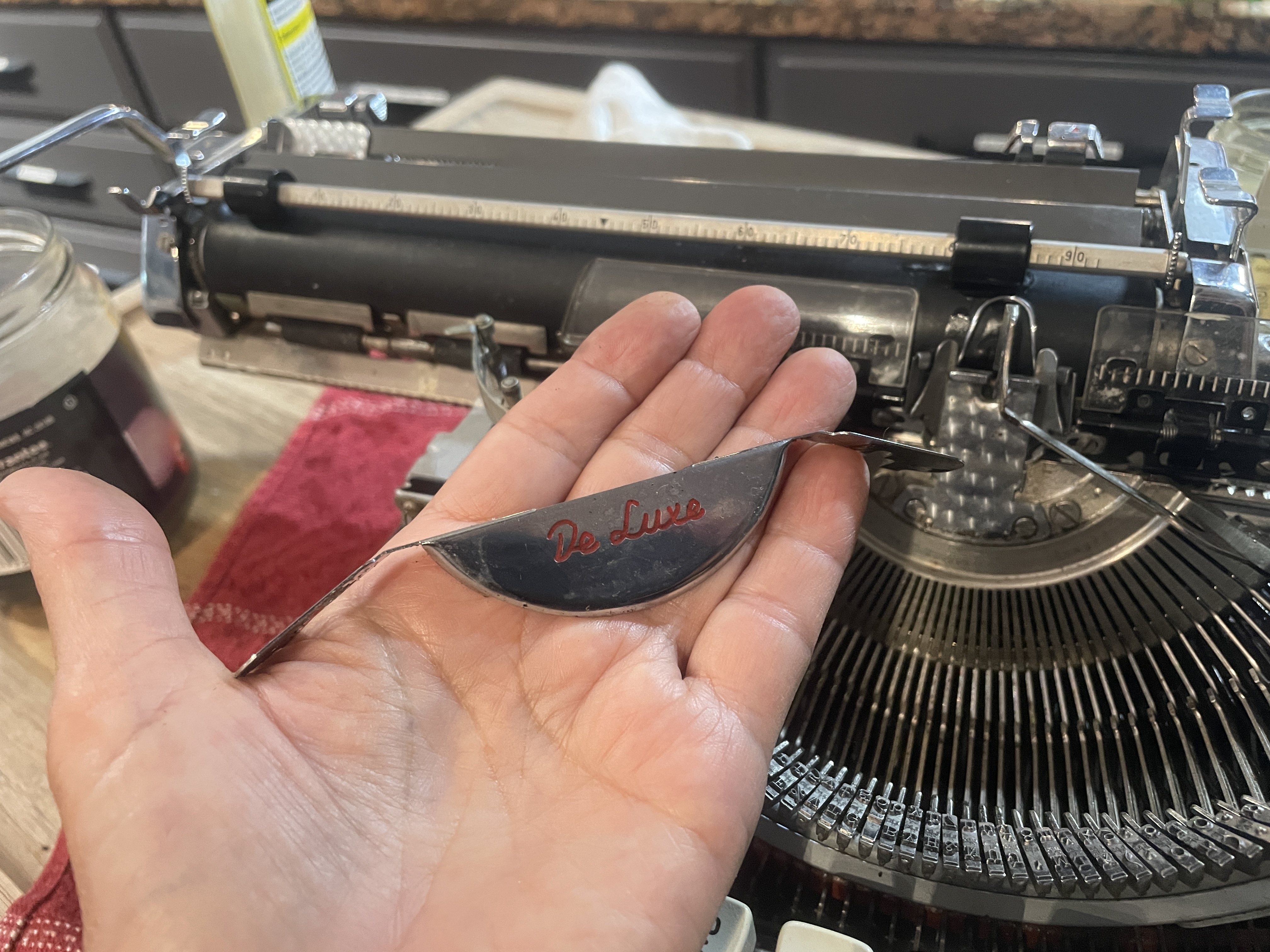
Some goo in this Olympia was soft and sticky. Other patches were like cement and had to be scraped off. It was everywhere.
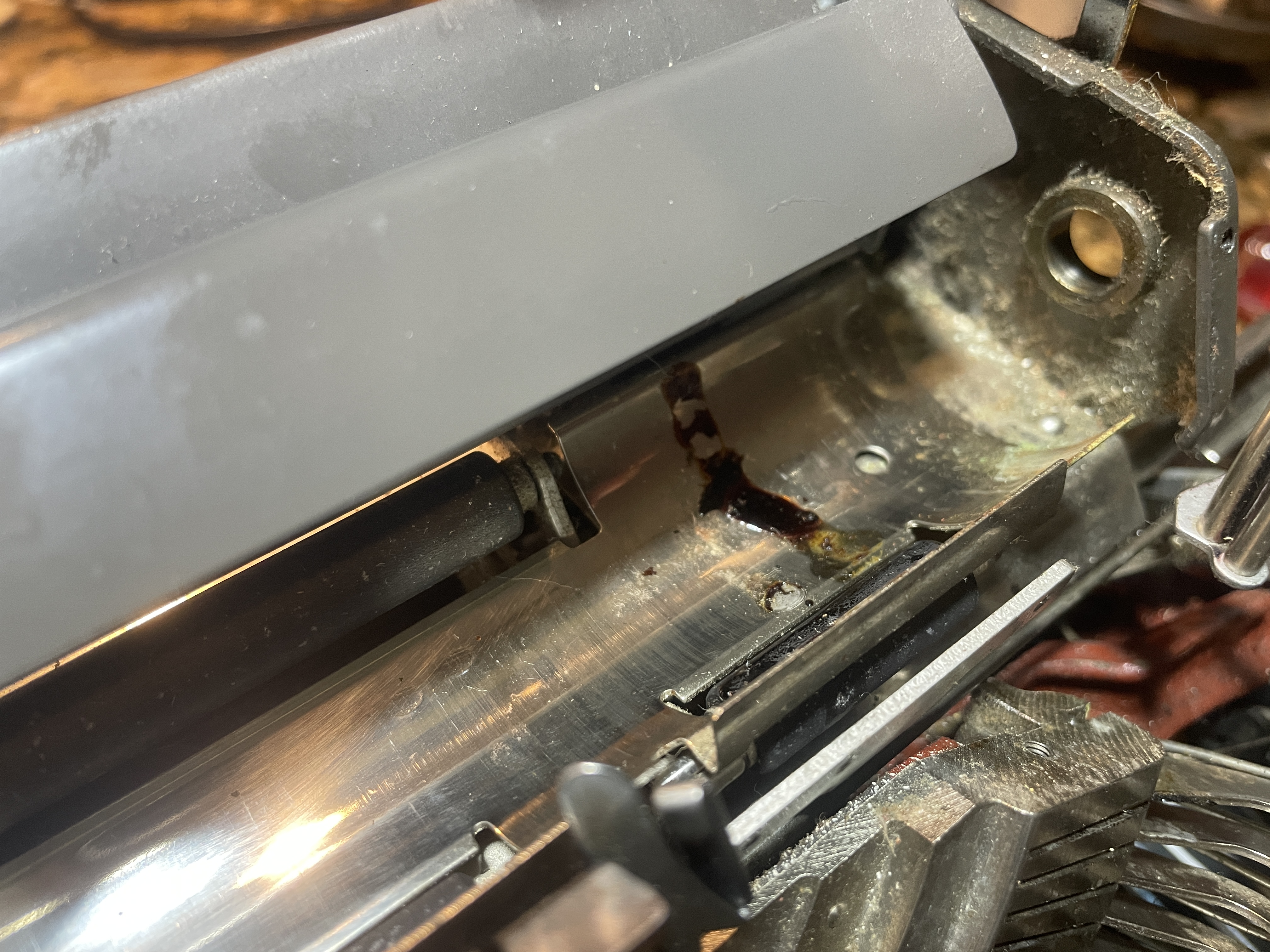
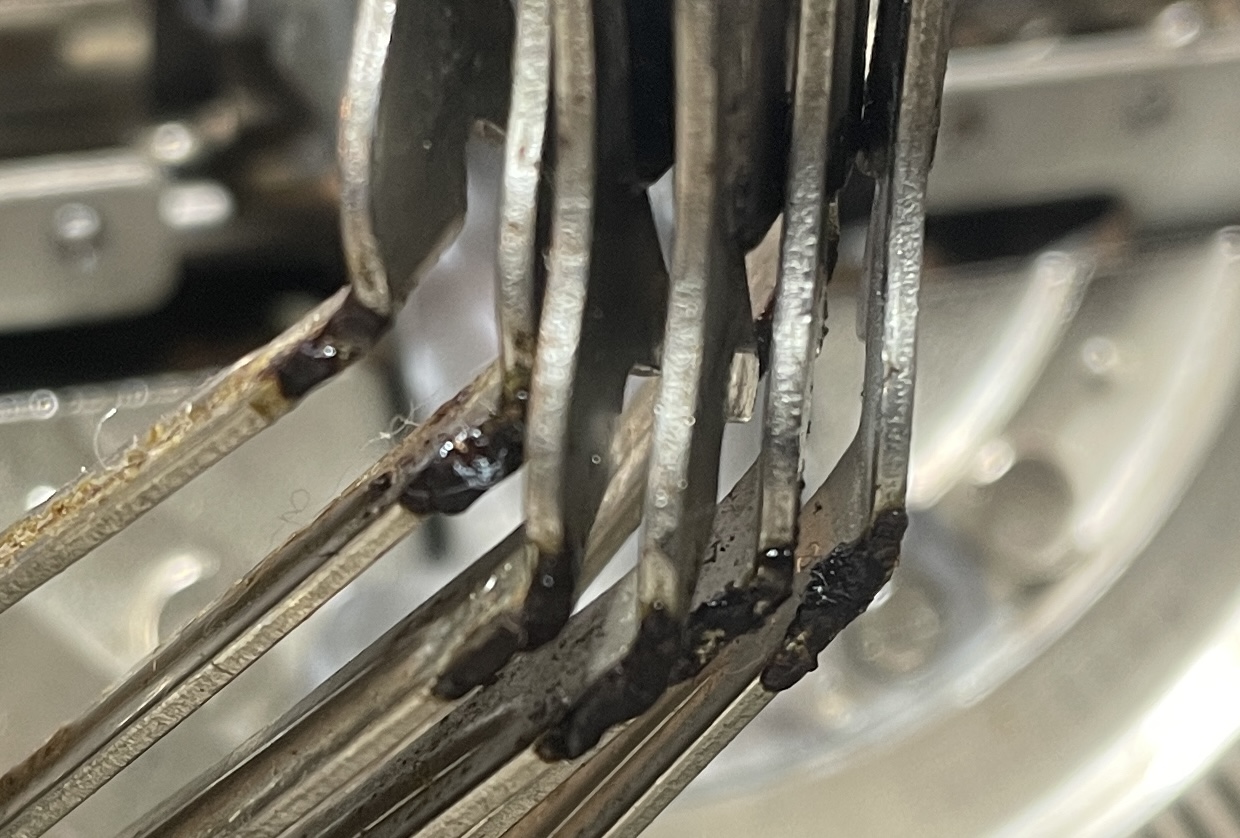
Because the escapement wasn’t tripping too good, I went with the nuclear option and removed the carriage. It was very gummy and hairy in there. Here’s the machine after a second day of cleaning:
So here’s the thing: you’ll clean with lacquer thinner, blow out the goo, and everything will be free and swinging nicely. You think your work is done, but it’s not. You come back the next day and it’s all stuck and gummy again. And then you’re back to cleaning with lacquer thinner and sending compressed air through the segment. Again and again.
As I was scrubbing away at the segment with my brush and jar of lacquer thinner, I began to wonder if heat might speed cleaning. What if I poured boiling water through the segment? Applied a heat gun? A small torch? Would the heated goo re-liquify and drip out? I didn’t do any of these things, but I did wonder about using heat as I scrubbed and scrubbed and scrubbed.
After about four consecutive days of sporadic cleaning, I got almost all the typebars swinging freely. However, there were a scattered few that were resistant to my cleaning. I decided to pull the gummy typebars and see what was going on. I extracted the segment fulcrum wire from my parts machine 1966 Royal Safari since the segment was approximately the same size as the SM7’s segment.
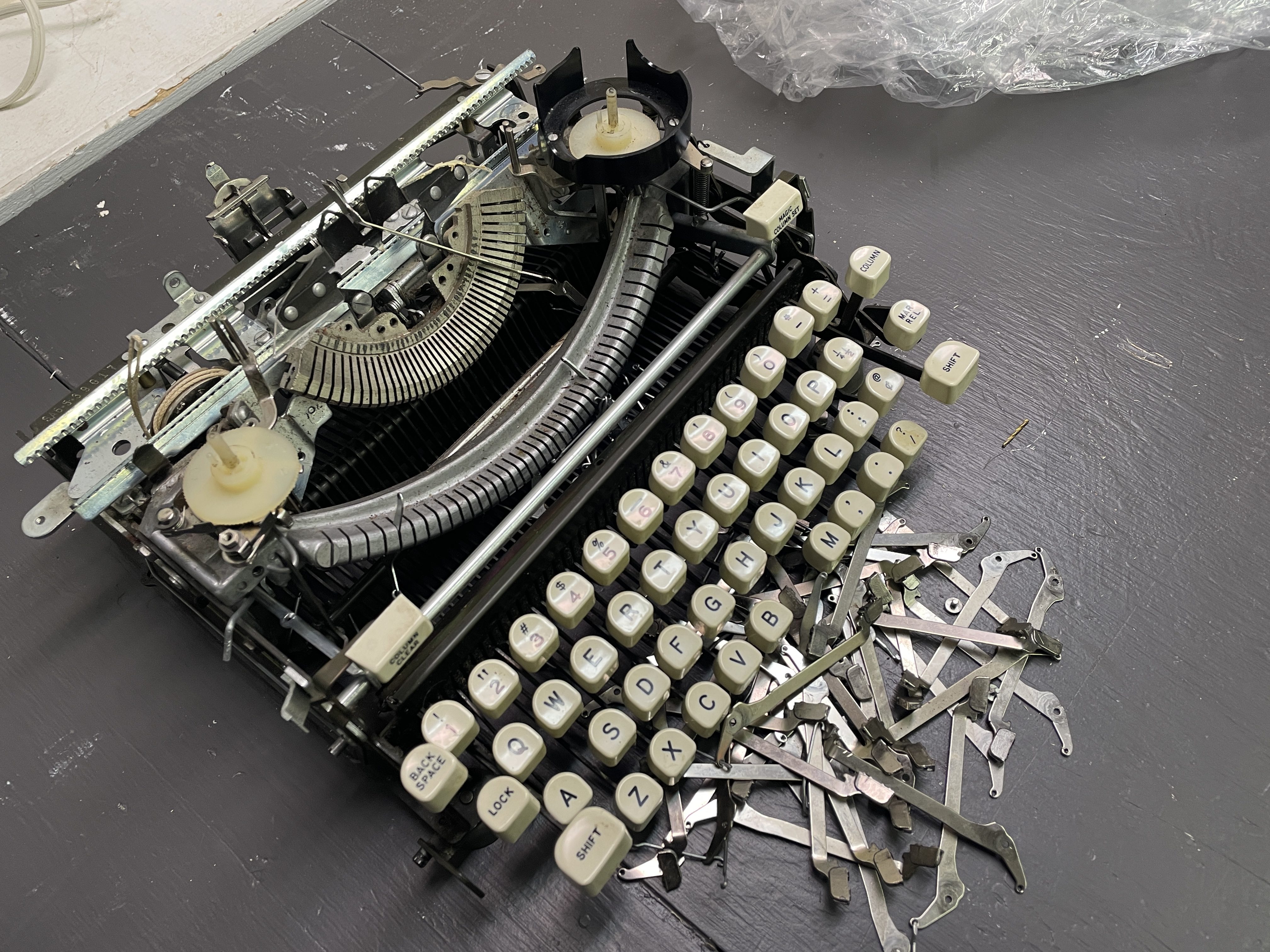
Thank you, Old Friend.
I chased the Olympia’s fulcrum wire and pulled the stubborn typebars, one at a time. There were residual globs of brown goo in there despite several days of repeated cleaning.

I would have loved to pull all of them for cleaning, but the Olympia wire links are very fragile and get bent easily. I only pulled the typebars that needed cleaning. If you want to see someone have a rough evening with Olympia typebars, watch this.
After cleaning out residual gunk, I reinserted and tested. All good.
I put the carriage back on and tested typing. The ribbon feed on the right wasn’t working. On inspection, I saw an enormous blob of goo that I had somehow missed. The goo tightly glued the ribbon feed pawl into a frozen position.
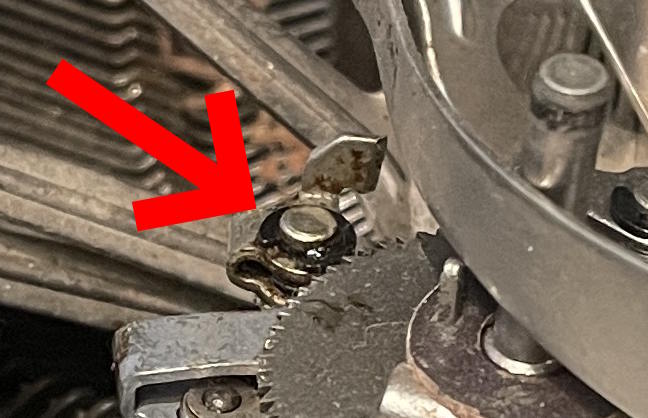
I took the ribbon feed pawl apart to clean it. Sadly, the little spring that makes the ribbon feed pawl go boing-boing-boing was broken.
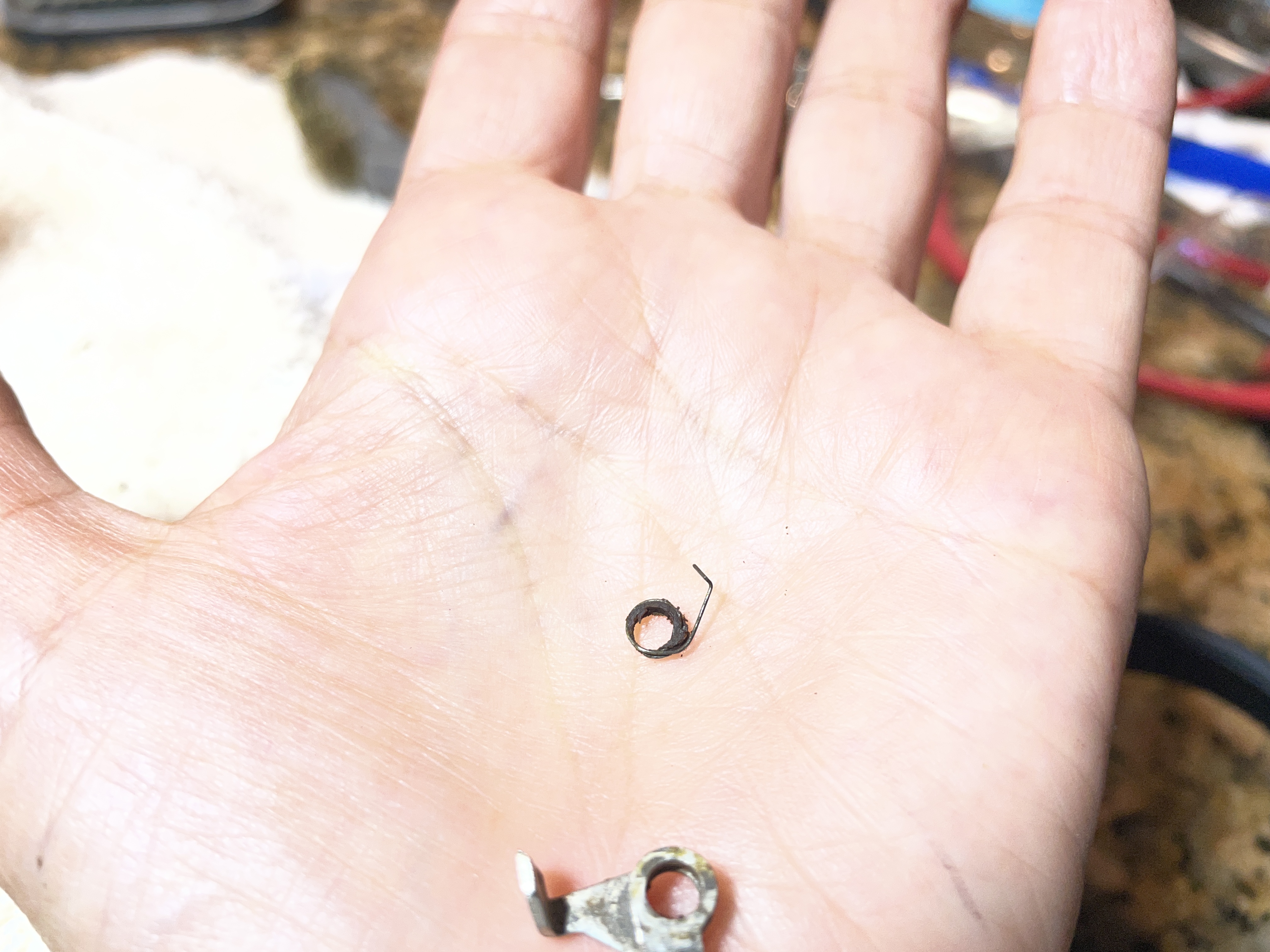
And I didn’t have a replacement spring…or did I?

I scavenged a tensioner spring from my parts Royal Safari. I cut it down and made a shortie spring for the ribbon feed pawl, using the left side’s mechanism as a guide.
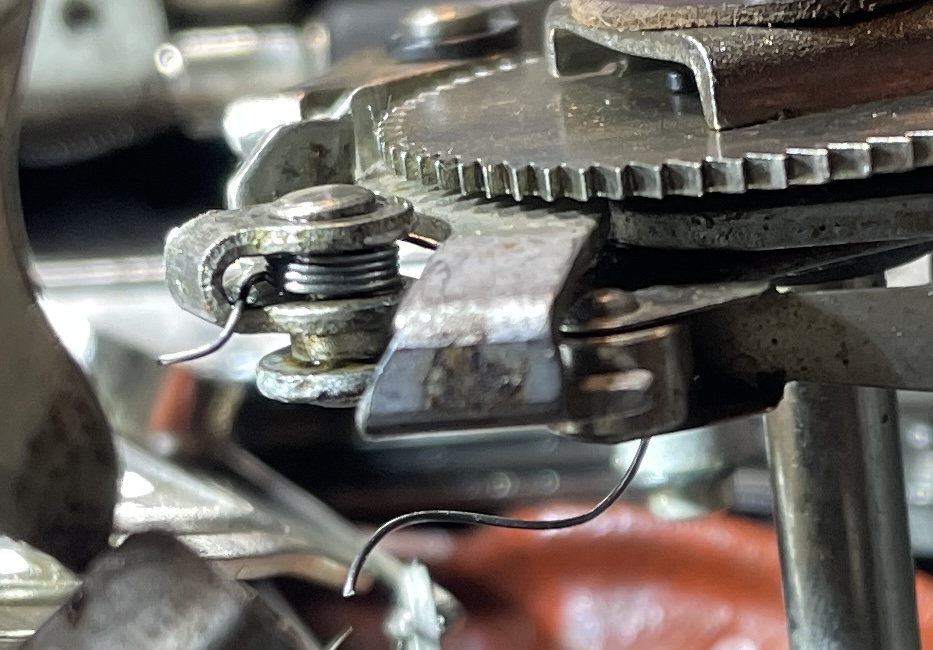
Don’t worry. I clipped the long tail of the spring and seated the pawl properly.
I popped the e-clip back on and boing-boing-boing!
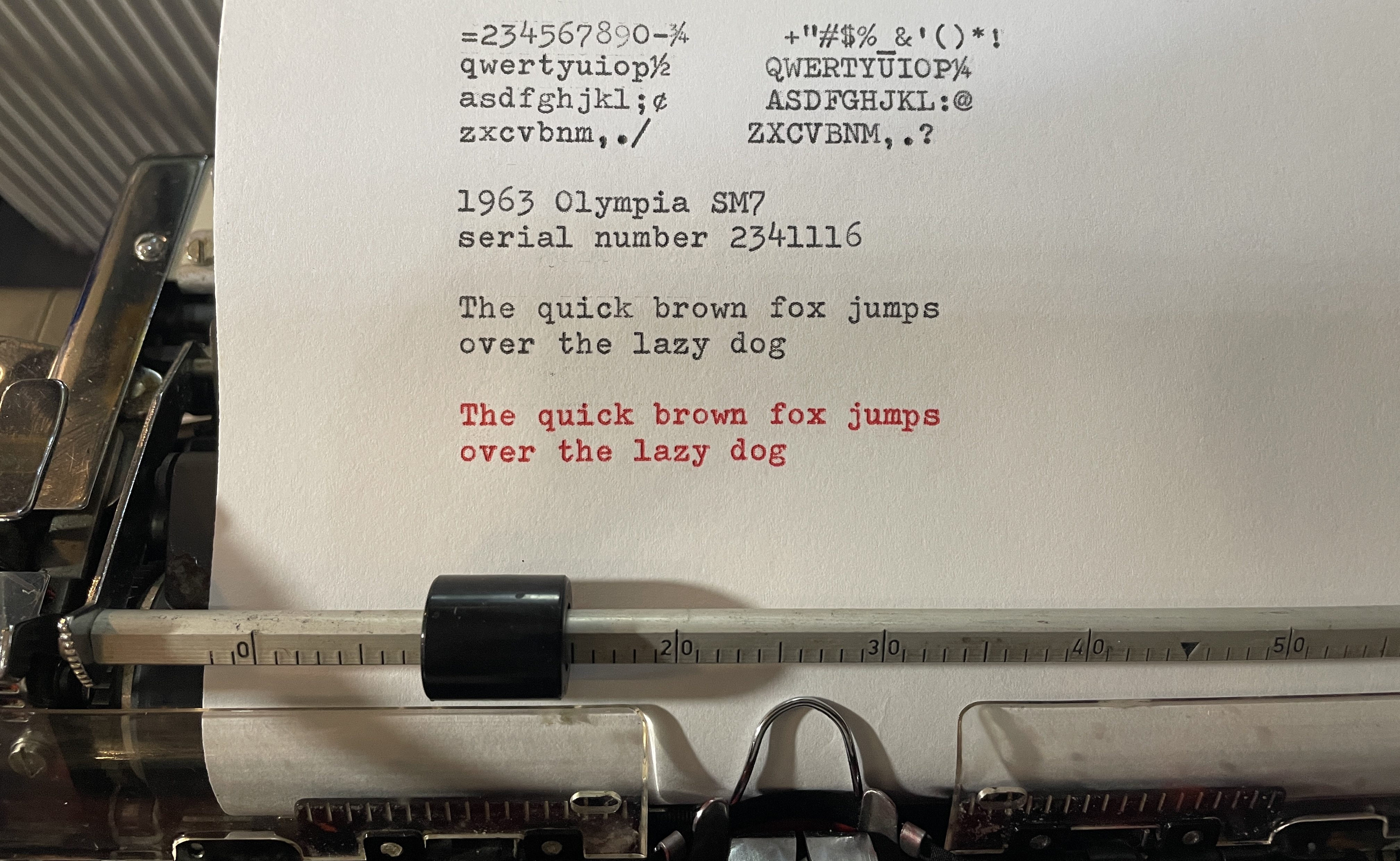
Nice! I let the typewriter sit a for a few days, in case any gumminess crept back in, but I think I’ve rid the machine of the brownish-orange blobs.
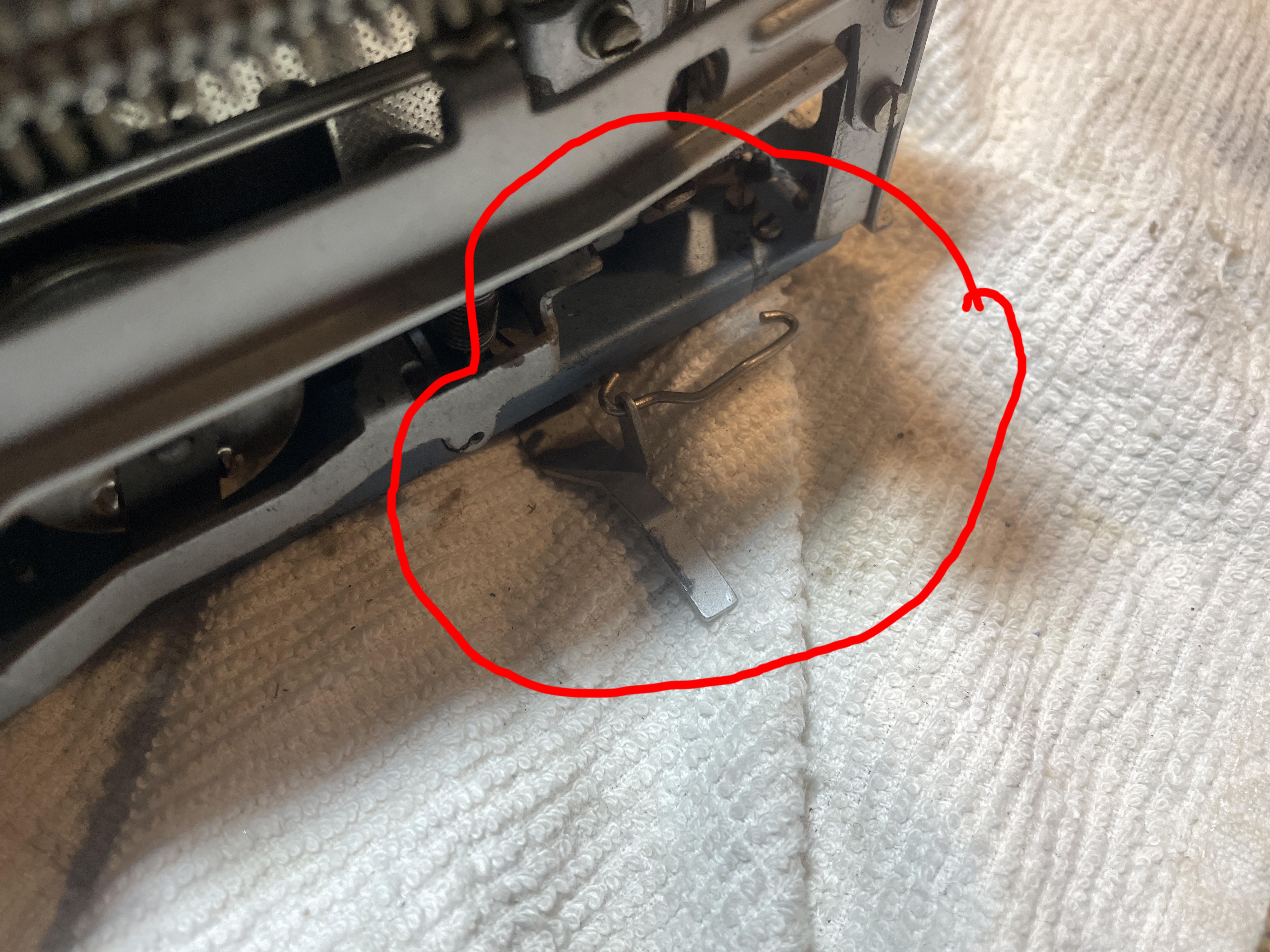
After I was confident that the machine was fully free of gumminess, I put it all back together. When I had removed the bottom cover plate for cleaning, the wire linkages for both the tab “clear” and tab “set” fell off. Keep an eye on those linkages because when the machine is out of its lower casing, they flop around and can fall off.
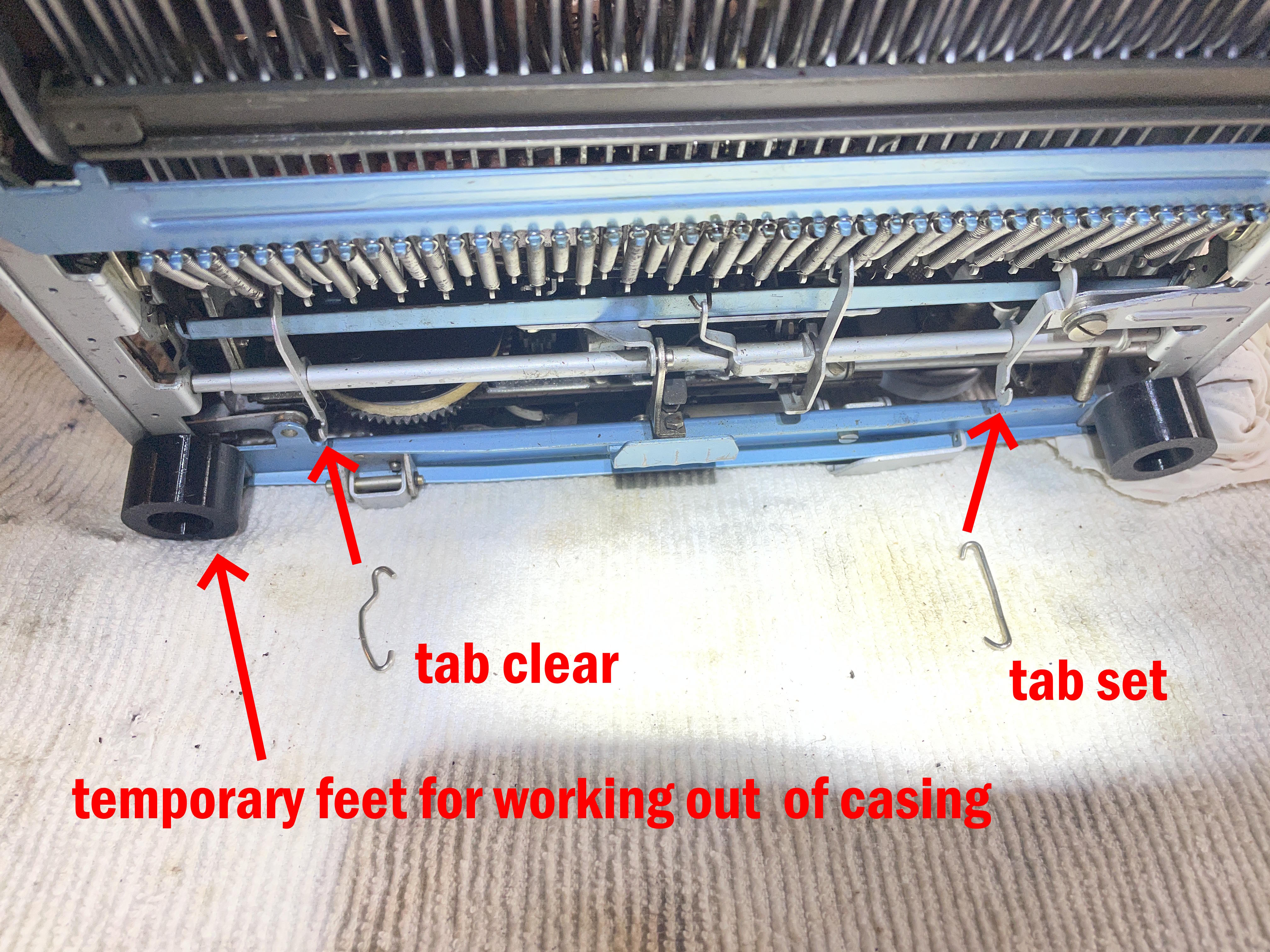
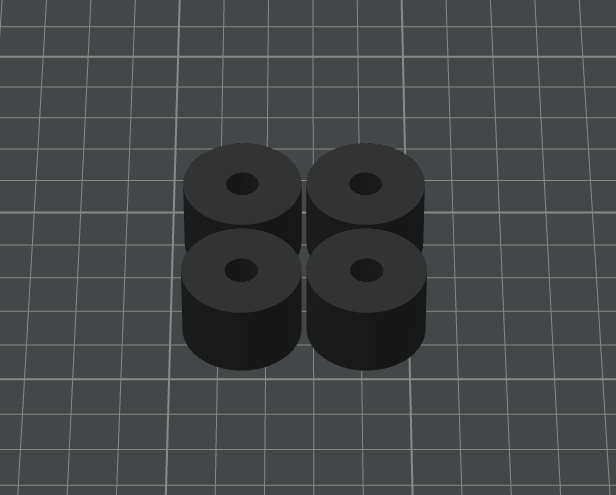
Note the temporary feet I 3D-printed for working on the the SM7. Its mechanics are low-slung and need to be elevated for testing if it’s out of its footed casing. You can use ribbon spools to raise the typewriter up, but I wanted something more stable while I worked.
I got all the cover plates back on, but I had a problem with the right platen knob spinning around loosely. The knob on the right had come apart and needed a quick super glue fix. Here’s Duane with exactly the same issue and solution:
Now that she’s all put back together, here are some glamor shots:
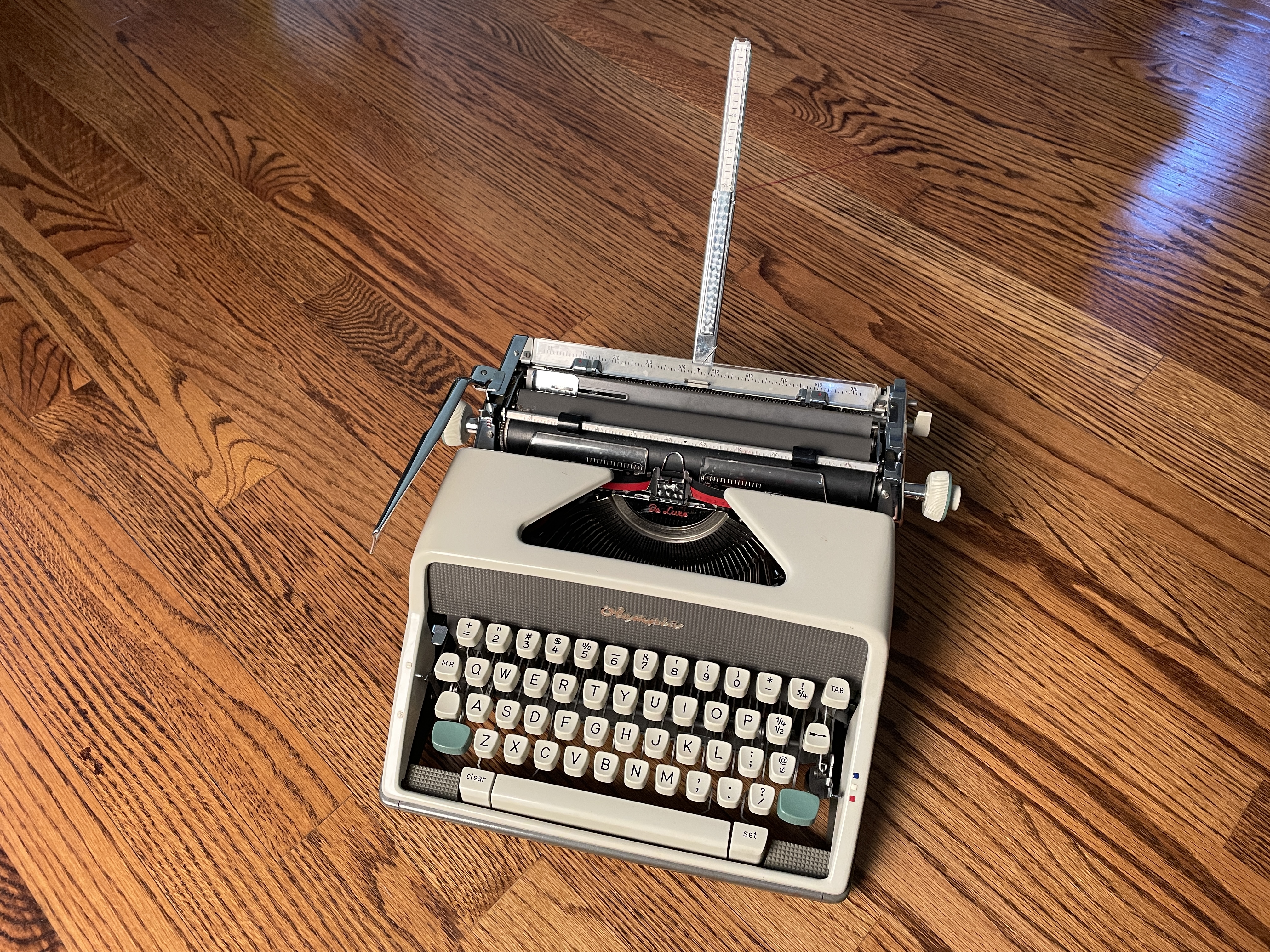
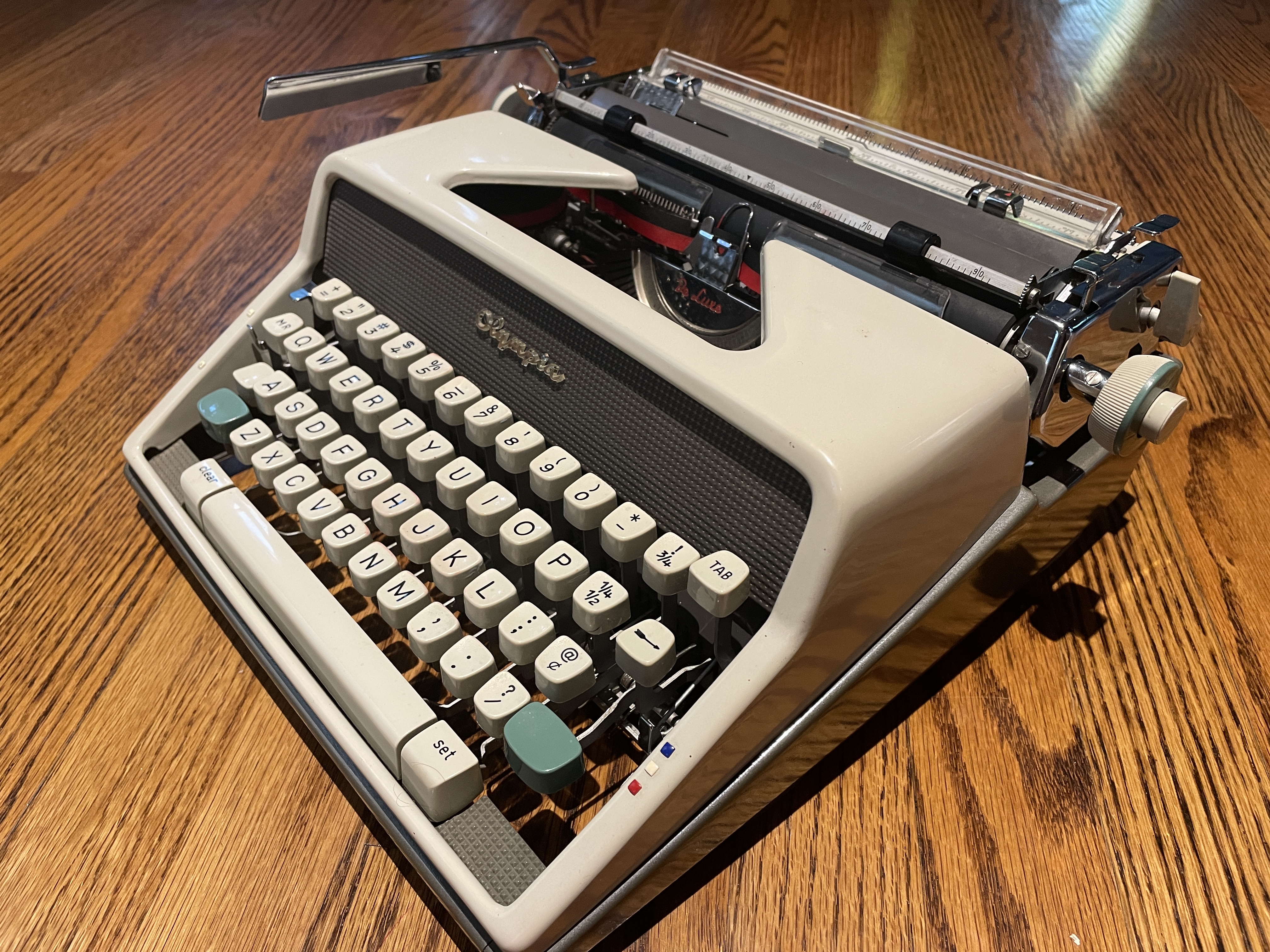

Such a swell-looking machine, and now finally typing the way an Olympia should. This 1960s vision of the future has aged beautifully. Ted Munk wrote about his 1963 Olympia SM7, reviewing it using a point-based system—it’s a good read.
Farewell, beautiful, Horta-infested SM7. You tug at my heart, but it’s time for you to go home and to your happily ever after.


The ‘Rough evening with Olympia typebars’ is the perfect illustration of why you never believe someone who brings you a typewriter that they have taken apart and say ‘It’s all there’. No it isn’t. There is always some small but vital part or special screw missing, or they have broken something ! 🙂
LikeLike
I’ve gotten a couple typewriters as “Box of Parts”. They are, by far, the most challenging projects for me.
LikeLike
Yikes!
LikeLike
I’ve run into this problem on a smaller scale. Never imagined that the stuff was melted adhesive. It is good to know that fellow typewriter nuts run into some of the same frustrations and challenges that I do … and find solutions.
LikeLike
Some say it’s old oil, but I’m pretty sure it’s melted adhesive – the gunk in the segment looks just like the adhesive under felt. Whatever it is, it is very tough stuff.
LikeLike
whatever that orange gunk is, it’s a curse on Olympias, and you were most patient and kind with this fellah. Always love to see an SM-7 sing! (:
LikeLike
It’s a good-looking machine, and I am happy to see it running again. I’ve only ever seen this orangey-brown gunk in Olympias. Maybe someone with a chemistry background will do a definitive chemical analysis of the substance and be able to identify a best solvent and/or removal process. Lacquer thinner, elbow grease, and time seem to be effective, but it would be nice to find a more efficient process.
LikeLike
After all of my typewriters, the SM series are the ones I stayed with. I’ve owned several Hermes 3000, but I preferred the snap of my Olympia SM9s. Although, if I had found an Ambassador with a pitch larger than 13cpi, I probably would have kept that. What a typewriter!
Great work with getting this one clean. When a segment sticks like that, and when it needs repeated cleaning, it’s just so frustrating and disheartening. I’m glad you went the distance to get this one fully working again.
LikeLike
Thanks, Jacy! Fortunately, I’ve faced this kind of Olympia goo before, so I knew what to expect: several days of cleaning. It pays off in the end for sure.
LikeLike
That was one tough SM-7 repair. I’ve run into similar and taking the segment apart and putting it back together is no fun. I”m always amazed how the linkages fall off SM7s. They fall off in perfect condition. Super difficult to put back, but the German gremlins have no problem removing them.
I hope this comment works. Generally my comments do not work. Just one of many blogs like this.
LikeLike
This one was the worst I’ve ever come across – but I was mentally prepared for it to be a slog since I’ve run across the goo before.
LikeLike