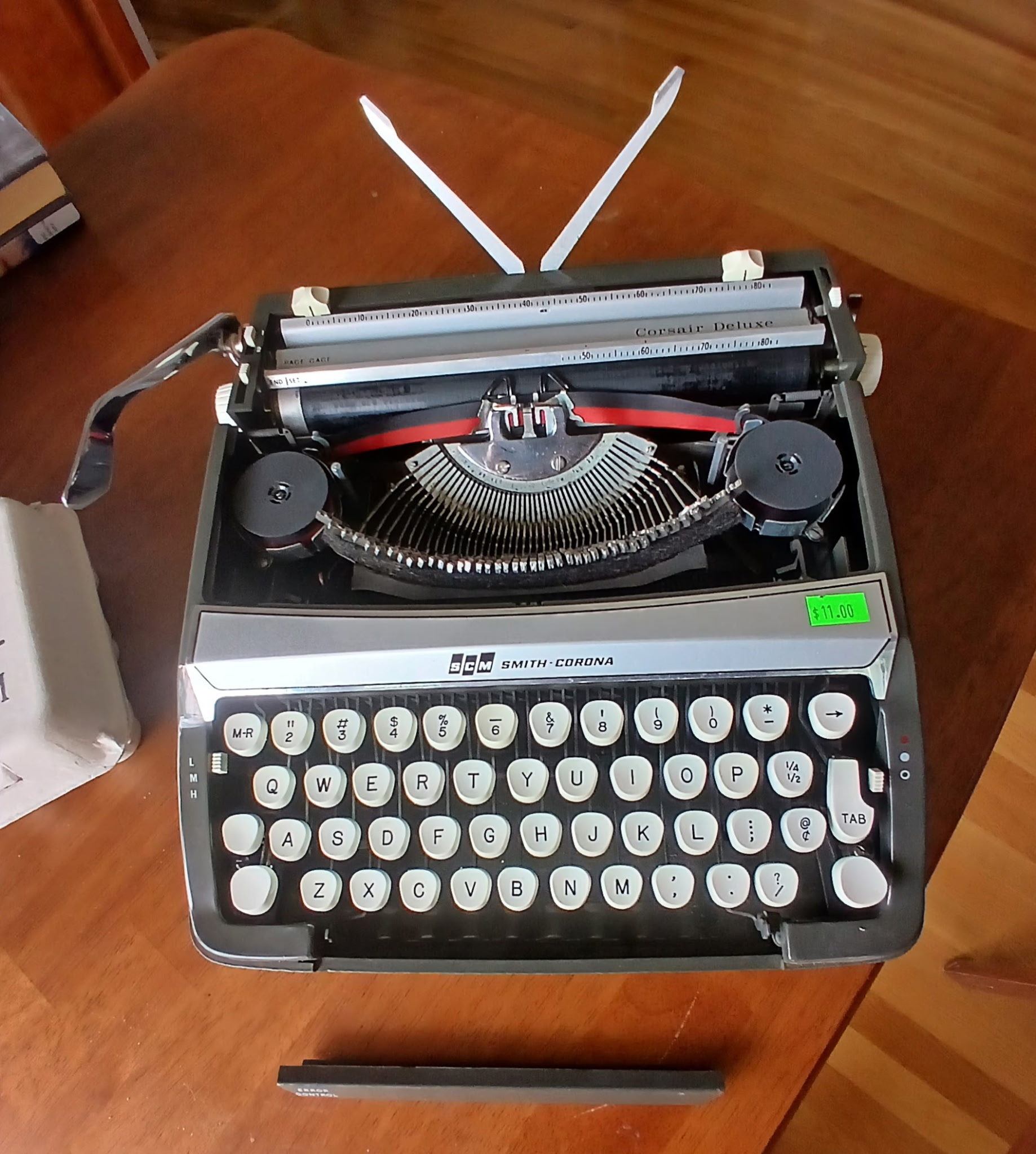
A local enthusiast’s new acquisition, a battered 197x Smith-Corona Corsair Deluxe came to me for a clean-up. Showing this scrawny thing a little love was surprisingly fulfilling. I think it needed me.
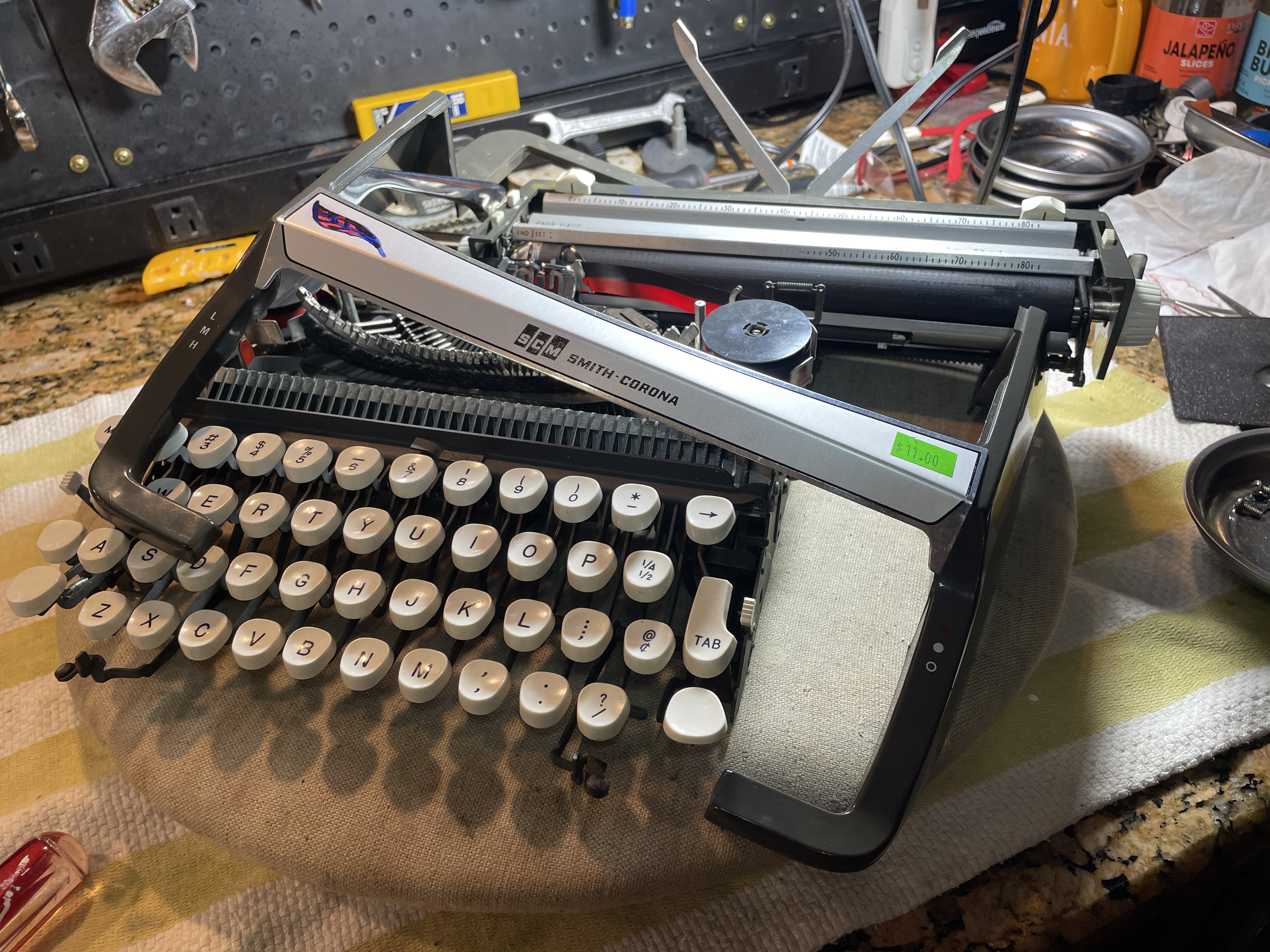
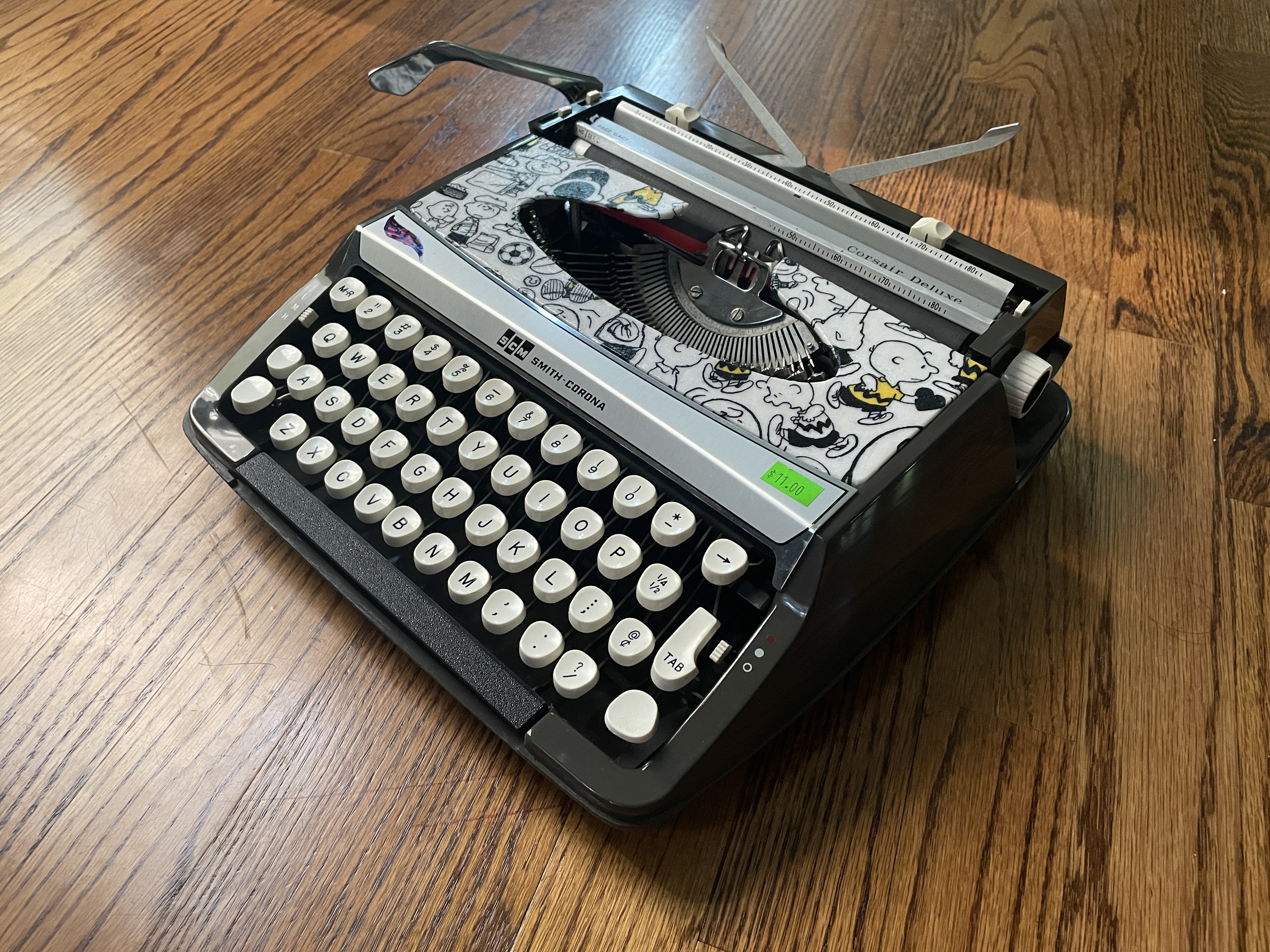
Jean is a local artist, art teacher, and typewriter enthusiast. She picked up this Corsair Deluxe at a thrift shop for $11.00 and kind of fell in love with it despite its lack of a ribbon cover and a broken spacebar. And no case cover, neither.
It is a Charlie Brown Christmas Tree of a typewriter: small, frail, and unassuming. Corsairs are often overlooked, even ridiculed. This Reddit thread about Corsairs is merciless.
For those unfamiliar with A Charlie Brown Christmas, it’s a 1965 animated TV special about Charlie Brown, a depressed elementary school kid who has real problems with the commercialization of Christmas. He selects a small, weird tree for the Christmas play, because “I think it needs me”. Charlie Brown is roundly mocked for his choice, but then, hearts are changed and everyone sings “Hark, the Herald Angels Sing” at the end. For a kids’ cartoon from 1965, it’s pretty right-on and full of spiritual insights.
I see why Jean couldn’t resist this Corsair.
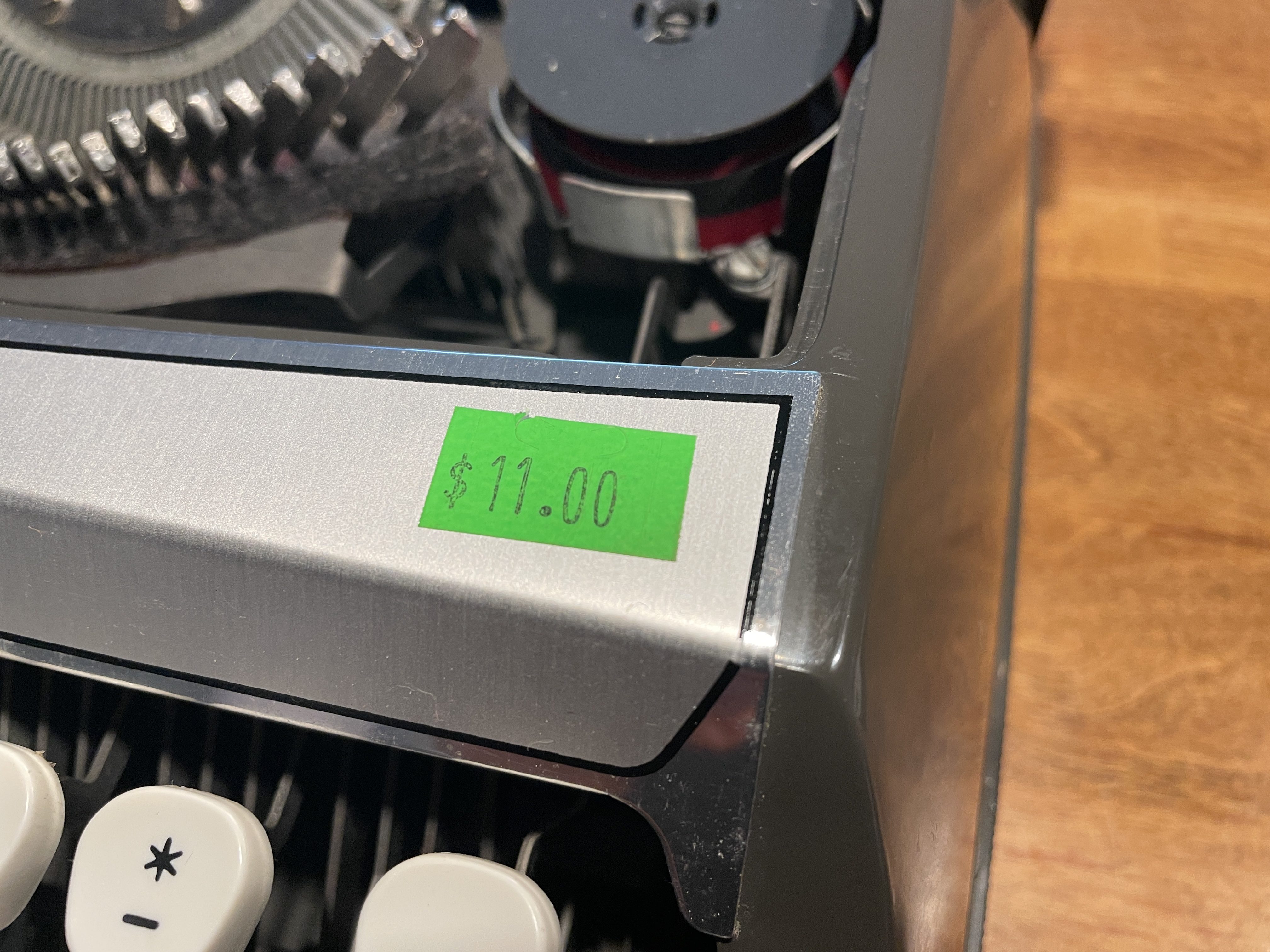
Eleven Dollah—not as affordable as Six Dollah, but inflation, you know
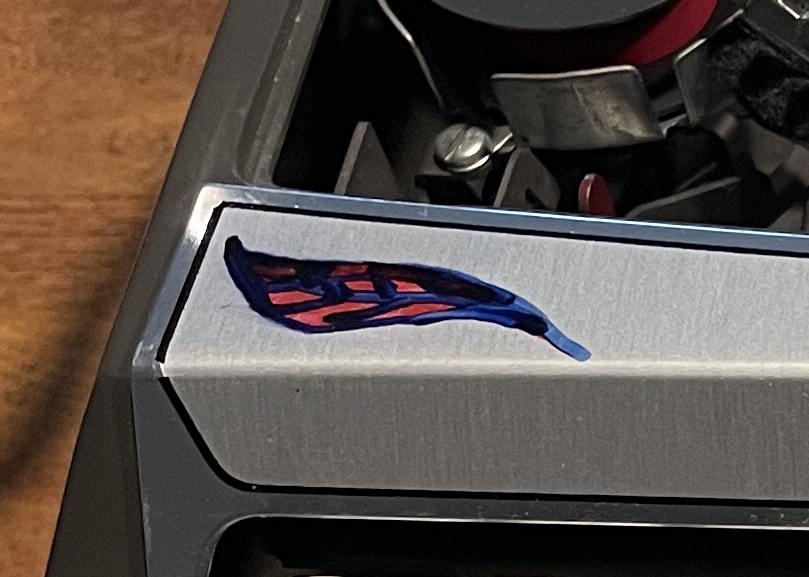
It’s so light in its plastic shell, Jean is able to carry it around the house easily. She’s an artist, so she painted a little feather on it. Though it doesn’t have a spacebar, she’s been using it, pressing the little spacebar arm nubs for spacing. She is so committed to using her typewriters.
Repairing typewriters for Jean is very satisfying to me because she uses hers every day for journaling. She rotates through her collection, and this lightweight Corsair has become a new favorite.
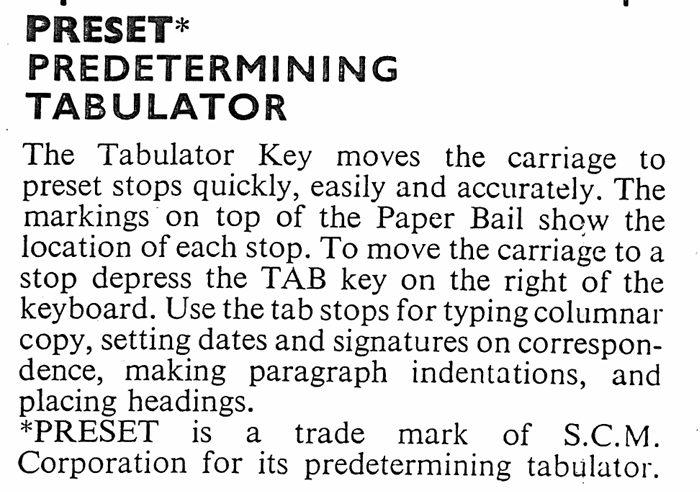
You can find a 1971 Corsair Deluxe users manual in Richard Polt’s manuals archive. This budget machine actually has a tabulator, albeit one with pre-determined stops.
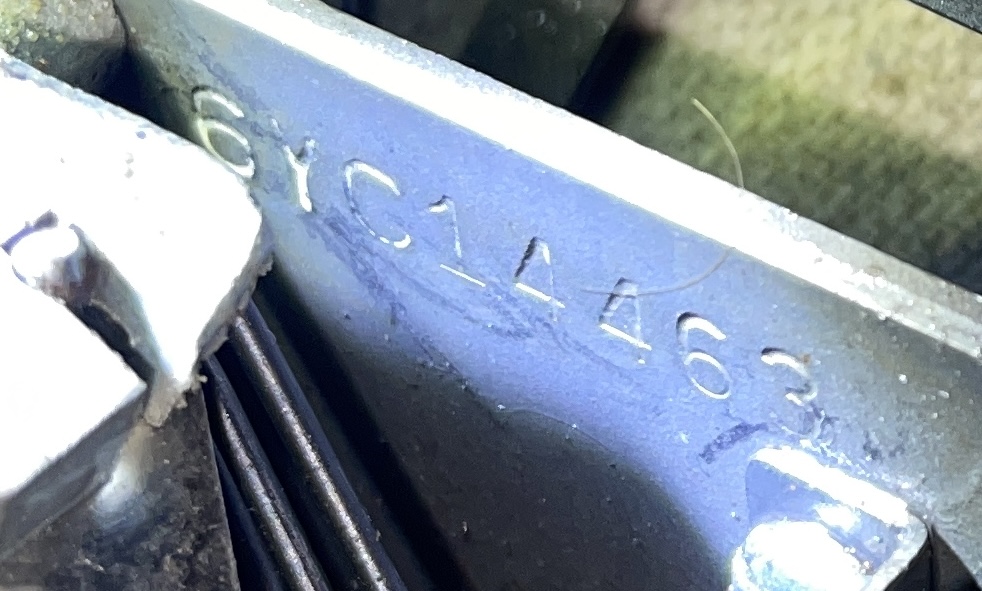
I hunted and hunted and finally found the serial number for the Corsair behind the right ribbon spool: 6YC14463.
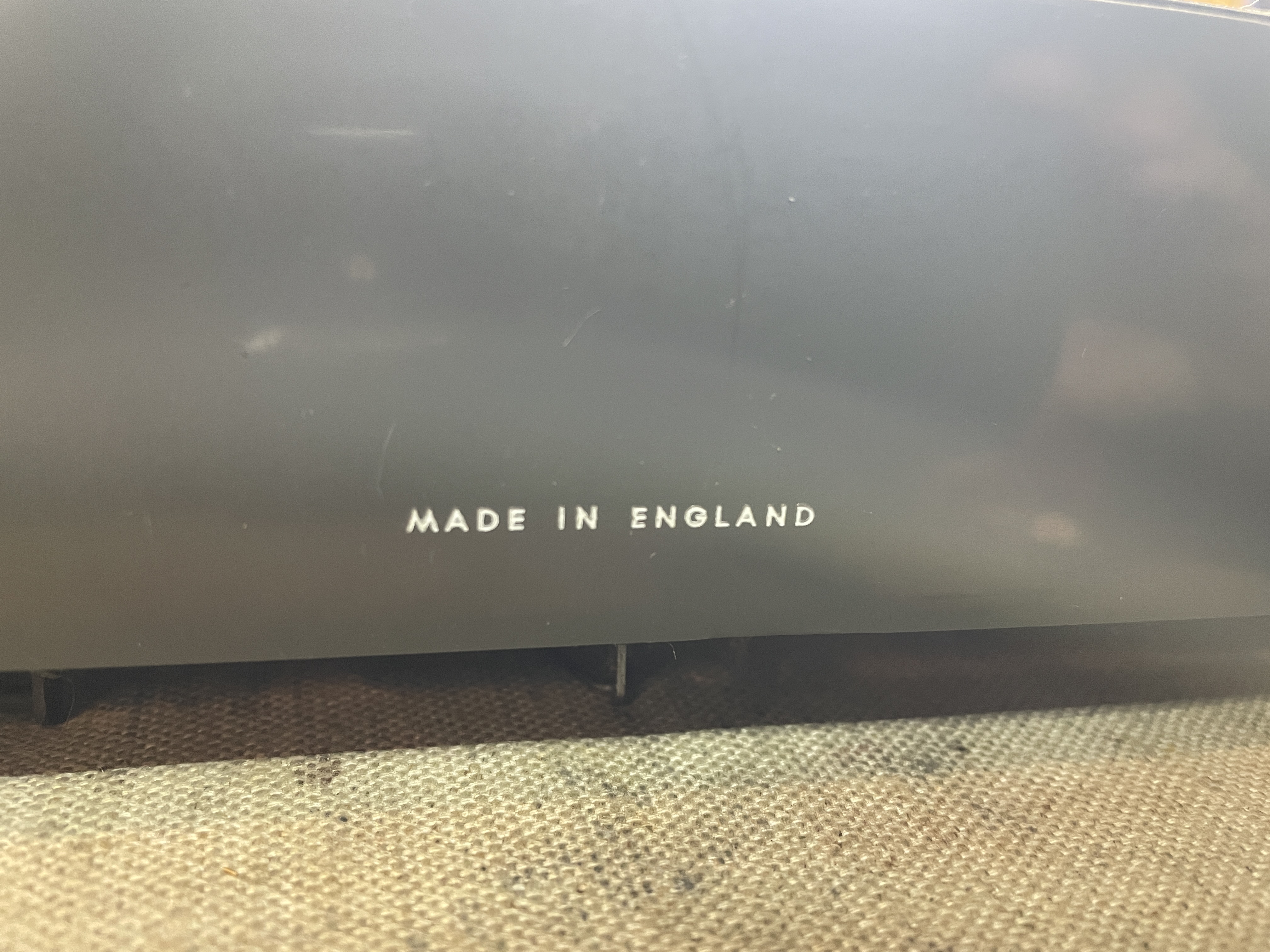
It’s hard to date this one. It was made in England sometime in the 1970s, maybe 1960s. Robert Messenger has a good post from 2012 about the British SCM Corsair.
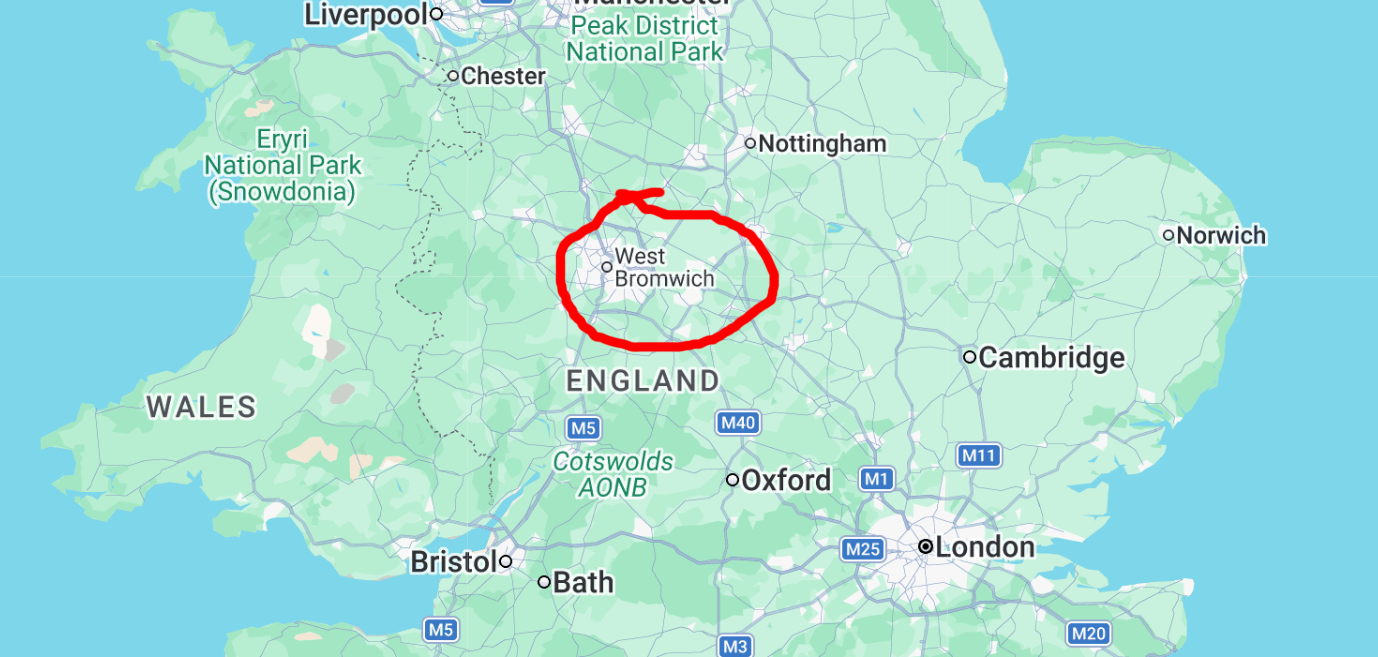
These British SCMs were made in West Bromwich, the “Chicago of the Midlands“. In 1958, Smith-Corona Marchant bought British Typewriters, Ltd. and started operations at the former British Typewriters plant in West Bromwich.
I went to the “I live in West Bromwich” Facebook group page and found this post:
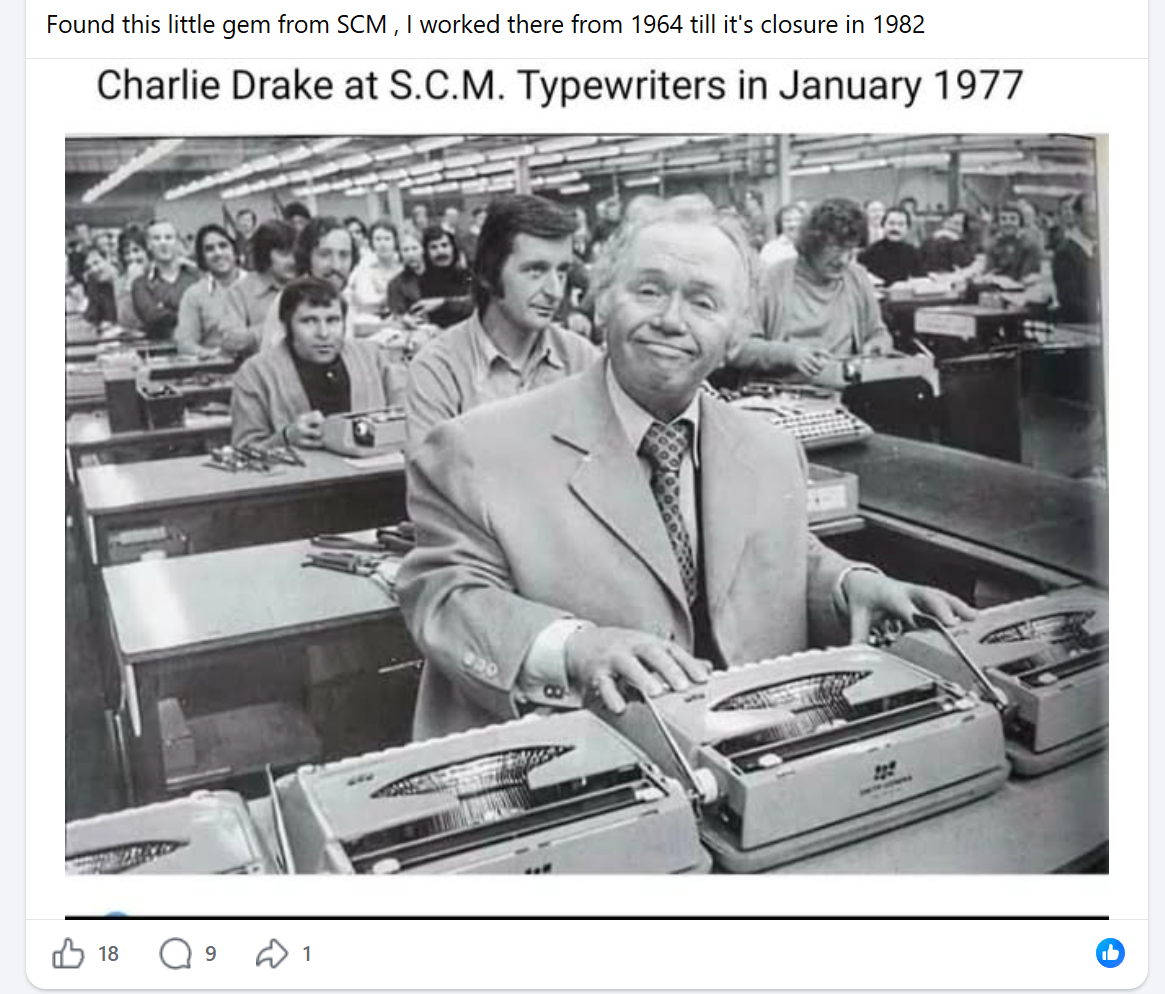
Another Charlie: Charlie Drake, a very popular British actor/comedian

I have a West Bromwich machine in my own collection: a 1974 Smith-Corona Super-G with racing stripes. It’s a Formula One Corsair. The internal mechanics are very similar.
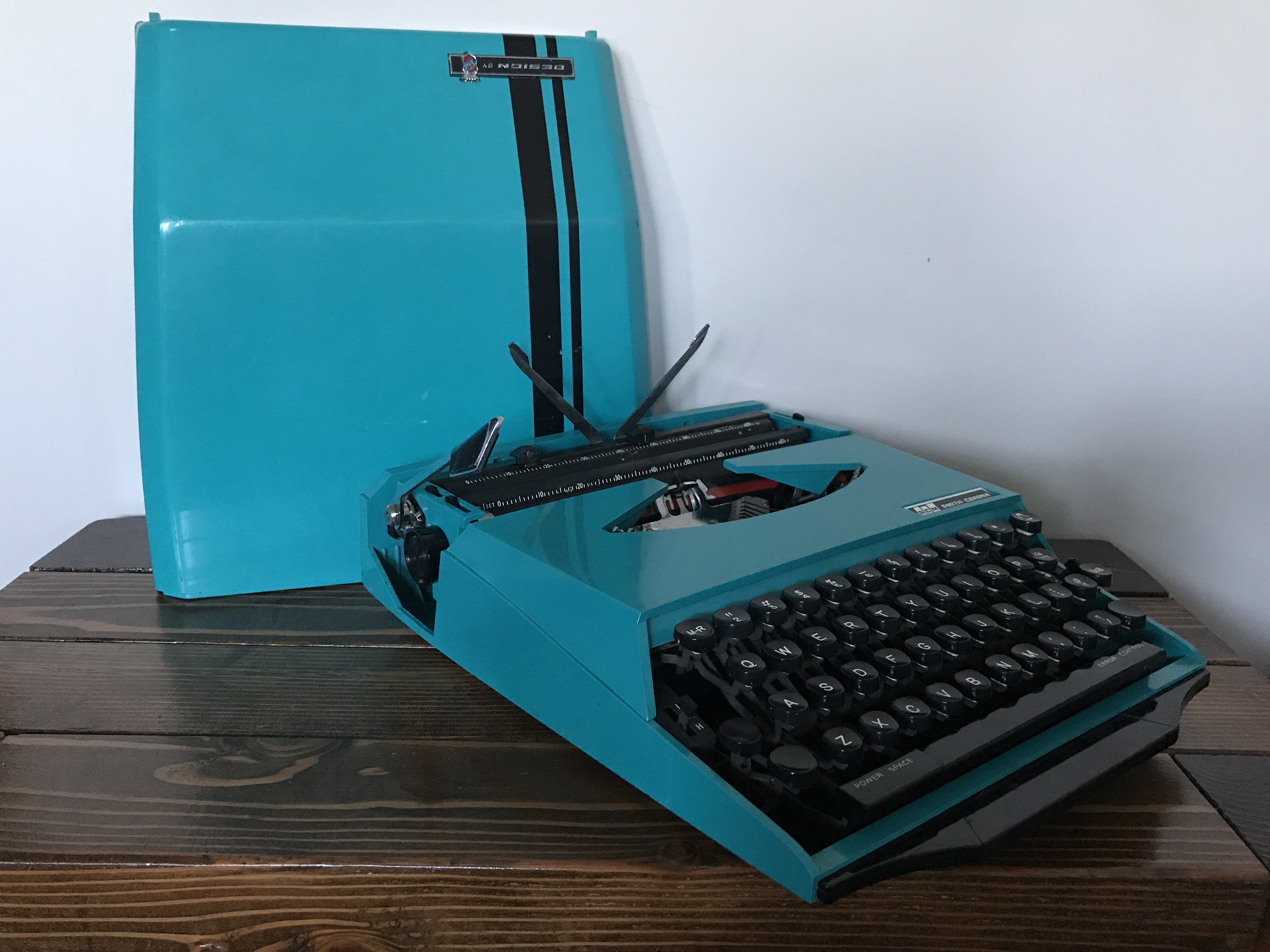
There didn’t seem to be too much wrong mechanically with the Corsair I was now confronted with: broken spacebar, a few sticky keys. I sensed a low growl in the carriage—the carriage release lever didn’t seem to lift the escapement rack high enough. I bent it up a tad, and it was fine. All the metal parts are so thin and so bendy. The Corsair was missing a ribbon cover, and I planned to model and 3D print one.
It took me a moment or two to figure out how to take the cover plates off this Corsair. They’re made from a clattery plastic that you need to be gentle with. I found that de-shelling the machine was easiest when I removed the bottom plate first. There’s four screws, two on each side that hold the bottom plate on. I then slid the machine backwards to free it from the bottom plate.
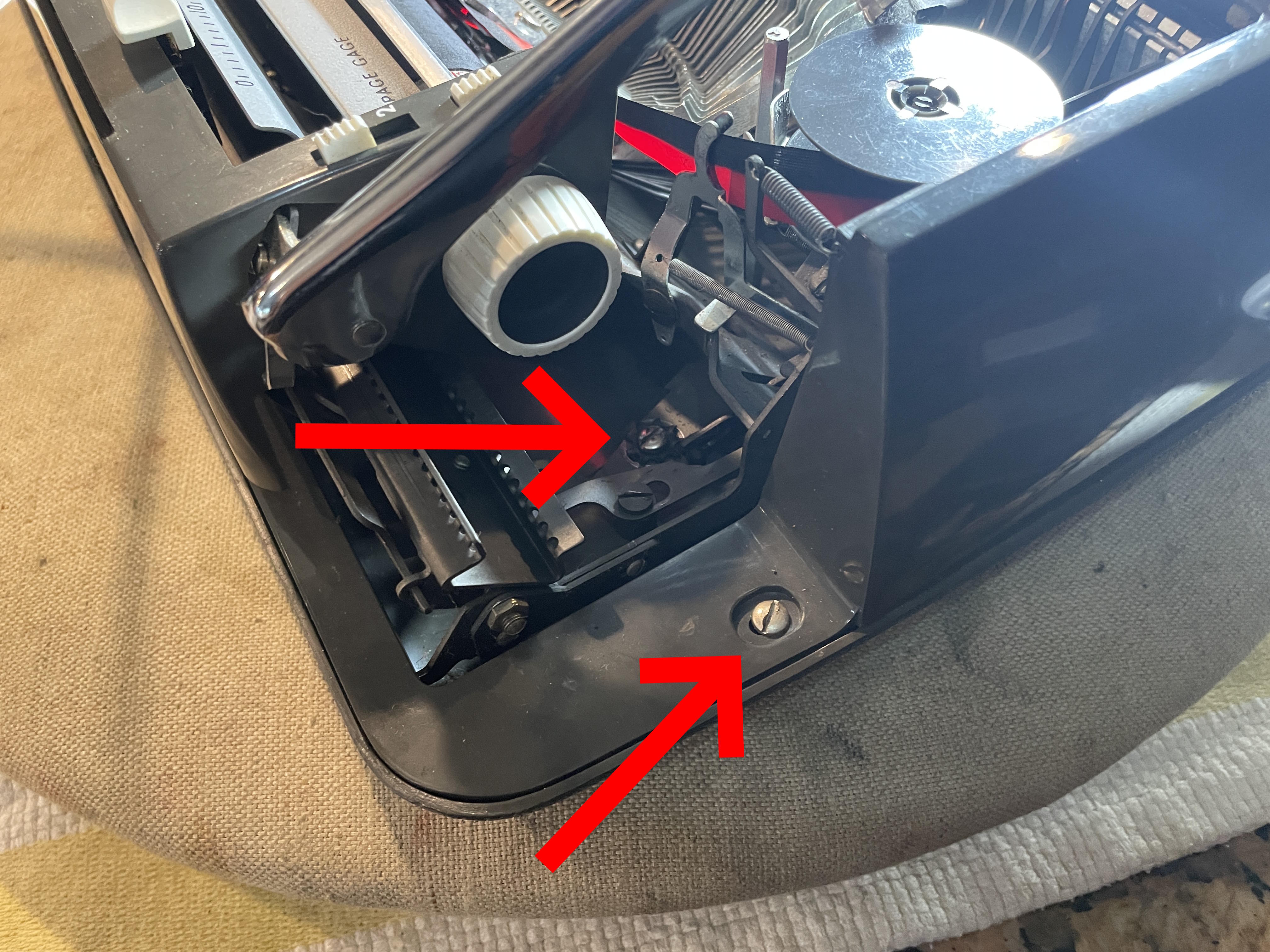
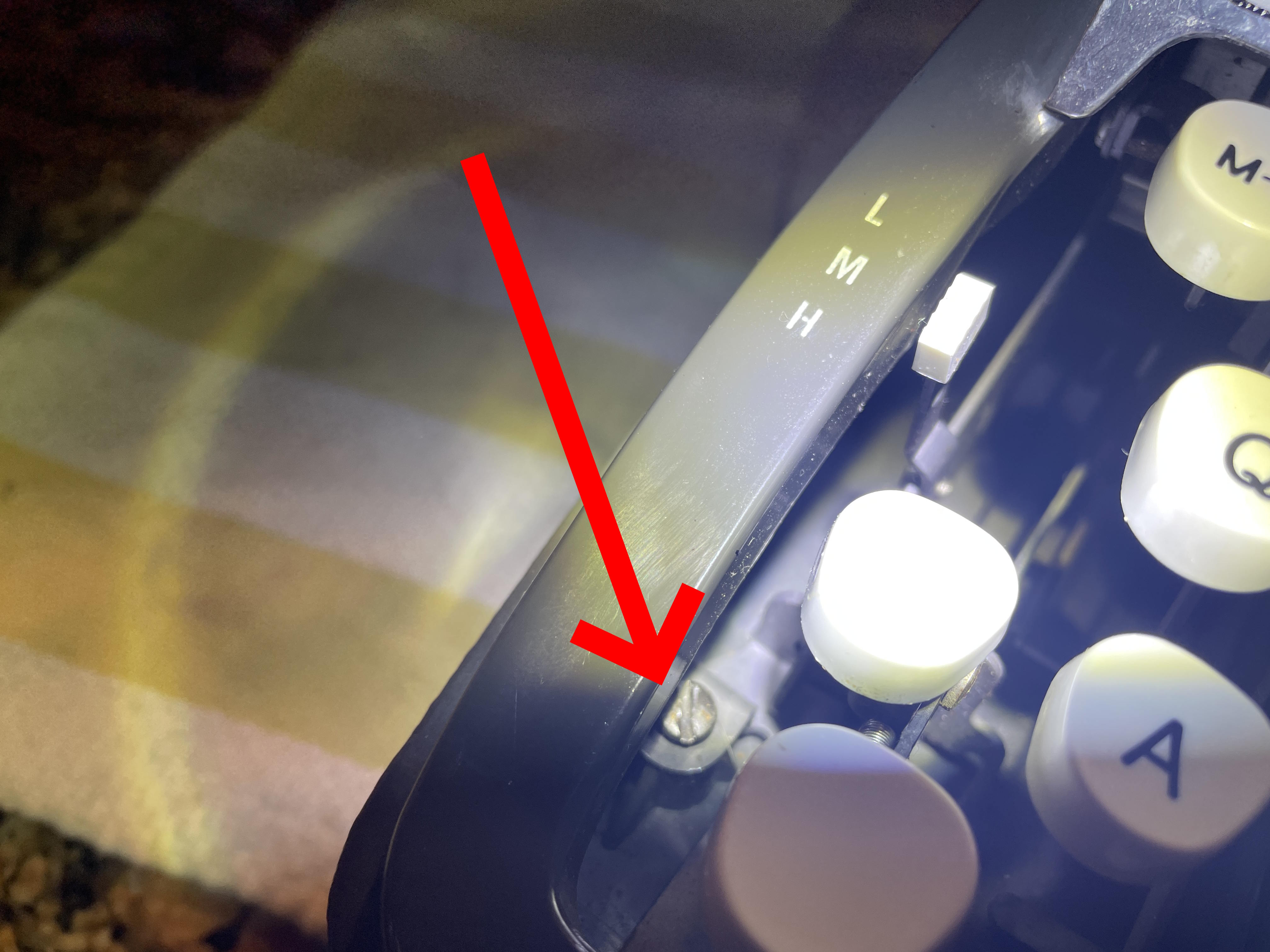
You don’t need to remove these two front screws. I did remove them my first time around and ended up with some loose metal pieces I needed to re-secure. These two front screws hold slotted pieces that machine hooks slide into.
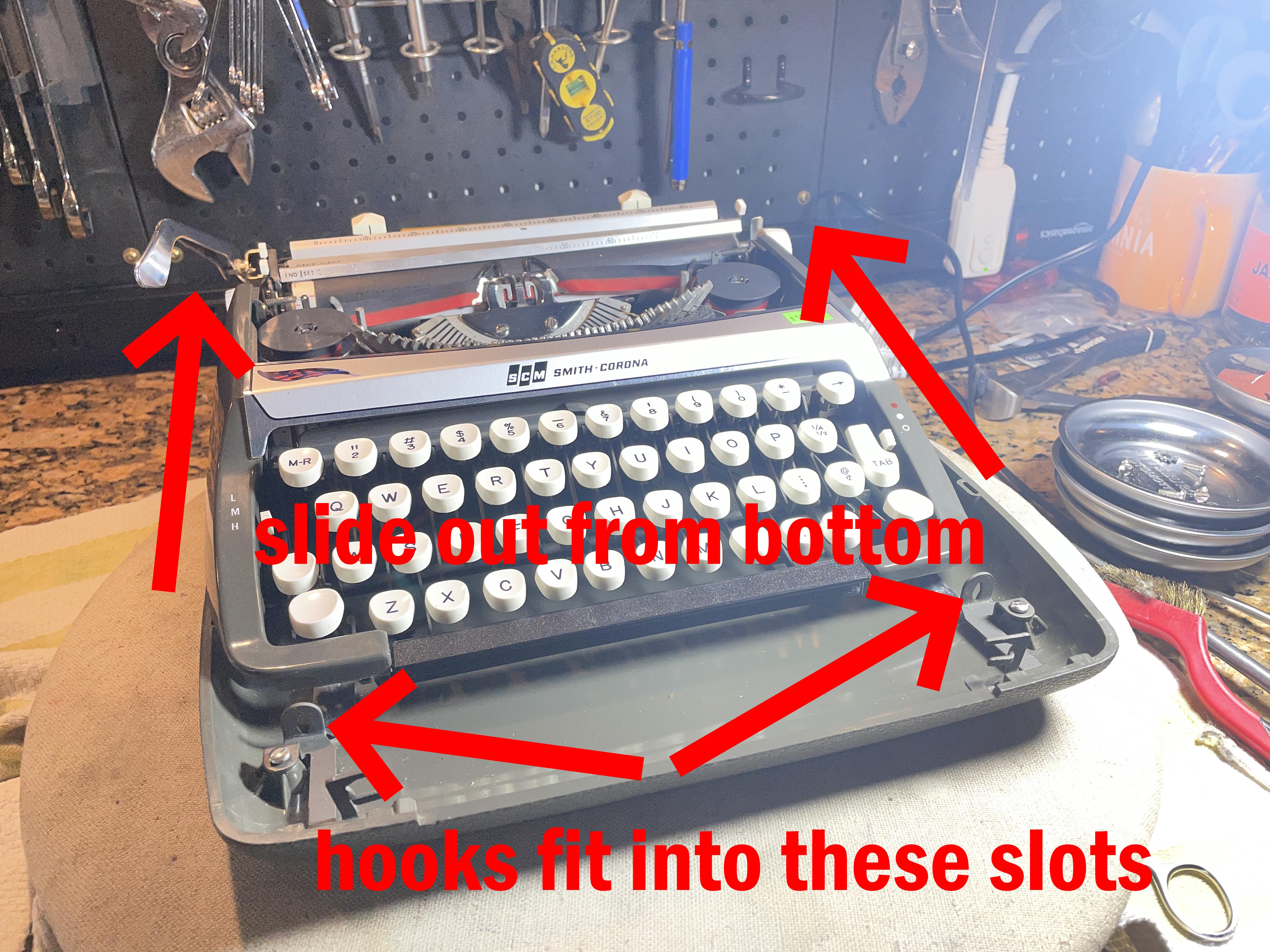
The machine slides rearwards out of the bottom plate. Once again, you don’t have to take the front screws out.
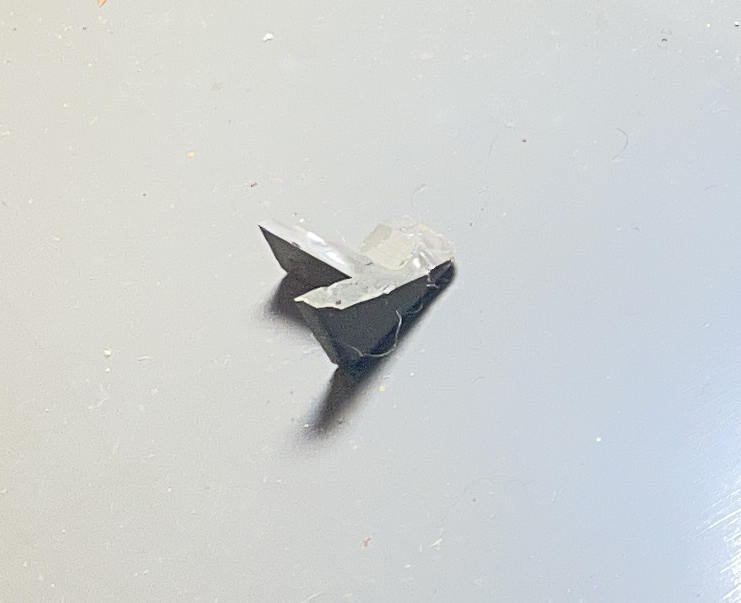
Out of the bottom shell, I found a part of the space bar rattling around inside.
Once the bottom plate was off, the top plate snaked around the extended carriage and came off.
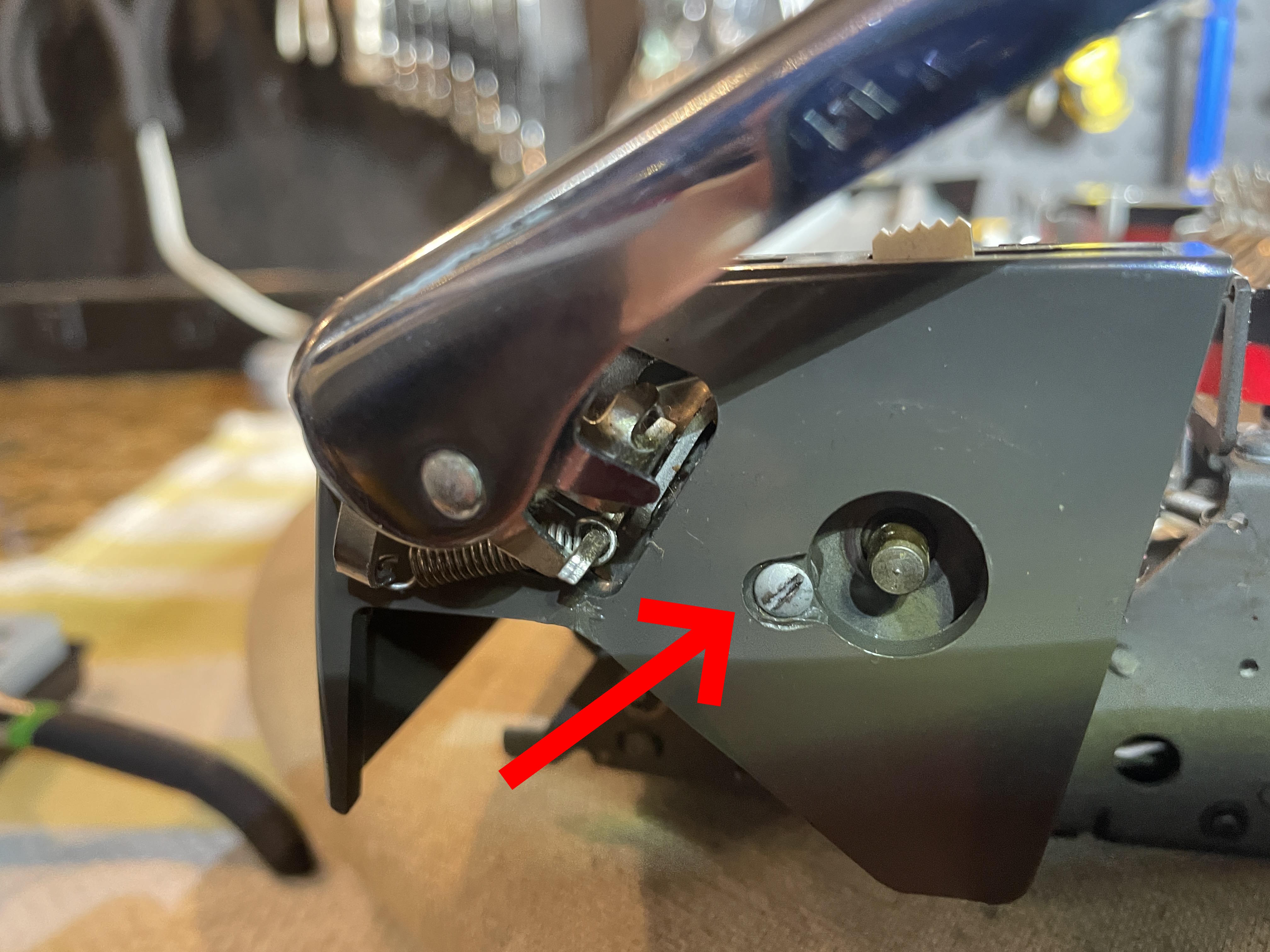
The back/side cover plate was a little trickier to remove. I removed the platen knobs on either side by loosening the set screws. 2mm hex drivers worked on the set screws. Once the platen knobs on either end were off, the cover plate screws on either end on the carriage were exposed. I removed them.
I then removed the carriage return arm by detaching the spring and pulling the e-clip that held it on.
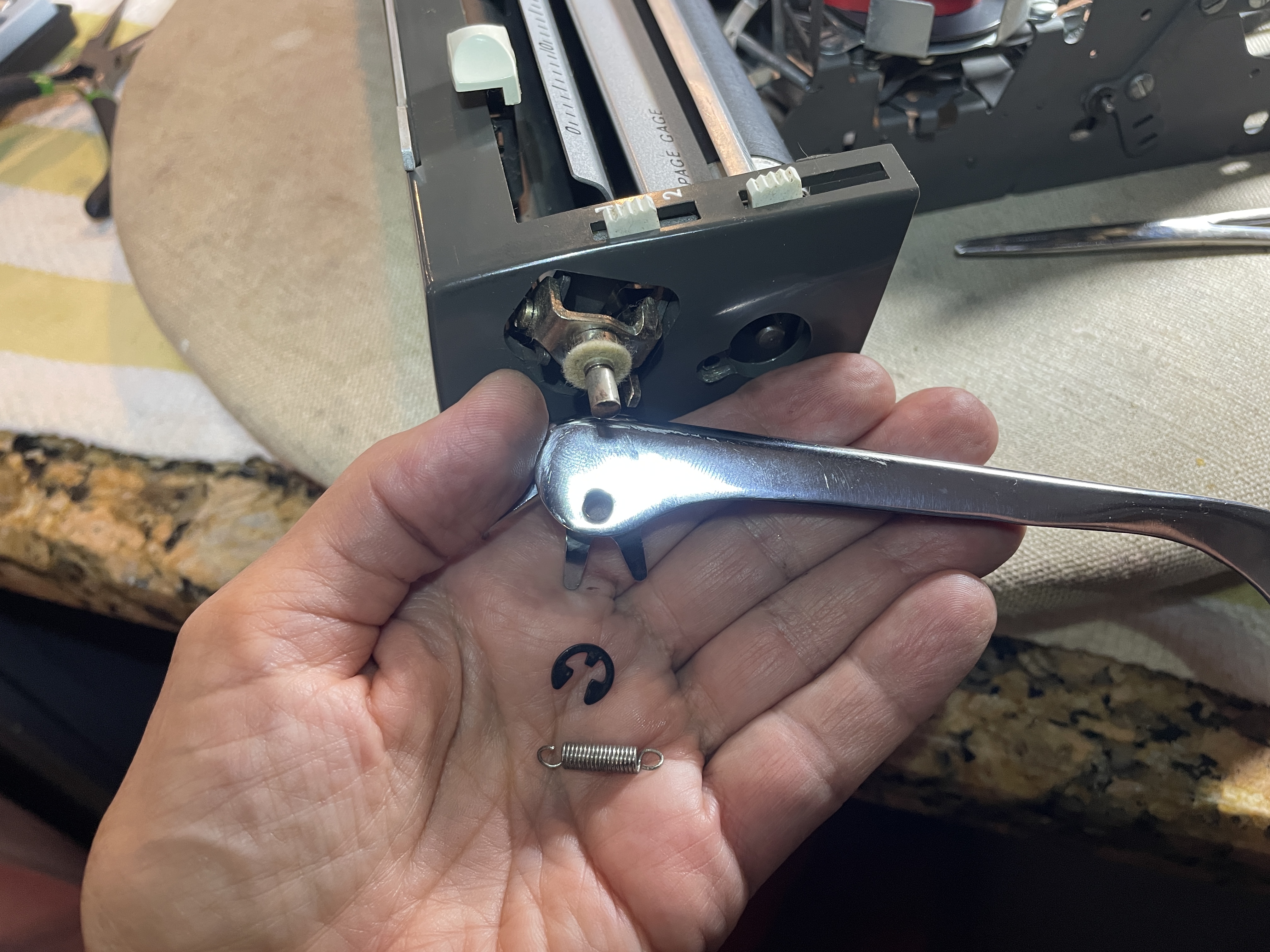
It’s a big, beefy return arm, a definite step up from the shriveled limb found on early Skyriters. I can see why people swap out Skyriter arms for Corsair arms.
There are two plastic projections inside the top cover plate. You’ll need to flex the plastic plate to pop the projections out of their slots and after that the top cover plate will lift off.
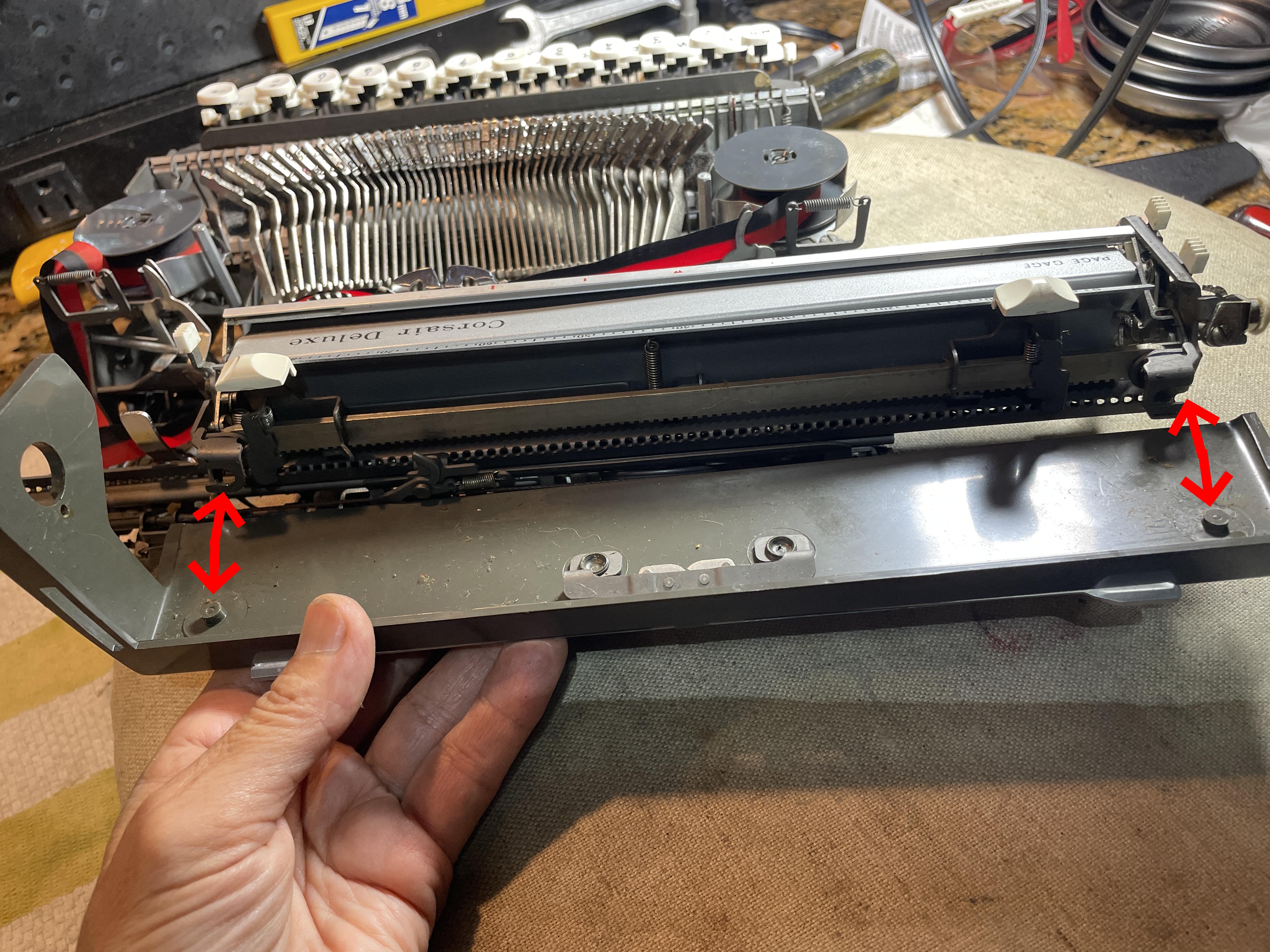
I didn’t fracture the 50 year old plastic getting the back cover plate off. It’s very brittle and fragile.
The spools flummoxed me. I couldn’t get them off. I watched Duane struggling with them in this video and then knew a little extra force and profanity might be required. I ended up prying (gently) with a screwdriver from beneath.
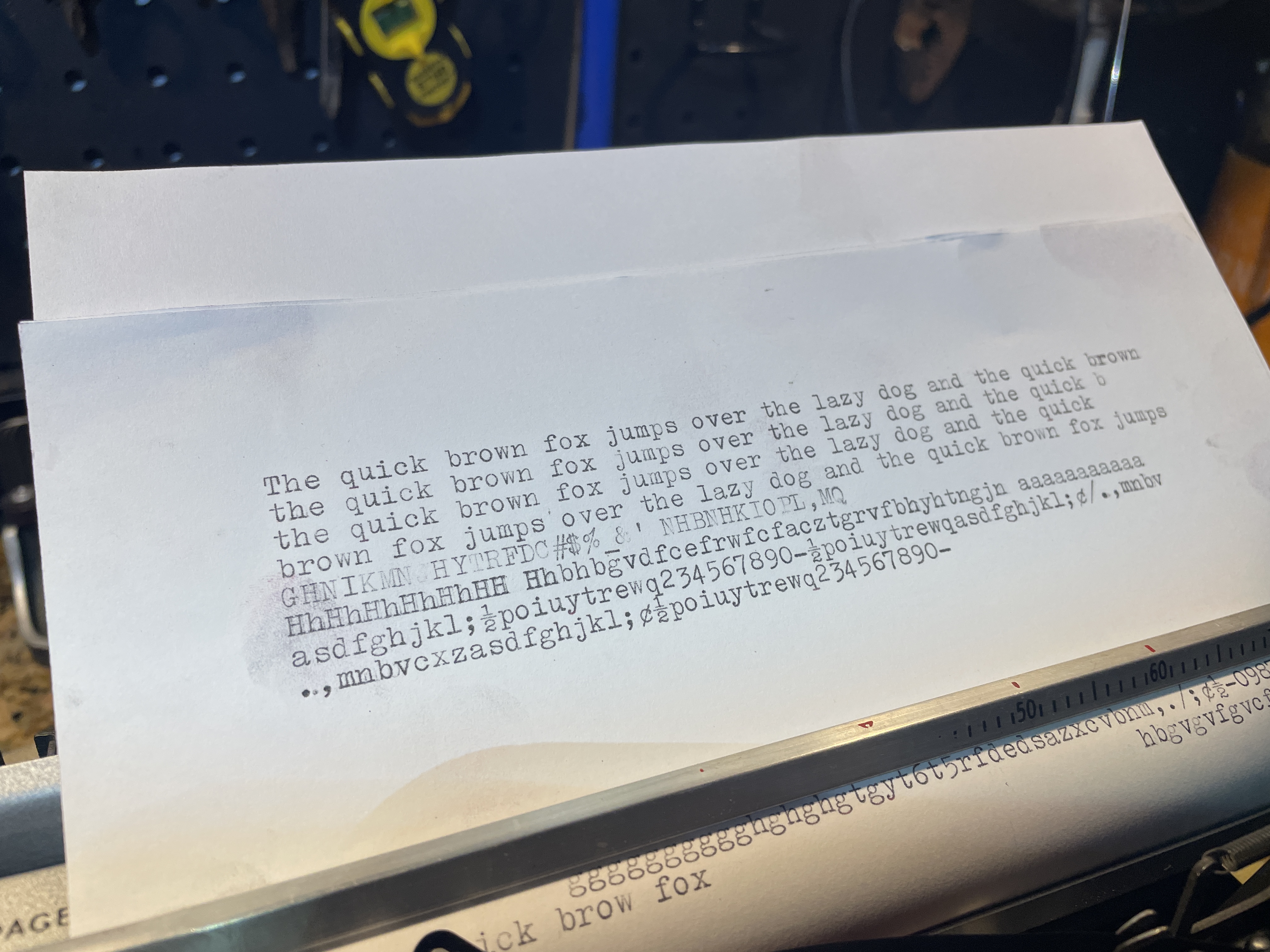
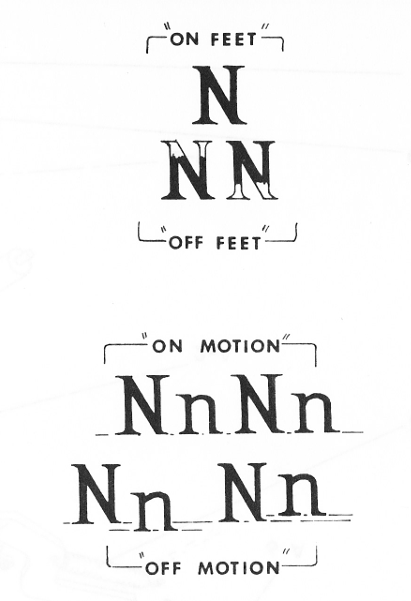
It wasn’t very dirty. I did a light cleaning with mineral spirits and then did some typing tests. The typing doesn’t look too bad. The machine appears to be “On Feet” and shifting looks good.
If I had needed to make adjustments to put the machine “on feet” or “on motion”, I had the Operation OOPRAP Smith-Corona 6YC Series Typewriter Repair Manual.
And here’s Duane making the adjustments:
As a matter of fact, Duane has a large collection of Corsair/Corsair-adjacent videos if you are looking for help.
The broken spacebar was a real problem. I had the main bar section and one end piece that had broken off. I super-glued it back together and then another piece broke off. Ugh.
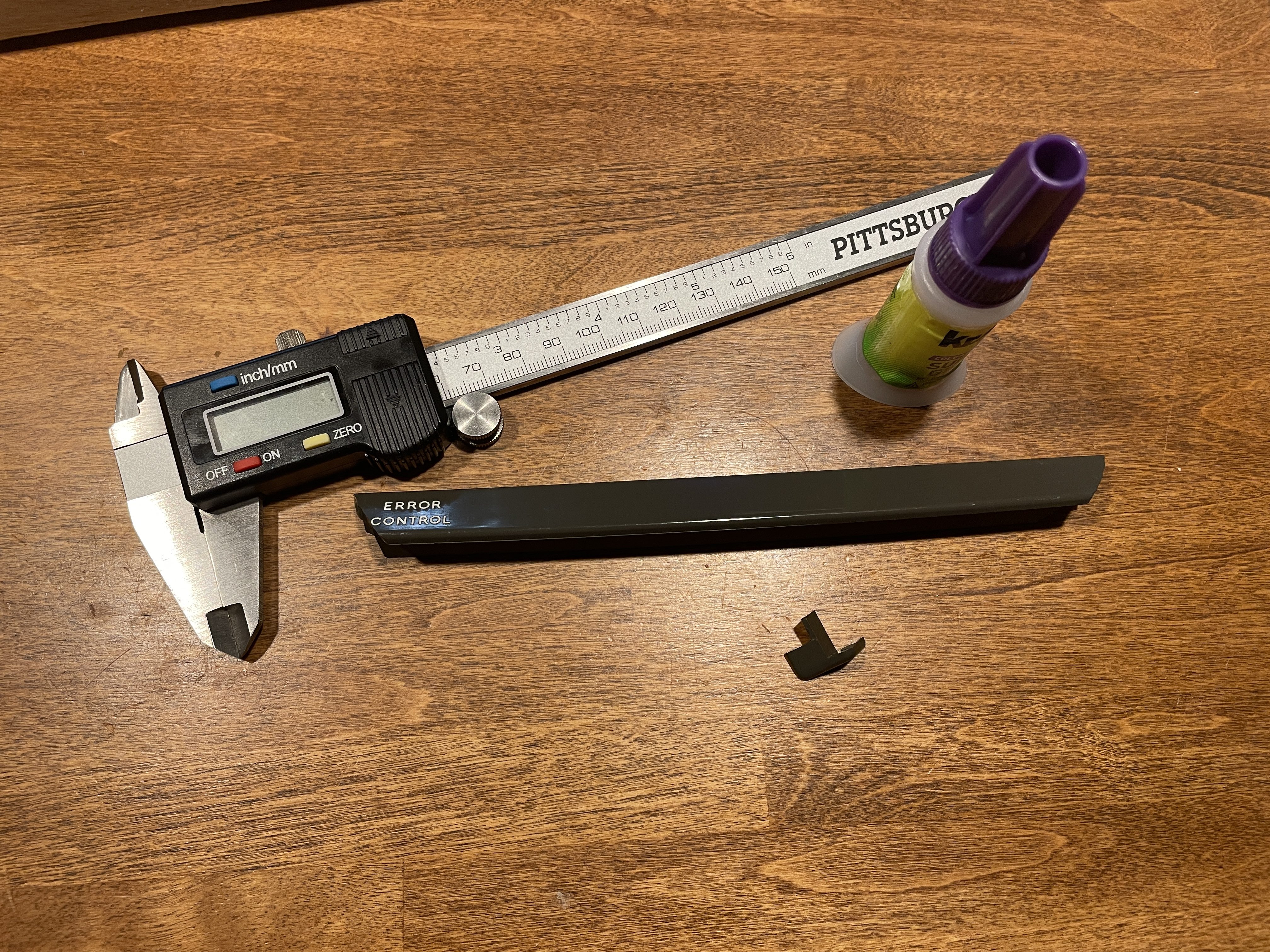
I pulled out my calipers, measured the original, and made a 3D model. After repeated design adjustments, I printed out a functional spacebar in PLA which I glued into place with J-B Weld.
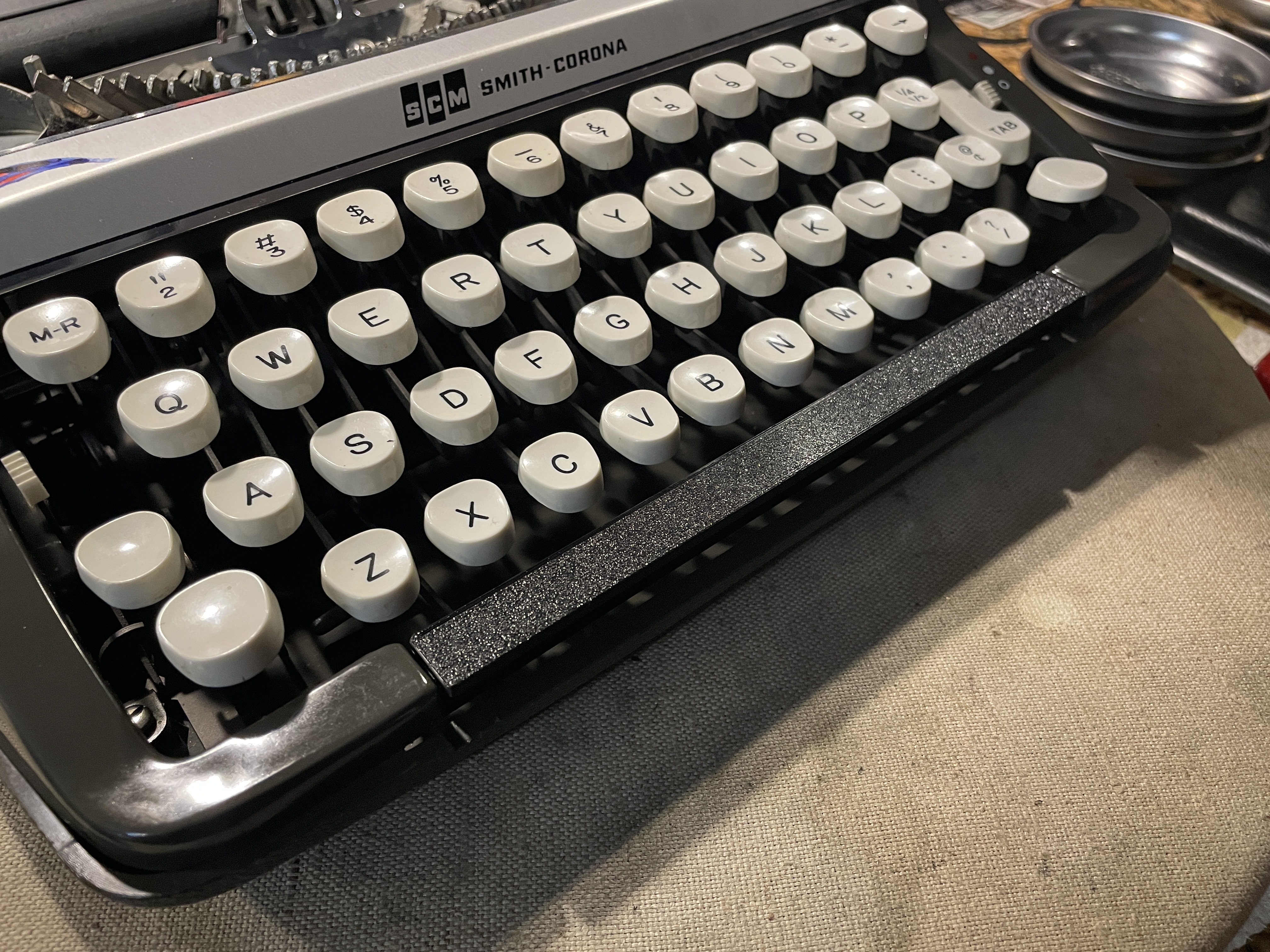
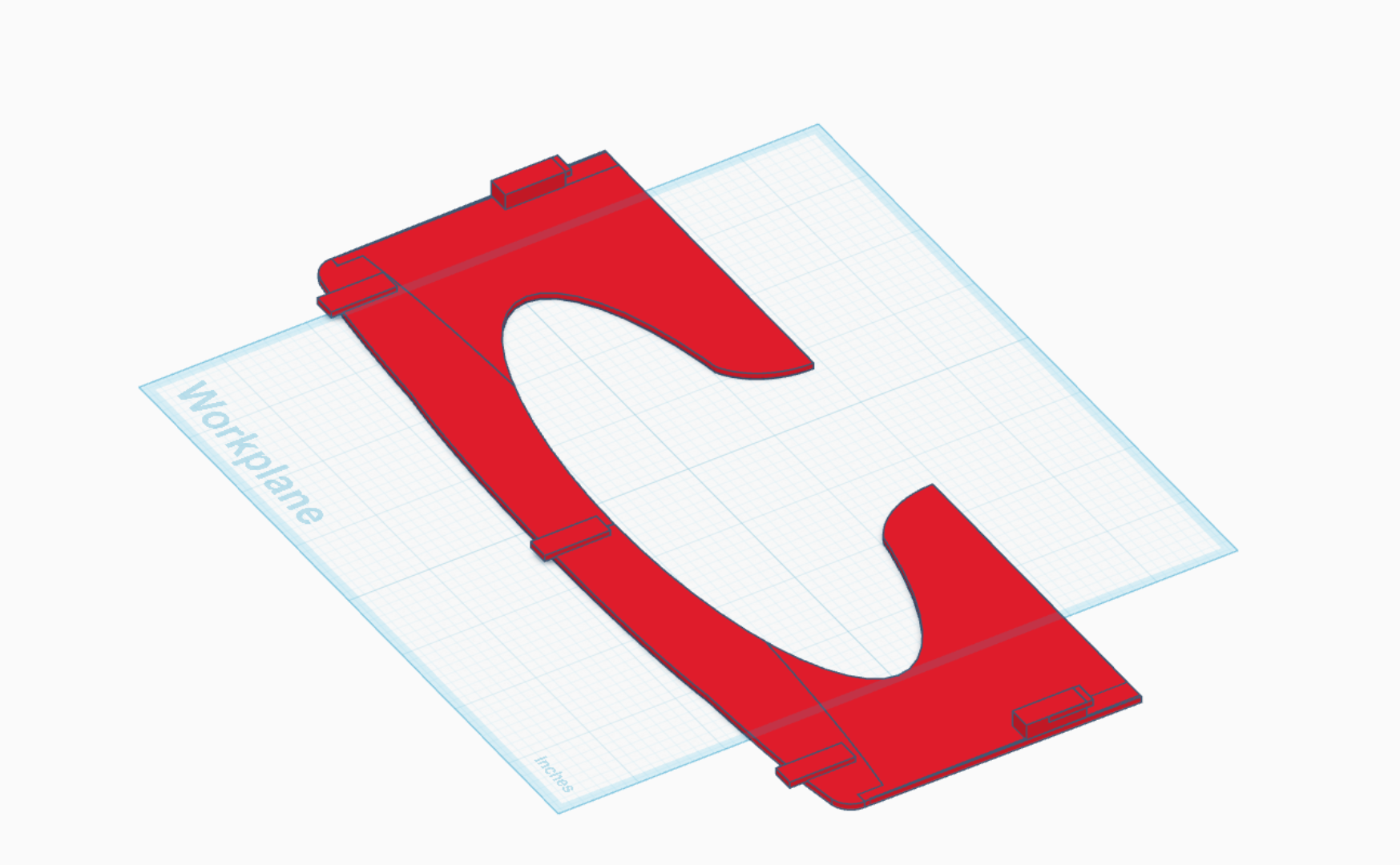
The missing ribbon cover was more challenging since I didn’t have a ribbon cover for reference. I spent a long time looking at a Corsair ribbon cover for sale on eBay.
The print barely fit on my 10 inch printer bed, but after repeated re-designs, I got a solid, good-looking ribbon cover that grips the main body firmly. I made it thin enough to flex into place.
I printed it out in three different colors so that Jean can paint or decorate them to her tastes. She’s an artist. She understands the assignment.
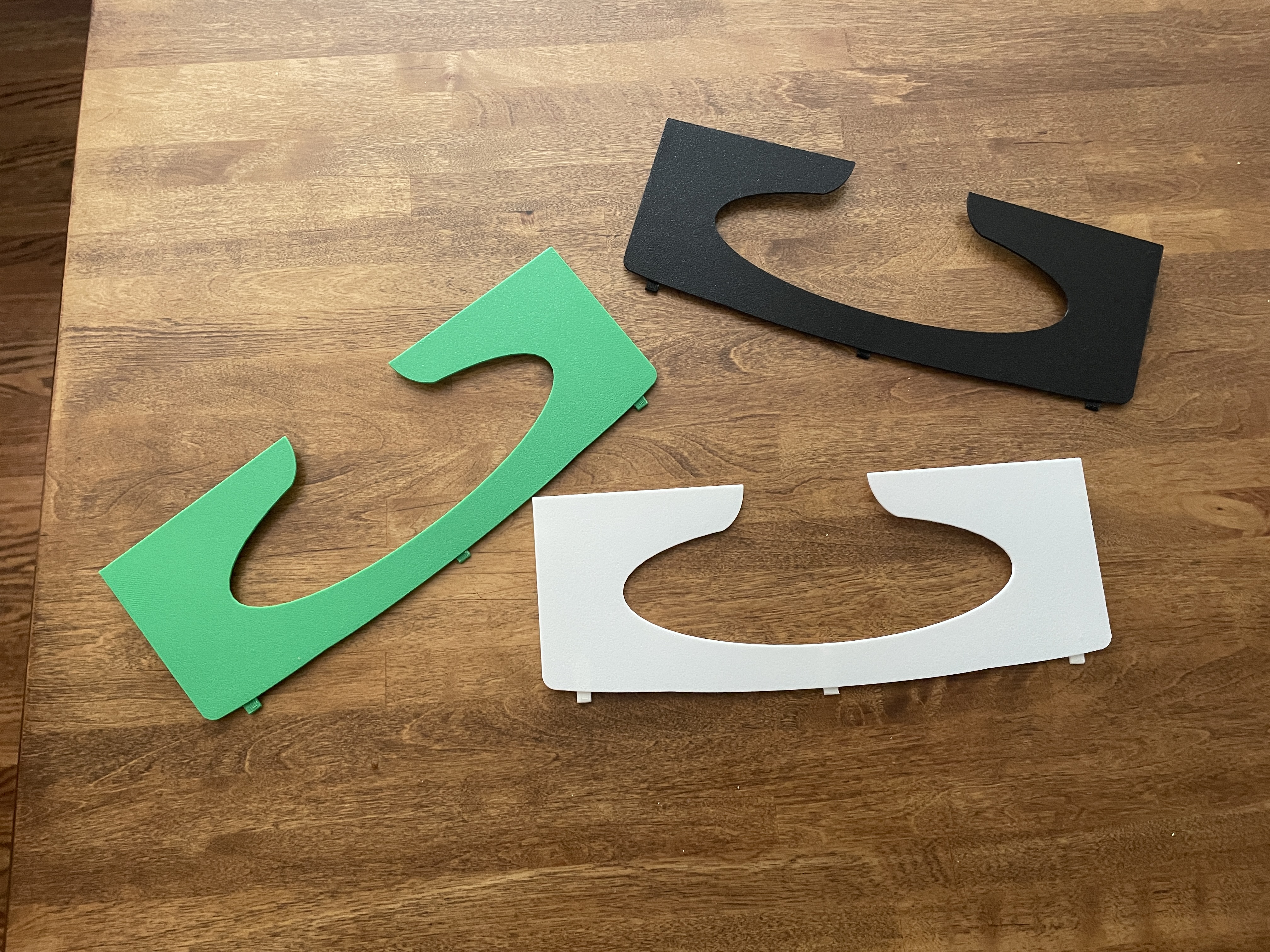
The black and white versions look great:
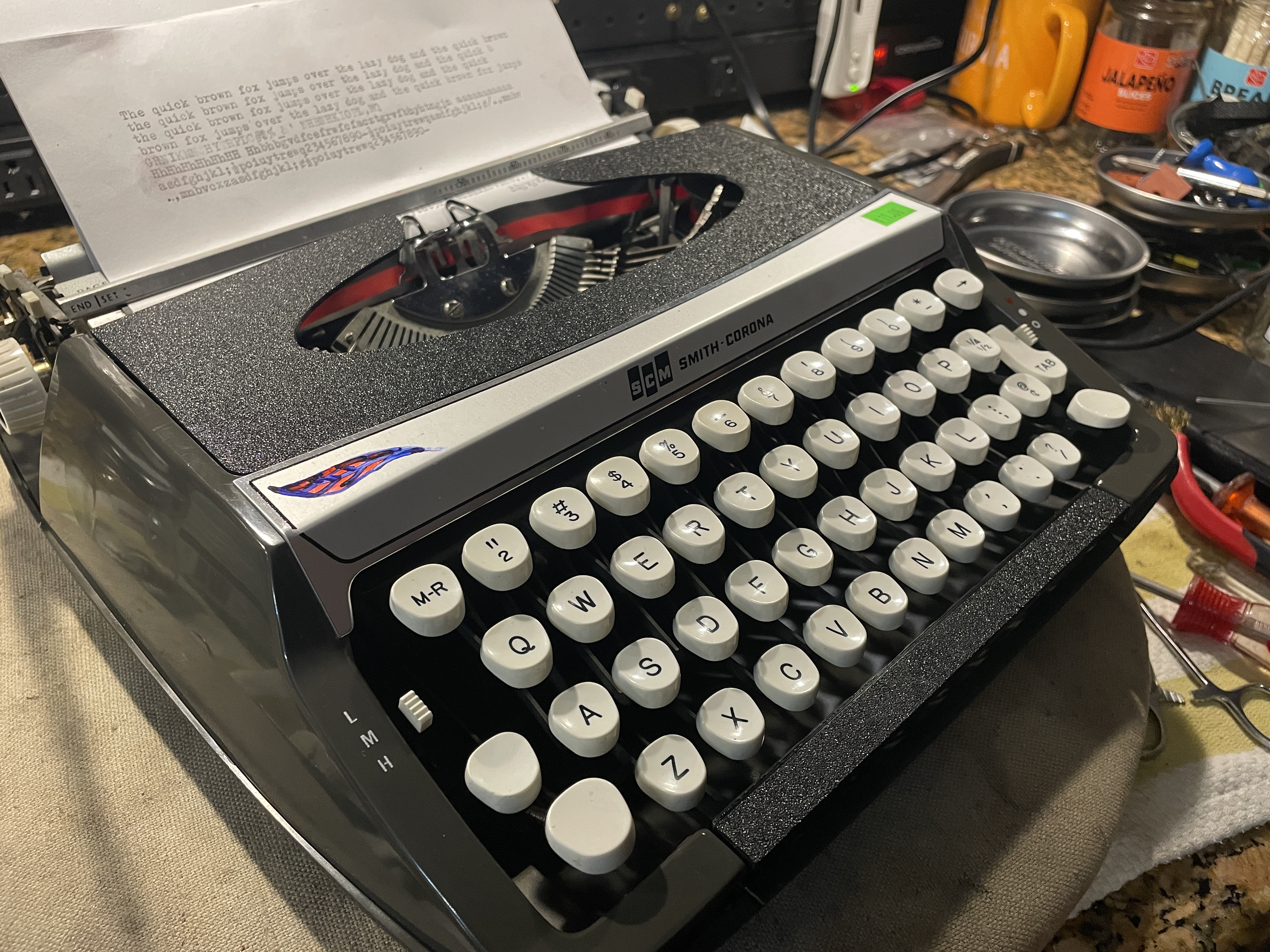
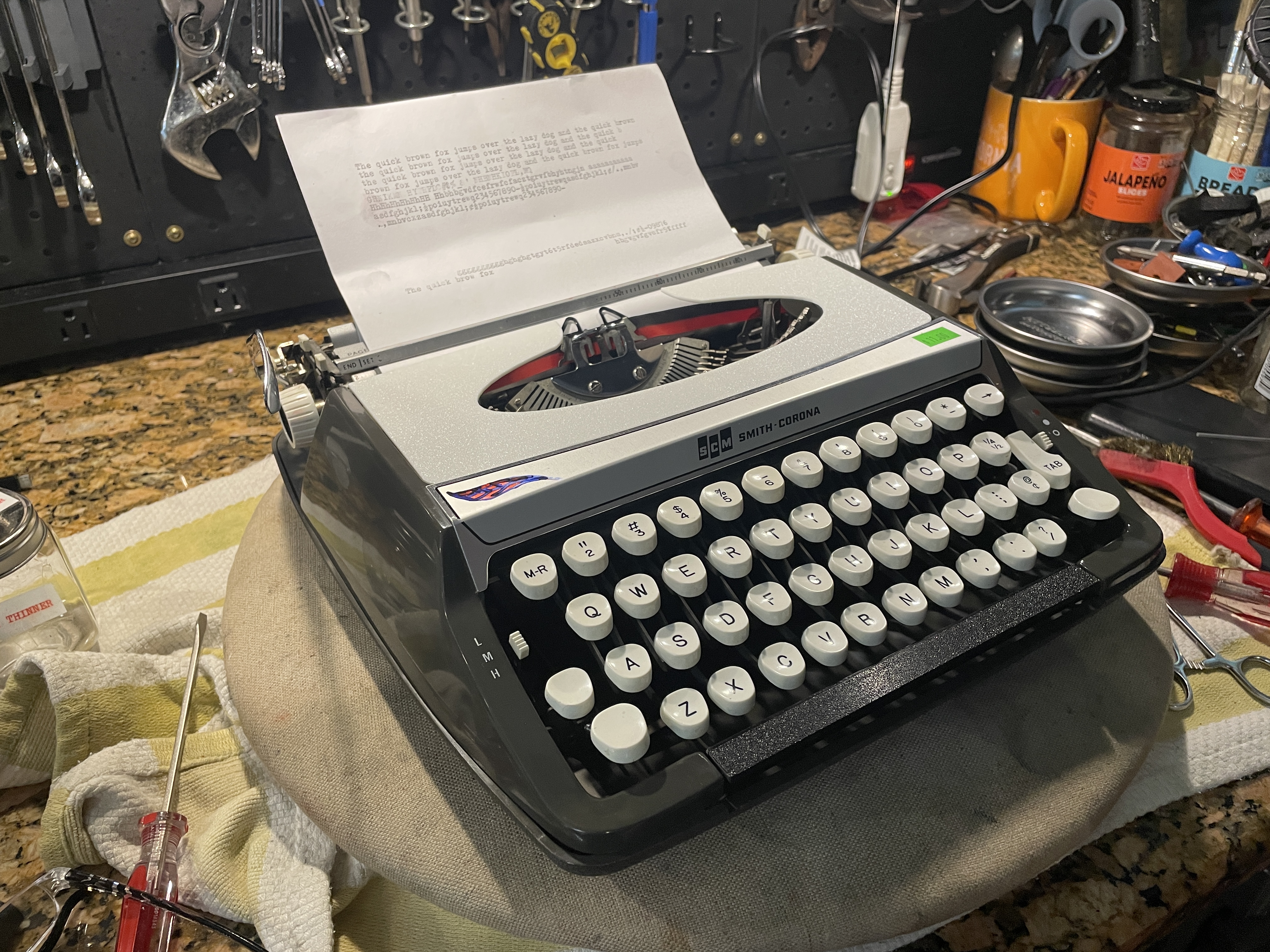
Tuxedo cat!
The green version makes me laugh out loud. It matches the $11.00 price tag. I think Jean made a conscious design decision to keep the price tag. Provenance, you know.
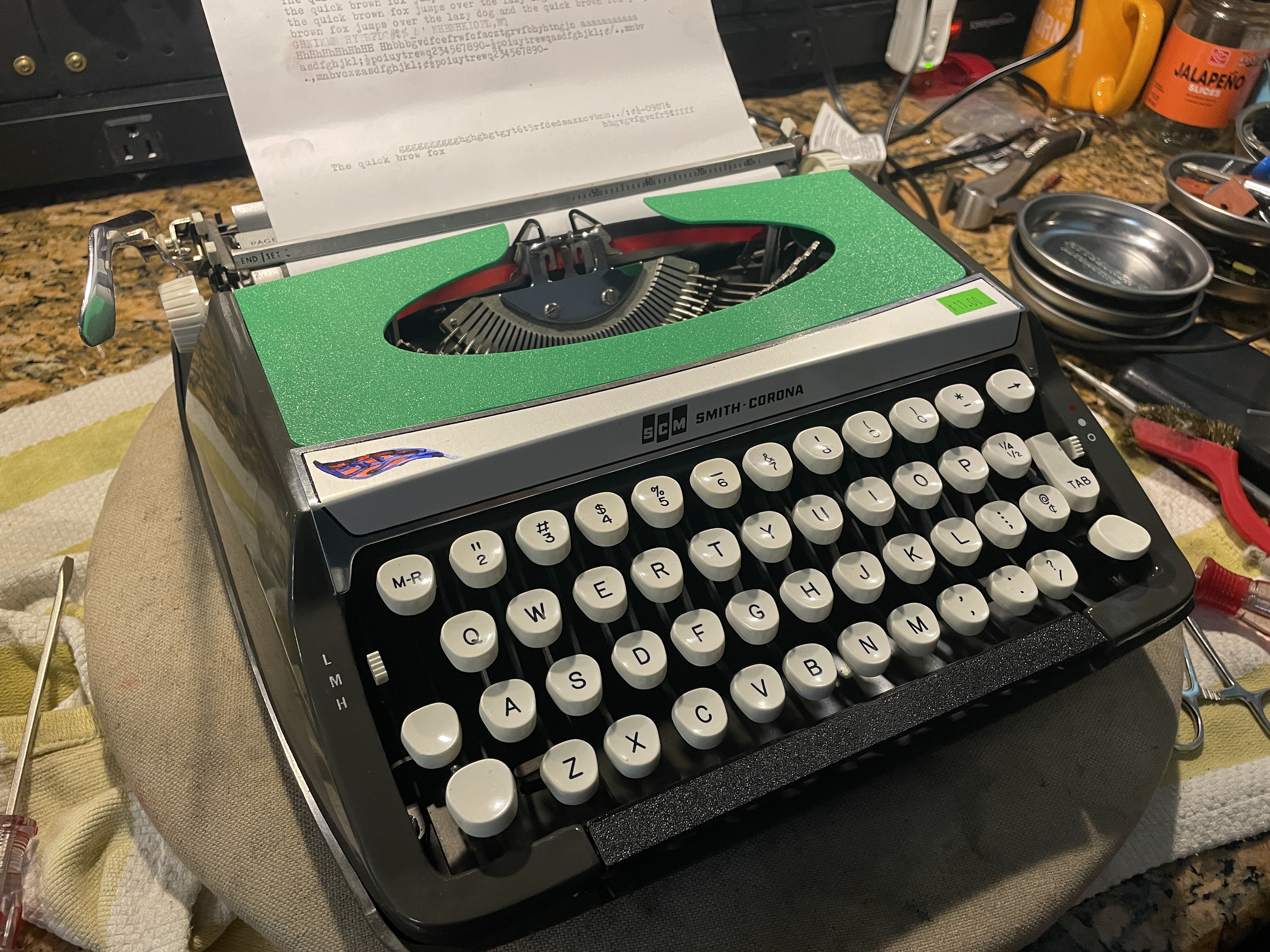
The ribbon cover model isn’t perfect—there are thin gaps on each side of the cover, but I’m satisfied. I welcome more experienced 3D modelers to perfect both the ribbon cover and the spacebar in remixes:
- Ribbon Cover for Smith-Corona Corsair Deluxe Typewriter at Thingiverse
- Spacebar for Smith-Corona Corsair Deluxe Typewriter at Thingiverse
Leaning into the Charlie Brown Christmas Tree-ism of this Corsair, I pulled out a Charlie Brown fabric remnant from my stash. I printed out another ribbon cover in PLA, got my Mod Podge (I’m really getting in touch with my 60s and 70s inner child) and applied the fabric to the PLA ribbon cover.
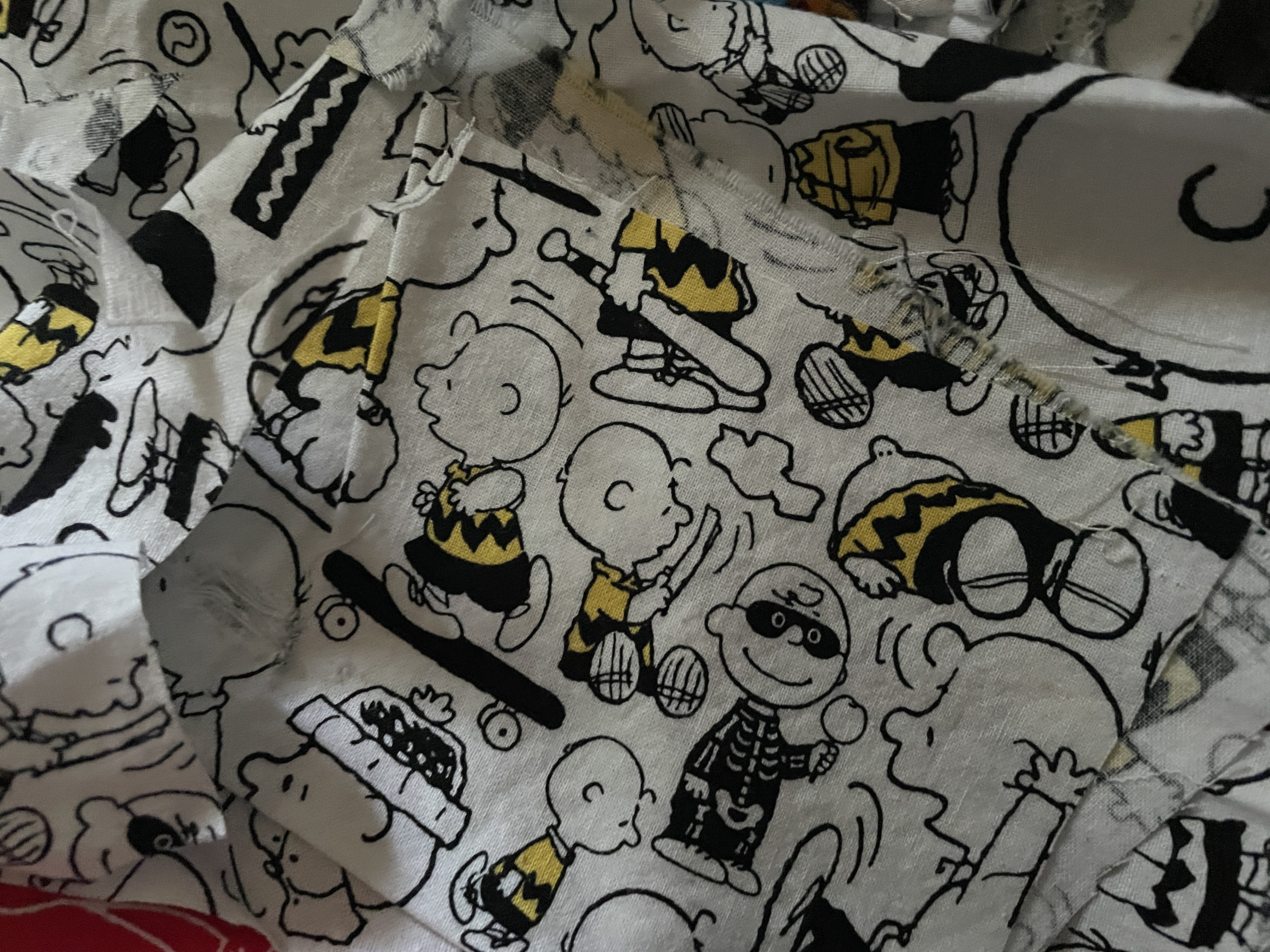
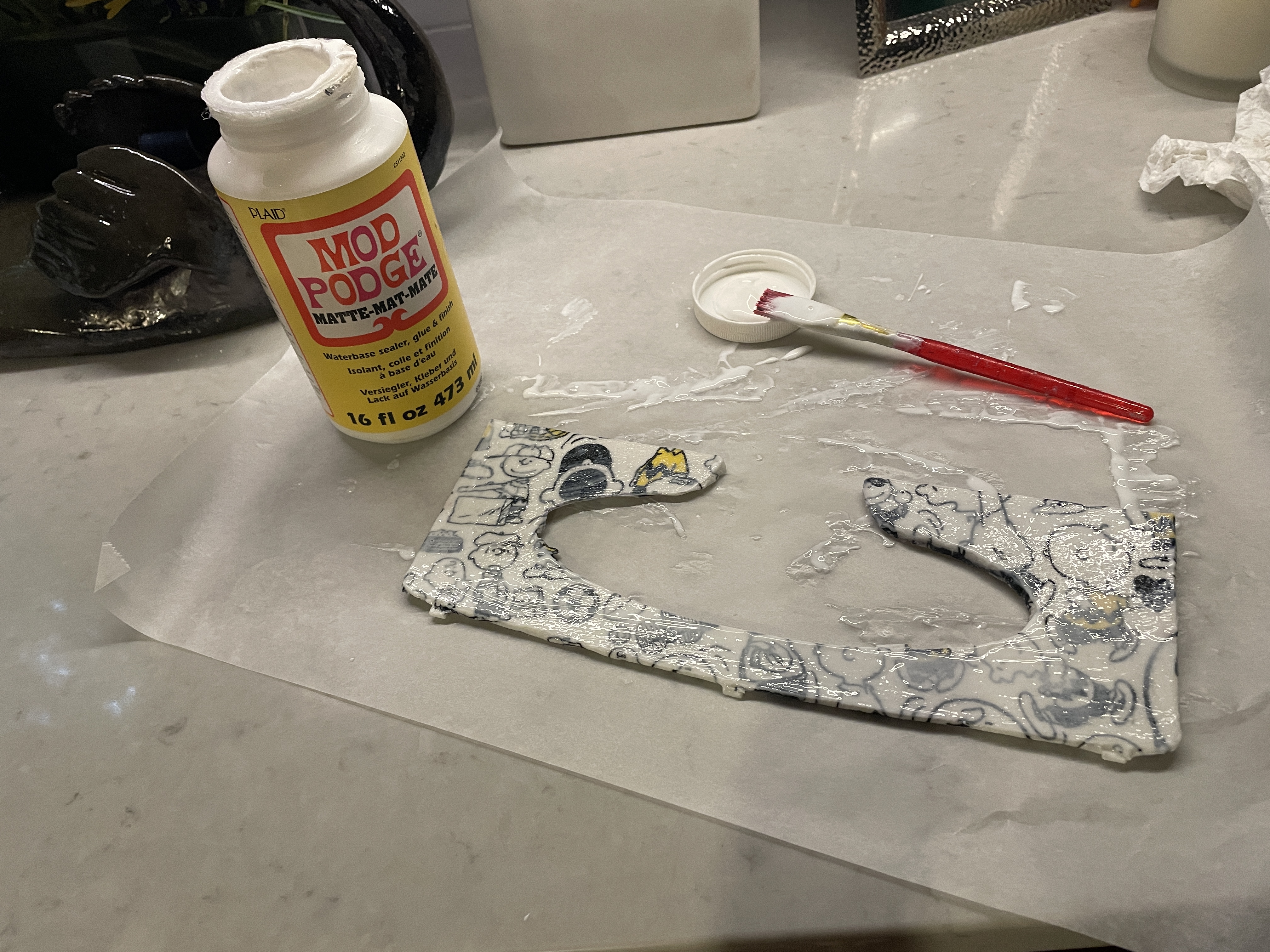
The Mod Podge dried, and the ribbon cover looks pretty swell.
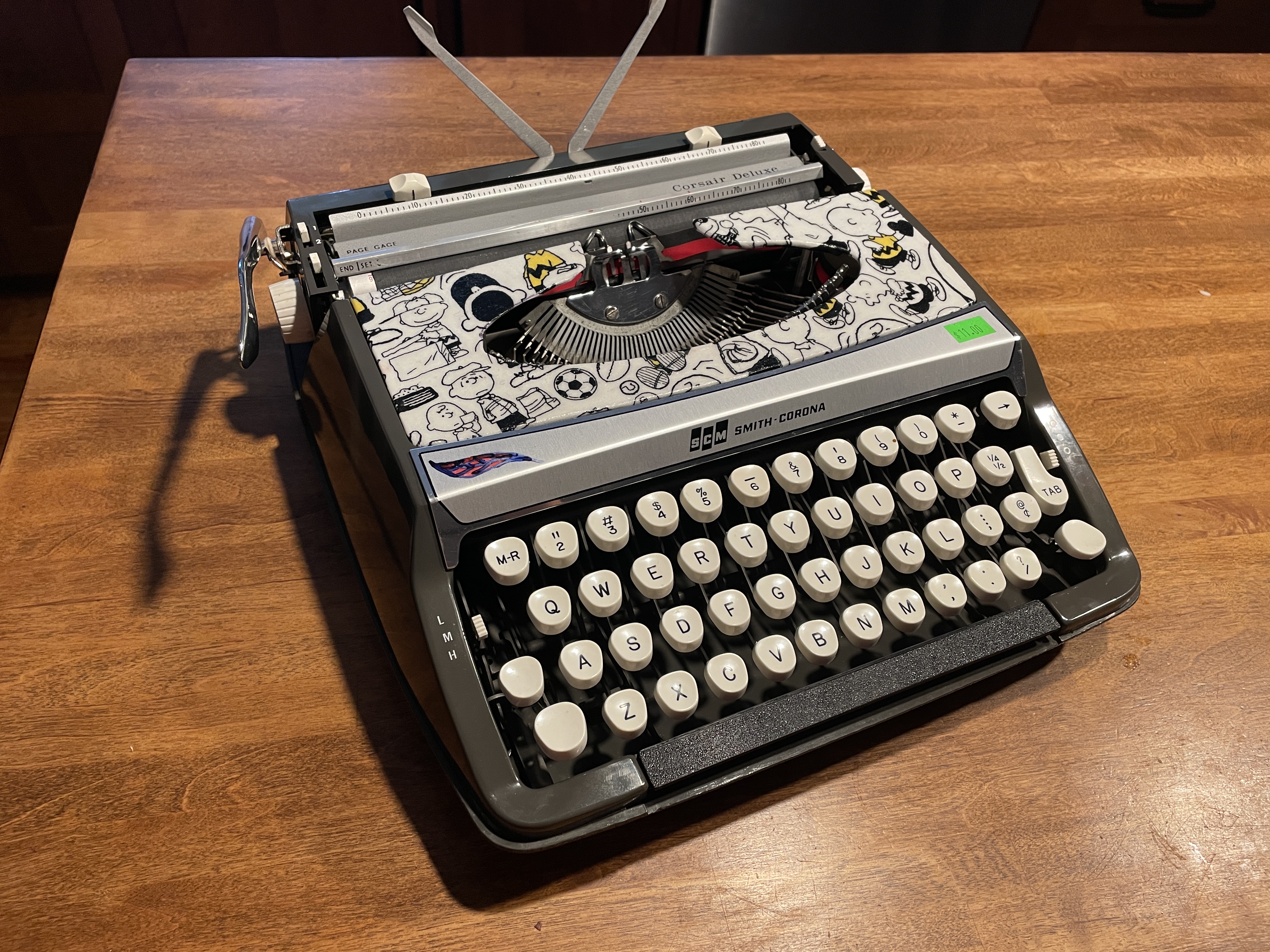
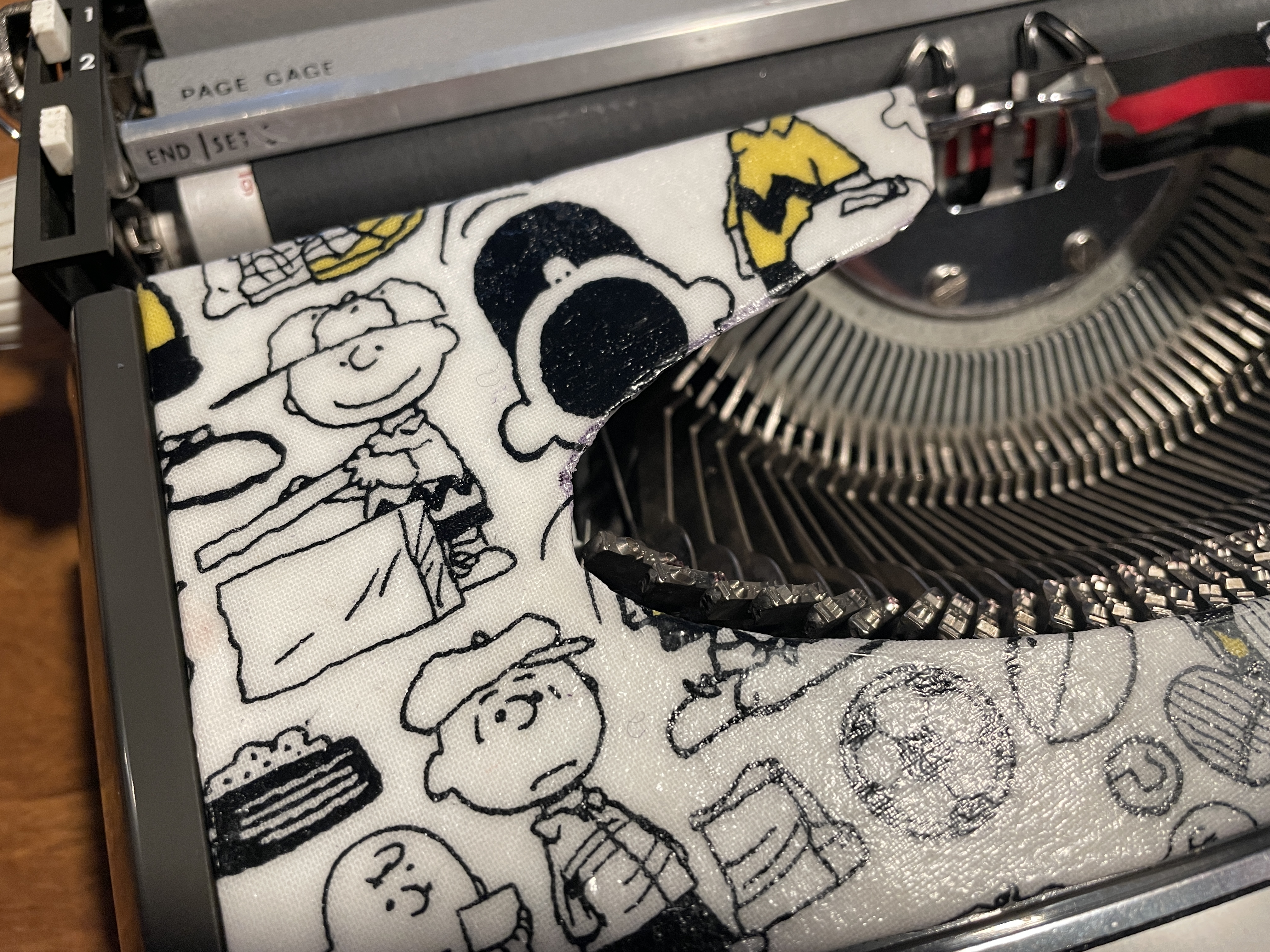
Now Jean has four options for her ribbon cover. Artists like options.
And I like the way it types! It’s kind of loose and jangly, but it feels like it’s having a rollicking good time. I grew up with manual typewriters, typed all my college papers on a KMart 100 Deluxe, and this Corsair feels fine to me. Maybe I’m built different, but I like this Corsair.
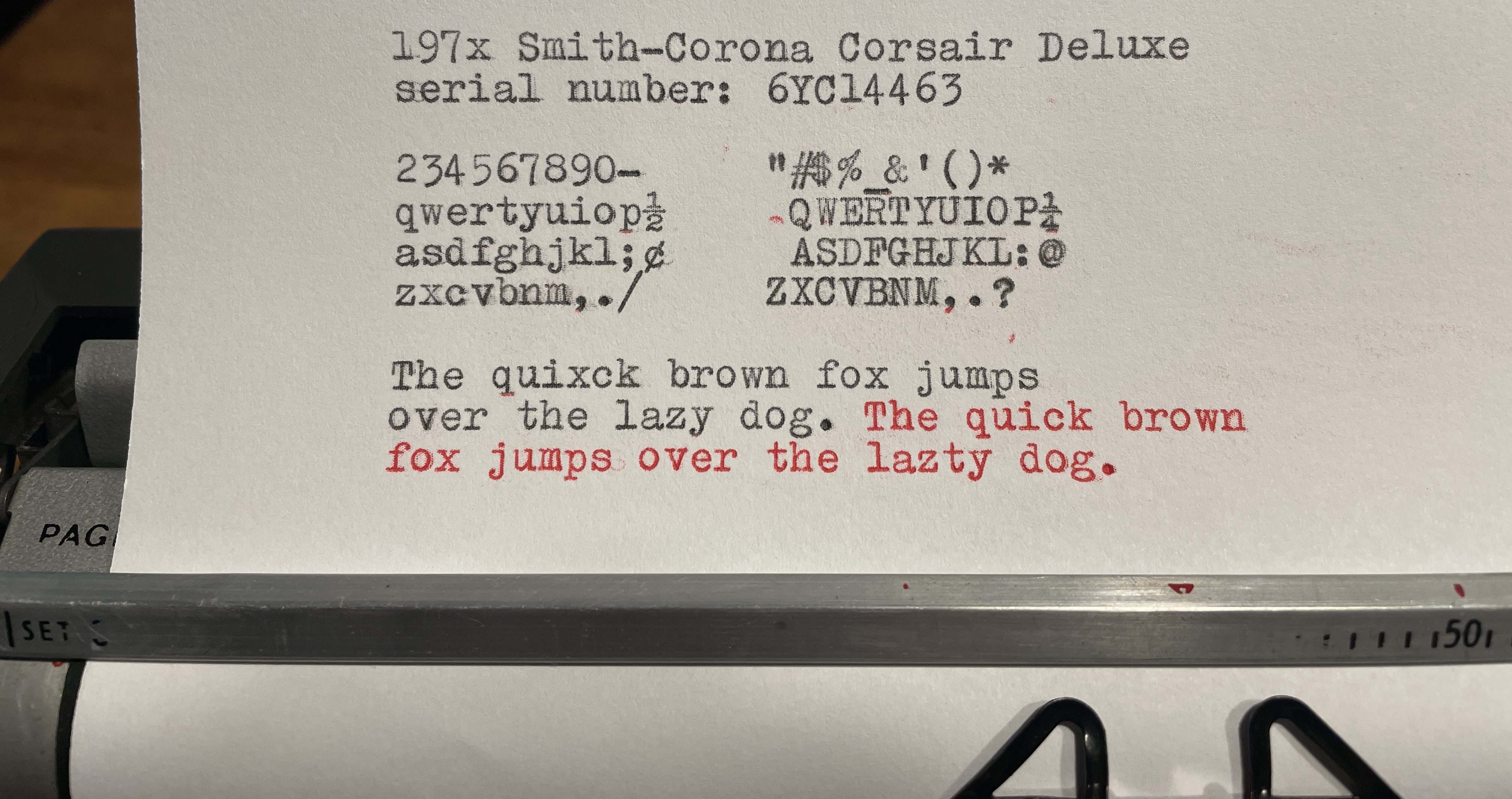
However, because it’s so light, it has a tendency to slide around on the table surface while typing. Never before have the words, “This typewriter needs to weigh more,” crossed my lips, but maybe this little Corsair needs to bulk up. It may be a balance and weight distribution issue, since other very light ultra-portables I’ve used haven’t felt as skittery as this Corsair.
The case feet are soft but smooth. I may add a layer of some grippy rubber to see if it helps.
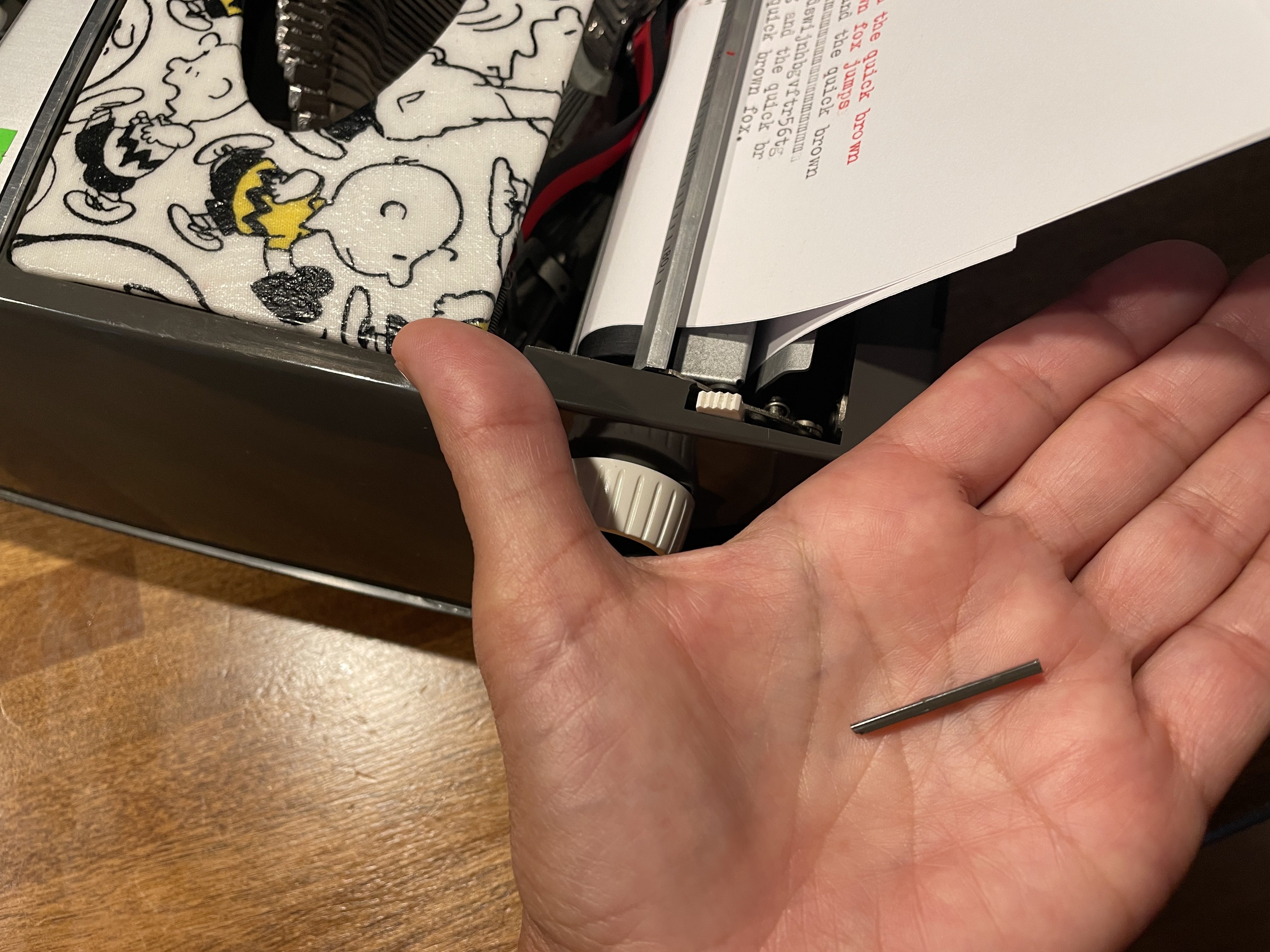
The Corsair has turned out pretty good, but one thing I regret is that in replacing the back cover plate on re-assembly, the 50+ year old plastic took a hit. A piece on the left side broke off as I snapped the cover into place.
I killed it!
A little Super Glue, and it will go back together, but I learned my lesson: gentle, gentle with this old plastic. Maybe it’s best to leave the back cover plate on.
Soon, Little Corsair Deluxe is going back home to Jean where he belongs. Projects like this, that are a mix of mechanical and artsy problem-solving are delicious to me. The cherry on top is that I know this machine’s owner will regularly use and care for this Corsair. I think it needs her.


Great post. First time I have seen such a clear image for “Off-feet.” I bought a SCM Galaxie for $8.00 and it is great except for missing a front cover piece. I was walking and imagining making one out of cardboard then shellac-ack-ack-ing it. Love your 3D-printed solution!
LikeLiked by 1 person
Cardboard and shellac-ack-ack-ing sound like a fun solution. Also, you may want to check with Trevor at TB Writers Plus for the part for your Galaxie. He has a couple parts machine Galaxies including this one:
https://www.tbwritersplus.com/projects-8-1?pgid=lwk08mbw-78960e65-9f4d-4def-85c9-49643dfd84ce
His prices are very reasonable.
LikeLike
I thoroughly enjoyed reading this, from Peanuts to Mod Podge to ignoring the online haters. Very impressive 3D modeling!
LikeLiked by 1 person
Another excellent post. Thanks.
I have one of those SCM GT Ghias. In the blue/green rather than the funky 1970s orange. Not a subtle typer & it does tend to move on the desk. Especially when using the tab.
Charlie Drake was a comedian who seemed to be on telly a lot in the 1960s. I do remember him. BTW a P45 is the tax document you get in the UK when leaving a job to take to your next job. It says how much NI (National Insurance) and PAYE (Pay As You Earn) income tax you’ve paid in the tax year. It also gives your NI number equivalent to a US social security number.
LikeLike
I was completely unfamiliar with Charlie Drake and had to look him up. And thank you for the P45 explanation. I am thoroughly charmed by the British-isms in the “I live in West Bromwich” posts. “You would get paid on a Friday and be skint by Monday” 😀
LikeLike
This was another great post, and I especially enjoyed how you were able to use a three-D printer to fabricate broken parts. I’ve certainly never tried anything like that. I wouldn’t have thought of using Modge Podge to create an artistic, Charlie Brown ribbon cover either.
LikeLiked by 1 person
Hey, nothin’ needs love like those that *really* need love! 😀
LikeLike
😀
LikeLike
I always laugh when I see these listed for a few hundred bucks at the local antique malls. I don’t think I ever sold one for more than $20 CAD when I was seriously collecting and repairing–I never felt like they were worth more.
Above everything, the quality of the metal inside is what ruins them for me. I enjoy a cheap typewriter. Plastic doesn’t bother me. But the way the metal in this era of Smith Corona bends and warps makes them utterly unusable for me. I once had a type bar collapse under me while simply typing. Probably an outlier, but still. Even the four Super-Gs that I’ve owned felt bad enough that they’ve never stuck around.
They’re problem children, unloved even as they were made, so I’m glad that some folks can come to love them and give them the care they deserve.
LikeLike
This Corsair was fortunate to find a loving home with Jean. The rattly little thing made its way into her heart.
LikeLike
Artistic and expert restoration!
At their worst, these things really are “hot garbage,” as someone wrote on Reddit. There was a British Consumer Reports-style magazine that reviewed various portables and concluded that the SCMs were the least precise and pleasant. However, when they’re properly adjusted, they do have a certain charm. They’re nice and light, and some of us love the turquoise color that they usually sport. I bet that brand-new cast rubber feet (available from typewriterfeet.com) would stop the sliding problem—at a cost that handily exceeds what your friend paid for the whole typewriter.
LikeLike